New Design Customized Ultrasonic Soldering Machine Soldering Iron for Vacuum Glass Welding
Description
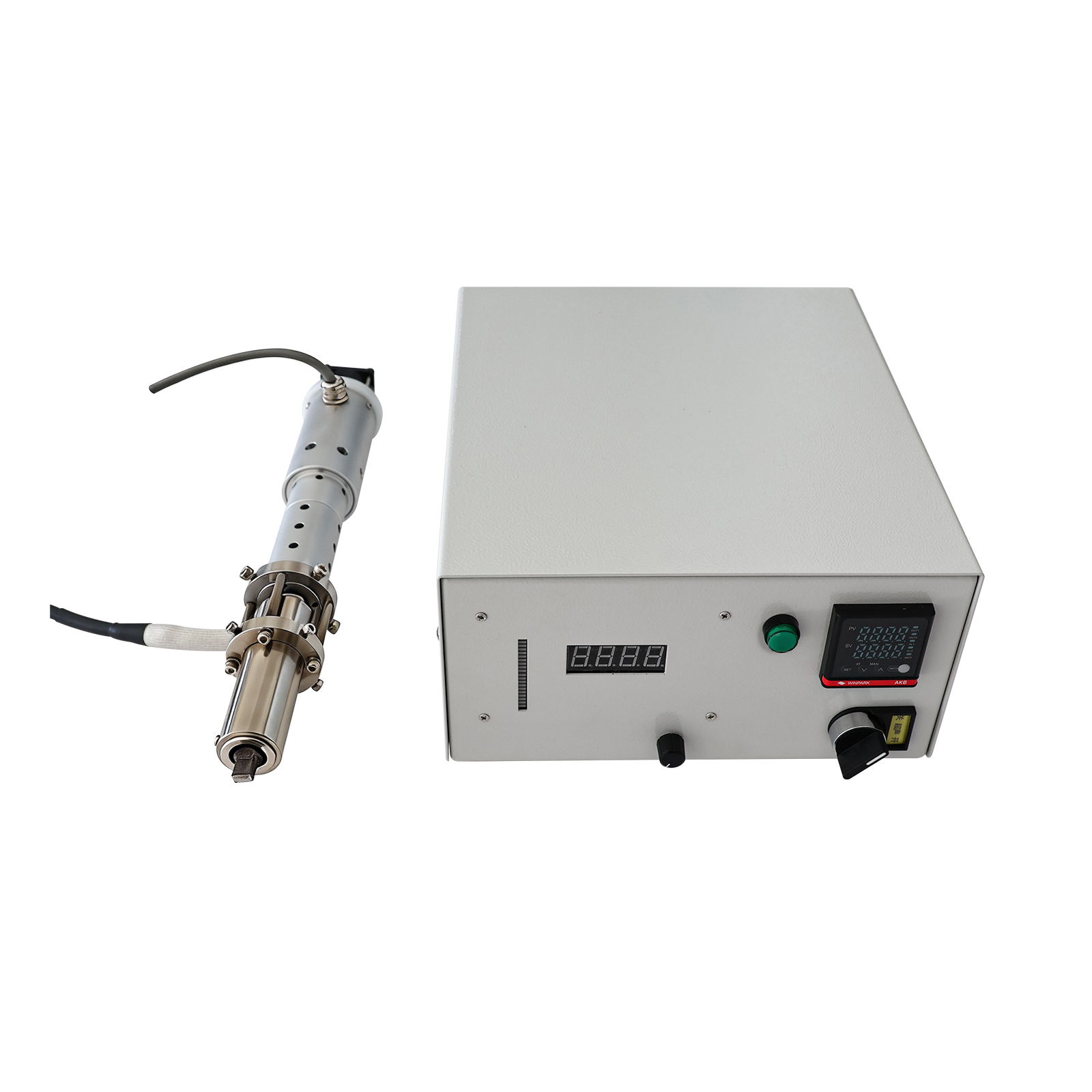
The New Design Customized Ultrasonic Soldering Machine is a precision joining system engineered for advanced soldering applications on difficult-to-bond materials such as vacuum glass, ceramics, and specialty metals. Unlike conventional soldering irons that rely solely on heat and flux, this ultrasonic-assisted system uses high-frequency vibration energy to break oxide layers and enhance solder wetting, enabling strong, clean, and reliable bonding.
Specifically developed for vacuum glass welding and high-precision assembly processes, this system ensures stable solder flow and deep interfacial bonding without damaging sensitive substrates. It is widely used in high-end manufacturing environments where traditional soldering methods fail to achieve consistent adhesion or long-term reliability.
It is a fluxless soldering process that uses high-frequency sound waves to clean metal surfaces and enable the solder to flow, all without the need for chemical flux.
It's primarily used for joining materials that are traditionally difficult to solder, such as aluminum, stainless steel, and ceramics, because their surfaces instantly form a tough, stable oxide layer that prevents wetting.
Parameter:
| Model No. | RPS-T40 |
| Ultrasonic Frequency | 40Khz |
| Maximum Output | 800 Watt |
| Temperature Range | 150 ~ 400 °C |
| Power Supply | 220V / 50-60 Hz |
| Ultrasonic Generator | Size | 250(W) x 310(L) x 135(H) mm |
| Weight | 3 Kg |
| Feature | Ultrasonic Amplitude Adjustable |
| Pot dimension | 5*8 mm |
| Avail Soldering Matrial | ITO Glass, AL, Mo, Cu etc., |
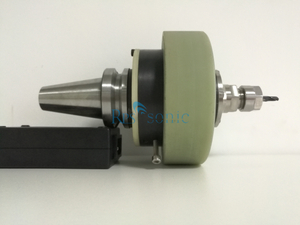
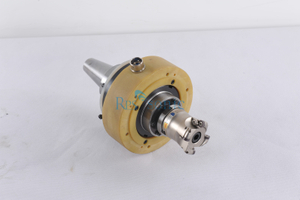
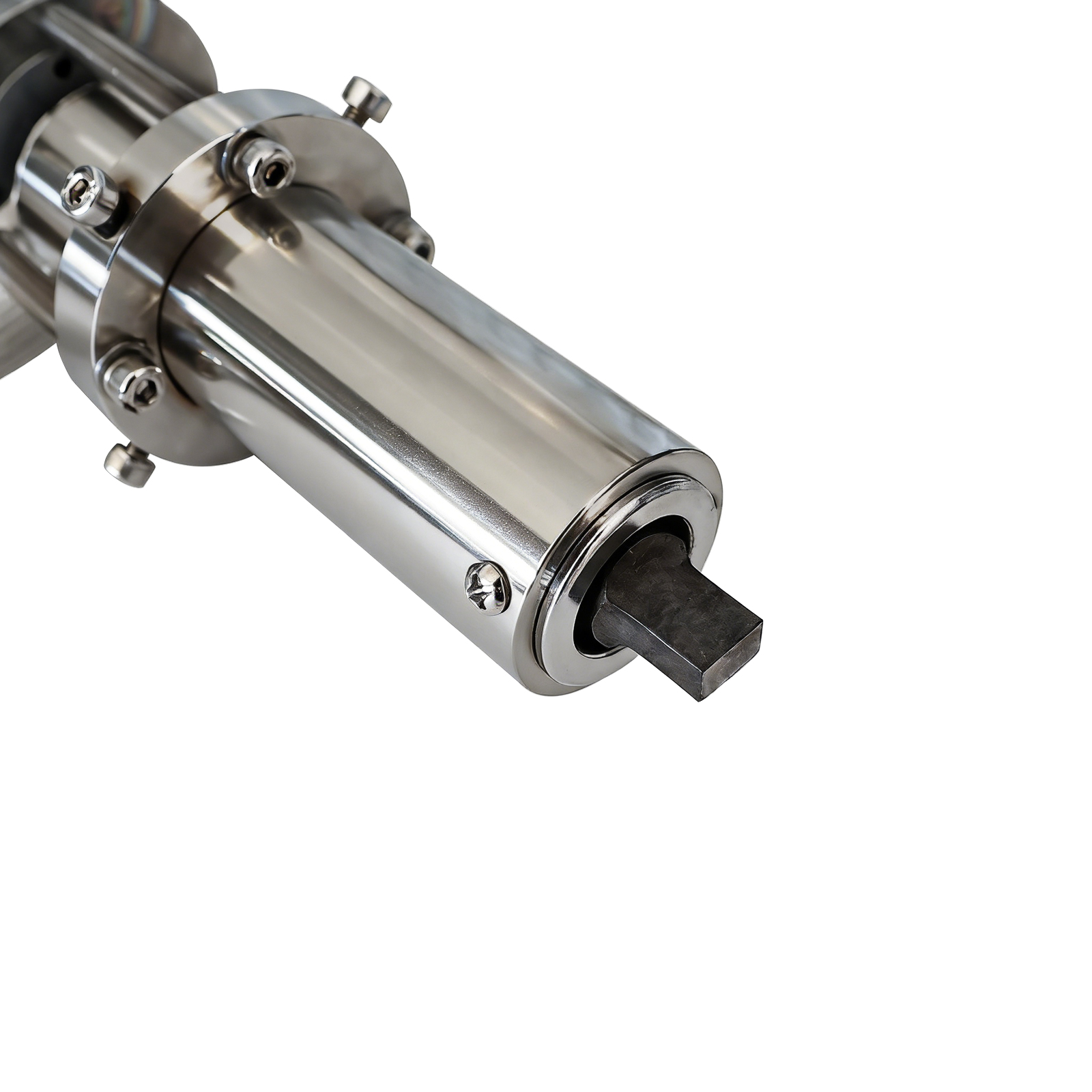
The system integrates a customized ultrasonic soldering tip (horn) that delivers controlled high-frequency vibration directly to the soldering interface, improving wetting performance and eliminating oxide barriers in real time.
A key advantage is its ability to perform flux-free soldering, significantly reducing residue contamination—especially important for vacuum glass and optical-grade applications.
Compared with conventional electric soldering irons, this ultrasonic system provides active surface activation during soldering, ensuring stronger metallurgical bonding rather than simple surface adhesion.
The temperature and ultrasonic power are independently controlled, allowing precise adjustment for heat-sensitive materials such as vacuum glass, thin metal films, and precision electronic components.
Its modular design supports customization of tip geometry and ultrasonic parameters to match different welding structures and production requirements.
The system is built with high-stability ultrasonic components and thermally optimized structures to ensure consistent performance under continuous industrial use.
Key Components of an Ultrasonic Soldering System
A typical system consists of:
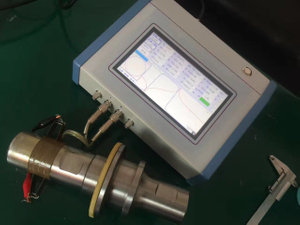
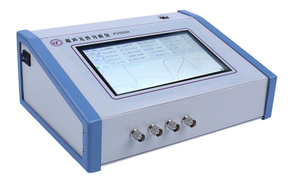
Ultrasonic Generator: The power supply that converts standard electrical power into high-frequency electrical energy.
Transducer (or Converter): Converts the high-frequency electrical signal from the generator into high-frequency mechanical vibrations.
Booster / Acoustic Horn: Modifies the amplitude of the mechanical vibrations.
Sonotrode (Soldering Tip): This is the working tip that delivers the ultrasonic vibrations to the solder and the workpiece. It can be designed as a simple iron tip or as part of a larger soldering pot.
Key Advantages
Ultrasonic-assisted soldering significantly improves wetting ability on difficult materials, ensuring stable and reliable bonding where traditional soldering fails.
It reduces oxidation issues and minimizes the need for aggressive flux, resulting in cleaner joints and improved long-term stability.
The process enables stronger interfacial bonding strength, particularly for vacuum glass and dissimilar material combinations.
Compared to conventional soldering irons, it delivers higher precision, lower defect rates, and improved repeatability in micro-assembly applications.
It reduces rework and improves production efficiency by ensuring consistent solder quality in each operation.
Advantages:
Fluxless Process: Eliminates the cost of flux and, more importantly, prevents issues like corrosion and electrical leakage from flux residues. This is critical for high-reliability electronics, medical devices, and components that must remain clean.
Joins "Unsolderable" Materials: Makes it possible to solder aluminum and other difficult metals.
Excellent Wetting: The cavitation action ensures superior wetting and a strong, reliable bond.
Eco-Friendly and Safer: No harmful flux fumes are produced, creating a healthier work environment.
Application
Vacuum glass sealing and assembly
Optical device manufacturing
Precision electronic component soldering
Ceramic and metal bonding
Sensor and instrumentation assembly
High-end laboratory and research applications
Thin-film and microstructure soldering
Advanced material joining where conventional soldering is ineffective