Application of Ultrasonic Atomization Spraying Equipment in The Medical Industry
In the medical industry, "spraying" entails far more than simply dispensing liquid onto a target surface.
For pharmaceuticals, disinfectants, biomaterials, coating fluids, and functional solutions, the true determinants of spraying performance are droplet size, uniformity, deposition quantity, coverage, and the stability of the liquid itself.
While traditional pressure nozzles rely on high-pressure airflow or mechanical pressure to break liquid into droplets, ultrasonic atomization spraying technology utilizes high-frequency mechanical vibration to generate stable, micro-scale droplets on the liquid surface, thereby enabling a more precise and controllable spraying process.
Consequently, the value of ultrasonic atomization equipment in the medical sector extends beyond mere "liquid atomization"; it has evolved into a sophisticated technology for precision micro-droplet generation and surface deposition.
The core of ultrasonic atomization spraying: generating controllable micro-droplets.
An ultrasonic atomization system typically comprises:
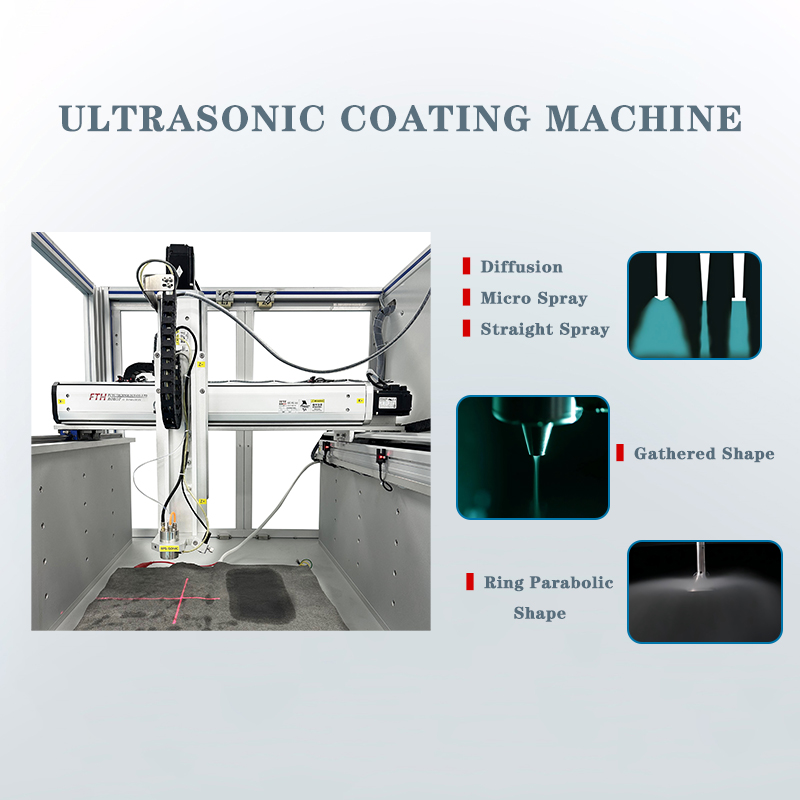
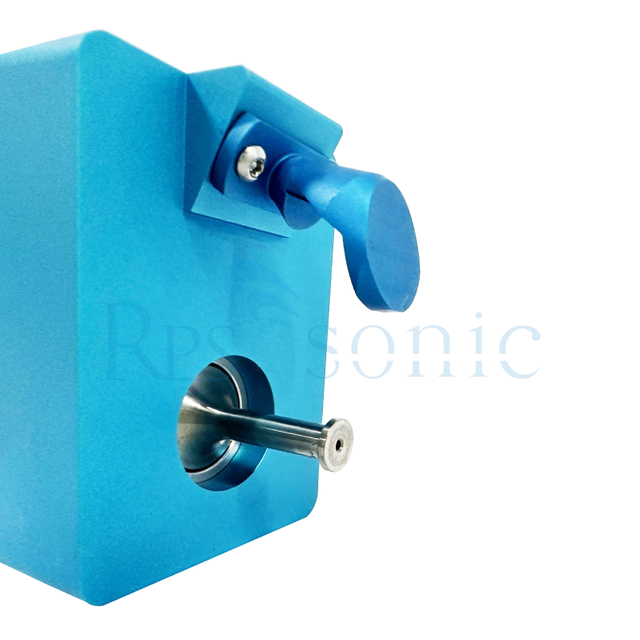
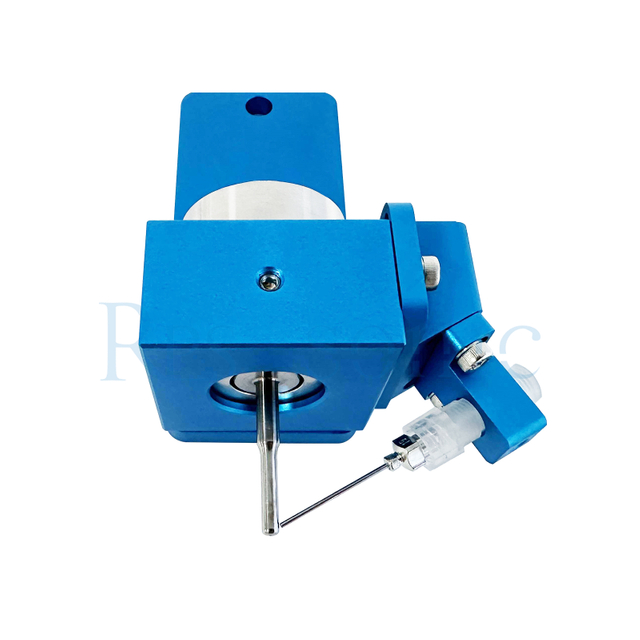
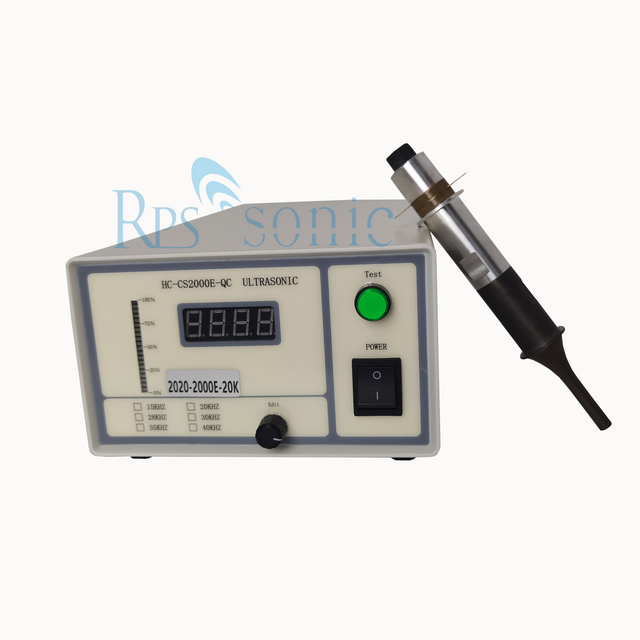
An ultrasonic generator, an atomizing transducer/nozzle, a liquid supply system, a control system, and a spraying mechanism.
The ultrasonic transducer converts electrical energy into high-frequency mechanical vibration, inducing high-frequency oscillation in the liquid at the atomizing surface.
Once the vibration reaches a specific threshold, a multitude of tiny droplets form on the liquid surface and detach, creating a stable atomized aerosol.
Compared to traditional pressure nozzles, ultrasonic atomization offers a crucial advantage:
Atomization is driven primarily by ultrasonic vibration, rather than relying solely on high-pressure airflow to "shatter" the liquid.
This allows the equipment to maintain a stable atomization state even at low liquid flow rates.
This capability is vital for precision spraying applications within the medical industry.
A key area of specialized application: functional surface coatings for medical devices.
This represents a highly significant application for ultrasonic atomization spraying technology.
Modern medical devices increasingly emphasize surface functionalization. Examples include:
Catheters, medical tubing, surgical instruments, implants, medical membranes, medical sensors, microfluidic chips, and biomaterial scaffolds.
These products often require the application of a very thin, uniform functional coating on their surfaces.
Traditional spray guns are prone to issues such as:
Oversized droplets, uneven coating, localized accumulation, overspray (splatter), material waste, and difficulty controlling spray boundaries.
In contrast, ultrasonic spraying allows for the adjustment of the final deposition outcome by controlling:
Ultrasonic power, liquid flow rate, nozzle distance, spray speed, and the number of passes.
Consequently, it is better suited for transitioning from simply "spraying a layer of liquid" to "creating a reproducible, micron-scale thin film."
Differentiated Application #2: Drug Coatings and Controlled-Release Material Research
In the field of medical R&D, certain medical devices require coatings made of drugs or functional materials.
Examples include:
Drug-eluting medical devices, medical catheter surface coatings, implant materials, biocompatible coatings, polymer-based drug delivery systems, and laboratory drug delivery materials.
In these applications, the spraying process must minimize material waste while precisely controlling coating thickness and uniformity.
Ultrasonic atomization converts liquid into a continuous, stable stream of micro-droplets, which are then applied via scanning using a mechanical motion platform or a robotic arm.
This results in a complete process flow:
Liquid → Micro-droplets → Directed transport → Surface deposition → Functional coating.
This means that ultrasonic spraying equipment functions not merely as a "spray nozzle," but as a core execution unit within a medical material preparation system.
It is important to note that when dealing with drugs, bioactive ingredients, or other sensitive materials, one must verify—based on the specific formulation—whether ultrasonic energy, temperature rise, or shear forces might affect the material's activity.
Differentiated Application #3: Tissue Engineering and Biomaterials
Tissue engineering represents another application area with significant potential.
For instance, the manufacturing of biological scaffolds, medical membranes, or functional materials often requires the uniform deposition of specific solutions onto material surfaces. Traditional dip-coating methods often result in:
Thick surface coverage and uneven internal penetration.
In contrast, ultrasonic spraying allows the target structure to be built up gradually through multiple thin-layer applications.
For example:
First pass → Forms the base layer
Second pass → Increases coverage
Third pass → Adjusts thickness
Multiple cycles → Establishes the target coating structure
This method is particularly well-suited for R&D focused on coating thickness, coverage, and repeatability.
What factors are critical for medical-grade ultrasonic spraying equipment?
If the equipment is to be used in a medical product R&D or production environment, simply having an ultrasonic spray nozzle is insufficient.
System design must address the following:
1. Liquid-contact materials
Selection based on the specific liquid:
316L stainless steel
PTFE
PEEK
Medical-grade polymers
Other validated materials (to prevent material-liquid incompatibility)
2. Precise liquid delivery
Recommended configurations:
Precision syringe pumps
Precision metering pumps
(Select the delivery method based on liquid properties)
3. Spray distance
The distance between the nozzle and the workpiece directly affects:
Coverage area, droplet deposition, coating uniformity, and liquid evaporation
Therefore, process optimization is required based on the specific material.
4. Ultrasonic parameters
Includes:
Ultrasonic frequency, output power, amplitude, operating mode, and continuous vs. pulsed operation
Different liquids require different atomization parameters.
5. Automated control
For mass production, the ultrasonic spray nozzle can be integrated with:
XYZ motion platforms, robots, conveyor lines, PLCs, vision systems, and precision liquid delivery systems
This creates a complete automated spraying system.