Advantages of Ultrasonic Welding for Tetra Pak Caps
Introduction
In the beverage packaging industry, Tetra Pak cartons and other paper-based liquid packaging solutions are widely used for milk, juice, plant-based drinks, and other liquid products. As reclosable packaging becomes increasingly popular, plastic caps and closure components play an important role in improving consumer convenience and package functionality.
Manufacturers need a joining process that delivers consistent quality, high production efficiency, and reliable performance. Ultrasonic welding technology offers an efficient solution for joining compatible thermoplastic cap components used in beverage packaging systems.
By using high-frequency mechanical vibrations to generate localized heat at the joining interface, ultrasonic welding can create strong plastic joints within a short cycle time. When properly designed and validated, it can help packaging manufacturers improve production efficiency and achieve consistent assembly quality.
1. High-Speed Welding for Mass Production
One of the main advantages of ultrasonic welding is its short welding cycle.
Unlike conventional processes that may require extended heating or cooling periods, ultrasonic welding generates heat directly at the plastic joining interface. The material softens locally, forms a joint under pressure, and solidifies during the holding stage.
This makes ultrasonic welding suitable for high-speed production environments where large quantities of plastic caps or closure components must be assembled.
Key benefits include:
Short welding cycles
Reduced waiting time between operations
Potential for higher production throughput
Easy integration into automated assembly lines
Actual cycle time depends on the cap design, material properties, joint geometry, and welding parameters.
2. Strong and Consistent Plastic Joints
For beverage packaging, the connection between plastic components must withstand handling, transportation, opening, and repeated use where applicable.
Ultrasonic welding can produce consistent joints when the material combination, welding interface, and process parameters are properly selected.
With suitable joint design and process monitoring, manufacturers can control important parameters such as welding time, amplitude, pressure, energy, and displacement.
This helps reduce variations between production batches and supports repeatable manufacturing quality.
However, joint strength and package integrity must be verified through appropriate mechanical and leakage tests.
3. Localized Heating with Limited Thermal Impact
Ultrasonic welding concentrates energy around the intended joining interface instead of heating the entire component.
This localized heating can help reduce unnecessary thermal exposure to surrounding plastic parts and nearby components.
For cap assemblies with compact structures or precision features, controlled energy delivery is particularly valuable.
The welding process must still be optimized to prevent excessive melting, deformation, flash, or damage to adjacent packaging layers.
For paper-based composite cartons, the effect of vibration and heat on the barrier layers and sealing structure must be evaluated separately.
4. No Additional Adhesive Required for Compatible Plastic Joints
When two compatible thermoplastic components are joined directly by ultrasonic welding, an additional adhesive is generally not required at the welded interface.
This can simplify the assembly process and eliminate adhesive application, curing, and related material handling steps.
Potential benefits include:
Fewer process steps
Reduced dependence on adhesive materials
Cleaner assembly operations
Easier automation
Lower adhesive-related maintenance requirements
This advantage applies to suitable plastic-to-plastic joints. Other packaging structures may still require dedicated sealing materials or separate sealing processes.
5. Improved Production Efficiency and Process Control
Modern ultrasonic welding systems can incorporate digital generators, programmable controllers, and process monitoring functions.
Depending on the equipment configuration, operators can set and monitor welding time, amplitude, energy, pressure, or displacement.
These controls help manufacturers establish a repeatable welding process and identify abnormal conditions.
For high-volume cap production, process monitoring can support quality management and reduce the risk of defective assemblies.
Advanced systems can also provide alarms, production signals, and data interfaces for integration with factory automation systems.
6. Easy Integration into Automated Packaging Lines
Ultrasonic welding equipment can be designed for different production layouts, including:
Single-station welding machines
Rotary indexing systems
Multi-head welding stations
Robotic assembly systems
Fully automated cap assembly lines
A customized welding horn and positioning fixture can be developed to match the cap geometry and joining area.
For circular cap components, the horn and fixture must be designed to provide appropriate contact and pressure distribution around the intended welding interface.
With suitable mechanical design and controls, ultrasonic welding can become part of a continuous, automated manufacturing process.
7. Compact Equipment and Flexible Installation
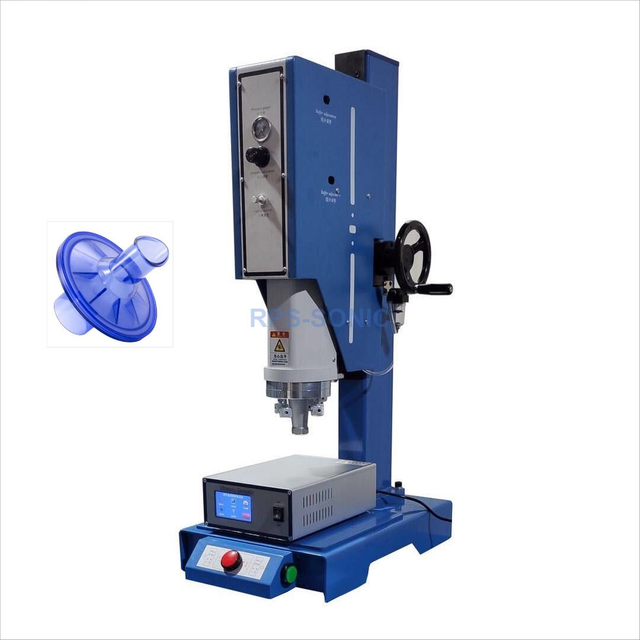
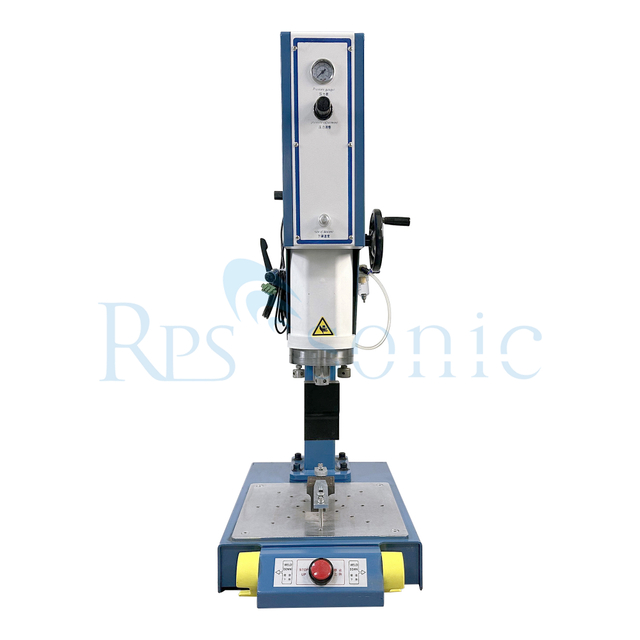
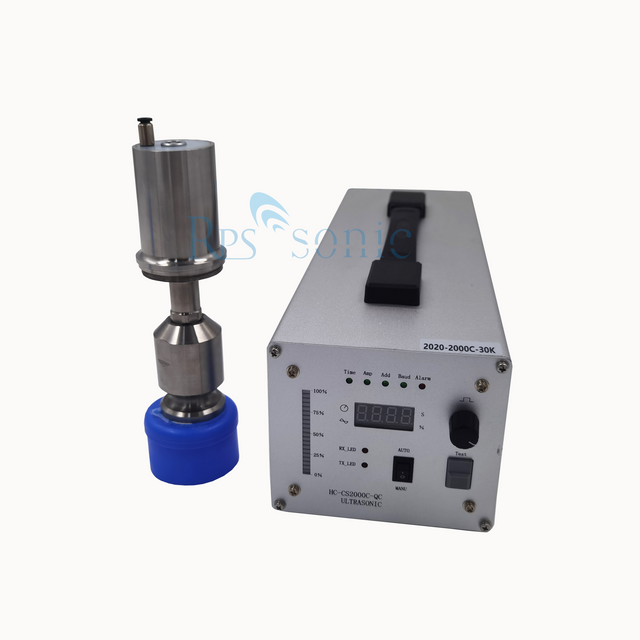
Ultrasonic welding systems typically consist of a generator, transducer, booster or horn assembly, welding head, fixture, and control system.
Compared with some larger thermal joining systems, a suitably designed ultrasonic welding station can occupy relatively little space.
This makes it easier to integrate the equipment into existing production lines or use it in a dedicated assembly station.
The system can be customized according to cap dimensions, production capacity, installation space, and automation requirements.
8. Lower Operating Costs Through Process Optimization
Ultrasonic welding may help reduce operating costs by shortening cycle times, eliminating adhesive application for compatible joints, and reducing unnecessary heating.
It can also support automated production, helping reduce manual handling and improve process repeatability.
However, total cost savings depend on equipment investment, production volume, maintenance requirements, tooling design, and the quality performance of the finished packaging.
A practical evaluation should compare the full production process rather than considering equipment purchase price alone.
9. Why Welding Interface Design Matters
The performance of ultrasonic welding depends not only on the machine but also on the design of the plastic components.
Important considerations include:
Plastic material and grade
Wall thickness and component geometry
Welding area and joint configuration
Energy-directing features, where appropriate
Horn contact surface
Fixture rigidity and alignment
Required joint strength and sealing performance
For cap components, a poorly designed interface can cause incomplete welding, excessive flash, deformation, or inconsistent joint strength.
Therefore, sample testing and process optimization are important steps before selecting the final equipment.
Important: Welding a plastic cap to a compatible plastic fitment is different from attaching a plastic cap or fitment directly to a multilayer paper-based carton. The latter requires specific evaluation of the packaging structure and may need a dedicated sealing or joining process.
10. Applications in Beverage Packaging
Ultrasonic welding can be evaluated for suitable thermoplastic components used in:
Milk and dairy beverage packaging
Juice and fruit drink packaging
Plant-based beverage packaging
Liquid food cartons
Plastic cap and closure assemblies
Plastic fitments and related packaging components
The suitability of ultrasonic welding depends on the actual component design and production requirements. It should not be assumed that every cap design or carton material can be welded using the same process.
Conclusion
Ultrasonic welding offers several potential advantages for compatible plastic cap components used in beverage packaging, including short cycle times, localized heating, consistent joint formation, reduced adhesive requirements, and convenient integration into automated production lines.
For manufacturers seeking to improve cap assembly efficiency and production consistency, a customized ultrasonic welding system can be a valuable option.
The best results come from matching the welding equipment, horn, fixture, and process parameters to the actual cap design and material combination.
Before industrial implementation, manufacturers should validate joint strength, package integrity, leakage performance, and compatibility with the intended food-contact packaging requirements.
Looking for an ultrasonic welding solution for beverage packaging caps? Providing cap samples, material specifications, joining-area drawings, and target production speed will help determine whether ultrasonic welding is suitable and support the development of a customized solution.