Key Applications of Inline Ultrasonic Technology in Wastewater Treatment
1. Sludge Treatment
Sludge treatment is a key application of ultrasonic wastewater treatment technology.
The cavitation and mechanical shear forces generated by ultrasound can disrupt sludge floc structures, disperse sludge particles, and facilitate cell wall rupture and the release of organic matter.
Following pretreatment, the sludge becomes more amenable to subsequent biochemical or anaerobic digestion processes.
Typical process flow:
Sludge tank → Circulation pump → Inline ultrasonic reactor → Anaerobic digestion/Biochemical system
This method allows for recirculating treatment, eliminating the need to ultrasonically treat the entire volume of the sludge tank.
2. High-Concentration Organic Wastewater
For certain types of high-concentration organic wastewater, ultrasound can serve as a pretreatment or process-intensification unit.
Ultrasound enhances contact between pollutants and oxidizing agents and improves mass transfer.
Combining ultrasound with advanced oxidation technologies—such as ozone, hydrogen peroxide, or Fenton processes—creates an ultrasound-intensified advanced oxidation process.
Example:
Wastewater → Ultrasonic Reactor → Oxidation → Biological Treatment
In this context, ultrasound primarily functions to intensify the reaction and mass transfer.
3. Printing and Dyeing Wastewater
Printing and dyeing wastewater is typically characterized by intense coloration and a complex mix of organic compounds.
Ultrasound can be used to enhance contact between dye molecules and oxidizing agents, thereby facilitating subsequent oxidation treatment.
As treating recalcitrant dyes with ultrasound alone often requires high energy input, practical industrial systems may combine it with technologies such as:
· Ozone, H₂O₂, Fenton, UV, or catalytic oxidation.
4. Chemical Industry Wastewater
Chemical manufacturing processes can generate wastewater containing organic solvents, surfactants, and other recalcitrant organic compounds.
Inline ultrasonic reactors can serve as intensification units for chemical treatment and advanced oxidation systems, improving mixing and mass transfer efficiency.
They are particularly suitable for processes requiring continuous recirculation treatment.
5. Food Processing Wastewater
Food processing wastewater typically contains high concentrations of:
· Fats, proteins, carbohydrates, suspended solids, and organic matter.
Ultrasonic waves can enhance solid-liquid mixing and mass transfer, thereby facilitating subsequent biochemical treatment.
For oily wastewater, the mechanical action generated by ultrasound can promote the dispersion of oil and water; however, if the ultimate goal is oil-water separation, this must be combined with techniques such as dissolved air flotation, sedimentation, filtration, or other separation methods.
6. Particle Dispersion and Pretreatment in Sewage
Some sewage contains large particles, agglomerates, or flocs.
Inline ultrasonic reactors can alter the state of particle agglomeration through cavitation and mechanical shear, thereby improving mass transfer efficiency in subsequent treatment stages.
Consequently, ultrasonic technology can serve as a pretreatment step in certain sewage treatment processes.
Typical Process for In-Line Ultrasonic Systems
A simple recirculation treatment system can be designed as follows:
Wastewater storage tank
↓
Circulation pump
↓
In-line ultrasonic reactor
↓
Flow meter/Temperature sensor
↓
Return to storage tank
↓
Repeat cycle
Once the preset number of cycles or treatment duration is reached, the process moves to the next stage.
For continuous treatment requirements, the following setup can be used:
Inlet → Pump → Ultrasonic reactor → Outlet → Downstream treatment
Adjusting the flow rate allows for control over the wastewater's residence time within the ultrasonic reactor.
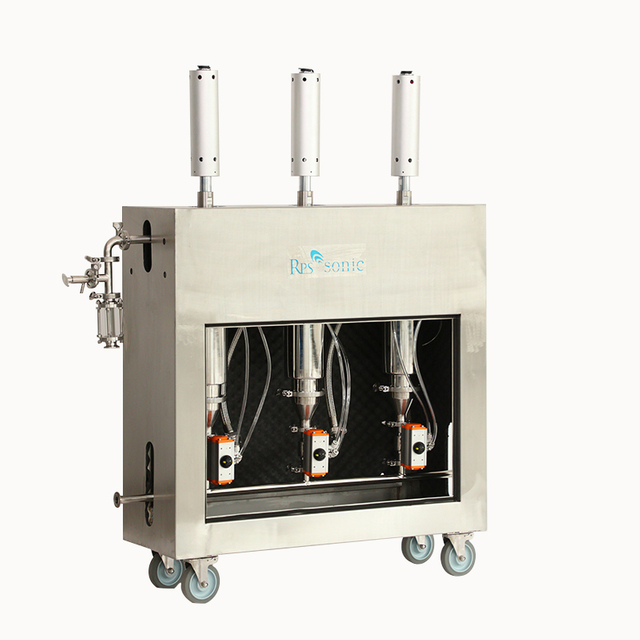
For large-scale projects, multiple ultrasonic reaction chambers can be arranged in parallel or series.
Future Trends in Ultrasonic Wastewater Treatment
Future industrial wastewater treatment will not rely on a single technology but will increasingly emphasize the combination of different treatment methods.
In-line ultrasonic technology can be combined with processes such as:
Ultrasonic + Ozone, Ultrasonic + H₂O₂, Ultrasonic + Fenton, Ultrasonic + Biological Treatment, Ultrasonic + Membrane Treatment, etc.
By utilizing ultrasound to enhance mixing, mass transfer, particle processing, and oxidation reactions, more compact continuous wastewater treatment systems can be created.
For industrial clients, the true value lies not merely in adding a standalone ultrasonic device, but in implementing a complete continuous treatment solution comprising an ultrasonic reactor, circulation pump, piping system, and automatic controls.
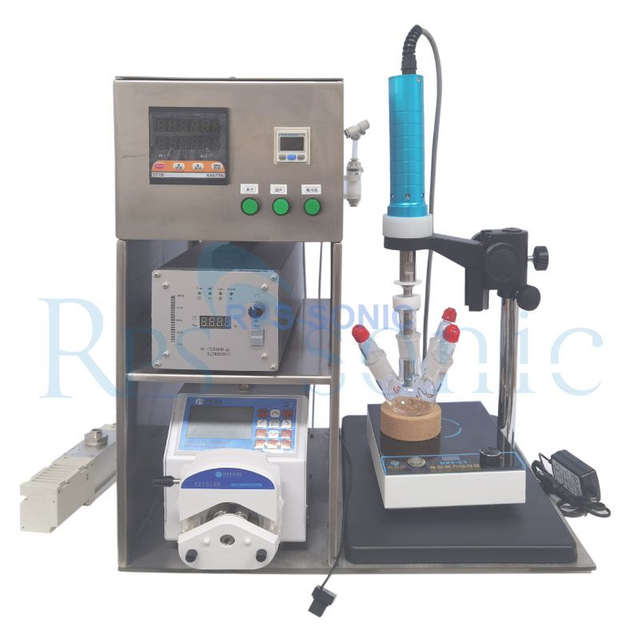
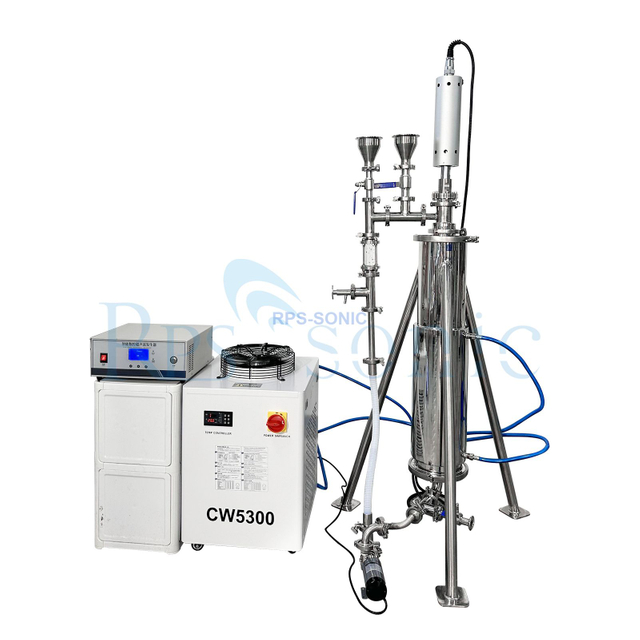
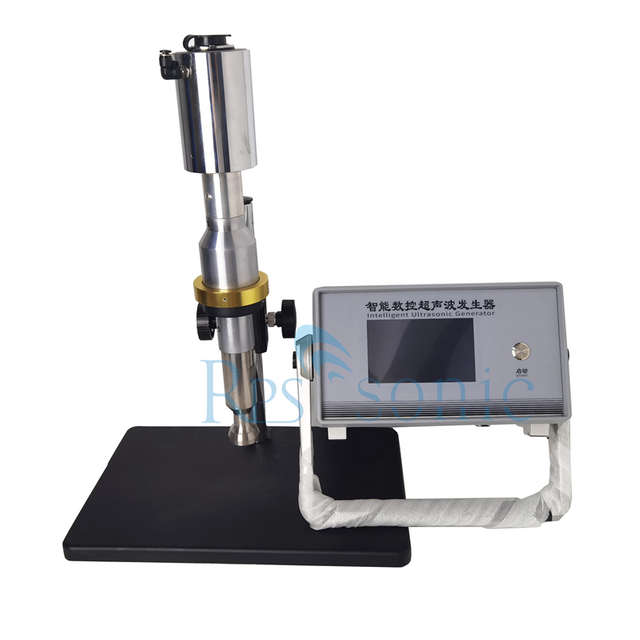
**In-Line Ultrasonic Wastewater Treatment** is an ultrasound-enhanced technology suitable for both continuous flow and recirculation treatment processes.
By installing the ultrasonic reactor directly into the wastewater pipeline, the wastewater is subjected to high-intensity ultrasonic action while flowing; this intensifies mass transfer, mixing, particle processing, and partial oxidation or biochemical processes. Key advantages include:
·Continuous online processing
·Concentrated ultrasonic energy
·Easy integration with existing piping
·Controllable flow rate and processing time
·Suitability for automation
·Scalability via modular reactors
·Suitability for process intensification in the treatment of sludge, organic wastewater, and various industrial wastewaters
For practical industrial projects, the recommended workflow is: laboratory-scale testing → pilot-scale validation → pipeline reactor design → industrial system integration. The final equipment configuration is determined based on actual pollutant removal rates, throughput, and specific energy consumption.
Pipeline-based ultrasonic treatment is not merely a matter of "installing ultrasonic devices into water pipes"; rather, it involves the strategic design of the ultrasonic reaction chamber, flow rate, power output, and residence time to effectively align acoustic energy with the wastewater treatment process, thereby enabling continuous, controllable, and scalable industrial application.