Why Choose Ultrasonic Atomization Instead of Conventional Pressure Nozzles?
Traditional pressure nozzles typically rely on liquid pressure or high-speed airflow to achieve atomization, making them suitable for many conventional spraying tasks and high-flow-rate applications.
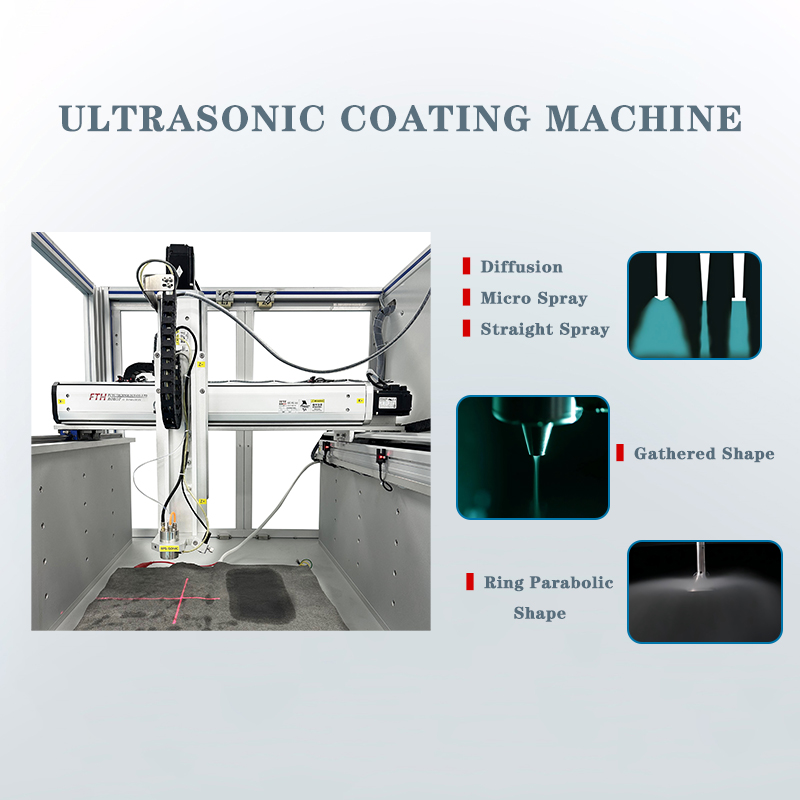
In contrast, ultrasonic atomization utilizes high-frequency mechanical vibration to generate droplets, offering distinct advantages in scenarios such as low-flow-rate feeding, laboratory materials research, and the production of fine aerosols.
Comparison Items | ultrasonic atomization | Traditional pressure nozzle |
Atomization method | High-frequency mechanical vibration | Liquid pressure or high-speed airflow |
Low-flow feed | Suitable for some low-flow processes | It depends on the structure of the nozzle and the working pressure. |
Droplet characteristics | It can be adjusted through parameter optimization. | Affected by factors such as pressure and nozzle structure |
materials consumption | Suitable for experiments that require control of the input quantity | Suitable for various conventional spraying scenarios |
Tube furnace integration | Can be designed as an aerosol feed module | It can also be integrated, but it requires matching of the nozzle and the gas path. |
typical application | Spray pyrolysis, material research and development, fine atomization | Conventional spraying, atomization and industrial feeding |
From Powder Preparation to Thin-Film Deposition: A Single System Adaptable to Various Research Directions
An integrated system combining ultrasonic atomization and a tube furnace allows for different process configurations depending on the target product.
Option 1: High-Temperature Aerosol Reaction and Powder Collection
The precursor solution is atomized and transported into the tube furnace for heat treatment in the reaction zone; the resulting powder is then recovered using an appropriate collection device.
This configuration is primarily intended for spray pyrolysis, the synthesis of oxide materials, and research into functional powders.
Option 2: Material Deposition on a Heated Substrate
If the goal is to form a thin film or surface coating, the substrate position must be adjusted according to process requirements to ensure the aerosol reaches the substrate surface under the desired temperature and atmospheric conditions.
In this scenario, factors such as substrate temperature, aerosol delivery method, deposition rate, and subsequent heat treatment will influence the quality of the final coating.
It should be noted that the equipment configurations for powder preparation and thin-film deposition differ. When selecting the system, the desired form of the final product should be determined first, followed by the design of the corresponding tube furnace interfaces and collection structures.
Which technical parameters need to be confirmed for equipment selection?
To ensure the ultrasonic atomizer is successfully matched with the existing tube furnace, it is recommended to confirm the following information before the design phase:
technical specification | The items that need to be confirmed |
Tube size of the furnace | Inner diameter, outer diameter, length and material |
operating temperature | Maximum temperature, average temperature and temperature distribution |
Precursor properties | Solvent, viscosity, concentration, corrosiveness and thermal decomposition characteristics |
Target feed rate | Minimum, normal and maximum liquid flow rate |
Atomization requirements | Target droplet size or acceptable particle size distribution |
Gas carrier conditions | Gas type, flow rate and reaction atmosphere |
final product | Powder, particles, films or surface coatings |
collection methods | Powder collector, filtration system or heating base |
safety requirements | Exhaust gas discharge, exhaust gas treatment, pressure management and solvent protection |
This information directly influences the atomizer specifications, liquid delivery method, interface structure, and the control scheme for the entire system.
Application Advantages: Combining Precision Atomization with High-Temperature Processing
For research institutions, materials laboratories, and industrial R&D departments, the integrated solution combining ultrasonic atomization with a tube furnace offers the following potential advantages:
**Precision Feed Control:** Suitable for materials research requiring precise control over liquid supply rates.
**Continuous Experimentation:** Enables continuous liquid delivery and reaction under set conditions.
**Modular Integration:** Connection interfaces can be designed to match the structure of existing tube furnaces.
**Coordinated Parameter Control:** Atomization, liquid delivery, carrier gas flow, and furnace temperature can be managed within a unified process control system.
**Application Versatility:** Allows for the selection of either powder synthesis or deposition processes based on the target material.
**Process Scalability:** Facilitates the exploration of process windows at the laboratory stage, providing data for subsequent scale-up research.
Actual performance depends on equipment configuration, the material system, and the results of process validation.
Conclusion
The integration of ultrasonic atomization equipment with a tube furnace provides a flexible process solution for spray pyrolysis, the synthesis of functional nanomaterials, the development of catalytic materials, and high-temperature materials processing.
The core of this approach lies not merely in mounting an atomizer at the furnace tube inlet, but in establishing a comprehensive material preparation workflow through optimized interface design, stable liquid delivery, effective aerosol transport, and precise control of the thermal reaction.
For research clients with custom requirements, designing a specialized atomization interface—tailored to the existing tube furnace's dimensions, temperature range, precursor properties, and target products—is far more critical than simply comparing atomizer power ratings.