Application of Ultrasonic Equipment in Wastewater Treatment: Pipeline Ultrasonic Treatment Technology
As the scale of industrial production continues to expand, increasingly stringent requirements are being placed on the treatment of industrial wastewater—including chemical, textile printing and dyeing, food processing, and high-concentration organic wastewater. Traditional wastewater treatment processes typically involve stages such as coagulation, sedimentation, aeration, biological treatment, filtration, and advanced oxidation; ultrasonic technology can serve as an intensification method integrated into these existing systems.
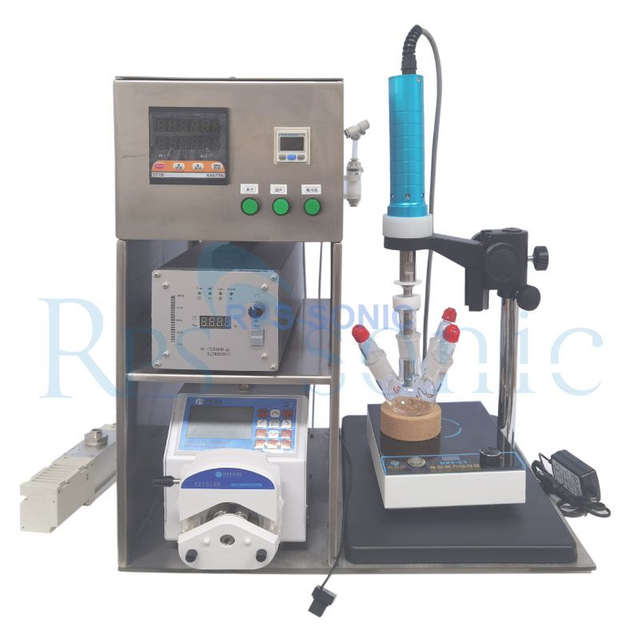
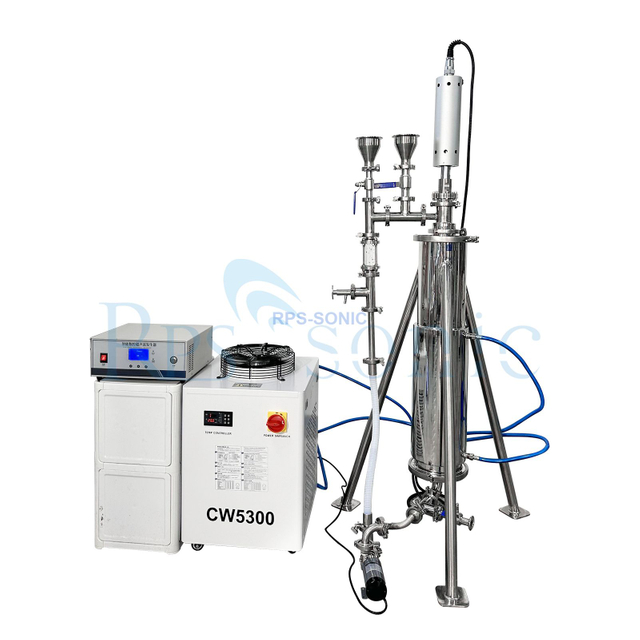
Unlike traditional immersion-type ultrasonic equipment, the **Ultrasonic In-Line Wastewater Treatment System** installs ultrasonic transducers or reactors directly into the fluid transport piping, allowing the wastewater to undergo continuous ultrasonic treatment while flowing.
This configuration is particularly well-suited for industrial applications requiring continuous processing, high-flow circulation, and integration with existing wastewater treatment infrastructure.
I. What is in-line ultrasonic wastewater treatment?
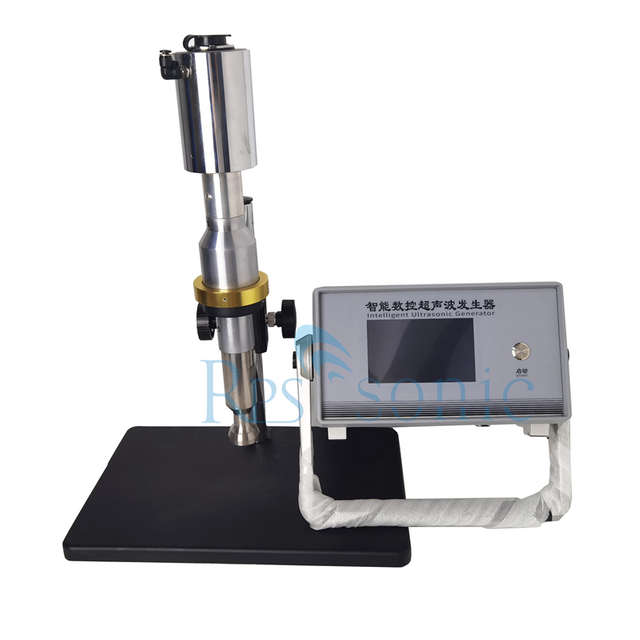
In-line ultrasonic wastewater treatment integrates an ultrasonic generator, an ultrasonic transducer, and a specialized in-line reaction chamber into a single continuous processing unit.
A typical system follows this workflow:
Wastewater Storage Tank → Circulation Pump → In-Line Ultrasonic Reactor → Downstream Treatment Unit → Storage Tank/Next Process
Wastewater is pumped into the ultrasonic reaction chamber, where it is subjected to high-intensity ultrasonic waves within the pipeline before exiting to the next stage of treatment.
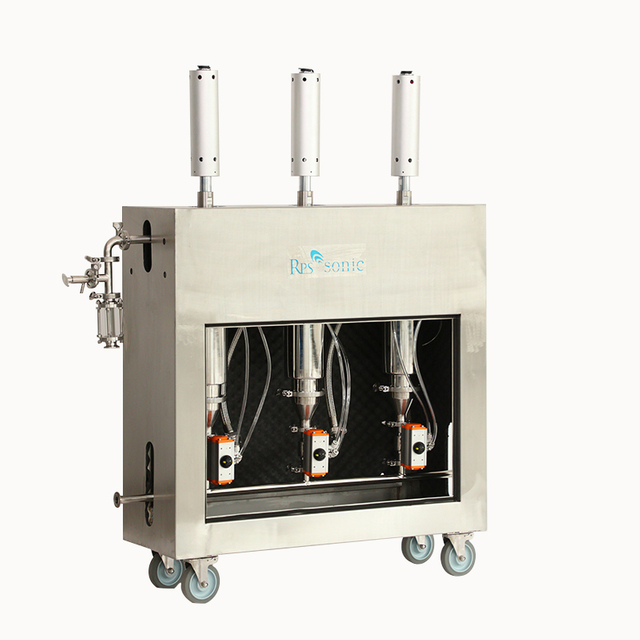
For applications requiring longer treatment times, multiple ultrasonic reactors can be connected in series, or a recirculation loop can be used to pass the wastewater through the reaction chamber multiple times.
This approach eliminates the need to install numerous ultrasonic probes in large wastewater basins while facilitating precise control over flow rate, pressure, residence time, ultrasonic power, and the number of treatment cycles.
II. Why can ultrasonic waves be used for wastewater treatment?
When ultrasonic waves propagate through a liquid, they induce rapid pressure fluctuations. When the sound intensity reaches a certain threshold, a large number of micro-bubbles form within the liquid; these bubbles undergo growth, oscillation, and rapid collapse—a phenomenon known as acoustic cavitation. Acoustic cavitation can generate localized, transient effects such as high temperatures, high pressures, intense shear forces, and micro-jets.
Consequently, ultrasound can enhance wastewater treatment processes in various ways:
Enhancing mass transfer
Promoting particle dispersion
Disrupting floc or sludge structures
Improving solid-liquid mixing
Facilitating gas-liquid mass transfer
Assisting in the degradation of organic matter
Promoting contact between oxidants and pollutants
Improving sludge disintegration and cell wall disruption
Enhancing subsequent biochemical or advanced oxidation processes
It is important to note that ultrasound is not a standalone "universal solution" for all wastewater pollutants. Actual performance depends heavily on factors such as the type of pollutant, COD, BOD, SS, sludge concentration, pH, temperature, ultrasonic power, frequency, treatment duration, and the use of oxidants.
Therefore, in industrial projects, ultrasound is typically best utilized as an enhancement unit within existing wastewater treatment processes.
III. Key Advantages of Pipeline-Based Ultrasonic Treatment
1. Continuous Treatment
Traditional ultrasonic treatment often requires installing probes in basins or reaction tanks, whereas pipeline-based systems can be installed directly onto wastewater conveyance lines.
Ultrasonic treatment occurs while the wastewater is flowing, eliminating the need to alter the fundamental structure of the overall treatment system.
Particularly suitable for:
Continuous flow wastewater treatment
And recirculation treatment systems.
2. Concentrated Ultrasonic Energy
Pipeline reaction chambers can be custom-designed based on wastewater flow rate, pipe diameter, and ultrasonic power, concentrating ultrasonic energy on a specific, limited volume of wastewater.
Compared to ultrasonic treatment in large, open basins, this method allows for better control over actual treatment conditions.
3. Easy Integration with Existing Systems
Pipeline ultrasonic reactors can be installed in:
Wastewater recirculation lines
Upstream of biochemical treatment
Downstream of biochemical treatment
Advanced oxidation systems
Sludge recirculation lines
Upstream of dissolved air flotation (DAF) systems
Chemical oxidation systems
Upstream of filtration systems
Thus, the installation location can be determined based on specific pollutants and process requirements.
4. Well-Suited for Automated Control
Pipeline systems can be integrated with flow meters, pressure sensors, temperature sensors, pH monitoring, and PLC control systems. For example:
Flow Rate → Ultrasonic Power → Residence Time → Treatment Efficiency
Industrial-scale operation is facilitated by automatically adjusting the ultrasonic power and circulation flow rate.
Inline Ultrasonic vs. Tank-style Ultrasonic
Item | Inline Ultrasonic | Tank-style Ultrasonic |
Handling method | Continuous flow processing | Batch processing / Loop processing |
Installation Method | Installed in the pipeline | Installed inside a pool or tank |
automation | Easy to integrate | Requires additional design |
Energy Control | Relatively concentrated | Prone to attenuation in large volumes. |
Volume | small | bigger |
Flow control | Easy to control | Relatively complex |
Suitable Scenarios | Continuous processing, cyclic processing | Large-scale tank structures, batch processing |
For plants that already have a complete wastewater treatment production line, pipeline ultrasonic reactors usually have better system integration flexibility.