English



Views: 100 Author: Site Editor Publish Time: 2026-10-09 Origin: Site
Ultrasonic atomization equipment: Precise process technology for transforming liquid into micron-sized droplets
When a liquid needs to be converted into fine, uniform droplets, traditional nozzles are not the only option.
For high-value liquids, heat-sensitive materials, fine chemical feedstocks, biological agents, and industrial processes requiring precise droplet size control, the critical factor is not merely "spraying out the liquid," but rather:
Can the liquid be atomized stably? Is the droplet size uniform? Is the flow rate easily controlled? Can splashing and overspray be minimized? Can stable operation be maintained at low flow rates?
Ultrasonic atomization equipment is a precision atomization technology developed specifically to meet these requirements.
Instead of simply using pressure to "force" the liquid out of a nozzle, it employs high-frequency mechanical vibration to transform the liquid surface into a multitude of tiny droplets, thereby achieving a more controllable atomization process.
I. What is ultrasonic atomization?
Ultrasonic atomization involves applying high-frequency ultrasonic vibrations to a liquid to create periodic waves on its surface; once these surface waves reach a certain threshold, the liquid breaks away from the surface to form a large number of tiny droplets.
A typical system generally comprises:
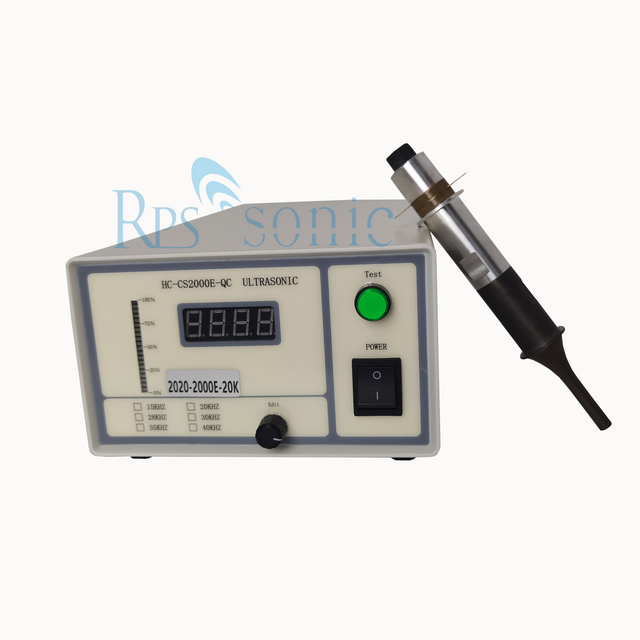
Ultrasonic generator → Piezoelectric transducer → Ultrasonic atomizing nozzle → Liquid supply system → Control system
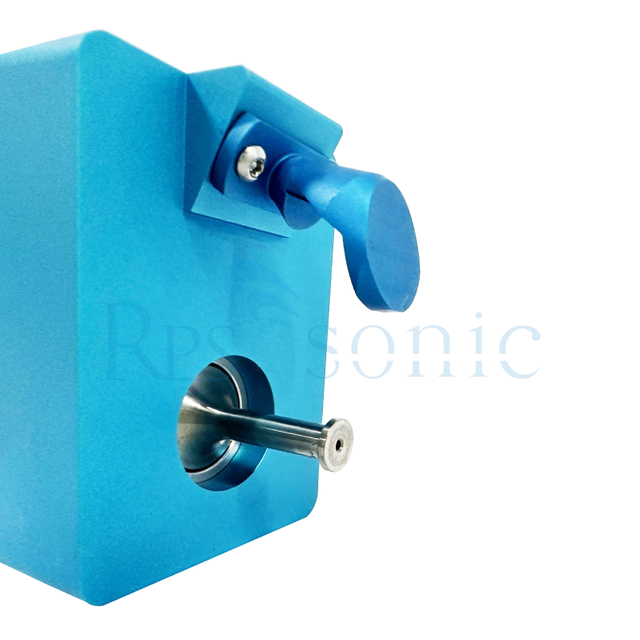
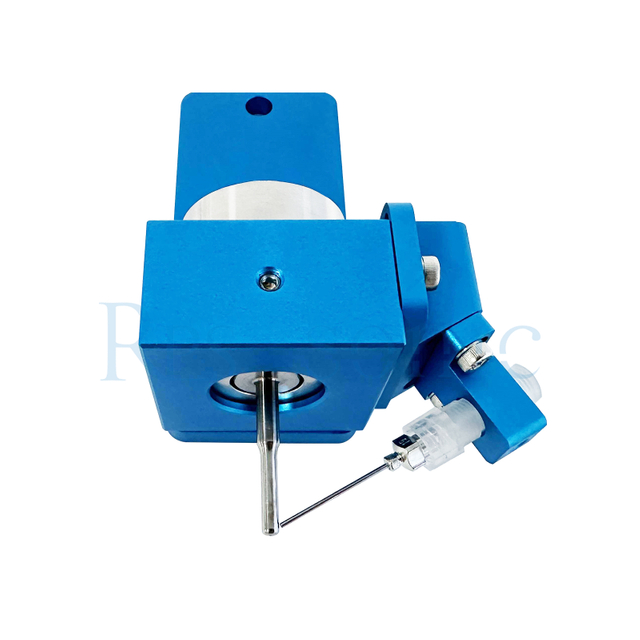
The generator produces a high-frequency electrical signal, the transducer converts this electrical energy into mechanical vibration, and the atomizing nozzle transmits the high-frequency vibration to the liquid.
Ultimately, the liquid is dispersed into micron-sized droplets.
II. How does ultrasonic atomization differ from traditional pressure spraying?
Traditional spraying typically relies on:
Pressure + nozzle geometry + high-speed liquid flow
In contrast, ultrasonic atomization relies more on:
Ultrasonic vibration + liquid surface oscillation + droplet formation
This leads to a crucial distinction:
Traditional nozzles focus primarily on "pressure,"
Whereas ultrasonic atomization focuses on:
·Vibration frequency
·Amplitude
·Liquid properties
·Liquid feed rate
·Liquid film thickness
·Atomizing surface condition
Therefore, ultrasonic atomization is not simply a matter of replacing a standard nozzle with an ultrasonic device; it employs a fundamentally different mechanism for droplet formation.
III. The true core of ultrasonic atomization: the droplet, not just the "spray"
Many people, when considering ultrasonic atomization, focus solely on whether a mist is produced.
However, for industrial applications, what matters more is:
The characteristics of the mist droplets produced.
An excellent ultrasonic atomization system is not defined by "the denser the mist, the better"; rather, it aims to achieve stable, controllable droplet sizes and flow rates tailored to specific process requirements.
IV. A key advantage of ultrasonic atomization equipment: operation at low flow rates
Traditional pressure nozzles usually require a certain level of liquid pressure and flow rate to generate a stable spray.
Ultrasonic atomization, however, can achieve stable atomization even with relatively low liquid feed rates.
This is particularly important for applications involving:
·High-value liquids
·Small quantities of additives
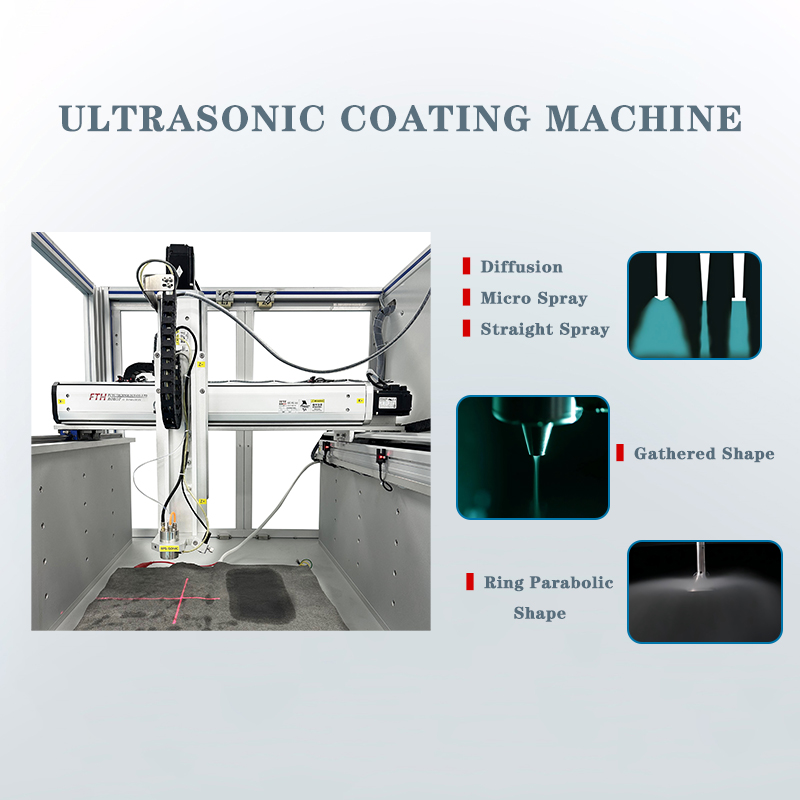
·Precision coating
·Laboratory research
·Micro-spraying
·Highly concentrated active substances
For instance, if a liquid is extremely expensive, the production process may require minimizing the amount of material sprayed at any one time.
In such cases, the ability of ultrasonic atomization to operate at low flow rates with controlled liquid delivery becomes a significant advantage.