What Is An Ultrasonic Homogenizer Circulation System? With Flow Cell.
In modern chemical, pharmaceutical, food, cosmetic and materials processing, many processes require efficient mixing, extraction, dispersion, emulsification or chemical reactions.
Traditional mechanical stirring can provide bulk mixing, but it may not generate sufficient energy at the microscopic level. This is where ultrasonic sonochemistry can provide an additional processing mechanism.
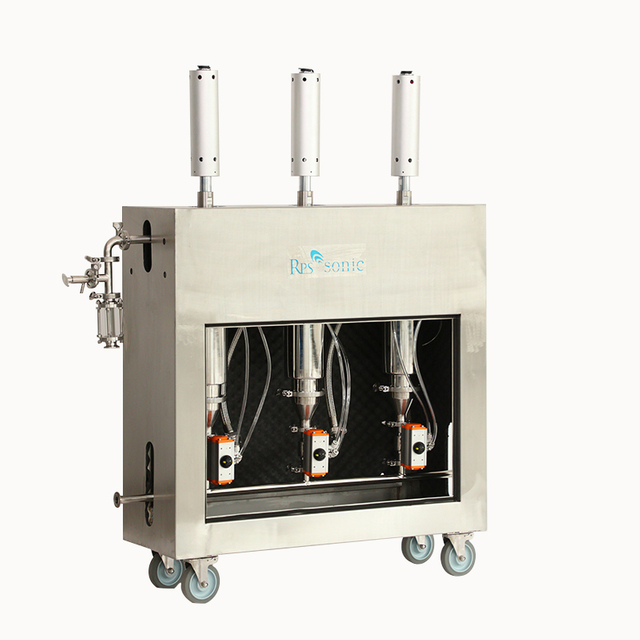
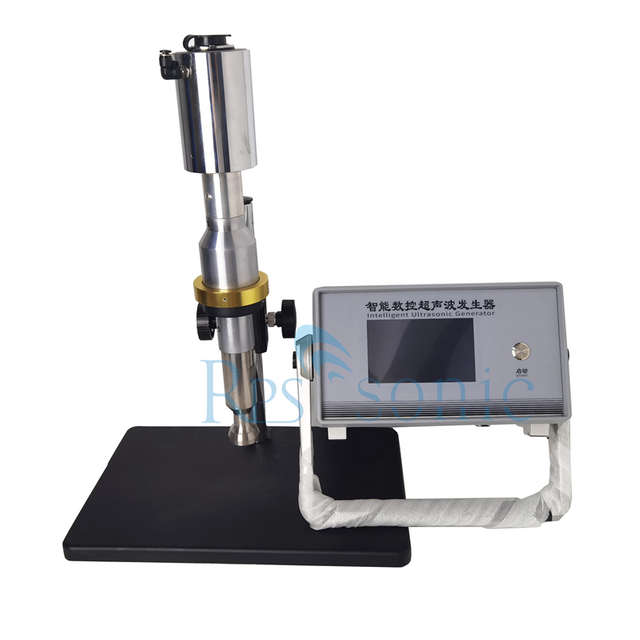
An Ultrasonic Sonochemical Circulation System is a continuous-flow ultrasonic processing system that combines ultrasonic cavitation with liquid circulation to intensify chemical reactions and physical processing.
Instead of treating the entire liquid only inside a stationary tank, the material is continuously pumped through an ultrasonic reaction chamber, where high-intensity ultrasonic energy is applied.
What Is Sonochemistry?
Sonochemistry is the use of ultrasonic energy to promote or intensify chemical and physical processes.
When high-power ultrasound is introduced into a liquid, it produces microscopic bubbles through a phenomenon known as acoustic cavitation.
These bubbles rapidly grow and collapse under ultrasonic pressure waves.
The implosion of cavitation bubbles can generate localized high-energy conditions, including extremely high temperature and pressure for very short periods of time.
This phenomenon can produce several effects:
· Enhanced mass transfer
· Particle disruption
· Improved mixing
· Increased contact between reactants
· Improved extraction
· Emulsification
· Deagglomeration
· Acceleration of certain chemical reactions
Therefore, ultrasonic energy can act as a process-intensification technology rather than simply functioning as a conventional mixer.
How Does an Ultrasonic Sonochemical Circulation System Work?
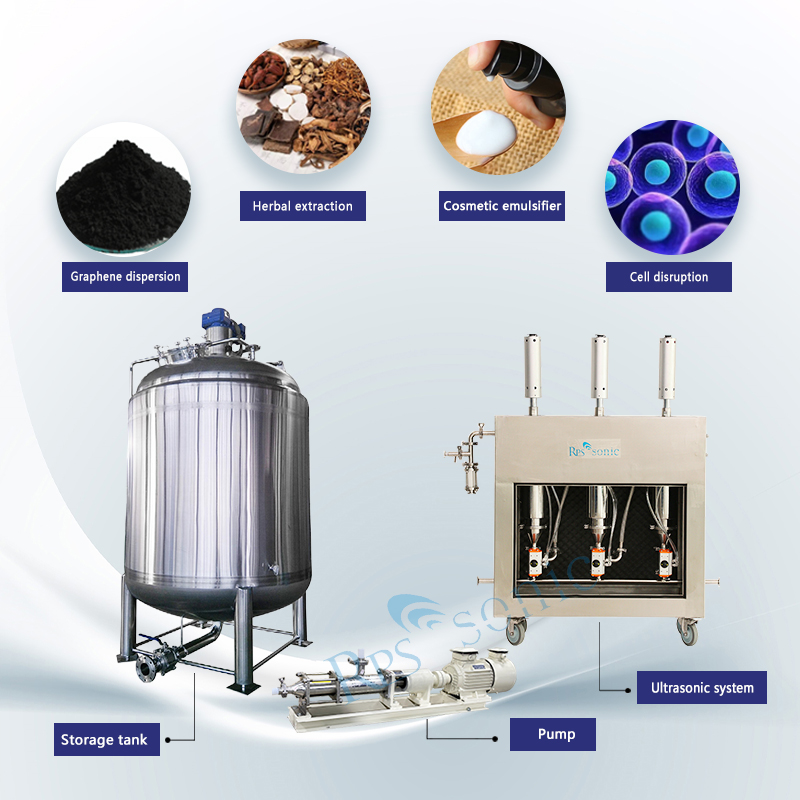
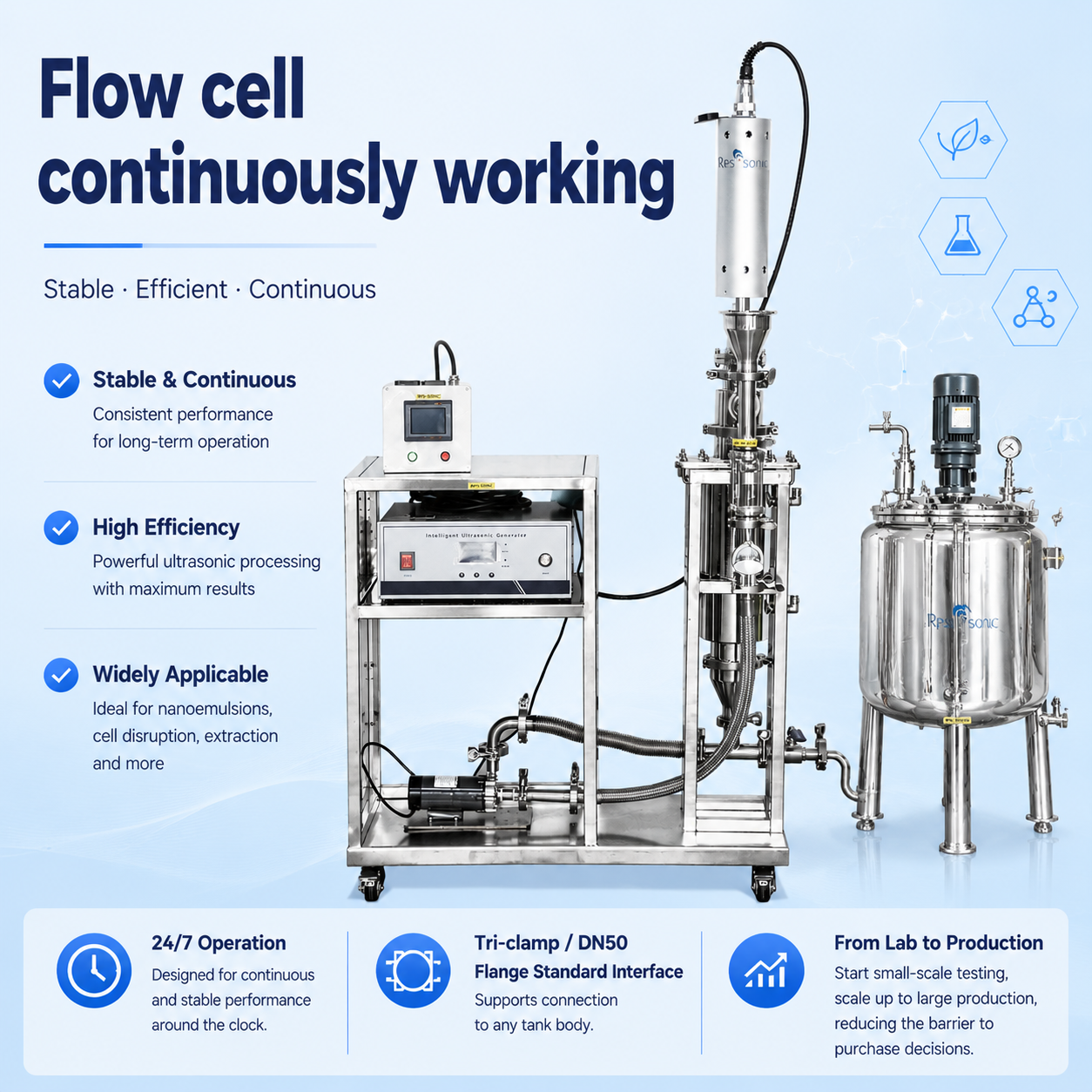
A typical circulation system consists of several major components:
Feed Tank → Circulation Pump → Ultrasonic Flow Cell → Return Line → Tank
The material is first loaded into a process tank.
A circulation pump continuously transfers the liquid through the ultrasonic reaction chamber. Inside the chamber, one or more ultrasonic transducers or sonotrodes introduce high-intensity ultrasonic energy into the flowing material.
The treated liquid then returns to the tank.
The circulation process can continue for a predetermined period until the desired processing effect is achieved.
Basic Process Flow
Process Tank
↓
Circulation Pump
↓
Ultrasonic Flow Cell
↓
Ultrasonic Cavitation Treatment
↓
Return to Tank
↓
Continuous Recirculation
This design allows ultrasonic treatment to be combined with controlled flow, temperature and processing time.
The Role of the Ultrasonic Flow Cell
The ultrasonic flow cell is one of the most important components of a sonochemical circulation system.
Unlike an ultrasonic probe simply inserted into a large tank, a flow cell creates a controlled processing zone.
The flow cell can be designed around:
· Liquid flow rate
· Ultrasonic power
· Frequency
· Material viscosity
· Solid concentration
· Temperature
· Residence time
· Required processing capacity
As the material passes through the ultrasonic zone, it receives concentrated acoustic energy.
For industrial systems, multiple ultrasonic transducers can also be integrated into the flow cell to increase processing capacity.
Why Use a Circulation System?
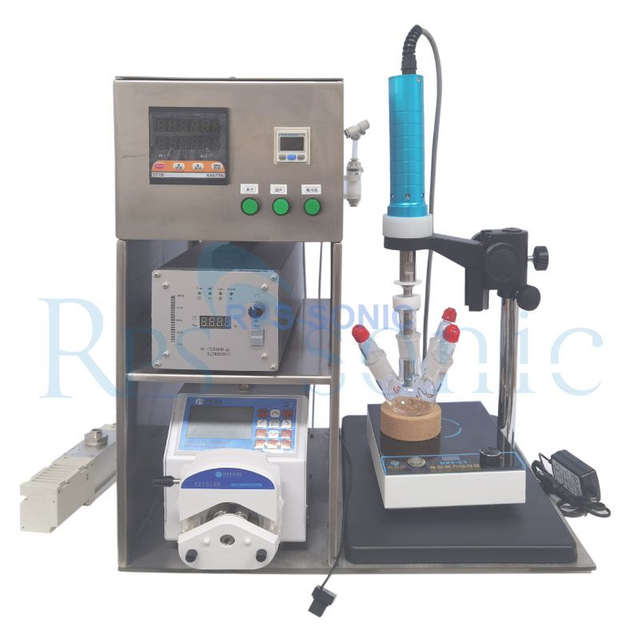
A conventional ultrasonic tank system may work well for laboratory-scale processing or relatively small batches.
However, as the processing volume increases, delivering sufficient ultrasonic energy uniformly throughout a large tank becomes more challenging.
A circulation system provides another approach.
Instead of trying to sonicate the entire tank volume simultaneously, the material is repeatedly passed through a high-intensity ultrasonic treatment zone.
This provides better control over:
· Ultrasonic energy input
· Flow rate
· Treatment time
· Temperature
· Processing cycles
· Scale-up
For this reason, circulation systems are particularly attractive for pilot-scale and industrial continuous-flow processing.
Main Advantages of Ultrasonic Sonochemical Circulation
1. High-Intensity Localized Cavitation
The ultrasonic flow cell concentrates ultrasonic energy into a defined processing area.
This can create a strong cavitation environment for chemical and physical processing.
2. Improved Mass Transfer
Ultrasonic cavitation and acoustic streaming can improve contact between liquid phases, particles and reactants.
This can be useful for extraction, dissolution and heterogeneous reactions.
3. Enhanced Chemical Reactions
For suitable chemical systems, ultrasound can increase contact between reactants and improve reaction conditions.
The actual effect depends strongly on reaction chemistry, solvent, concentration, temperature and ultrasonic parameters.
4. Improved Dispersion
Ultrasonic cavitation can break down particle agglomerates and improve the dispersion of fine particles in liquids.
This makes the technology useful for pigments, nanoparticles, ceramics, graphene-related materials and other advanced materials.
5. Continuous Processing
The material can circulate continuously through the ultrasonic treatment chamber.
This provides a scalable process configuration compared with simply increasing the size of an ultrasonic bath.
6. Better Temperature Control
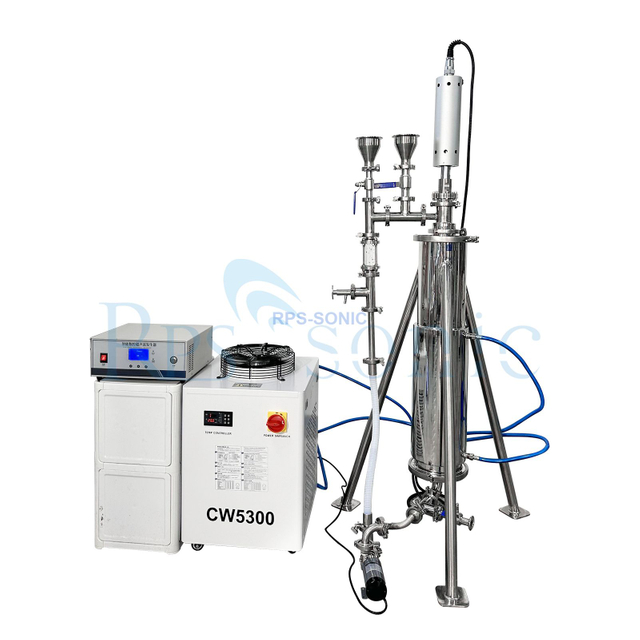
Because the process liquid is circulated through the system, a heat exchanger or chiller can be incorporated into the circulation loop.
This is especially important for temperature-sensitive products and reactions where excessive heat must be avoided.
Typical Applications
Ultrasonic sonochemical circulation systems can be used in many industries.
Ultrasonic Extraction
Ultrasound can assist the extraction of active compounds from:
· Herbs
· Plants
· Algae
· Mushrooms
· Roots
· Seeds
· Botanical materials
Cavitation can help disrupt plant or biological structures and improve solvent penetration and mass transfer.
Chemical Synthesis
Ultrasound can be investigated as a process-intensification method for selected chemical reactions, including reactions involving:
· Solid-liquid systems
· Liquid-liquid systems
· Heterogeneous catalysts
· Crystallization
· Precipitation
Process validation is required because ultrasonic effects are highly dependent on the specific reaction system.
Nanoparticle Preparation
Ultrasonic cavitation can assist:
· Particle nucleation
· Deagglomeration
· Dispersion
· Precipitation
· Nanomaterial processing
It can be combined with controlled chemical reactions to produce fine and relatively uniform particle dispersions.
Emulsification
High-intensity ultrasound can create fine droplets and improve the dispersion of immiscible liquids.
Potential applications include:
· Oil-in-water emulsions
· Water-in-oil emulsions
· Cosmetic formulations
· Pharmaceutical formulations
· Functional ingredients
Powder Dispersion
Ultrasonic treatment can help break particle agglomerates and improve the dispersion of powders in liquid media.
This can be useful for:
· Ceramic slurries
· Pigments
· Carbon materials
· Metal oxides
· Functional powders
Key Parameters for System Design
An ultrasonic sonochemical circulation system should not be selected based only on ultrasonic power.
Several parameters need to be considered together.
Ultrasonic Frequency
Common industrial ultrasonic systems may operate around 20 kHz, while higher frequencies can be used for specific applications.
Lower-frequency high-power ultrasound is commonly selected when strong cavitation is required.
Ultrasonic Power
The required power depends on:
· Liquid volume
· Flow rate
· Material properties
· Processing intensity
· Desired treatment time
For industrial applications, the ultrasonic power should be evaluated together with the actual energy delivered to the process material.
Flow Rate
Flow rate determines how quickly material passes through the ultrasonic reaction zone.
A suitable flow rate must balance:
Flow rate + ultrasonic intensity + residence time + number of circulation passes
Temperature
Ultrasonic cavitation generates heat during operation.
For temperature-sensitive materials, a cooling system can be integrated into the circulation loop to maintain the required process temperature.
Flow Cell Geometry
The design of the ultrasonic flow cell has a major influence on acoustic energy distribution.
Factors include:
· Chamber diameter
· Chamber length
· Transducer arrangement
· Sonotrode geometry
· Flow direction
· Pressure
· Material viscosity
Therefore, industrial flow cells are normally customized according to the application.
Conclusion
An Ultrasonic Sonochemical Circulation System combines the high-energy effects of ultrasonic cavitation with controlled liquid circulation.
By continuously passing the material through an ultrasonic flow cell, the system can provide a concentrated ultrasonic treatment zone while allowing engineers to control flow rate, temperature, ultrasonic power and processing time.
It can be applied to chemical reactions, extraction, emulsification, nanoparticle preparation, dispersion, crystallization and other process-intensification applications.
For industrial applications, the system can be customized with different ultrasonic generators, titanium-alloy sonotrodes, flow cells, pumps, tanks, heat exchangers and cooling systems according to the specific process.
If you are developing an ultrasonic chemical process, the most important step is not simply selecting a high-power generator. The complete system should be designed around the material characteristics, flow rate, temperature, reaction conditions and required processing result.