Application of Ultrasonic Atomization Technology in Blood Collection Tube Production: Principles, Advantages, And Future Prospects
I. What Is Ultrasonic Atomization Technology for Blood Collection Tubes?
With the advancement of the medical testing industry, vacuum blood collection tubes have become increasingly essential in clinical diagnostics, blood analysis, and medical research. To meet the requirements of various blood tests, the inner walls of these tubes often undergo specialized treatment—such as the application of coagulants, anticoagulants, or other functional additives—to ensure they perform as needed for specific diagnostic procedures.
Traditionally, the inner walls of blood collection tubes have been treated using methods like spraying, dip-coating, or other liquid-application techniques. As production processes become more automated, ultrasonic atomization technology has emerged as a viable option for precise liquid coating.
Ultrasonic atomization technology utilizes high-frequency mechanical vibration to disperse liquids into fine droplets. Unlike conventional methods that rely on high-pressure airflow or fluid pressure to generate a mist, ultrasonic atomization employs vibrational energy to create waves on the liquid's surface, which then break apart into small, uniform droplets.
In the production of blood collection tubes, this technology is used for the precise atomization and internal coating of specific liquid additives. The exact implementation depends on factors such as the properties of the liquid, coating specifications, production throughput requirements, and equipment design.
II. Working Principle of Ultrasonic Atomization
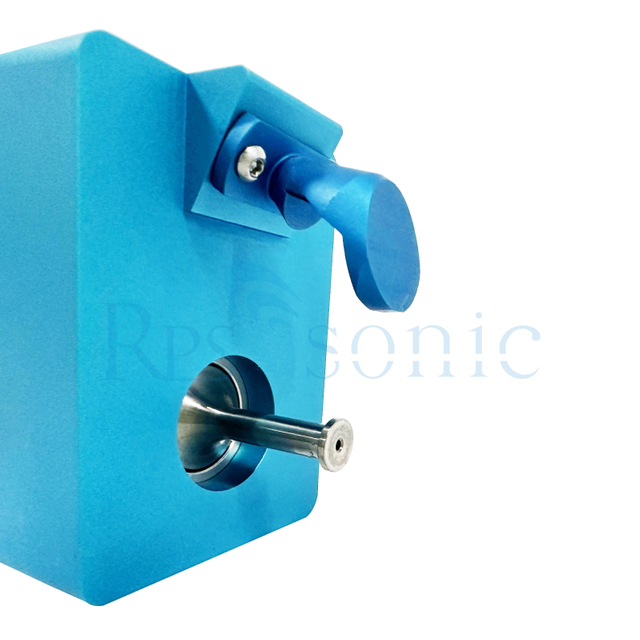
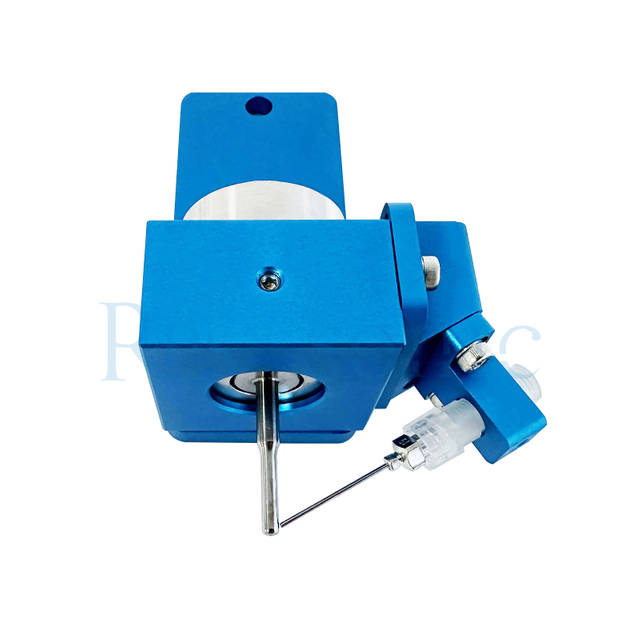
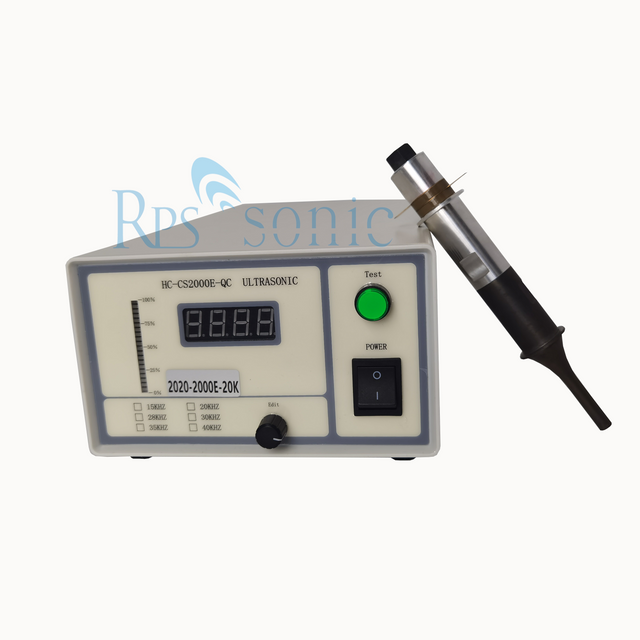
An ultrasonic atomization system typically consists of an ultrasonic generator, a piezoelectric transducer, an atomizing nozzle, a liquid supply system, and an automated control system.
The basic operational workflow is as follows:
1. Electrical Energy Conversion: The ultrasonic generator produces electrical signals at a specific frequency, which drive the piezoelectric transducer to vibrate.
2. High-Frequency Vibration: The transducer converts electrical energy into mechanical vibration and transmits it to the atomizing nozzle.
3. Liquid Atomization: The liquid forms waves on the vibrating surface, resulting in the creation of fine droplets that detach from the liquid surface.
4. Targeted Spraying: The atomized droplets are directed toward the target area to coat the inner walls of the blood collection tubes. 5. Drying or Curing: Perform necessary drying, curing, or subsequent processing steps in accordance with the coating formulation and process requirements.
It should be noted that ultrasonic atomization is not the same as ultrasonic cavitation. Atomization primarily involves the dispersion of a liquid into droplets, whereas cavitation entails the formation, oscillation, and collapse of bubbles within a liquid; the two processes differ in their operating principles and equipment design.
III. Potential Advantages of Ultrasonic Atomization Technology in Blood Collection Tube Production
1. Uniform Atomized Droplets Facilitate Coating Quality Control
For processes requiring a thin layer of additives on the inner walls of blood collection tubes, factors such as droplet size distribution, spray positioning, and the amount of substance deposited per unit area directly influence the final quality of the coating.
A well-designed ultrasonic atomization system can generate stable, fine droplets, which helps achieve a uniform coating. However, the actual uniformity of the coating also depends on the nozzle structure, liquid viscosity, spray distance, the rotation method of the blood collection tubes, and drying conditions.
2. Potential for Reduced Liquid Waste
Under appropriate process conditions, ultrasonic atomization enables precise spraying at lower liquid delivery pressures. Furthermore, the dosage of additives can be managed by controlling the liquid flow rate, atomization duration, and the activation/deactivation of the nozzle.
This level of control is particularly valuable for production processes that require only a small amount of coating material per blood collection tube.
Nevertheless, the actual material utilization rate also depends on factors such as droplet capture efficiency, the spray area, the exhaust/ventilation system, and the amount of residue remaining within the equipment; therefore, it cannot be assumed that ultrasonic atomization is inherently more material-efficient than traditional spraying methods.
3. Suitability for Precision Coating Processes
Some additives for blood collection tubes must be distributed uniformly across the tube wall in very small quantities. By adjusting parameters such as atomization power, liquid flow rate, spray duration, and nozzle position, one can determine the optimal process settings for various coating formulations.
For liquids containing surfactants, polymers, or other specialized components, it is essential to evaluate properties such as viscosity, surface tension, solids content, and solvent characteristics to determine their suitability for ultrasonic atomization. 4. Ease of Integration with Automated Production Lines
Ultrasonic atomization modules can be integrated into production lines alongside blood collection tube transport mechanisms, positioning fixtures, automated liquid supply systems, and control systems, depending on the specific layout.
For instance, the system can be configured to trigger a metered spray once a blood collection tube is correctly positioned, with the spray duration and liquid volume controlled via software. This facilitates the design of equipment for continuous, automated production.
The actual production throughput must be evaluated by considering factors such as the spray time per tube, the method used for tube positioning, drying time, and the cycle time for loading and unloading.
IV. Which Blood Collection Tube Additives Are Suitable for Ultrasonic Atomization?
Determining the suitability of ultrasonic atomization requires more than just looking at the name of an additive; one must also consider its specific formulation and the desired coating characteristics.
Common blood collection tube additives include:
Clot activators: Used to promote coagulation in specific types of blood collection tubes.
Anticoagulants: Such as heparin, EDTA salts, or citrate-based formulations, with the specific type depending on the intended application of the blood collection tube.
Separation gel-related materials: These typically require individual assessment based on their viscosity, rheological properties, and the intended coating method.
Other functional coating materials: Including specific polymers or other formulations validated for use in blood collection tubes.
It is important to note that some additives may have high viscosity, a tendency to form films, or high sensitivity to temperature, shear forces, or drying conditions—all of which can affect the stability of the atomization process.
Furthermore, certain additives may be better suited for conventional spraying, metered dispensing (dripping), or other coating techniques. For liquids that are highly viscous, contain particulates, or are prone to crystallization, atomization testing should be conducted first, rather than assuming they can be processed through an ultrasonic nozzle.
V. Key Technical Parameters of Ultrasonic Atomization Equipment
When selecting ultrasonic atomization equipment for blood collection tubes, focus on the following parameters.
technical parameters | Impact on the production process |
working frequency | Affecting the atomization characteristics, it needs to be matched with the structure of the nozzle and the properties of the liquid. |
Aerosol droplet size | Affecting the distribution of droplets, the deposition location and the uniformity of the coating |
liquid flow | Determine the amount of additive supplied within a certain period of time |
Liquid viscosity and surface tension | Affecting the stability of atomization and the formation of droplets |
Spray width and distance | Affecting the coverage effect of the inner wall of the blood collection tube |
Spray volume control | The influence on the dosage of additives in a single collection tube |
automation control | Affecting the spraying cycle, repeatability and equipment linkage |
Cleaning and Maintenance Design | Affecting fluid replacement, residue control and long-term stable operation |
Among them, droplet size, spraying volume and uniformity of inner wall coverage are important indicators for process validation. The equipment supplier should conduct tests based on the actual additives and the size of the blood collection tubes, and determine the applicable working parameters based on the test results.
VI. Challenges in Applying Ultrasonic Atomization Technology to the Blood Collection Tube Industry
Although ultrasonic atomization offers the potential for precise coating, several key issues regarding equipment selection and process development must be addressed in the production of medical consumables.
First, the chemical stability of additives. It must be verified whether the atomization process alters the properties of the additives, the concentration of active ingredients, or the performance of subsequent diagnostic tests.
Second, coating uniformity. Blood collection tubes typically feature a long, narrow tubular structure. Ensuring that droplets cover the inner walls uniformly—while avoiding excessive deposition at the tube opening, the bottom, or other localized areas—requires optimization of the nozzle design and the motion profile.
Third, cross-contamination and cleaning. When switching between different formulations, it is essential to assess potential residue within the fluid lines, nozzles, and supply systems, and to establish appropriate cleaning and maintenance protocols.
Fourth, quality validation for medical products. Blood collection tubes must ultimately meet specific performance requirements. For various types of tubes, it is necessary to validate additive distribution, blood draw volume, sample stability, and the performance of relevant blood tests; visual appearance or coating uniformity alone cannot serve as the sole criteria for compliance.
Fifth, production throughput. High-speed production lines require the integration of atomization capacity, tube positioning, precise fluid dosing, drying, and quality inspection. The actual throughput of the atomization module must be verified through testing of the entire production line.
VII. Future Prospects for Ultrasonic Atomization Technology
As the production of medical consumables moves toward greater automation, precision, and traceability, the quantitative application of additives to the inner walls of blood collection tubes—along with the associated quality control—is receiving increasing attention.
Ultrasonic atomization technology provides a new technical option for specific, low-volume, high-precision liquid coating processes. As advancements continue in nozzle design, fluid supply control, in-line inspection, and automated integration, this technology is poised to play a role in relevant blood collection tube manufacturing processes.
However, ultrasonic atomization is not suitable for every type of additive or every production line. Its practical value must be determined through comprehensive testing, covering factors such as formulation compatibility, coating uniformity, additive dosage, production efficiency, and the performance of the final product. VIII. Conclusion
Ultrasonic atomization technology, which achieves fine atomization of liquids through high-frequency mechanical vibration, offers a process solution worth evaluating for the application of additives to the inner walls of blood collection tubes.
For manufacturers of blood collection tubes, selecting an appropriate atomization technology requires more than just ensuring sufficiently fine droplet size; it also necessitates a comprehensive assessment of additive characteristics, tube geometry, coating uniformity, production cycle times, and quality requirements for medical products.
Only by conducting atomization tests with actual formulations—while aligning equipment parameters with the specific production process—can one determine whether ultrasonic atomization technology is suitable for a given blood collection tube manufacturing project.