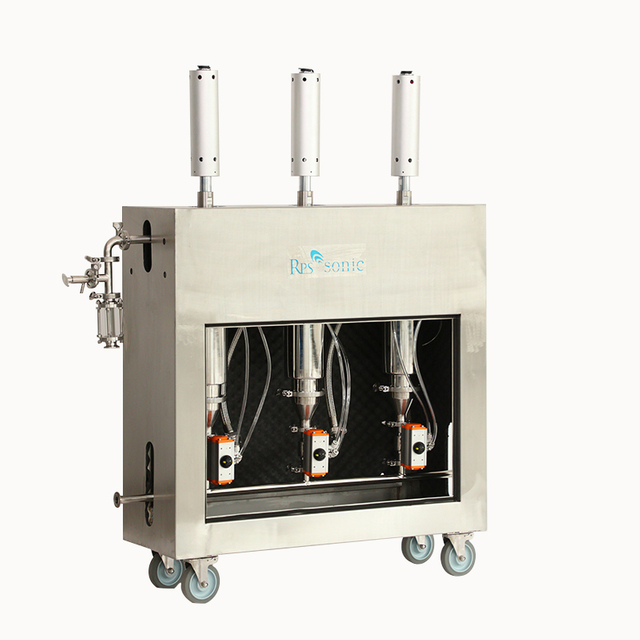
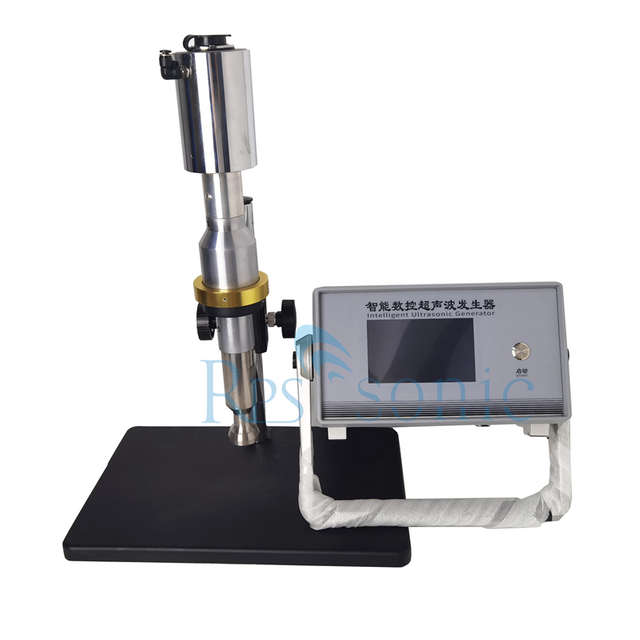
Ultrasonic Sonochemical Reactor: Continuous Flow Homogenizer System for Chemical Processing
Modern chemical and material processing increasingly requires faster reactions, better mass transfer, improved dispersion and more efficient process control. Traditional mechanical stirring and conventional batch reactors may not provide sufficient energy transfer for certain demanding applications.
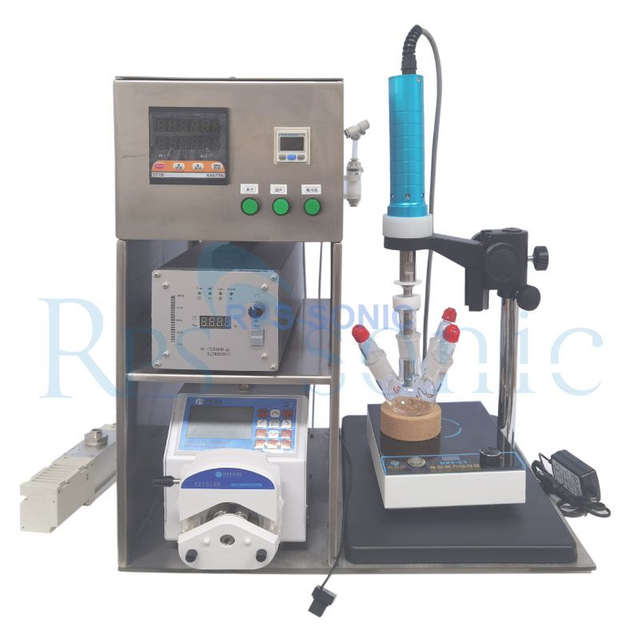
An Ultrasonic Sonochemical Reactor combines high-intensity ultrasonic cavitation with controlled chemical processing to intensify selected physical and chemical processes.
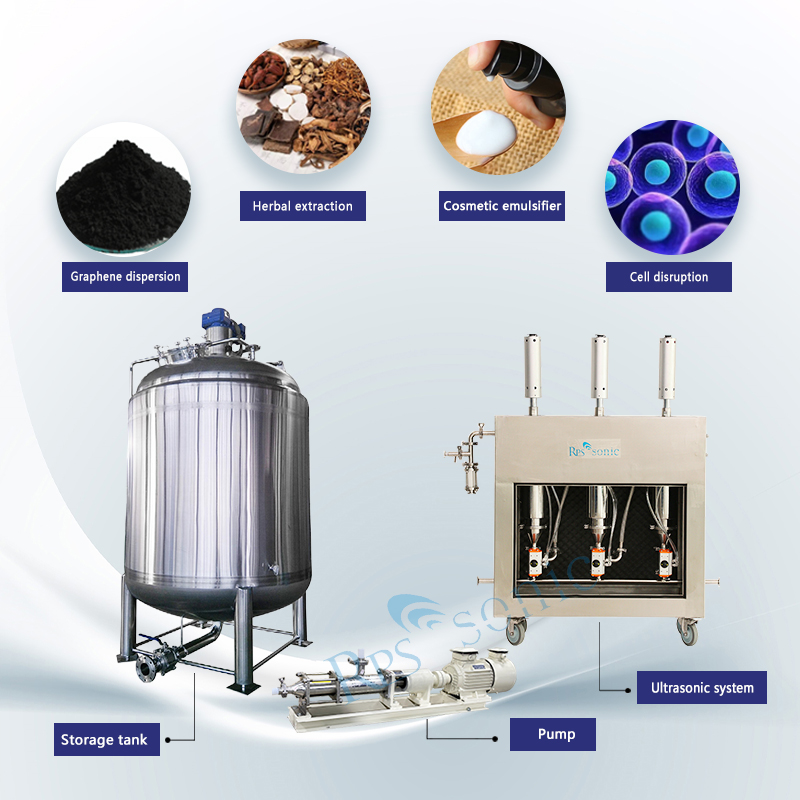
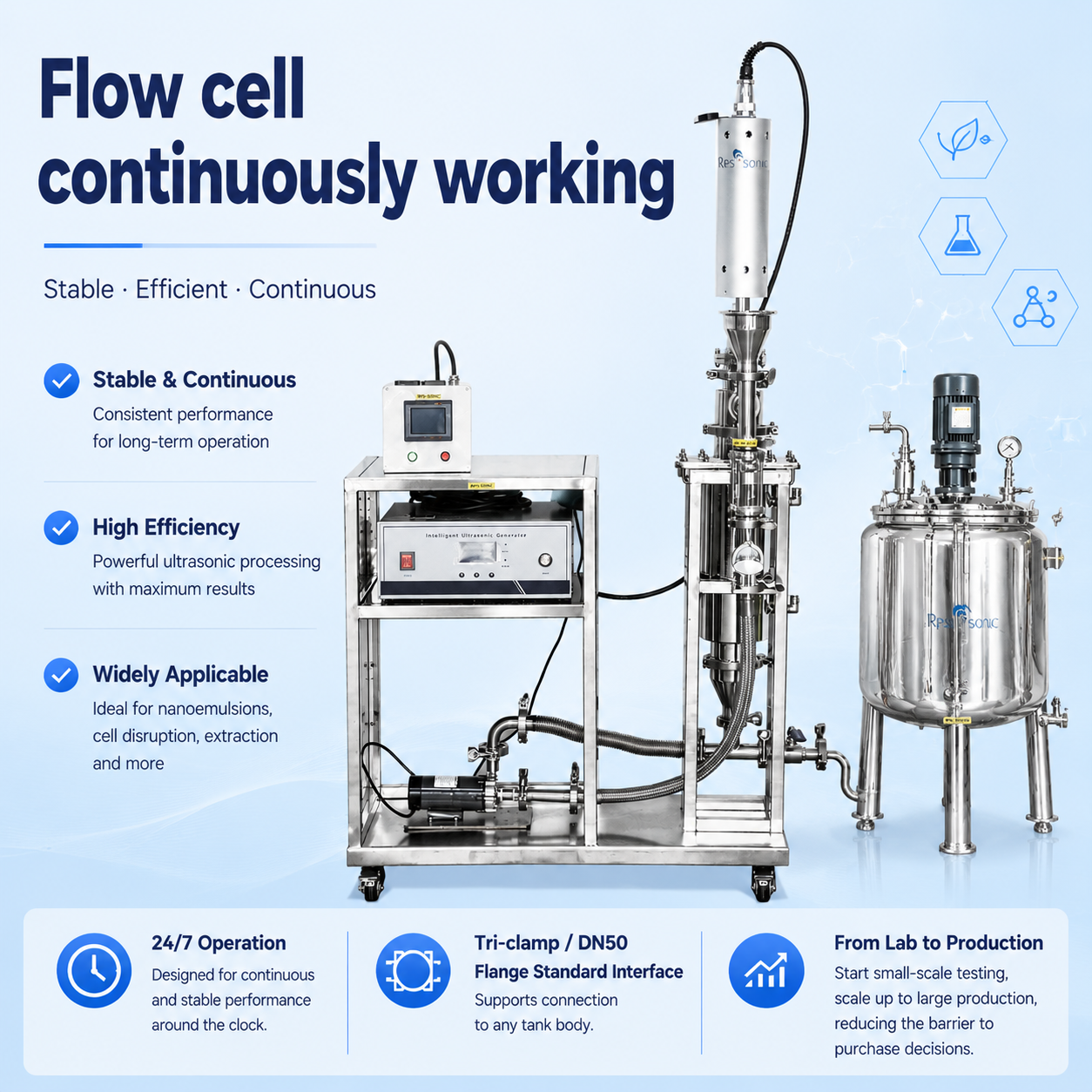
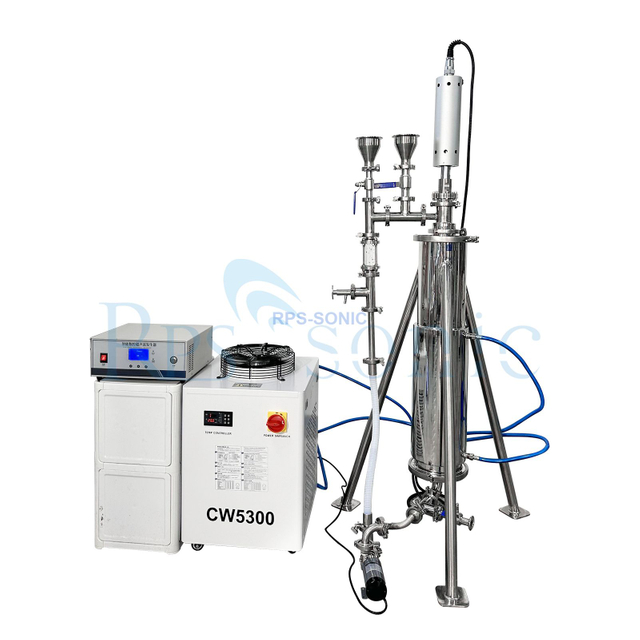
For larger-scale applications, a Continuous Flow Sonochemistry System can continuously circulate process material through an ultrasonic flow cell, providing a controlled high-intensity ultrasonic treatment zone.
This technology is suitable for applications including chemical synthesis, extraction, emulsification, nanoparticle preparation, crystallization, dispersion and other process-intensification applications.
What Is an Ultrasonic Sonochemical Reactor?
An Ultrasonic Sonochemical Reactor is a reactor system that uses high-frequency ultrasonic energy to enhance chemical or physical processes occurring in a liquid medium.
The core principle is acoustic cavitation.
When high-power ultrasound is introduced into a liquid, microscopic cavitation bubbles are generated, grow and subsequently collapse. The collapse of these bubbles creates localized high-energy conditions that can significantly influence the surrounding liquid.
Depending on the process, ultrasonic cavitation can contribute to:
· Enhanced mass transfer
· Improved mixing
· Particle deagglomeration
· Improved solvent penetration
· Emulsification
· Dispersion
· Crystallization
· Improved contact between reactants
· Process intensification
Unlike a conventional agitator, ultrasonic energy can generate intense microscopic mixing and cavitation directly within the liquid.
What Is a Continuous Flow Sonochemistry System?
A Continuous Flow Sonochemistry System is an ultrasonic reactor designed for continuous or recirculating processing.
Instead of placing an ultrasonic probe only inside a large batch tank, the process liquid is pumped through a specially designed Ultrasonic Flow Cell.
A typical configuration is:
Process Tank
↓
Circulation Pump
↓
Ultrasonic Sonochemical Reactor / Flow Cell
↓
Cooling or Heating System
↓
Return to Tank
The material can pass through the ultrasonic reactor repeatedly until the required processing result is achieved.
For continuous production, the system can also be configured so that material enters and exits the ultrasonic reactor continuously.
The system normally consists of several key components:
1. Ultrasonic Generator
The ultrasonic generator supplies controlled high-frequency electrical energy to the ultrasonic transducer.
Industrial systems can be equipped with adjustable ultrasonic power and automatic frequency tracking to maintain stable operation.
2. Ultrasonic Transducer
The transducer converts electrical energy into mechanical ultrasonic vibration.
For industrial liquid processing, piezoelectric ultrasonic transducers are commonly used.
3. Titanium Sonotrode
The sonotrode transfers ultrasonic vibration into the process liquid.
Titanium-alloy sonotrodes are widely used for demanding industrial applications because of their mechanical strength, fatigue resistance and suitability for ultrasonic vibration.
4. Ultrasonic Flow Cell
The flow cell creates a defined ultrasonic processing zone.
Its geometry can be customized according to:
· Flow rate
· Liquid viscosity
· Solid concentration
· Ultrasonic power
· Number of transducers
· Processing pressure
· Required residence time
5. Pump and Circulation System
The circulation pump controls the movement of material through the ultrasonic reactor.
Pump selection should consider viscosity, temperature, particle size, solids concentration and required flow rate.
6. Temperature Control
High-intensity ultrasound can generate heat.
For temperature-sensitive processes, a heat exchanger, chiller or jacketed tank can be integrated into the system.
Why Use Ultrasonic Sonochemistry?
Ultrasonic energy can provide several process-intensification effects that are difficult to achieve using mechanical agitation alone.
Enhanced Mass Transfer
Acoustic cavitation and acoustic streaming can improve contact between different phases.
This can benefit processes involving:
· Solid-liquid extraction
· Liquid-liquid reactions
· Dissolution
· Heterogeneous reactions
· Catalyst systems
Improved Particle Dispersion
Ultrasonic cavitation can help break down particle agglomerates and improve the dispersion of powders in liquids.
Potential applications include:
· Nanomaterials
· Pigments
· Ceramic slurries
· Metal oxides
· Carbon materials
Emulsification
High-intensity ultrasound can reduce droplet size and improve the dispersion of immiscible liquids.
This makes ultrasonic reactors useful for certain:
· Cosmetic formulations
· Pharmaceutical formulations
· Food formulations
· Chemical emulsions
Actual droplet size and stability depend on formulation and processing conditions.
Enhanced Extraction
Ultrasonic cavitation can help disrupt plant and biological structures and improve solvent penetration.
Potential applications include extraction from:
· Herbs
· Mushrooms
· Algae
· Roots
· Seeds
· Botanical materials