What Is Ultrasonic Diesel Emulsification? The Principle And Application of Ultrasonic Diesel-water Emulsification Technology
Diesel and water are immiscible liquids; if water is simply added to diesel, the mixture will typically separate into distinct layers upon standing. Therefore, to uniformly disperse water within diesel and create a stable diesel-water emulsion, methods such as the use of emulsifiers, mechanical shearing, or ultrasonic technology are required.
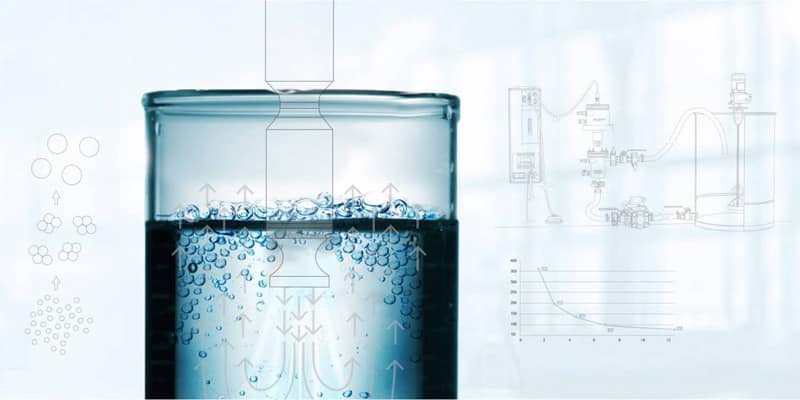
**Ultrasonic diesel emulsification is a technique that utilizes acoustic cavitation**—generated by high-intensity ultrasonic waves—to facilitate the mixing, dispersion, and emulsification of diesel and water.
The application of ultrasonic waves breaks the dispersed-phase liquid into finer droplets and promotes thorough contact between the diesel and water, resulting in a more uniform emulsion system.
What is diesel emulsification?
Diesel emulsification generally refers to the process of mixing diesel with a specific proportion of water and a suitable emulsification system, causing one liquid to disperse within the other in the form of tiny droplets.
Depending on the system structure, different types of emulsions can be formed.
Oil-in-water (O/W) emulsion
Water is the continuous phase, and diesel is dispersed in the water as tiny oil droplets.
Water-in-oil (W/O) emulsion
Diesel is the continuous phase, and water is dispersed in the diesel as tiny water droplets.
For diesel fuel applications, the focus is usually on water-in-oil (W/O) emulsions, where water is dispersed within the diesel.
The final structure of the emulsion is influenced by various factors, such as diesel properties, water content, emulsifier type, ultrasonic parameters, temperature, and shear conditions.
How does ultrasound emulsify diesel and water?
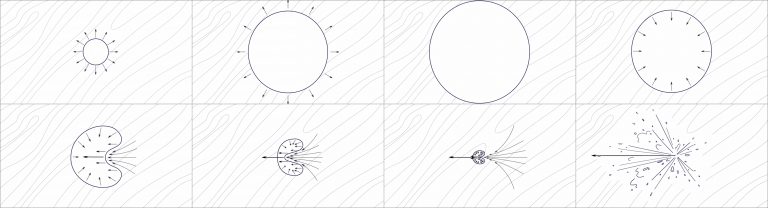
The core principle behind ultrasonic diesel emulsification is acoustic cavitation.
When high-power ultrasound enters the liquid, a large number of tiny cavitation bubbles form within it.
Under the influence of the ultrasonic wave's periodic pressure, these bubbles undergo a continuous cycle of:
Formation → Growth → Collapse
The rapid collapse of cavitation bubbles generates effects such as localized high-speed micro-jets, intense liquid agitation, and acoustic streaming.
These actions significantly enhance microscopic mixing between the liquids and promote the breakup of larger droplets.
In simple terms:
Diesel + Water
↓
Ultrasonic cavitation
↓
Intense microscopic agitation
↓
Droplet breakup and dispersion
↓
Formation of finer dispersed droplets
↓
Diesel-water emulsion
The Process of Ultrasonic Diesel Emulsification
A typical ultrasonic diesel emulsification system can utilize a recirculation configuration:
Diesel + Water + Emulsification System
↓
Mixing Tank
↓
Circulation Pump
↓
Ultrasonic Emulsification Reaction Chamber
↓
High-Intensity Ultrasonic Treatment
↓
Emulsion Returned to Storage Tank
↓
Recirculation/Processing Loop
For continuous production, the process can also be designed as follows:
Raw Materials → Mixing → Ultrasonic Flow-through Emulsification Chamber → In-line Monitoring → Finished Product
This method is particularly suitable for industrial applications requiring continuous production.
How does ultrasonic diesel emulsification compare to traditional stirring?
Traditional mechanical stirring relies primarily on impellers to generate macroscopic fluid flow.
While it can achieve preliminary mixing of diesel and water, forming very fine droplets requires high shear intensity and prolonged processing times.
Ultrasonic processing, conversely, utilizes the micro-scale disturbances and localized high-shear effects generated by acoustic cavitation to further break down and disperse the droplets.
Therefore, ultrasonic processing and mechanical stirring can effectively complement each other.
A typical industrial approach involves:
Mechanical Stirring → Preliminary Mixing
Ultrasonic Processing → Droplet Refinement and Enhanced Dispersion
This combination is generally easier to implement at an industrial scale than relying solely on ultrasonic treatment for the entire volume of liquid.
Key Advantages of Ultrasonic Diesel Emulsification
1. Enhanced Liquid Mixing
The acoustic streaming and cavitation effects generated by ultrasound enhance micro-scale contact between the diesel and water.
2. Facilitates Droplet Refinement
Appropriate ultrasonic parameters promote the breakdown of larger droplets into smaller ones.
Smaller droplet sizes generally result in a larger interfacial surface area.
3. Controllable Processing Time
The emulsification process can be optimized by adjusting:
• Ultrasonic power
• Amplitude
• Flow rate
• Number of circulation cycles
• Temperature
4. Suitable for Continuous Recirculation Production
Flow-through ultrasonic reaction chambers allow ultrasonic emulsification technology to be integrated into continuous recirculation production systems.
5. Compatible with Mechanical Stirring
Ultrasonic processing does not necessarily need to completely replace mechanical stirring. In industrial applications, the two can respectively handle:
Macro-mixing + Micro-emulsification
...thereby forming a combined emulsification system.
In which fields can ultrasonic diesel emulsification be applied?
Ultrasonic emulsification technology can be used to research and develop various fuel emulsion systems, such as:
·Diesel-water emulsions
·Biodiesel-water emulsions
·Fuel oil-water emulsions
·Vegetable oil-based fuel emulsions
·Other oil-water emulsion systems
It should be noted that determining whether a specific fuel system is suitable for an engine or combustion equipment requires comprehensive testing regarding combustion performance, material compatibility, safety, and emissions.
Ultrasonic emulsification equipment alone does not guarantee that the final fuel can be directly used in a specific engine.
The core value of ultrasonic diesel emulsification
The essence of ultrasonic diesel emulsification is not merely "mixing diesel and water together," but rather utilizing the high-intensity micro-effects generated by acoustic cavitation to promote droplet breakup and dispersion.
For industrial applications, what truly matters is establishing a complete process system comprising:
Formulation + Pre-mixing + Ultrasonic treatment + Recirculation + Temperature control + Stability testing
By properly designing parameters such as ultrasonic power, amplitude, flow rate, reaction chamber geometry, and number of recirculation cycles, specific emulsification processes can be developed for different diesel-water systems.
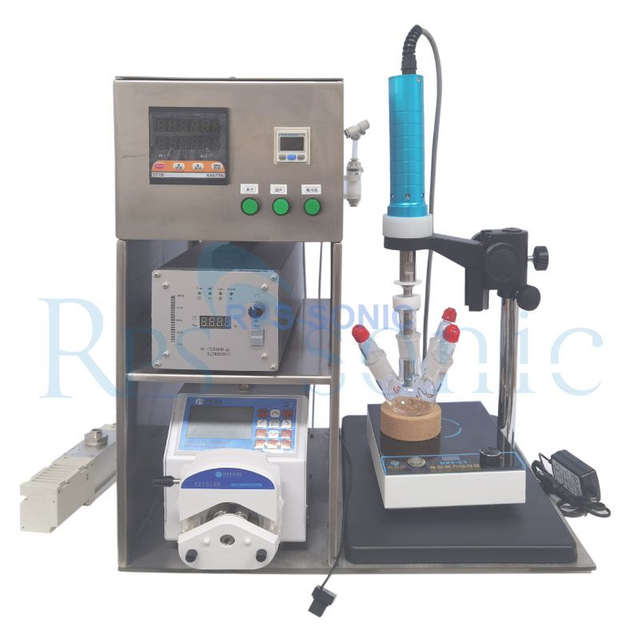
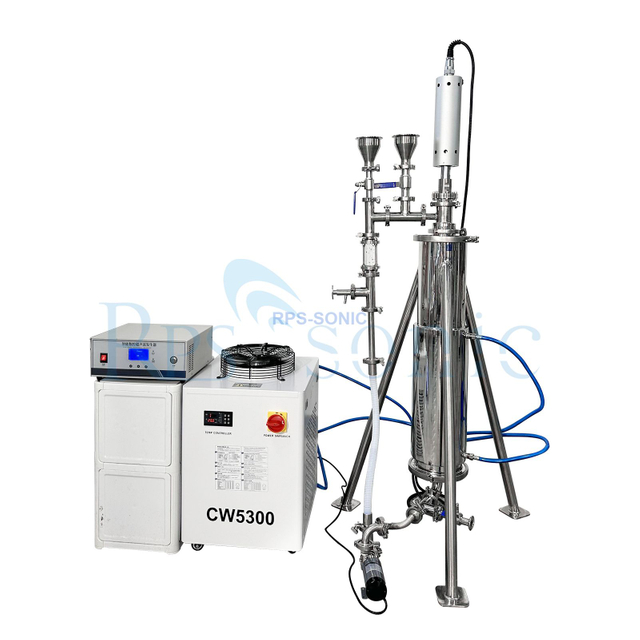
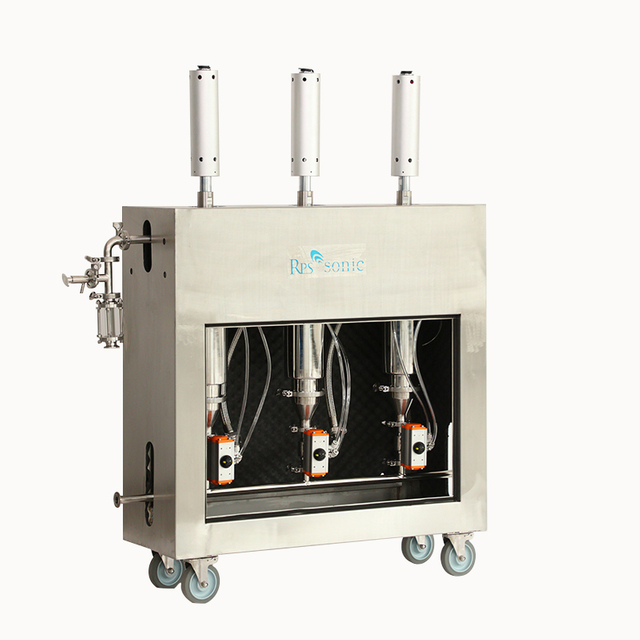
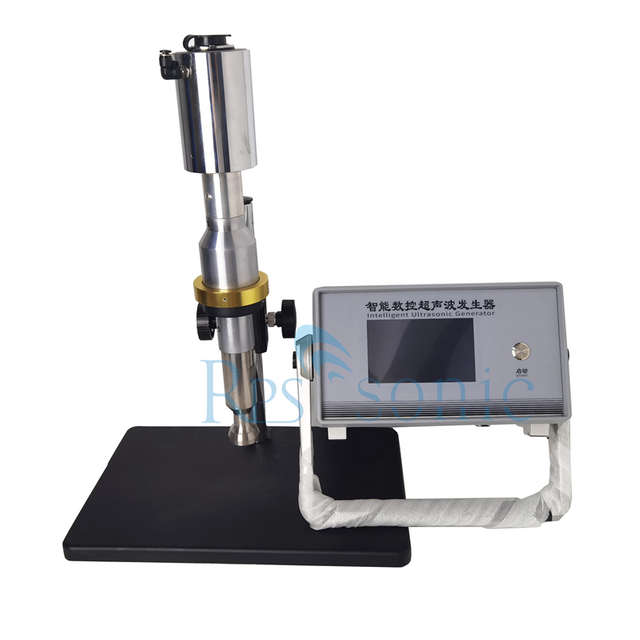
Depending on the scale—laboratory R&D, pilot-scale production, or industrial continuous production—ultrasonic probe systems, ultrasonic recirculation systems, or continuous-flow ultrasonic emulsification systems can be employed.
The final equipment design should be based on factors such as the specific type of diesel, water content, emulsifier system, target droplet size, production capacity, and stability requirements, with optimal parameters determined through testing with actual materials.