Robotic Ultrasonic Cutting Knife for HDPE, PVC,ABS and Engineering Plastics
As manufacturers move toward automated production, robotic cutting systems are becoming increasingly important for processing complex plastic components. However, conventional mechanical cutting tools can encounter problems such as high cutting resistance, burrs, material deformation, tool wear, and inconsistent cutting quality.
A robot-mounted ultrasonic cutting knife offers an alternative solution for automated cutting of engineering plastics and thermoplastic materials such as HDPE, PVC, ABS, PP, PE and similar materials.
By combining high-frequency ultrasonic vibration with a robotic arm, the system can provide precise, flexible and repeatable cutting along complex 3D paths.
How Does a Robotic Ultrasonic Cutting Knife Work?
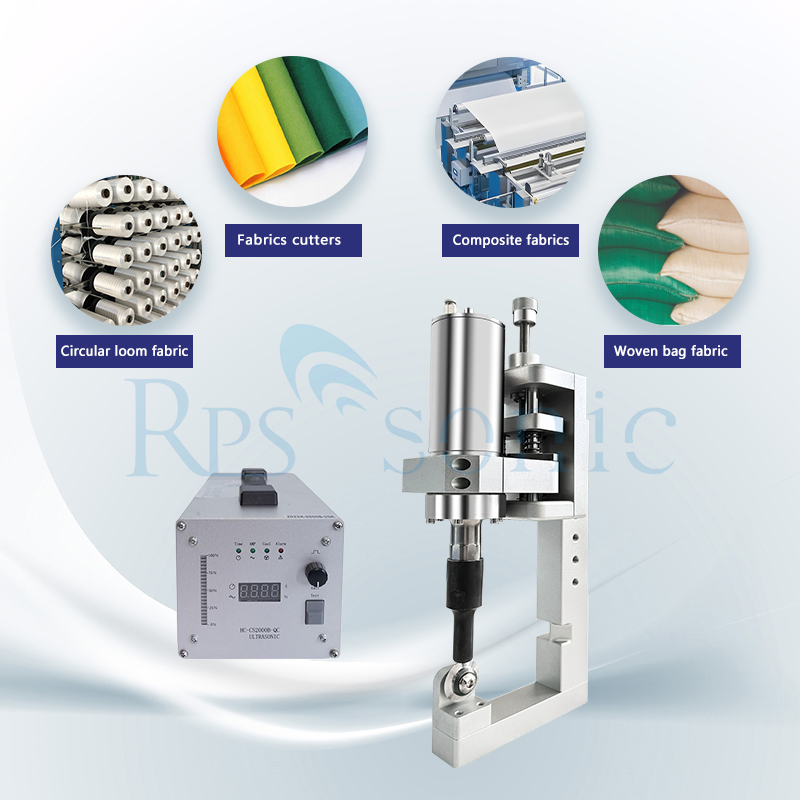
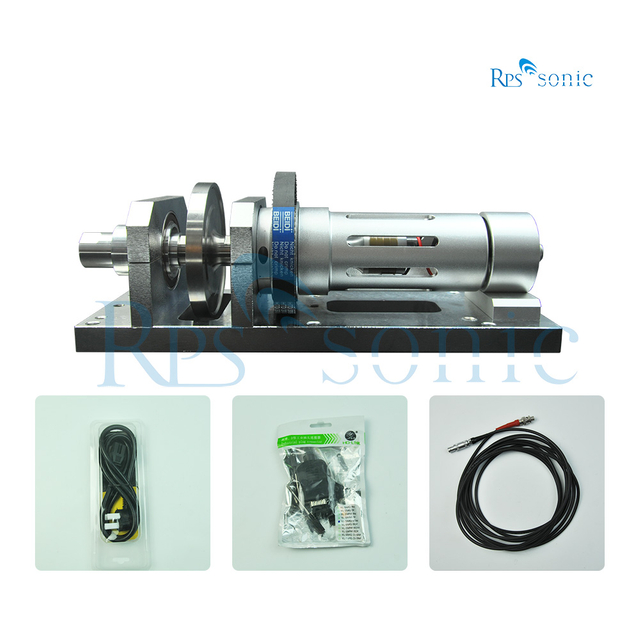
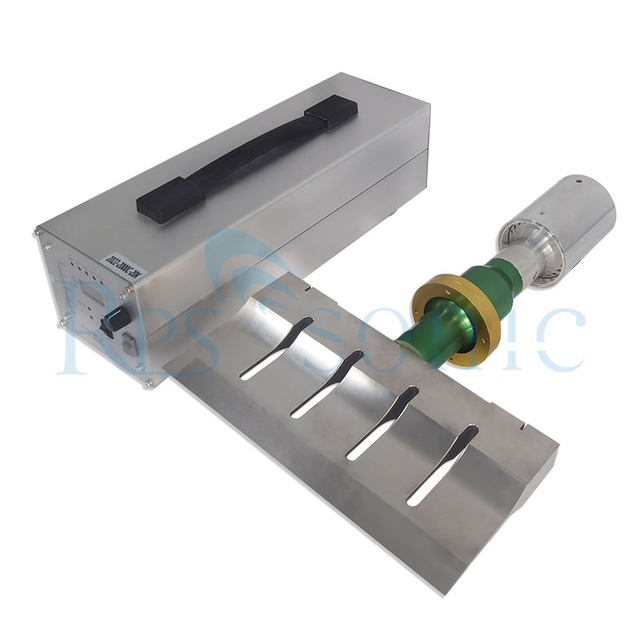
A typical robotic ultrasonic cutting system consists of an ultrasonic generator, ultrasonic transducer, titanium alloy cutting blade and robotic arm.
The ultrasonic generator converts electrical energy into high-frequency electrical signals. The transducer then converts these signals into mechanical vibration, causing the cutting blade to vibrate at ultrasonic frequency.
During cutting, the vibrating blade can reduce friction and cutting resistance between the tool and the material. This allows the robot to follow programmed cutting paths while maintaining relatively stable cutting performance.
The ultrasonic cutting head can be integrated directly onto a 6-axis industrial robot or other automated positioning system, making it suitable for applications where conventional fixed cutting machines cannot easily reach complex surfaces.
Why Combine Ultrasonic Cutting with a Robot?
The biggest advantage of the system is not only the ultrasonic knife itself, but the combination of ultrasonic technology + robotic flexibility.
1. 3D Cutting Capability
A robotic arm can move the ultrasonic cutting head along multiple axes.
This allows the system to process:
· Curved surfaces
· Irregular contours
· Complex 3D components
· Molded plastic parts
· Automotive components
· Large workpieces
Unlike conventional fixed-axis cutting machines, the robot can approach the workpiece from different directions.
2. Reduced Cutting Resistance
High-frequency blade vibration can reduce friction and resistance during the cutting process.
This can make it easier to process certain thermoplastic materials and may help reduce deformation and edge damage.
3. Cleaner Cutting Edges
For suitable materials and properly optimized parameters, ultrasonic vibration can help achieve cleaner cuts with less burr formation.
This is particularly valuable when the cutting edge will remain visible or requires limited secondary finishing.
4. Flexible Production
The cutting path can be controlled through the robot's programming system.
When changing products, manufacturers can modify the cutting program rather than redesigning an entire mechanical cutting structure.
This makes robotic ultrasonic cutting particularly suitable for multi-product and customized production.
5. Integration with Automated Production Lines
The ultrasonic cutting head can be integrated with:
· 6-axis robots
· Vision systems
· Conveyor systems
· Automatic loading/unloading
· CAD/CAM software
· PLC control systems
· Inspection systems
The complete system can therefore become part of a highly automated production line.
Typical Applications
Robotic ultrasonic cutting technology can be considered for a wide range of plastic and polymer processing applications.
Typical applications include:
Automotive Industry
· Interior plastic components
· Instrument panels
· Door panels
· Trim components
· Wheel arch components
· Plastic molded parts
Electrical & Electronics
· ABS housings
· PVC components
· Plastic enclosures
· Cable-related components
· Electronic device parts
Industrial Plastics
· Plastic sheets
· Profiles
· Molded components
· Thermoplastic parts
· Customized plastic products
Consumer Products
· Appliance components
· Plastic housings
· Household products
· Molded plastic parts
Customized Ultrasonic Cutting Heads
Different materials and applications require different cutting solutions.
The ultrasonic cutting head can be customized according to:
· Material type
· Material thickness
· Cutting speed
· Cutting geometry
· Robot payload
· Required cutting force
· Blade length
· Blade shape
· Ultrasonic frequency
· Ultrasonic amplitude
Titanium alloy blades and sonotrodes can be used for demanding industrial applications because of their combination of strength, fatigue resistance and suitability for ultrasonic vibration.
The cutting head can also be designed with a compact structure to minimize the payload added to the robotic arm.
Build a Robotic Ultrasonic Cutting Solution
A robotic ultrasonic cutting knife is more than a simple replacement for a conventional blade. It is a flexible processing module that combines high-frequency ultrasonic vibration, precision cutting and robotic motion control.
For manufacturers working with HDPE, PVC, ABS, PP, PE and other thermoplastic materials, the technology provides a potential solution for automated trimming, contour cutting and complex 3D cutting.
If you are developing a robotic cutting application, the ultrasonic system can be customized according to your material, thickness, cutting speed, blade geometry and robot model.
Send us your material samples, drawings or cutting requirements, and we can evaluate a suitable ultrasonic generator, transducer, sonotrode and robotic cutting head for your application.