  +86-15658151051                            sales@xingultrasonic.com 
Product Details
Home / Products / Ultrasonic Sonochemistry / Customized 3000W Ultrasonic Homogenizer Flow Cell in Series for Continuous Biodiesel Production Anti-explosion

Product Category

News

loading

Share to:
facebook sharing button
twitter sharing button
line sharing button
wechat sharing button
linkedin sharing button
pinterest sharing button
whatsapp sharing button
kakao sharing button
snapchat sharing button
telegram sharing button
sharethis sharing button

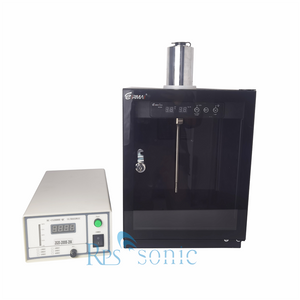
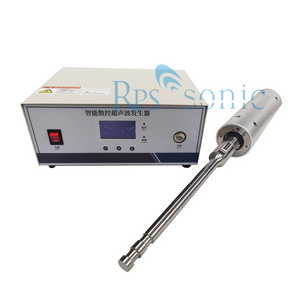
Customized 3000W Ultrasonic Homogenizer Flow Cell in Series for Continuous Biodiesel Production Anti-explosion

The ultrasonic extractors (often called ultrasonic emulsifiers) are the latest scientific devices being used to obtain CBD from hemp.
Frequency:
Power:
Material:
Generator :
Availability:
Quantity:
Customized 3000W Ultrasonic Homogenizer Flow Cell in Series for Continuous Biodiesel Production
  • RPS-SONO20

  • Rps-sonic

  • RPS-SONO20


 Customized 3000W Ultrasonic Homogenizer Flow Cell in Series for Continuous Biodiesel Production


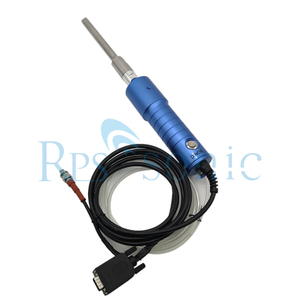
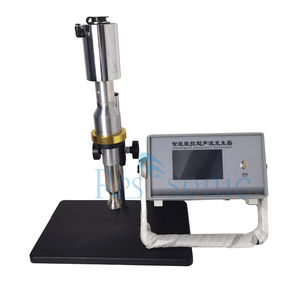
A homogenizer is a class of mixing devices, which is designed to break particles, both solid and liquid, into a uniform mixture. Homogenizers are available as laboratory, bench-top and industrial equipment used for various applications in research and industry. Typical application of homogenizer include the mixing and disintegration of various materials, including particles, pigments, chemicals, plants, food, cells, tissues, amongst others.


Product Description

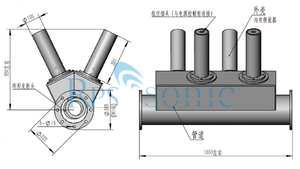
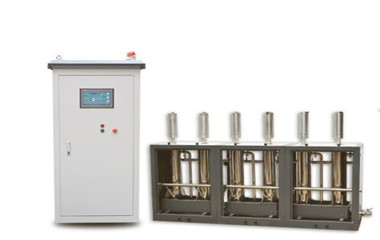
The customized 3000W ultrasonic homogenizer flow cell system is designed for continuous biodiesel production, providing efficient ultrasonic mixing and emulsification of oil and alcohol during the transesterification process.

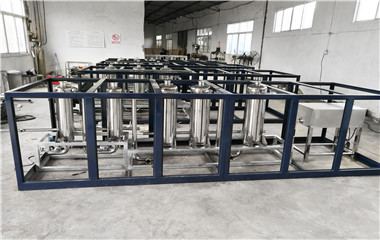
By integrating multiple ultrasonic flow cells in series, the system enables continuous material processing and enhances the interaction between immiscible oil and alcohol phases. The ultrasonic cavitation effect generates intense local shear forces, promoting uniform mixing, improving mass transfer, and potentially accelerating the transesterification reaction.

The system features a customized stainless steel flow cell structure, high-power ultrasonic generators, and a modular design that allows flexible configuration according to production capacity and process requirements. It is suitable for biodiesel pilot production, process development, and industrial continuous processing.


Parameter


Model

SONO20-1000

SONO20-2000

SONO20-3000

Frequency

20±0.5 KHz

20±0.5 KHz

20±0.5 KHz

Power

1000 W

2000 W

3000 W

Voltage

220/110V

220/110V

220/110V

Temperature

200 ℃

200 ℃

200 ℃

Pressure

35 MPa

35 MPa

35 MPa

Intensity of sound

20 W/cm²

40 W/cm²

60 W/cm²

Max Capacity

10 L/Min

15 L/Min

20 L/Min

Tip Head Material

Titanium Alloy

Titanium Alloy

Titanium Alloy


Key Advantages

1. Enhanced Mixing and Emulsification
Ultrasonic cavitation breaks down oil and alcohol into finer droplets, increasing the interfacial contact area and improving mass transfer between the two phases.

2. Continuous Processing
Multiple flow cells connected in series allow continuous material treatment, making the system suitable for integration into existing biodiesel production lines.

3. Improved Reaction Efficiency
Enhanced mixing and mass transfer can accelerate the transesterification reaction, potentially reducing reaction time and improving production efficiency.

4. Modular and Customized Design
The number of ultrasonic flow cells, reactor dimensions, and ultrasonic power configuration can be customized to meet different flow rates and production requirements.

5. Reduced Dependence on Mechanical Mixing
Ultrasonic cavitation provides intensive local mixing, potentially reducing the need for high-speed mechanical agitation and simplifying the mixing process.

6. Scalable Production
The modular series configuration allows the system to be expanded according to production requirements, supporting the transition from laboratory testing to pilot-scale and industrial continuous production.
6366508388792824693205


Suggested Product Highlights

  • 3000W high-power ultrasonic homogenizer

  • Customized flow cell reactor in series

  • Continuous biodiesel production

  • Efficient oil-alcohol mixing and emulsification

  • Enhanced mass transfer for transesterification

  • Modular design for flexible capacity expansion

  • Industrial stainless steel construction


Advantages of RPS-SONIC ultrasonic devices


• Easy and flexible handling
• Time saving
• Powerful
• Precisely controllable
• Reproducible results
• Eco-friendly and energy efficient
• Extremely durable and long lasting
• Wide product range
• Wide range of accessories for a variety of applications
• Production, service and repair in germany
• Specialist for ultrasonic technology


Famous customers


微信图片_20230628133638


微信图片_20230628133654


微信图片_20230628133702


微信图片_20230628133706


微信图片_20230628133711


微信图片_20230628133714


Sonochemical reactions

Three classes of sonochemical reactions exist: homogeneous sonochemistry of liquids, heterogeneous sonochemistry of liquid-liquid or solid–liquid systems, and, overlapping with the aforementioned, sonocatalysis (the catalysis or increasing the rate of a chemical reaction with ultrasound). Sonoluminescence is a consequence of the same cavitation phenomena that is responsible for homogeneous sonochemistry. The chemical enhancement of reactions by ultrasound has been explored and has beneficial applications in mixed phase synthesis, materials chemistry, and biomedical uses. Because cavitation can only occur in liquids, chemical reactions are not seen in the ultrasonic irradiation of solids or solid–gas systems.

For example, in chemical kinetics, it has been observed that ultrasound can greatly enhance chemical reactivity in a number of systems by as much as a million-fold;[16] effectively acting to activate heterogeneous catalysts. In addition, in reactions at liquid-solid interfaces, ultrasound breaks up the solid pieces and exposes active clean surfaces through microjet pitting from cavitation near the surfaces and from fragmentation of solids by cavitation collapse nearby. This gives the solid reactant a larger surface area of active surfaces for the reaction to proceed over, increasing the observed rate of reaction. 

While the application of ultrasound often generates mixtures of products, a paper published in 2007 in the journal Nature described the use of ultrasound to selectively affect a certain cyclobutane ring-opening reaction. Atul Kumar has reported multicomponent reaction Hantzsch ester synthesis in Aqueous Micelles using ultrasound.

Some water pollutants, especially chlorinated organic compounds, can be destroyed sonochemically.

Sonochemistry can be performed by using a bath (usually used for ultrasonic cleaning) or with a high power probe, called an ultrasonic horn, which funnels and couples a piezoelectric element's energy int


See also

Ultrasound

Sonication

Ultrasonics

ultrasonic homogenizer

homogenizer

Homogenization (chemistry)

Sonoelectrochemistry

Kenneth S. Suslick


1. Can your sonochemistry horn be used in an acid (alkali) environment?

Under the acid (alkali) environment, the horn need to be customized according to the actual working conditions of customers.


2. Can the ultrasonic sonochemistry work continuously?

Yes , it can work 24hours continue.


3. What kind of material is the horn?

Titanium alloy, we also  customized ceramic horn for customer before.


4. What’s the time of delivery

 For Conventional horn, 3 days, for customized horn 7 work days.


5. Does ultrasonic extraction also require the addition of a chemical catalyst?

No , but some time need Mechanical stirring.


6. What’s the advantage of ultrasonic extraction?

Decline the extraction time, and increase the extraction ratio.


7. What’s the Processing capacity of one set ultrasonic extraction equipment?

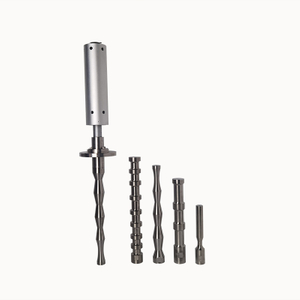
Different horn different Processing capacity, for 2000W Nine-section whip horn can dealing 2L~10L/min.


8. Are you manufacturer?

We only manufacturer the transducer and generator our-self, for the horn , we design and buy raw material ,and process by other companies.


9. What’s the warranty of your sonochemistry equipment?

All equipment one year warranty.


10. Do you have Foreign agent?

No, our price already very low for everyone, no agent. We have OEM customer in USA and Germany.


11. Is it difficult to install the ultrasonic sonochemistry equipment?

No , it is easy , we will share Installation diagram, also can take install video for you.


Previous: 
Next: 
Get in touch

CATEGORIES

NAVIGATION

GET IN TOUCH

 Ms. Yvonne
  sales@xingultrasonic.com   
  +86 571 63481280

  +86 15658151051
   1st Building NO.608 Road ,FuYang, Hangzhou, Zhejiang,China

QR-CODE

© RPS-SONIC |  Privacy Policy