Application of Ultrasonic Technology in The Extraction of Hericium Erinaceus (Lion’s Mane Mushroom)
*Hericium erinaceus*, commonly known as Lion’s Mane mushroom, is an edible and medicinal fungus containing compounds such as polysaccharides, phenolics, and characteristic aromatic substances. With the growth of the functional food and natural ingredient markets, optimizing extraction processes—specifically by increasing the yield of active components, reducing solvent consumption, and maintaining product quality—has become a key focus.
**Ultrasound-Assisted Extraction (UAE)** serves as an intensification method for traditional techniques like maceration or hot-water extraction. Through phenomena such as cavitation and localized shear forces, ultrasound facilitates the penetration of solvents into the raw material’s tissue and accelerates the release of intracellular contents. This can shorten extraction times and potentially enhance the yield of target compounds. The actual efficacy, however, depends on factors such as the specific raw material, solvent, temperature, and equipment parameters.
I. How Does Ultrasound Facilitate the Extraction of *Hericium erinaceus*?
As ultrasonic waves propagate through a liquid, they induce periodic pressure fluctuations. When the acoustic pressure reaches a certain threshold, tiny bubbles form and subsequently collapse—a process known as cavitation. Cavitation, along with the resulting micro-jets, localized turbulence, and shear forces, helps to disrupt or loosen the tissue structure of the raw material, thereby improving solid-liquid contact.
In the context of *Hericium erinaceus*, ultrasound-assisted extraction may offer the following benefits:
**Promoting Tissue Disruption and Mass Transfer:** It facilitates the penetration of solvents into the fungal tissue, shortening the distance that target compounds must travel to migrate from the solid matrix into the liquid phase.
**Improving Solid-Liquid Contact:** It reduces localized agglomeration and mass-transfer resistance, leading to a more uniform extraction process.
**Reducing Processing Time:** Under optimal parameters, it can shorten the time required compared to traditional, long-duration maceration methods.
**Enabling Milder Process Conditions:** It can be combined with temperature control to intensify extraction while avoiding excessive heat.
It should be noted that ultrasound is not a universal solution that automatically increases the content of every component. Excessive power, temperature, or processing time can lead to alterations in target components, oxidation, or increased energy consumption; therefore, the optimal process window must be determined based on actual analytical results.
II. Target Components for *Hericium erinaceus* (Lion’s Mane) Extraction
The extraction process for *Hericium erinaceus* should be designed according to the specific target product and the required quality parameters. Common objectives include:
1. Extraction of *Hericium erinaceus* Polysaccharides
If the target is water-soluble polysaccharides, an ultrasound-assisted hot-water extraction method—using water as the extraction medium—should be evaluated. Ultrasound can help loosen cell wall structures and improve the contact efficiency between the aqueous phase and the raw material.
During process optimization, factors such as polysaccharide yield, molecular weight distribution, purity, color, and subsequent concentration and drying characteristics should all be considered. Simply pursuing a higher crude extraction yield does not necessarily equate to better final product quality.
2. Extraction of Other Soluble Components
If the target components differ from polysaccharides, the extraction solvent, temperature, and post-processing methods must be adjusted accordingly. Since cavitation behavior and mass transfer efficiency can vary depending on the solvent system, it is advisable to conduct small-scale comparative trials before finalizing a scale-up strategy.
III. Typical Process Workflow
Taking the water extraction of *Hericium erinaceus* as an example, the following workflow may be employed:
Raw material pretreatment → Mixing with water → Ultrasound-assisted extraction → Solid-liquid separation → Filtration or clarification → Concentration → Drying or further formulation processing.
Factors such as raw material particle size, moisture content, solid-to-liquid ratio, initial temperature, and agitation method all influence extraction outcomes. If the raw material consists of large particles or has a high fiber content, it is recommended to improve uniformity through grinding and thorough mixing.
IV. Equipment Selection: Probe-type vs. Continuous-flow Systems
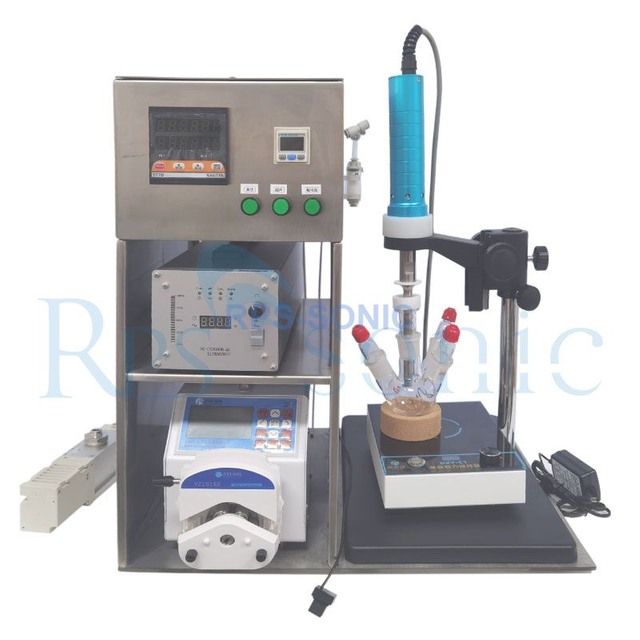
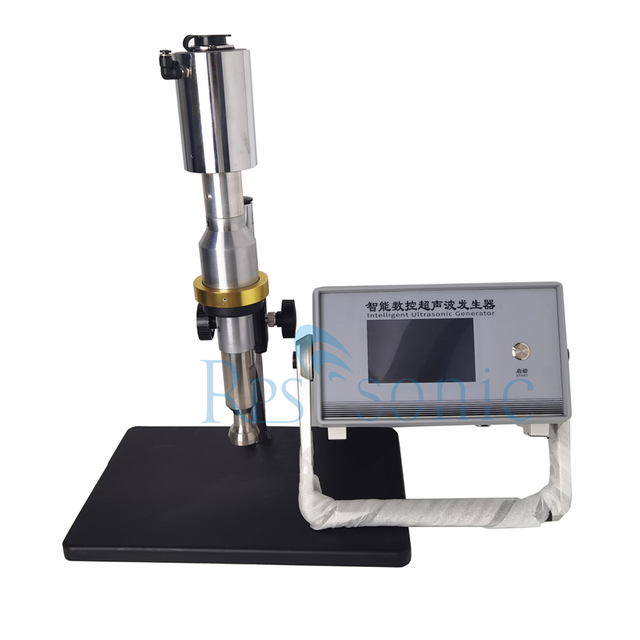
Probe-type Ultrasonic Extraction
In this setup, a probe delivers ultrasonic energy directly into the extraction medium. It is well-suited for laboratory R&D, small-scale trials, and certain batch-processing applications. Its advantage lies in the intuitive adjustment of parameters, facilitating comparative studies on power, duration, and temperature.
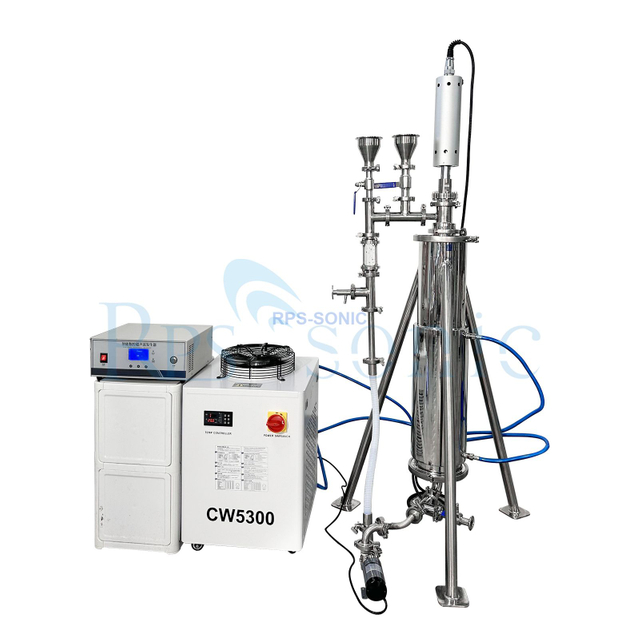
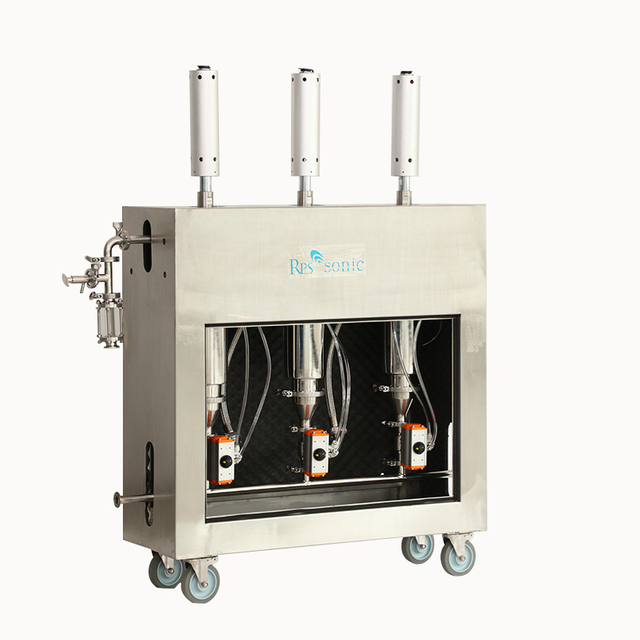
Continuous-flow Ultrasonic Extraction
For larger production scales or processes requiring continuous operation, the slurry can be circulated or processed continuously through an ultrasonic flow cell. This setup facilitates integration with storage tanks, pumps, heat exchangers, and solid-liquid separation equipment; however, the choice of pump and flow-channel configuration must be tailored to the slurry’s viscosity, particle size, and solids content.
When scaling up, one should not rely solely on simple conversions based on equipment power ratings. Instead, the process must be validated by considering effective processing volume, flow rate, temperature rise, treatment duration, and actual extraction outcomes.
Scaling Up from Laboratory-Scale Trials to Production
**Define the Target Product:** Determine whether the output should be a crude *Hericium erinaceus* (lion’s mane mushroom) polysaccharide extract, a standardized extract, or a precursor solution intended for subsequent concentration and spray drying.
**Conduct Laboratory-Scale Screening:** Compare extraction performance across various ultrasonic parameters, solid-to-liquid ratios, and temperatures.
**Monitor Temperature Rise and Uniformity:** Ultrasonic energy is converted into heat; therefore, the temperature during processing must be monitored, with cooling systems or temperature-controlled jackets implemented as necessary.
**Assess Slurry Handling Capacity:** Evaluate whether particles are prone to settling, whether flow channels are susceptible to clogging, and whether the pumps and flow cells are suitable for the specific material being processed.
**Perform Pilot-Scale Validation:** Use actual production-scale batches to verify extraction yield, product consistency, operational stability, and energy consumption per unit of output.
Conclusion
Ultrasonic-assisted extraction offers an effective method for enhancing mass transfer in the extraction of *Hericium erinaceus*. It can be integrated with aqueous extraction, circulation-based processing, and downstream concentration and drying operations. In practical applications, the process should be evaluated holistically—considering the quality of target compounds, batch-to-batch consistency, energy consumption, filtration characteristics, and the feasibility of scaling up—rather than relying exclusively on extraction speed or crude yield.
It is recommended to first establish optimal parameters for the specific raw material and target product through laboratory-scale trials, then select appropriate ultrasonic equipment (such as probe-type or continuous-flow systems), and finally validate the process efficacy using analytical data.