Application And Advantages of Ultrasonication in Vermiculite Powder Dispersion
Vermiculite is a natural layered silicate mineral characterized by a unique lamellar structure, high water-absorption capacity, excellent cation-exchange properties, and superior thermal insulation and fire resistance. Once processed, vermiculite is widely used in applications such as construction materials, thermal insulation, horticultural substrates, environmental adsorbents, coatings, composite materials, and various functional materials.
During the processing of vermiculite powder, achieving thorough dispersion, improving particle uniformity, and enhancing stability within liquid media are key concerns for many manufacturers.
**Ultrasonic dispersion** leverages the cavitation effects, micro-jets, and localized shear forces generated by high-frequency vibrations. This process facilitates the deagglomeration of vermiculite particles and enables the penetration of liquids into the mineral's layered structure, providing an effective method for the wet dispersion and exfoliation of vermiculite powder.
I. Why does vermiculite powder require ultrasonic dispersion?
As a mineral with a layered structure, vermiculite particles are prone to stacking, agglomeration, and mutual adsorption. When dispersed in water or other liquid media—particularly in systems with high solids content—the following issues may arise:
**Particle Agglomeration:** Fine vermiculite particles tend to cluster together, forming larger aggregates.
**Uneven Dispersion:** The powder may be distributed inconsistently throughout the liquid, compromising the quality of the slurry.
**Particle Sedimentation:** Larger particles or aggregates may settle at the bottom of the container.
**Incomplete Exfoliation of the Layered Structure:** Vermiculite platelets may remain tightly stacked, limiting their effective surface area.
**Inconsistent Quality in Downstream Processing:** This can negatively affect the uniformity of coatings, composite materials, and functional slurries.
While traditional mechanical stirring can achieve an initial mix of powder and liquid, it is often insufficient for breaking down aggregates of fine particles or overcoming the forces binding the mineral's layers together.
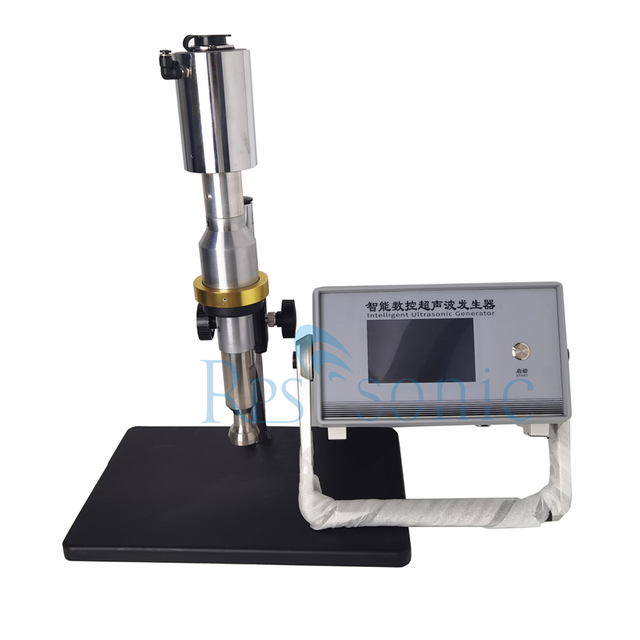
II. How does ultrasonic treatment facilitate the dispersion of vermiculite powder? Ultrasonic dispersion equipment primarily consists of an ultrasonic generator, a transducer, and a titanium alloy ultrasonic probe.
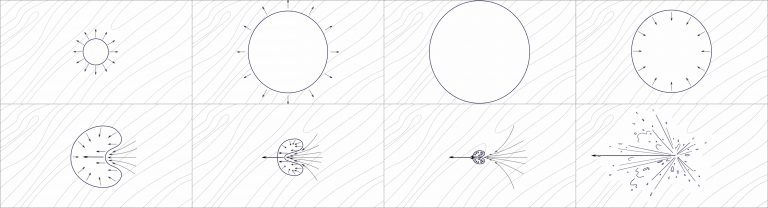
The ultrasonic generator drives the transducer to produce high-frequency mechanical vibrations, which are then transmitted into the liquid via the ultrasonic probe. As ultrasonic waves propagate through the liquid, they induce a cavitation effect.
The rapid formation and collapse of cavitation bubbles generate localized micro-jets, shock waves, and intense shear forces, which facilitate the deagglomeration of vermiculite particle clusters.
The primary effects of ultrasound on vermiculite powder include:
**Promoting deagglomeration:** Helping to break down weak bonds between particles, resulting in a more uniform distribution of the powder.
**Improving particle wetting:** Facilitating the penetration of the liquid into and between the vermiculite particles and their constituent layers.
**Promoting exfoliation:** Assisting in the further exfoliation of layered vermiculite, provided the appropriate liquid medium and ultrasonic conditions are used.
**Enhancing dispersion uniformity:** Reducing the localized clustering of powder within the slurry.
**Increasing effective surface area:** Expanding the layers and breaking down agglomerates, thereby increasing the contact area between the particles and the liquid medium.
It should be noted that while ultrasound can promote the exfoliation of vermiculite layers, this does not mean that all vermiculite can be directly converted into single-layer nanosheets. The degree of exfoliation depends on factors such as the type of raw material, its expansion state, particle size, pre-treatment methods, and the chemical environment of the liquid.
III. Key Advantages of Ultrasonic Dispersion for Vermiculite Powder
1. Effective reduction of powder agglomeration
Vermiculite powder possesses a layered structure, making its particles prone to stacking. The localized mechanical forces generated by ultrasonic cavitation help break apart these agglomerated structures, allowing the particles to disperse more uniformly throughout the liquid.
Compared to conventional mechanical stirring, ultrasound is more effective at breaking down agglomerates of fine or plate-like particles.
2. Promotion of vermiculite layer exfoliation
This represents a significant application of ultrasound in the processing of vermiculite.
Vermiculite is composed of multiple silicate layers. Under appropriate liquid media and processing conditions, the shear forces generated by ultrasound can facilitate the separation of vermiculite layers, resulting in thinner vermiculite flakes.
This holds potential value for the preparation of high-specific-surface-area vermiculite materials, functional fillers, and composite materials.
3. Improving Slurry Uniformity and Stability
Ultrasonic treatment can reduce the degree of agglomeration in vermiculite powder, thereby enhancing the uniformity of the slurry.
When combined with suitable dispersants and mechanical stirring, the distribution of particles within the liquid can be further improved, minimizing localized sedimentation.
4. Enhancing the Processing Quality of Composite Materials
Vermiculite is frequently used as a filler or functional additive in polymers, coatings, construction materials, and functional composites.
If vermiculite powder is not dispersed uniformly, it tends to form localized agglomerates, which can negatively affect the mechanical properties, surface quality, and functional performance of the material.
Ultrasonic-assisted dispersion improves the mixing of vermiculite with a liquid matrix or other components, providing a more uniform raw material system for subsequent processing.
5. Suitability for Various Production Scales
Ultrasonic dispersion equipment can be configured according to specific production requirements:
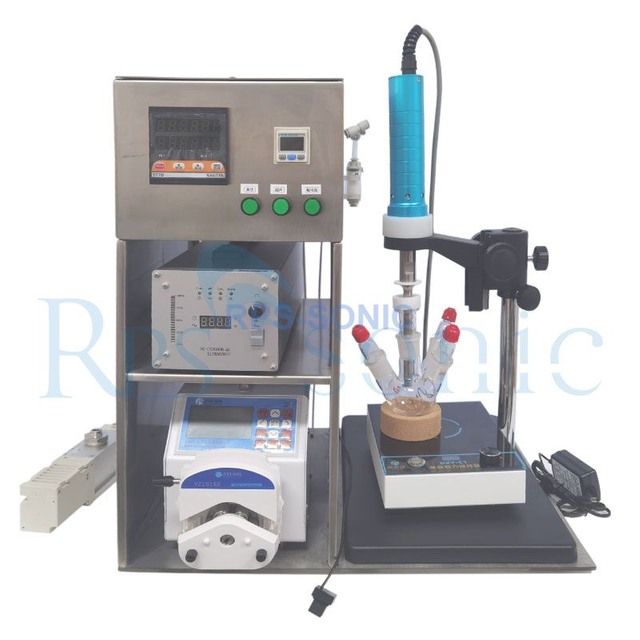
Laboratory scale: For small-batch powder dispersion and the exfoliation of vermiculite layers.
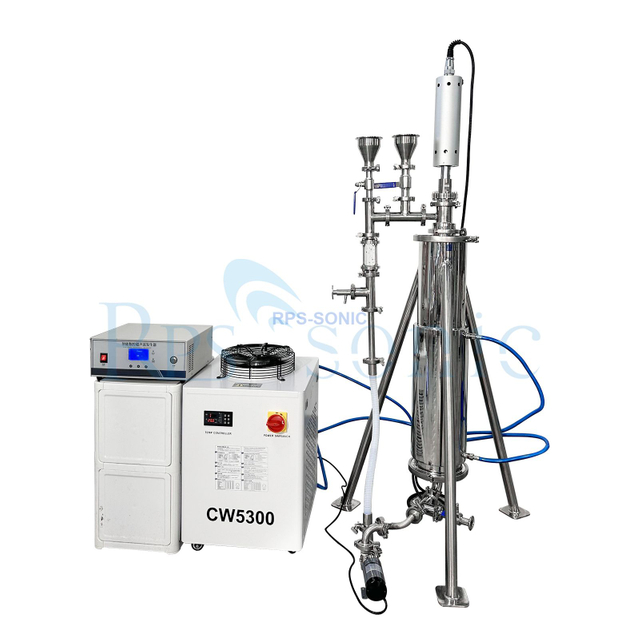
Pilot-scale production: Utilizing batch-type ultrasonic processing and circulating dispersion systems.
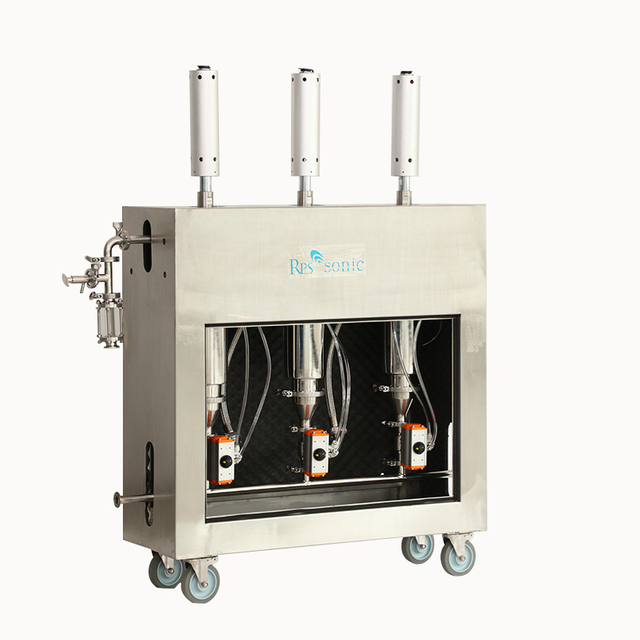
Industrial production: Employing continuous-flow ultrasonic dispersion systems.
IV. Key Application Areas for Ultrasonic Dispersion of Vermiculite Powder
1. Construction and Refractory Materials
Used in the preparation of slurries for vermiculite-based fireproof coatings, thermal insulation coatings, and construction composites, helping to ensure uniform dispersion of the powder within the liquid system.
2. Polymer Composite Materials
Facilitates the dispersion of vermiculite flakes within resins or other liquid media, reducing agglomeration and improving the structural uniformity of the composite material.
3. Environmental Adsorption Materials
Used in the preparation of vermiculite-based adsorbents and functional mineral slurries. While the exfoliation of layers may increase the accessible surface area, the actual adsorption capacity requires experimental verification. 4. R&D of Nanomaterials
Used for the exfoliation of vermiculite lamellae, the preparation of thin flakes, and the development of mineral materials with high specific surface area, providing process support for the creation of novel functional materials.
5. Coatings and Functional Slurries
Enhances the dispersion of vermiculite powder within water-based or other liquid coatings, thereby reducing the impact of large agglomerates on the surface quality of the coating.
Conclusion
Ultrasonic dispersion technology serves as an effective auxiliary processing method for the wet-processing of vermiculite powder. Its primary advantages include:
Effectively promoting the deagglomeration of vermiculite powder clusters;
Improving the uniformity of particle dispersion within liquid media;
Facilitating the exfoliation of vermiculite lamellae under appropriate conditions;
Enhancing the processing quality of slurries used in ceramics, coatings, and composite materials;
Supporting the transition from laboratory-scale R&D to continuous industrial-scale production.
For producers of vermiculite powder, manufacturers of ceramic materials, companies in the environmental materials sector, and R&D institutions focused on functional composite materials, ultrasonic-assisted dispersion represents a process upgrade worthy of evaluation.