What is ultrasonic tinning?Ultrasonic tinning is a kind of welding method that does not use flux. The ultrasonic probe produces cavitation in the molten solder core through mechanical vibration at ultrasonic frequency, and removes the oxide film on the metal surface for smooth and clean tinning. Ult
What's the Principle and theory of ultrasonic plastic welding machine? The principle of ultrasonic plastic welding machine? How does ultrasonic welding work? what's the composition and function of ultrasonic plastic welding machine What's the core parts in ultrasonic plastic welding machine Ultrasonic plastic welding machine models and specifications? What's the Advantages of ultrasonic welding?
The application of ultrasonic in the sewing industry mainly reflects the two major functions of ultrasonic: welding and cutting. In 2019, for masks that are popular all over the world, ultrasound is a household name for applying these two functions to the fullest. The cutting and welding of velvet c
What is ultrasonic tinning?Ultrasonic tinning is a kind of welding method that does not use flux. The ultrasonic probe produces cavitation in the molten solder core through mechanical vibration at ultrasonic frequency, and removes the oxide film on the metal surface for smooth and clean tinning. Ult
Currently, research on the extraction of antioxidants and anti-aging drugs from natural products has attracted widespread attention from domestic and foreign scholars. Considerable research results have been achieved in this field, and based on comprehensive domestic and international research repor
Ultrasonic spray coating system is a technique for forming thin films with specific functions or properties on the surface of optical glass. It utilizes ultrasonic waves to atomize liquid into fine droplets and uniformly spray them onto the surface of optical glass. This article introduces the princ
The application of ultrasonic in the sewing industry mainly reflects the two major functions of ultrasonic: welding and cutting. In 2019, for masks that are popular all over the world, ultrasound is a household name for applying these two functions to the fullest. The cutting and welding of velvet c
Currently, research on the extraction of antioxidants and anti-aging drugs from natural products has attracted widespread attention from domestic and foreign scholars. Considerable research results have been achieved in this field, and based on comprehensive domestic and international research repor
The application of ultrasonic in the sewing industry mainly reflects the two major functions of ultrasonic: welding and cutting. In 2019, for masks that are popular all over the world, ultrasound is a household name for applying these two functions to the fullest. The cutting and welding of velvet c
Ultrasonic spray coating system is a technique for forming thin films with specific functions or properties on the surface of optical glass. It utilizes ultrasonic waves to atomize liquid into fine droplets and uniformly spray them onto the surface of optical glass. This article introduces the princ
Currently, research on the extraction of antioxidants and anti-aging drugs from natural products has attracted widespread attention from domestic and foreign scholars. Considerable research results have been achieved in this field, and based on comprehensive domestic and international research repor
Ultrasonic spray coating system is a technique for forming thin films with specific functions or properties on the surface of optical glass. It utilizes ultrasonic waves to atomize liquid into fine droplets and uniformly spray them onto the surface of optical glass. This article introduces the princ
Currently, research on the extraction of antioxidants and anti-aging drugs from natural products has attracted widespread attention from domestic and foreign scholars. Considerable research results have been achieved in this field, and based on comprehensive domestic and international research repor
Why use ultrasonic impact gun to eliminate stress?Metal structure parts are generally welded by welding. During the metal filling process, there are residual heights, pits, undercuts and various welding defects at the joints, causing severe stress concentration and a certain welding residue. Pullin
Currently, research on the extraction of antioxidants and anti-aging drugs from natural products has attracted widespread attention from domestic and foreign scholars. Considerable research results have been achieved in this field, and based on comprehensive domestic and international research repor
What is ultrasonic tinning?Ultrasonic tinning is a kind of welding method that does not use flux. The ultrasonic probe produces cavitation in the molten solder core through mechanical vibration at ultrasonic frequency, and removes the oxide film on the metal surface for smooth and clean tinning. Ult
The application of ultrasonic in the sewing industry mainly reflects the two major functions of ultrasonic: welding and cutting. In 2019, for masks that are popular all over the world, ultrasound is a household name for applying these two functions to the fullest. The cutting and welding of velvet c
| Certification: | |
|---|---|
| Installation: | |
| Pressure: | |
| Frequency: | |
| Power: | |
| Max Capacity: | |
| Tip Head Material: | |
| Availability: | |
| Quantity: | |
SONOL20-3000
RPS-SONIC
8515900090
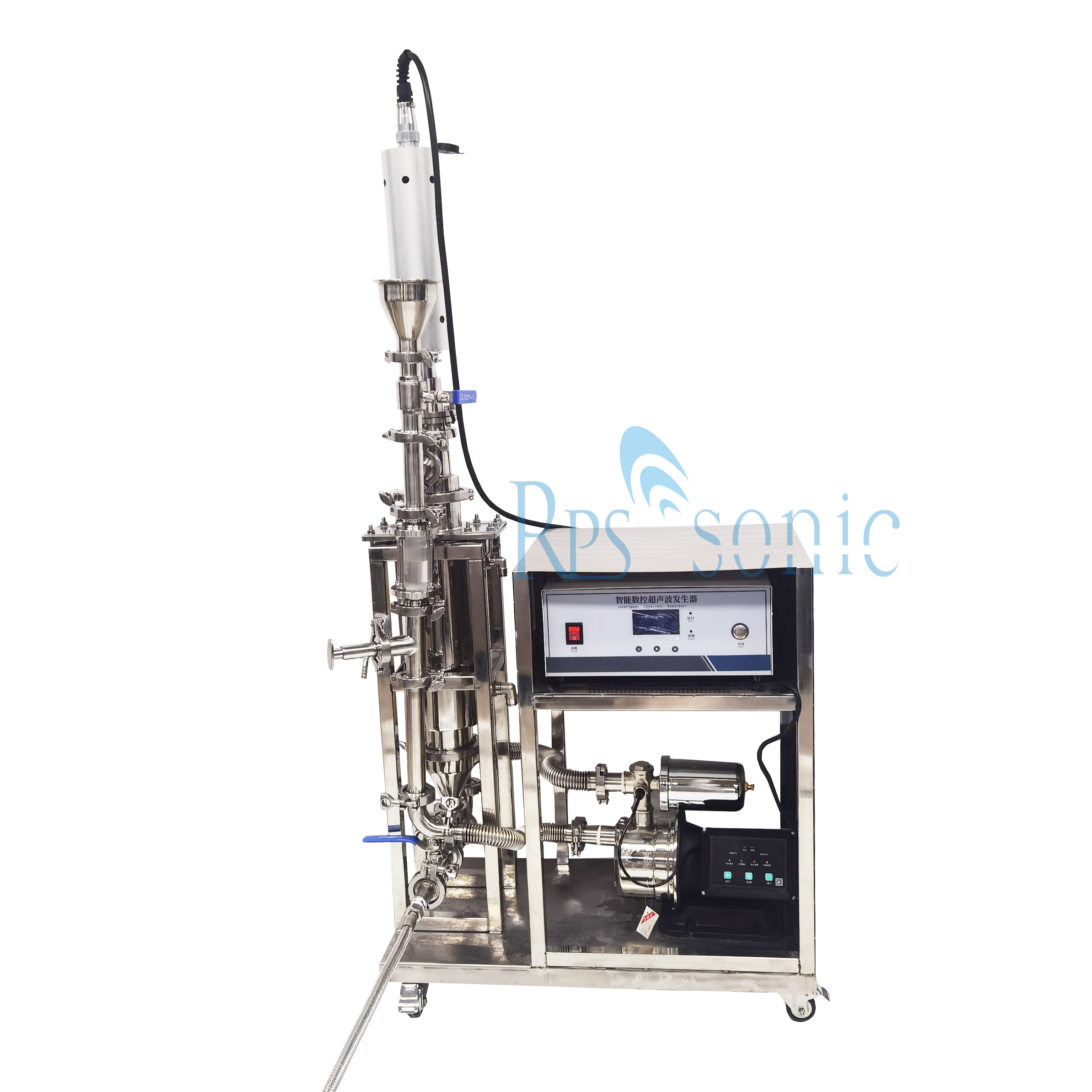
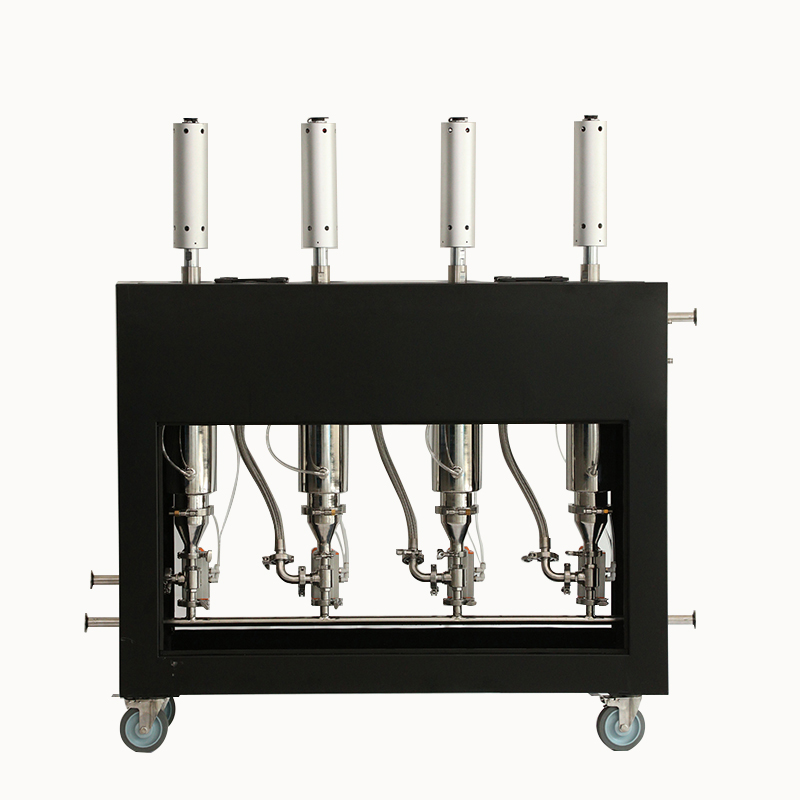
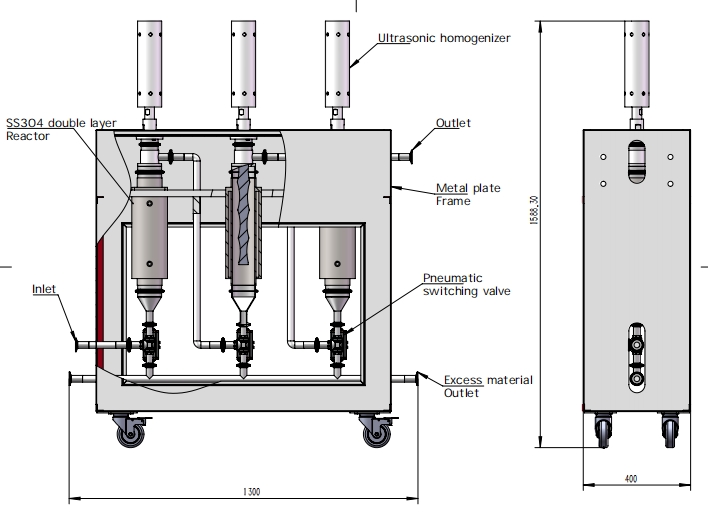
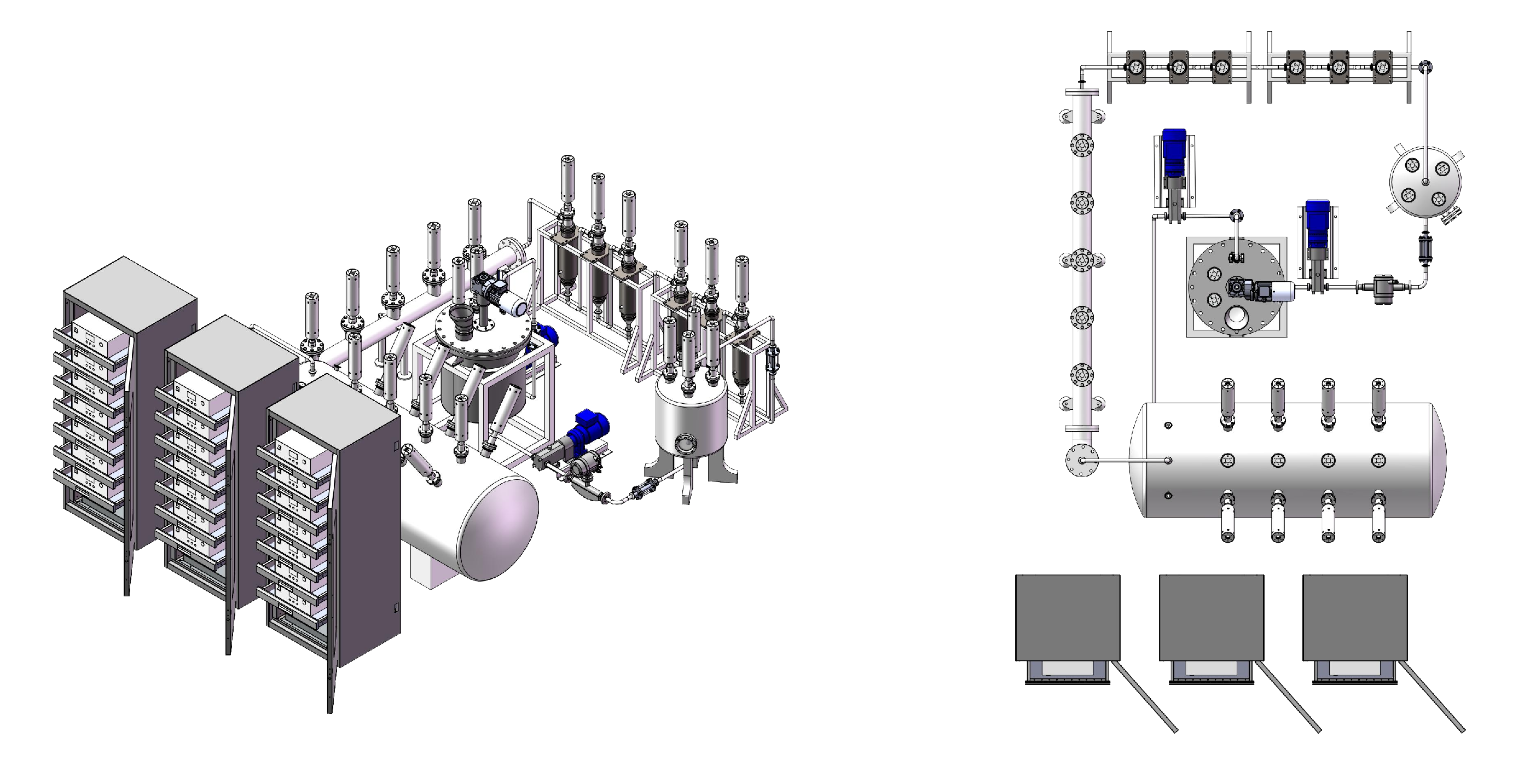
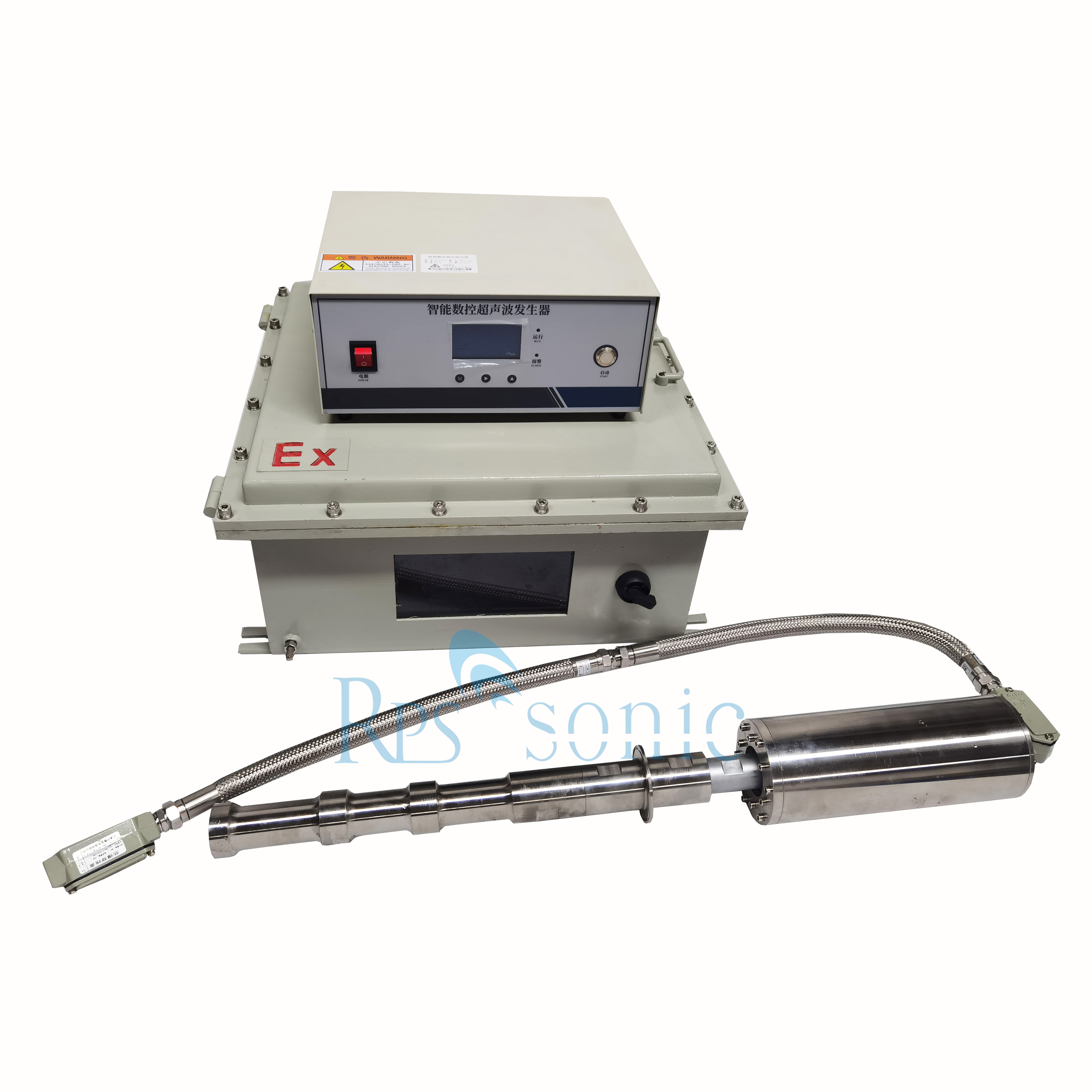
100L SS316 Tank Ultrasonic Homogenizer Pilot-plant Test Machine with Flow Cell for Herbal Powder Extraction
A homogenizer is a class of mixing devices, which is designed to break particles, both solid and liquid, into a uniform mixture. Homogenizers are available as laboratory, bench-top and industrial equipment used for various applications in research and industry. Typical application of homogenizer include the mixing and disintegration of various materials, including particles, pigments, chemicals, plants, food, cells, tissues, amongst others.
Two liquids can form diff
erent types of emulsions, for example, oil and water. First, oil-in-water emulsions, where oil is the dispersed phase and water is the dispersion medium. Second, they can form water-in-oil emulsions, where water is the dispersed phase and oil is the continuous phase. It is also possible to form multiple emulsions, including "water-in-oil-in-water" emulsions and "oil-in-water-in-oil" emulsions.
Phacoemulsification is caused by cavitation. Ultrasound passing through the liquid causes it to continuously compress and expand. High-intensity ultrasound provides the energy needed to disperse the liquid phase. When the maximum pressure is reached, the liquid ruptures at the point where the cohesion is weak. After this rupture, overpressure appeared at the point where the rupture occurred, and some cavities were found. In these cavities, the liquid dissolved gas explodes in the form of bubbles after a short time.
Parameter
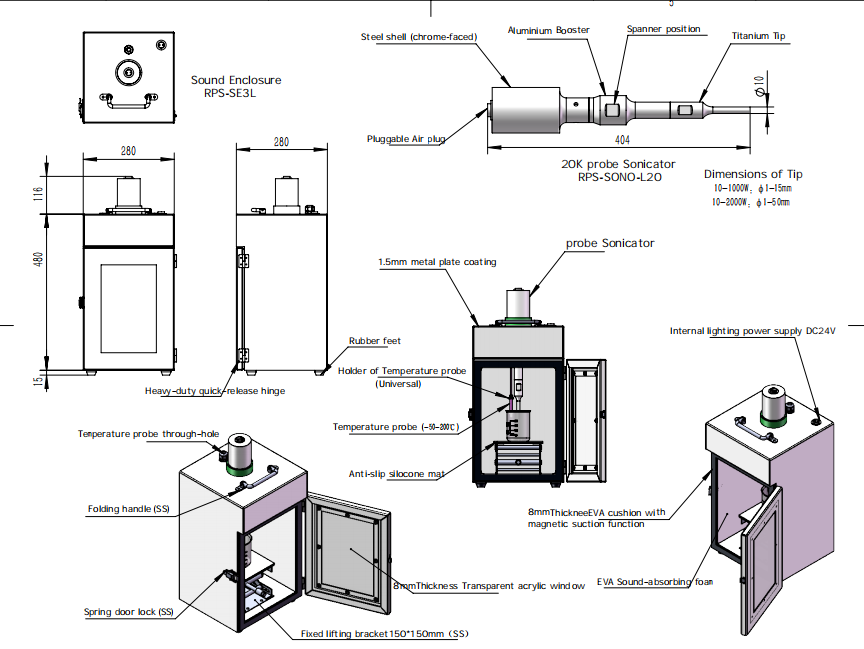
| Model | RPS-SONO-3000 |
| Frequency | 20KHZ |
| Power | 3000W |
| Input Voltage | 110 or 220V,50-60HZ |
| Temperature | 300℃ |
| Maxi Capacity | 100L/MIN with one set ultrasonic |
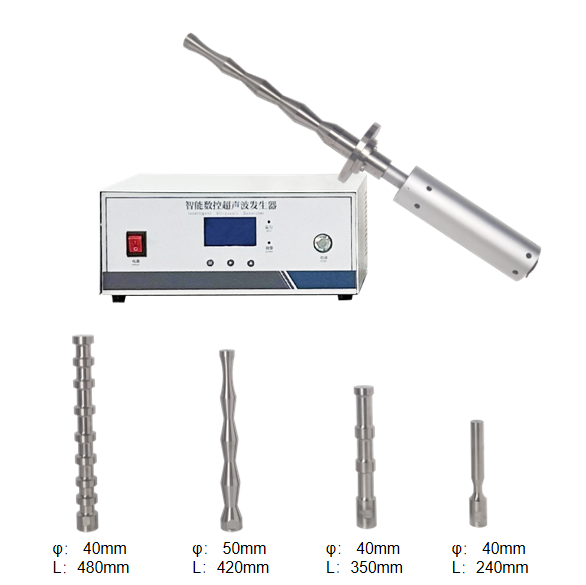
| Horn diameter | 35-50mm |
| Horn material | Titanium alloy/nickel-based alloy |
| Horn Length | Can be customized as your request |
| Tank layer | 1-2 layer |
| Radiation Amplitude | 20-80μm |
| Pump Volume | 0~12000ml/min., optional |
| Pressure | 35Mpa |
| Application Direction | extraction, dispersion, emulsification, defoaming, degassing, mixing |
Basic Process Flow:
Raw material pretreatment (washing, drying, pulverizing) → Mixing with solvent (water, ethanol, etc.) → Ultrasonic treatment (setting temperature, power, time) → Filtration/Separation → Concentration → Purification (optional) → Finished Product (Extract)
Key Influencing Factors:
Ultrasonic Parameters:
Power/Intensity: Higher power results in stronger cavitation, but excessive power may damage components.
Frequency: Low frequency (20-40kHz) has a strong cavitation effect, suitable for hard materials; high frequency (>100kHz) is gentler, suitable for fine extraction.
Time: Increased time increases yield, but there is an optimal value; excessive time may be ineffective or lead to degradation.
Mode: Pulsed ultrasound reduces thermal effects more effectively than continuous ultrasound.
Raw Material Factors:
Particle Size: Finer particles result in a larger contact area, but excessively fine particles may cause filtration difficulties.
Moisture Content and Structure.
Solvent Factors:
Type of Solvent (polarity matching the target component), concentration (e.g., ethanol concentration), liquid-to-solid ratio (the ratio of solvent to material).
Temperature: Typically controlled between room temperature and 60°C to balance extraction efficiency and protect against heat sensitivity.
Application
Pharmaceuticals and Health Products: Extraction of active ingredients from herbs, such as flavonoids, saponins, and alkaloids.
Food Industry: Extraction of natural pigments, flavor substances, antioxidants, and functional components.
Cosmetics: Extraction of plant essential oils, whitening, anti-inflammatory, and moisturizing active ingredients.
Natural Fragrances: Extraction of aromatic components.
Advantages of RPS-SONIC ultrasonic devices
• Easy and flexible handling
• Time saving
• Powerful
• Precisely controllable
• Reproducible results
• Eco-friendly and energy efficient
• Extremely durable and long lasting
• Wide product range
• Wide range of accessories for a variety of applications
• Production, service and repair in germany
• Specialist for ultrasonic technology
Famous Customers
100L SS316 Tank Ultrasonic Homogenizer Pilot-plant Test Machine with Flow Cell for Herbal Powder Extraction
A homogenizer is a class of mixing devices, which is designed to break particles, both solid and liquid, into a uniform mixture. Homogenizers are available as laboratory, bench-top and industrial equipment used for various applications in research and industry. Typical application of homogenizer include the mixing and disintegration of various materials, including particles, pigments, chemicals, plants, food, cells, tissues, amongst others.
Two liquids can form diff
erent types of emulsions, for example, oil and water. First, oil-in-water emulsions, where oil is the dispersed phase and water is the dispersion medium. Second, they can form water-in-oil emulsions, where water is the dispersed phase and oil is the continuous phase. It is also possible to form multiple emulsions, including "water-in-oil-in-water" emulsions and "oil-in-water-in-oil" emulsions.
Phacoemulsification is caused by cavitation. Ultrasound passing through the liquid causes it to continuously compress and expand. High-intensity ultrasound provides the energy needed to disperse the liquid phase. When the maximum pressure is reached, the liquid ruptures at the point where the cohesion is weak. After this rupture, overpressure appeared at the point where the rupture occurred, and some cavities were found. In these cavities, the liquid dissolved gas explodes in the form of bubbles after a short time.
Parameter
| Model | RPS-SONO-3000 |
| Frequency | 20KHZ |
| Power | 3000W |
| Input Voltage | 110 or 220V,50-60HZ |
| Temperature | 300℃ |
| Maxi Capacity | 100L/MIN with one set ultrasonic |
| Horn diameter | 35-50mm |
| Horn material | Titanium alloy/nickel-based alloy |
| Horn Length | Can be customized as your request |
| Tank layer | 1-2 layer |
| Radiation Amplitude | 20-80μm |
| Pump Volume | 0~12000ml/min., optional |
| Pressure | 35Mpa |
| Application Direction | extraction, dispersion, emulsification, defoaming, degassing, mixing |
Basic Process Flow:
Raw material pretreatment (washing, drying, pulverizing) → Mixing with solvent (water, ethanol, etc.) → Ultrasonic treatment (setting temperature, power, time) → Filtration/Separation → Concentration → Purification (optional) → Finished Product (Extract)
Key Influencing Factors:
Ultrasonic Parameters:
Power/Intensity: Higher power results in stronger cavitation, but excessive power may damage components.
Frequency: Low frequency (20-40kHz) has a strong cavitation effect, suitable for hard materials; high frequency (>100kHz) is gentler, suitable for fine extraction.
Time: Increased time increases yield, but there is an optimal value; excessive time may be ineffective or lead to degradation.
Mode: Pulsed ultrasound reduces thermal effects more effectively than continuous ultrasound.
Raw Material Factors:
Particle Size: Finer particles result in a larger contact area, but excessively fine particles may cause filtration difficulties.
Moisture Content and Structure.
Solvent Factors:
Type of Solvent (polarity matching the target component), concentration (e.g., ethanol concentration), liquid-to-solid ratio (the ratio of solvent to material).
Temperature: Typically controlled between room temperature and 60°C to balance extraction efficiency and protect against heat sensitivity.
Application
Pharmaceuticals and Health Products: Extraction of active ingredients from herbs, such as flavonoids, saponins, and alkaloids.
Food Industry: Extraction of natural pigments, flavor substances, antioxidants, and functional components.
Cosmetics: Extraction of plant essential oils, whitening, anti-inflammatory, and moisturizing active ingredients.
Natural Fragrances: Extraction of aromatic components.
Advantages of RPS-SONIC ultrasonic devices
• Easy and flexible handling
• Time saving
• Powerful
• Precisely controllable
• Reproducible results
• Eco-friendly and energy efficient
• Extremely durable and long lasting
• Wide product range
• Wide range of accessories for a variety of applications
• Production, service and repair in germany
• Specialist for ultrasonic technology
Famous Customers
Catalogue of ultrasonic homogenizer
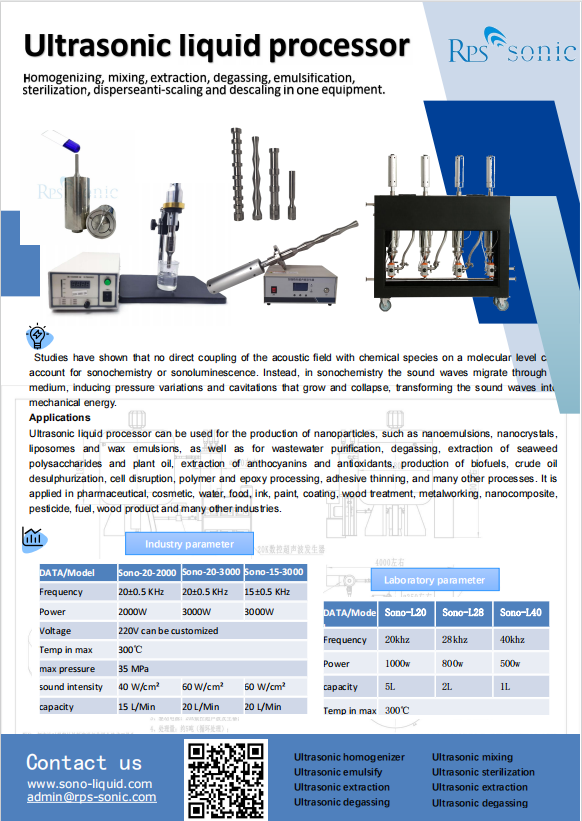
Ultrasonic homogenizers are powerful and reliable mixers for lab and industry for numerous applications. An ultrasonic homogenizer can be used for various applications, including:
Homogenization: Ultrasonic homogenizers can homogenize samples to create uniform and consistent mixtures.
Dispersion: Ultrasonic homogenizers can be used to disperse solid particles in liquids to create stable suspensions, to get nano-dispersions.
Emulsification: Ultrasonic homogenizers can be used to create stable emulsions and nanoemulsions by breaking up and dispersing immiscible liquids, such as oil and water.
Cell Disruption: Ultrasonic homogenizers can break open cells to extract intracellular components.
Degassing: Ultrasonic homogenizers can be used to remove dissolved gases from liquids. Anti-scaling and descaling, sterilizing,extraction Etc.

Catalogue of ultrasonic homogenizer
Ultrasonic homogenizers are powerful and reliable mixers for lab and industry for numerous applications. An ultrasonic homogenizer can be used for various applications, including:
Homogenization: Ultrasonic homogenizers can homogenize samples to create uniform and consistent mixtures.
Dispersion: Ultrasonic homogenizers can be used to disperse solid particles in liquids to create stable suspensions, to get nano-dispersions.
Emulsification: Ultrasonic homogenizers can be used to create stable emulsions and nanoemulsions by breaking up and dispersing immiscible liquids, such as oil and water.
Cell Disruption: Ultrasonic homogenizers can break open cells to extract intracellular components.
Degassing: Ultrasonic homogenizers can be used to remove dissolved gases from liquids. Anti-scaling and descaling, sterilizing,extraction Etc.

Ms. Yvonne
sales@xingultrasonic.com
+86 571 63481280
+86 15658151051
1st Building NO.608 Road ,FuYang, Hangzhou, Zhejiang,China