Applications of Ultrasonic Welding in the Diaper Industry
Ultrasonic welding technology is a core, efficient, and environmentally friendly key process in the production of diapers (and other absorbent hygiene products such as sanitary napkins and nursing pads). It primarily replaces traditional chemical and hot-melt adhesives, playing an indispensable role in modern high-speed production lines.
The following is a detailed analysis of the specific applications, advantages, and working principles of ultrasonic welding in the diaper industry:
I. Main Application Areas
Diapers have a complex structure, consisting of multiple components such as non-woven fabric, absorbent core (SAP + fluff pulp), leak-proof side panels, elastic waistband, and Velcro/waistband tabs. Ultrasonic welding is mainly applied to the joining of the following parts:
Structural Component Composite and Shaping
Welding of the Front Waistband/Tape Tab: Securely welding the Velcro to the waistband of the diaper. This is one of the most classic applications; the weld strength is high, and it is not easily detached even after repeated opening and closing.
Secure the Leg Cuff and Barrier Cuff: The elastic material is combined with the non-woven fabric substrate to form a three-dimensional leak-proof barrier. Ultrasonic welding allows for precise welding only at specific points or lines, securing the elastic material without compromising its elasticity.
Side Sealing of the Waistbands: This is a crucial step in closing the diaper from a flat surface to a pant shape. Ultrasonic welding replaces traditional hot-melt adhesive side sealing, creating a strong, soft, and residue-free seam, significantly improving wearing comfort and aesthetics.
Securing Functional Components
Securing the Flow-Guiding Layer and Leak-Proof Strips: The internal flow-guiding or leak-proof non-woven fabric is secured to the bottom film or non-woven fabric surface.
Welding of Logo and Size Labels: Label information is directly welded to the product surface, ensuring clarity and preventing detachment.
Interlayer Composite Materials
**Partial Composite of Top Nonwoven Fabric and Base Film (PE Film):** In some designs, this is used to secure the two layers and prevent slippage.
**Surrounding of Absorbent Polymer (SAP):** Sometimes used to secure the material surrounding the core and prevent SAP particles from escaping.
II. Working Principle of Ultrasonic Welding (on Nonwoven Materials)
Ultrasonic welding is a solid-state welding process that does not rely on adhesives:
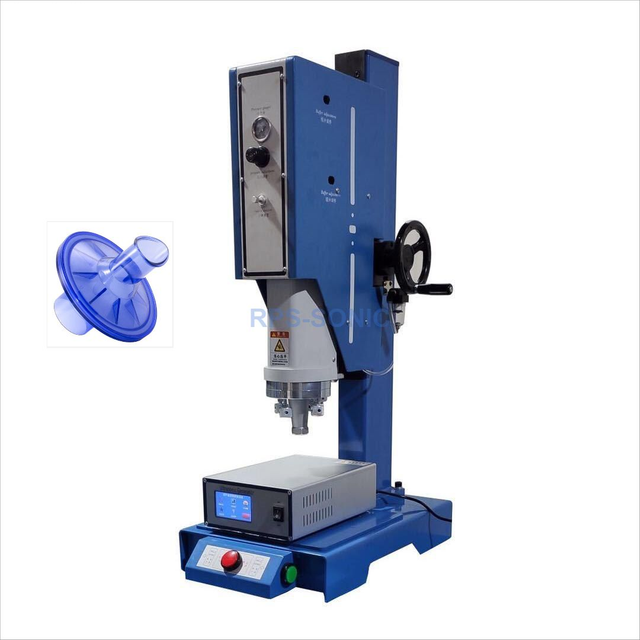
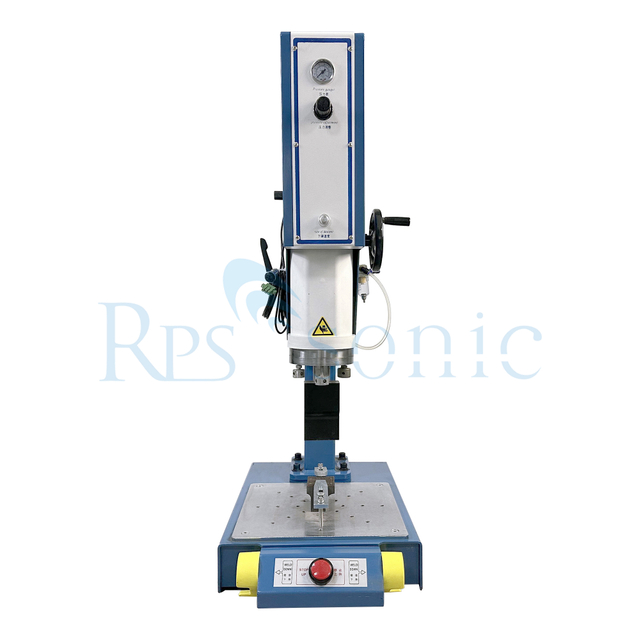
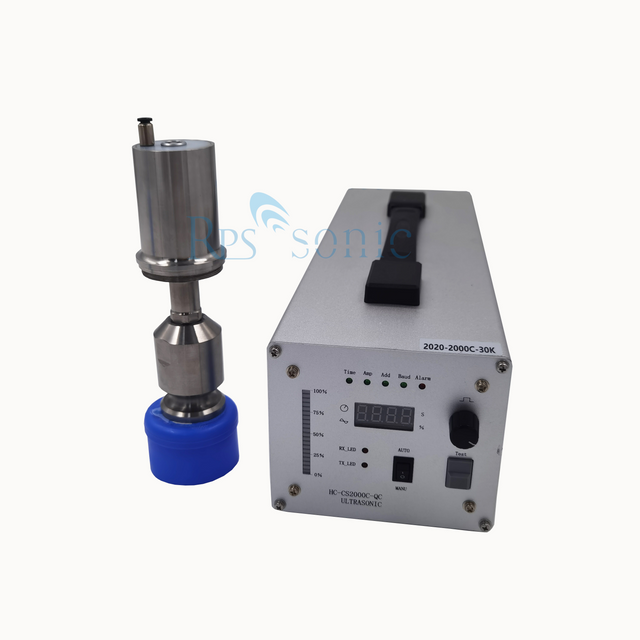
High-Frequency Vibration: The ultrasonic generator converts power frequency electrical energy into high-frequency electrical energy of 20kHz or higher.
Mechanical Vibration: The transducer converts electrical energy into high-frequency mechanical vibration (ultrasound), which is then transmitted to the workpiece to be welded via the welding head (tool head).
Interfacial Heating: Under pressure, the welding head directs the vibrational energy to the interface of two or more layers of thermoplastic materials (such as polypropylene (PP) nonwoven fabric, PE film). Material molecules generate concentrated heat at the interface due to high-frequency friction.
Melting and Bonding: The interface materials melt rapidly and flow and fuse under pressure.
Cooling and solidification: Vibration stops, pressure is maintained for a short time, molten material cools and solidifies, forming a strong molecular chain level weld point or weld.
characteristic | Ultrasonic welding | Traditional hot melt adhesive |
Environmental protection | Excellent. No chemical adhesives required, no VOC emissions, and the product is 100% recyclable (when the material itself is recyclable). | The need to use chemical adhesives raises environmental and sustainability concerns. |
Production speed | Extremely fast. Soldering time is typically completed in a fraction of a second, making it ideal for high-speed production lines (up to thousands of pieces per minute). | The speed is limited by the time required for gluing, pressing, and cooling. |
Product Quality | Superior. Strong welds, washable, and breathable. Soft weld joints without hard lumps, providing a more comfortable feel against the skin. No glue residue, clean appearance. | There may be problems such as glue residue, glue seepage (glue itching), hardening, and poor breathability, which may cause skin discomfort. |
Drying process | No drying tunnel required. Solid-state welding, instant cooling and curing, no need for a drying tunnel. | Yes, it is required. A longer drying or cooling area is needed, which will take up factory space. |
flexibility | High efficiency. By changing the welding head, various welding patterns such as dots, lines, and curves can be easily achieved, adapting to rapid product iteration. | Low efficiency. Changing the coating pattern requires replacing the die head, resulting in poor flexibility. |
Security | High efficiency. No open flames, minimal high-temperature exposure areas, resulting in a safer and cleaner working environment. | There are safety hazards such as high-temperature glue pots and fumes. |
IV. Development Trends and Challenges
Trends:
Integration and High Speed: Welding units are highly integrated with production line robots and vision positioning systems, achieving more precise and faster automated production.
Adaptation to New Materials: With the promotion of biodegradable bio-based materials (such as PLA nonwoven fabric), welding parameters need to be adjusted to adapt to the characteristics of these new materials.
Pattern Diversification: Developing more complex weld head patterns, not only for joining but also for product decoration and enhancing texture.
Challenges:
Initial Investment: The initial equipment investment for ultrasonic welding systems is higher than that for simple hot melt adhesive equipment.
Material Limitations: Primarily applicable to thermoplastic materials (such as PP, PE, PET, etc.). Its effectiveness is limited for non-thermoplastic natural fibers (such as pure cotton).
Parameter Adjustment: Precise adjustment of amplitude, pressure, and time parameters is required for different material thicknesses, compositions, and number of layers, placing high demands on process engineers.
Summary: Ultrasonic welding technology has become a standard feature in modern high-end diaper production. With its outstanding advantages of being environmentally friendly, efficient, comfortable, and economical, it has driven the entire absorbent hygiene products industry towards a more sustainable and higher-quality direction. With technological advancements and further cost optimization, its application scope is expected to expand further, and it may gradually replace more traditional bonding processes.