Views: 89 Author: Site Editor Publish Time: 2026-01-22 Origin: Site
How Ultrasound Shapes the Future of Graphene
While scientists struggled with the large-scale preparation of graphene—a single-layer carbon atom structure hailed as a "miracle material of the 21st century"—ultrasonic technology, with its unique approach, became a key to unlocking the industrialization of graphene. As one of the most common and effective methods for preparing and dispersing few-layer and even single-layer graphene, ultrasonic dispersion technology essentially utilizes the extreme physical forces generated by the cavitation effect to precisely overcome the weak van der Waals forces binding the graphene sheets, achieving controllable exfoliation and stable dispersion. This process is not only a sophisticated application of physical principles but also a technological bridge connecting the laboratory miracle of graphene with the grand vision of industrialization.
The core mechanism of ultrasonic exfoliation of graphene lies in the microscopic extreme environment created by the "cavitation effect." When high-intensity ultrasound propagates in a liquid medium, it instantly generates millions of tiny bubbles. These bubbles expand, contract, and eventually implode under the influence of sound pressure, creating an extreme environment with localized temperatures reaching thousands of degrees Celsius and pressures of hundreds of atmospheres. It is this instantaneous yet highly controllable extreme physical force that precisely acts between the graphene sheets of graphite powder or expanded graphite, overcoming the van der Waals forces, which, despite being only about 2 eV/nm², are sufficient to bind layers of graphite. This exfoliation is not a brutal crushing, but a precise separation between layers—like turning the pages of the "book of atoms" of graphite with incredibly delicate acoustic hands.
The excellence of ultrasonic dispersion technology lies in its unique "dual capability": it can efficiently exfoliate and prepare graphene while ensuring that the exfoliated nanosheets remain stably dispersed in solution, preventing re-aggregation. Compared to methods such as chemical redox methods that may introduce defects, ultrasonic methods (especially liquid-phase ultrasonic exfoliation) can preserve the complete sp² carbon lattice structure of graphene to the greatest extent, thus retaining its excellent electrical, thermal, and mechanical properties. Research data shows that by optimizing ultrasonic parameters (such as power, frequency, and time), the yield of monolayer graphene can reach over 10%, while the yield of few-layer graphene (less than 5 layers) can even reach over 75%. The high efficiency and low damage characteristics of ultrasound make it one of the most promising pathways for the large-scale preparation of high-quality graphene.
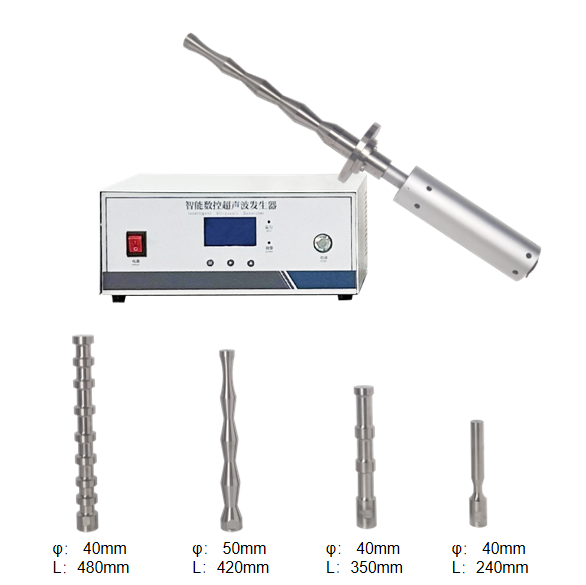
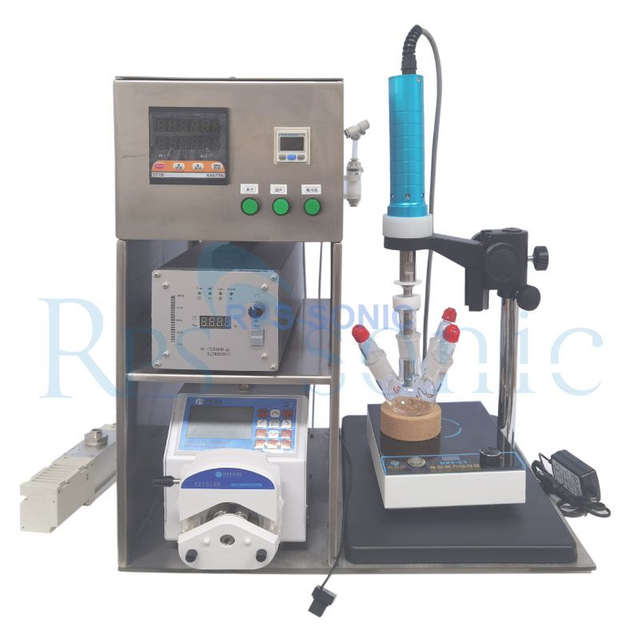
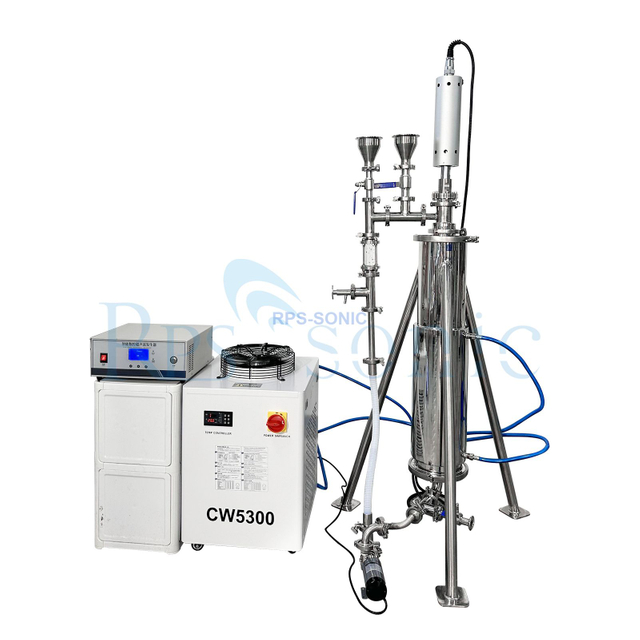
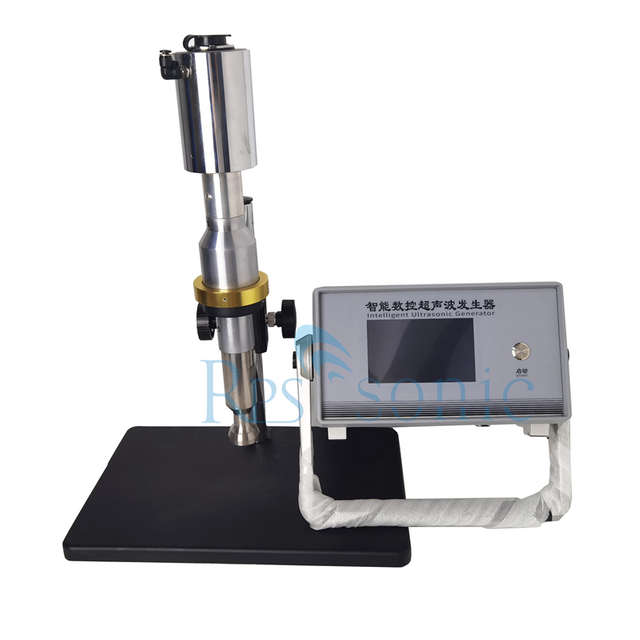
However, the transition from laboratory beakers to industrial reactors is no easy feat. Traditional probe-based ultrasonic equipment suffers from uneven energy distribution, limited throughput, and probe wear and contamination. Therefore, industrial-grade ultrasonic dispersion equipment is innovating towards flow reactor systems. These systems allow graphene suspensions to undergo uniform and efficient ultrasonic treatment in continuous flow through specially designed ultrasonic channels, with single-pass throughput reaching tens or even hundreds of liters. A more advanced trend is the development of multi-frequency composite ultrasonic systems. These systems utilize the synergistic effect of different frequency ultrasonic waves to achieve efficient exfoliation using the strong cavitation force of low frequencies (20-40 kHz) and uniform dispersion using the delicate action of high frequencies (above 100 kHz). Equipped with a real-time monitoring and feedback control system, they enable precise control over the number of graphene layers and the dispersion state.
The impact of this technological breakthrough is far-reaching. In the new energy field, high-quality graphene prepared by ultrasound has become a key additive in electrode materials for lithium-ion batteries and supercapacitors, significantly improving energy storage density and charge/discharge rates. In the field of composite materials, uniformly dispersed graphene can significantly enhance the mechanical, electrical, and thermal properties of polymers. In the field of flexible electronics, the large-scale, high-quality preparation of graphene inks relies on advancements in ultrasonic dispersion technology. It is estimated that over 30% of the global graphene market's preparation needs are met through or with the aid of ultrasonic technology, and this proportion is even higher in high-end applications.
Looking ahead, with a deeper understanding of ultrasonic cavitation dynamics and graphene exfoliation mechanisms, as well as the deep integration of acoustic equipment with automation and intelligent technologies, the next generation of ultrasonic dispersion systems will achieve more precise "acoustic programming"—automatically optimizing and executing ultrasonic processing schemes for different raw material characteristics and different target product specifications (number of layers, size, defect density). Ultrasonic technology is not only solving a core bottleneck in the industrialization of graphene, but also, with its unique physical means, providing us with a powerful and elegant tool for manipulating the microscopic world of materials. As cavitation bubbles instantly dissipate in the liquid, the released energy peels away the layers of graphite's secrets, and will also unveil a new chapter in the materials revolution driven by graphene.