How Ultrasonic Rubber Cutters Rewrite Manufacturing Rules Using Sound Waves?
Views: 54 Author: Site Editor Publish Time: 2026-01-15 Origin: Site
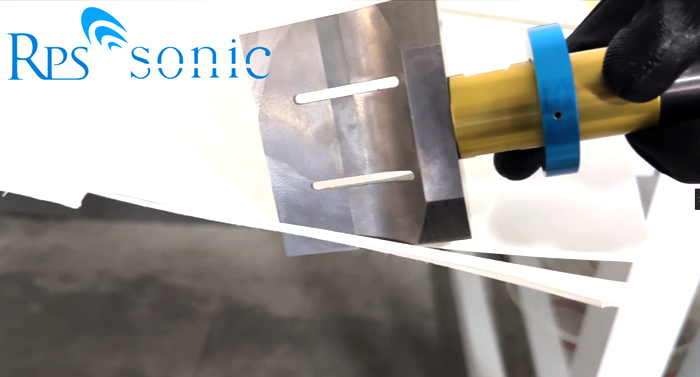
Traditionally, rubber cutting is often perceived as a "confrontational battle"—relying on sharp blades and immense mechanical pressure to forcibly tear apart the rubber polymer chains. Accompanied by ear-piercing noise, flying dust, and uncontrollable edge burrs, this process is brutal and inefficient. However, a technology called "ultrasonic rubber cutter" is quietly revolutionizing this, transforming cutting from "brute force tearing" to "precise separation," bringing a silent revolution to modern manufacturing.
Core Mechanism: When Vibration Becomes a "Thermal Scalpel"
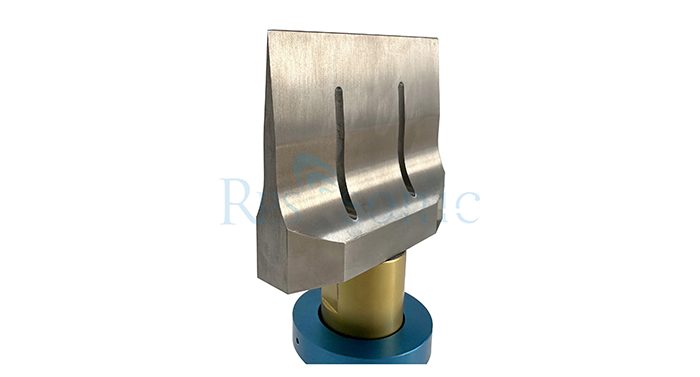
The essence of an ultrasonic rubber cutter is utilizing tens of thousands of high-frequency mechanical vibrations per second (typically between 20kHz and 40kHz) as an energy carrier. Its core secret lies in the unique viscoelasticity and high internal friction characteristics of rubber.
When the cutter head transmits ultrasonic vibrations to the rubber contact point, it doesn't simply rely on a physical blade for "hard cutting." Under extremely high-frequency tensile and compressive alternating stress, the rubber molecules experience a severe hysteresis effect due to internal chain segment friction. This intense friction at the microscopic level instantly generates a large amount of heat in the localized area at the cutting point, rapidly raising the temperature to the rubber's softening point or even higher. At this point, the blade is essentially contacting a thin layer of rubber that has been instantly "thermally softened" or even locally micro-melted. The cutting behavior is thus fundamentally changed: from mechanical tearing to "melting and separating" the softened material with minimal resistance.
This principle brings revolutionary advantages:
Stress-free cutting: Vibrational energy is highly focused on the cutting line, avoiding rubber deformation, stringing, or compression damage caused by compression in traditional cutting, achieving truly "deformation-free" cutting.
Perfect edge sealing: Under the thermal effect, the rubber molecules on the cutting surface instantly micro-melt and re-fuse, forming a smooth, dense sealing edge. This is crucial for products such as medical catheters and seals that require prevention of liquid penetration or debris shedding.
Beyond toughness: Whether it's the flexibility of natural rubber or the high elasticity and tear resistance of specialty rubbers such as silicone and fluororubber, both are "gently dissolved" by the internal heat dissipation effect caused by high-frequency vibration.
Beyond Tradition: A Multi-Dimensional Leap in Efficiency
Compared to traditional punching, rotary cutting, or laser cutting, ultrasonic cutting offers comprehensive advantages:
Precision and Quality: Smooth, flat cuts without burrs or residue, resulting in extremely high product consistency. Particularly suitable for applications with stringent cleanliness and precision requirements, such as precision medical devices and electronic product seals.
Efficiency and Lifespan: High cutting speed with virtually no resistance and low energy consumption. Due to non-violent contact, the blade experiences minimal wear, resulting in a lifespan far exceeding that of traditional cutting tools.
Environmental Protection and Safety: The entire process is free of chemical solvents and produces minimal dust, creating a clean and quiet working environment. Highly concentrated energy minimizes the heat-affected zone, preventing material charring or the generation of harmful gases.
Intelligent Integration: As a digital energy output device, ultrasonic cutting tools are easily integrated with robotic arms and CNC platforms, enabling automated cutting of complex three-dimensional paths, making them ideal for flexible manufacturing and smart factories.
The Future is Here: Silent Sound Waves Reshaping Manufacturing Boundaries
Today, ultrasonic rubber cutting technology has moved from the laboratory to a broad industrial landscape. In the new energy vehicle sector, it precisely cuts the sealing gaskets of battery packs; in wearable devices, it shapes soft, skin-friendly silicone shells for sensors; in the biopharmaceutical industry, it sterilizes infusion tubing and implant components.
It represents not just a process improvement, but a reshaping of manufacturing philosophy: from "fighting material properties" to "intelligently utilizing material properties." That seemingly silent high-frequency vibration is actually an efficient "dialogue" with material molecules, using the most precise energy to achieve the clearest separation at the smallest scale.
As manufacturing evolves towards greater precision, greener practices, and greater intelligence, technologies like ultrasonic rubber cutters, with their unique "soft-yet-hard" wisdom, are quietly and steadily expanding the boundaries of manufacturing, foreshadowing a future factory that will be a stage for precise energy control, rather than a battlefield of brute force.