Ultrasonic spray coating system is a technique for forming thin films with specific functions or properties on the surface of optical glass. It utilizes ultrasonic waves to atomize liquid into fine droplets and uniformly spray them onto the surface of optical glass. This article introduces the princ
Currently, research on the extraction of antioxidants and anti-aging drugs from natural products has attracted widespread attention from domestic and foreign scholars. Considerable research results have been achieved in this field, and based on comprehensive domestic and international research repor
Ultrasonic spray coating system is a technique for forming thin films with specific functions or properties on the surface of optical glass. It utilizes ultrasonic waves to atomize liquid into fine droplets and uniformly spray them onto the surface of optical glass. This article introduces the princ
What is ultrasonic tinning?Ultrasonic tinning is a kind of welding method that does not use flux. The ultrasonic probe produces cavitation in the molten solder core through mechanical vibration at ultrasonic frequency, and removes the oxide film on the metal surface for smooth and clean tinning. Ult
The application of ultrasonic in the sewing industry mainly reflects the two major functions of ultrasonic: welding and cutting. In 2019, for masks that are popular all over the world, ultrasound is a household name for applying these two functions to the fullest. The cutting and welding of velvet c
Currently, research on the extraction of antioxidants and anti-aging drugs from natural products has attracted widespread attention from domestic and foreign scholars. Considerable research results have been achieved in this field, and based on comprehensive domestic and international research repor
The application of ultrasonic in the sewing industry mainly reflects the two major functions of ultrasonic: welding and cutting. In 2019, for masks that are popular all over the world, ultrasound is a household name for applying these two functions to the fullest. The cutting and welding of velvet c
What is ultrasonic tinning?Ultrasonic tinning is a kind of welding method that does not use flux. The ultrasonic probe produces cavitation in the molten solder core through mechanical vibration at ultrasonic frequency, and removes the oxide film on the metal surface for smooth and clean tinning. Ult
Currently, research on the extraction of antioxidants and anti-aging drugs from natural products has attracted widespread attention from domestic and foreign scholars. Considerable research results have been achieved in this field, and based on comprehensive domestic and international research repor
What's the Principle and theory of ultrasonic plastic welding machine? The principle of ultrasonic plastic welding machine? How does ultrasonic welding work? what's the composition and function of ultrasonic plastic welding machine What's the core parts in ultrasonic plastic welding machine Ultrasonic plastic welding machine models and specifications? What's the Advantages of ultrasonic welding?
Currently, research on the extraction of antioxidants and anti-aging drugs from natural products has attracted widespread attention from domestic and foreign scholars. Considerable research results have been achieved in this field, and based on comprehensive domestic and international research repor
Ultrasonic spray coating system is a technique for forming thin films with specific functions or properties on the surface of optical glass. It utilizes ultrasonic waves to atomize liquid into fine droplets and uniformly spray them onto the surface of optical glass. This article introduces the princ
The application of ultrasonic in the sewing industry mainly reflects the two major functions of ultrasonic: welding and cutting. In 2019, for masks that are popular all over the world, ultrasound is a household name for applying these two functions to the fullest. The cutting and welding of velvet c
Currently, research on the extraction of antioxidants and anti-aging drugs from natural products has attracted widespread attention from domestic and foreign scholars. Considerable research results have been achieved in this field, and based on comprehensive domestic and international research repor
| Certification: | |
|---|---|
| Installation: | |
| Pressure: | |
| Frequency: | |
| Power: | |
| Max Capacity: | |
| Tip Head Material: | |
| Availability: | |
| Quantity: | |
SONOL20
RPS-SONIC
8515900090
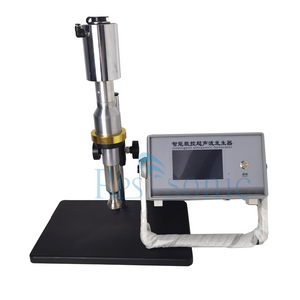
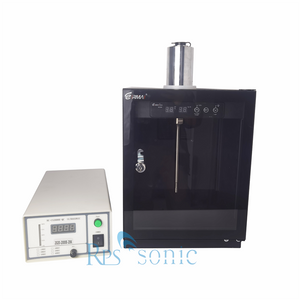
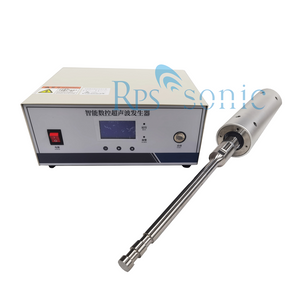
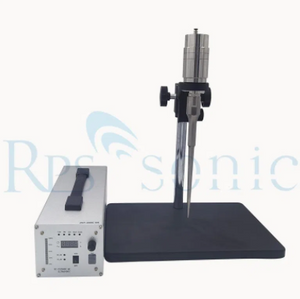
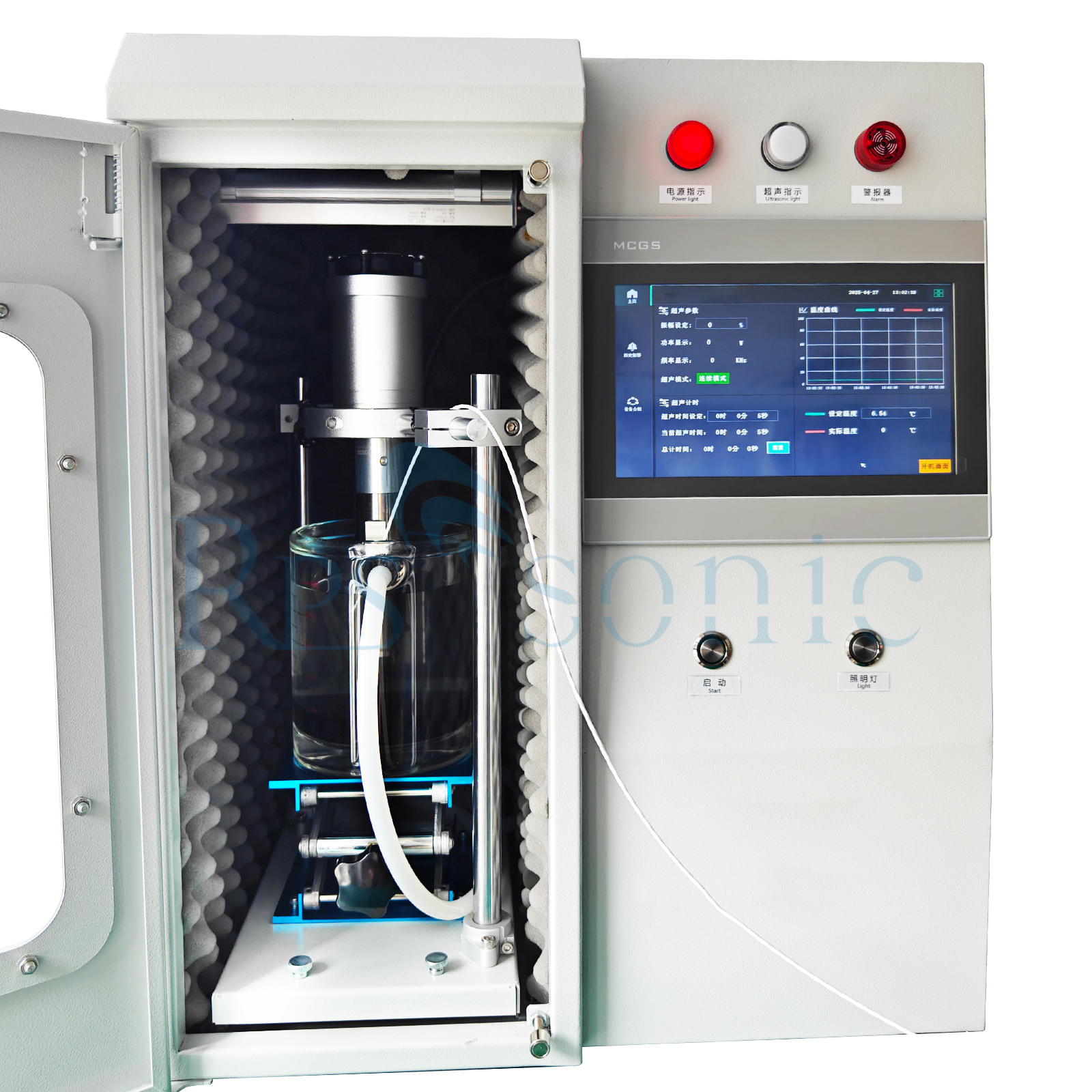
Intelligent Temperature-controlled Ultrasonic Cavitation Equipment Ultrasonic Homogenizer Testing Machine
Description
The Intelligent Temperature-Controlled Ultrasonic Cavitation Equipment is a high-precision laboratory and pilot-scale testing system designed for advanced ultrasonic processing applications. It integrates controlled temperature regulation with high-intensity ultrasonic cavitation to deliver stable, repeatable, and highly efficient homogenization, dispersion, and extraction performance.
Unlike conventional ultrasonic processors that generate uncontrolled heat during operation, this system features intelligent temperature management, ensuring that cavitation effects remain stable while preventing thermal degradation of sensitive materials. It is widely used in research, formulation development, and process optimization where precise control of both energy input and reaction conditions is essential.
Working principle
Cavitation effect: Generating tiny bubbles in liquids through high-frequency ultrasonic waves (typically 20-40 KHZ) Bubble rupture: Bubbles rapidly expand and collapse under pressure changes, generating local high temperature and high pressure Shock wave: When bubbles burst, they generate powerful micro-jets and shock waves
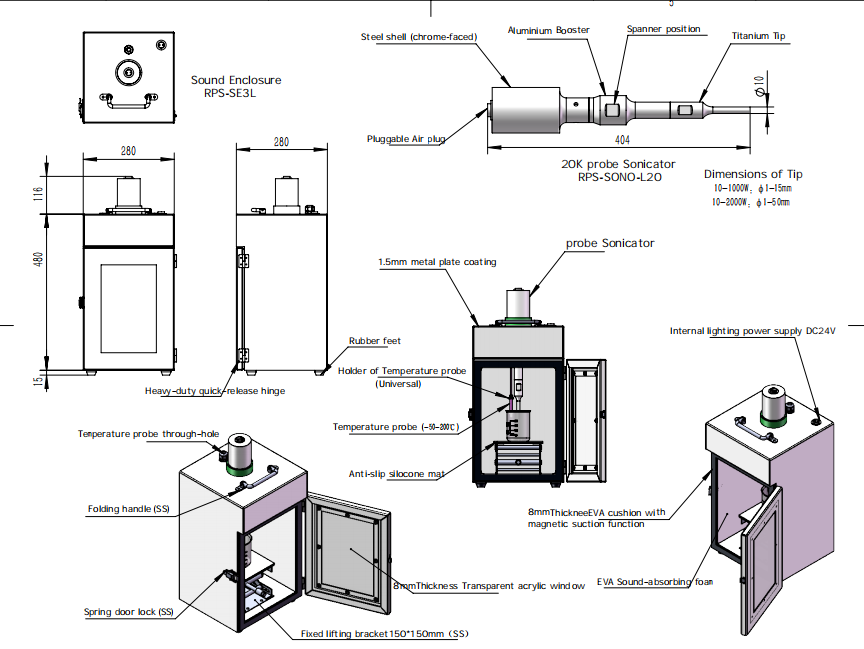
The system is equipped with a high-performance ultrasonic generator and probe system, delivering strong and stable cavitation energy for efficient particle disruption and molecular mixing.
A key advantage is the intelligent temperature-controlled design, which continuously monitors and regulates reaction temperature, ensuring consistent cavitation performance and preventing overheating of heat-sensitive materials.
Compared with standard ultrasonic homogenizers, this system provides dual control of energy and thermal environment, significantly improving reproducibility and experimental accuracy.
The ultrasonic cavitation effect enhances microbubble formation and collapse, leading to strong mass transfer improvement and efficient particle size reduction in complex liquid systems.
The system supports adjustable ultrasonic power, frequency, and processing time, allowing precise optimization for different research and industrial applications.
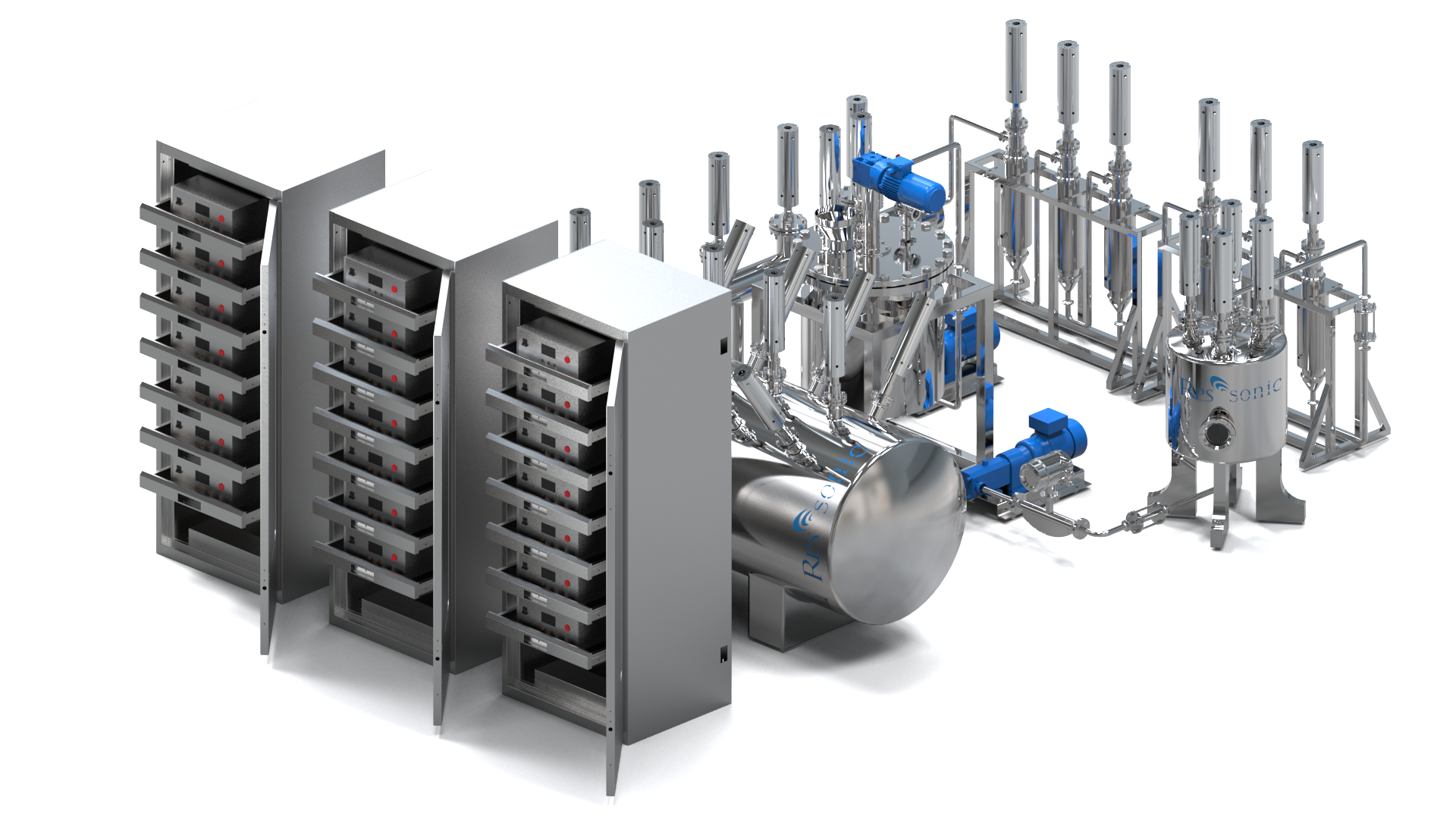
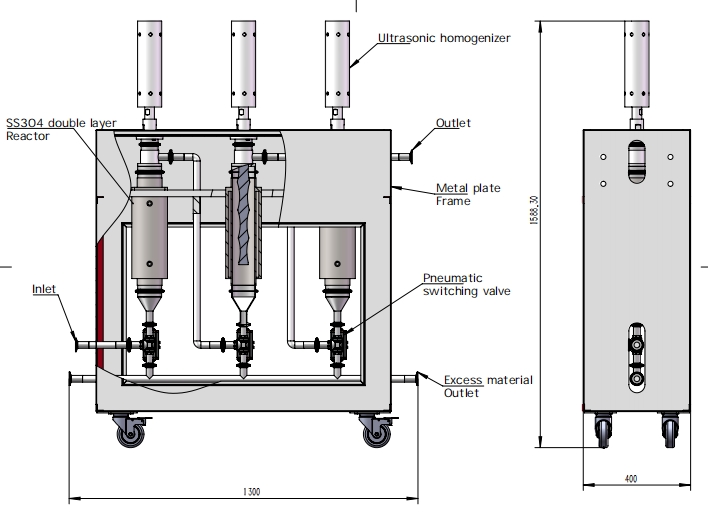
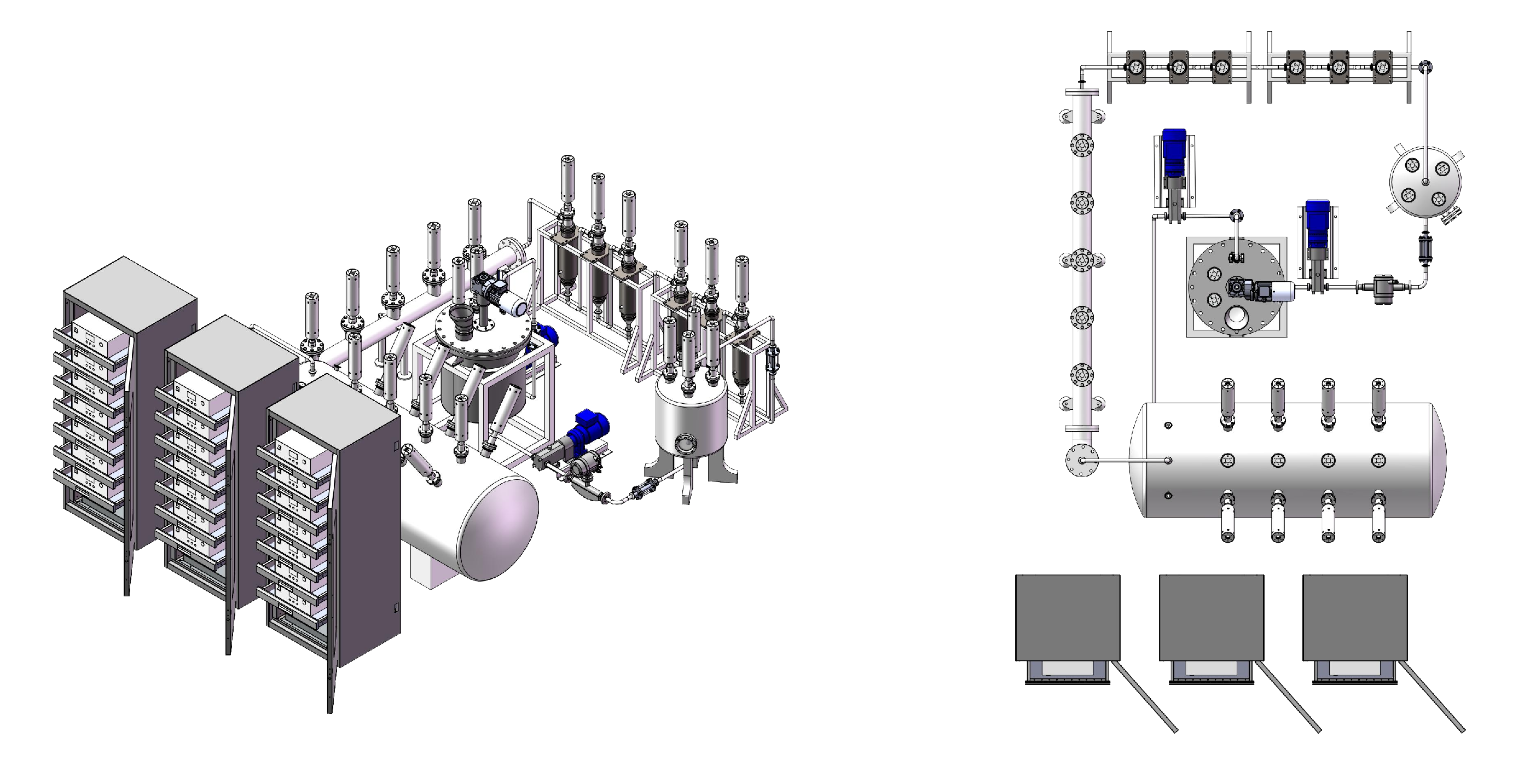
Its modular structure supports both batch and circulation operation modes, making it highly flexible for laboratory testing and pilot-scale validation.
Parameter
Model | SONOL20 |
Input voltage | 220/380V,50/60Hz |
Controller | Digital controller with automatic frequency tracking |
Rated power(kW) | 3.0 |
Power adjust | 50%~99% |
Amplitude | 30~80μm |
Frequency(kHz) | 20±0.5,automatic frequency tracking |
Horn material | Titanium alloy |
Flange | Tri-clamp/DN50 flange/customized flange |
Temperature control | Temperature control jacket for external temperature control system |
Processing volume | 200m-500mL,can be customized |
Operating method | Touch screen or buttons |
Working temperature | ≤200℃ |
Working pressure | ≤0.4MPa,can be customized |
Key Advantages
Ultrasonic cavitation enables rapid and uniform homogenization, significantly improving dispersion efficiency compared to mechanical mixing.
Intelligent temperature control ensures stable reaction conditions, preventing thermal damage and improving process reliability.
Compared with traditional ultrasonic systems, it provides higher reproducibility, better process stability, and improved control over material properties.
The system enhances experimental accuracy, making it ideal for sensitive formulations and advanced material research.
It offers scalable performance, allowing smooth transition from laboratory testing to pilot production.
The Ultrasonic Cavitation Testing System is widely used in:
Nanoparticle dispersion and material synthesis
Pharmaceutical formulation development
Cosmetic emulsions and active ingredient processing
Chemical reaction acceleration and sonochemistry
Biological sample preparation
Herbal and natural product extraction
Polymer and resin processing
Laboratory R&D and pilot-scale testing
Famous Customers
Catalogue of ultrasonic homogenizer
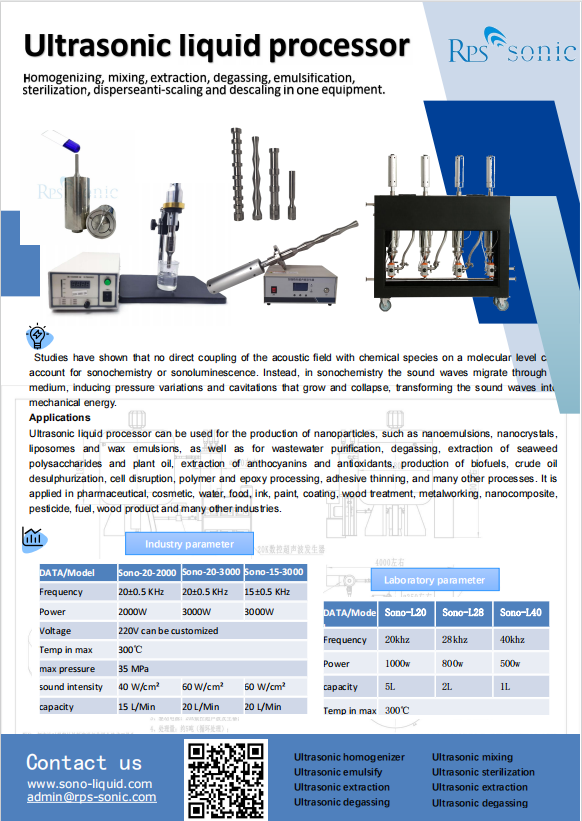
Ultrasonic homogenizers are powerful and reliable mixers for lab and industry for numerous applications. An ultrasonic homogenizer can be used for various applications, including:
Homogenization: Ultrasonic homogenizers can homogenize samples to create uniform and consistent mixtures.
Dispersion: Ultrasonic homogenizers can be used to disperse solid particles in liquids to create stable suspensions, to get nano-dispersions.
Emulsification: Ultrasonic homogenizers can be used to create stable emulsions and nanoemulsions by breaking up and dispersing immiscible liquids, such as oil and water.
Cell Disruption: Ultrasonic homogenizers can break open cells to extract intracellular components.
Degassing: Ultrasonic homogenizers can be used to remove dissolved gases from liquids. Anti-scaling and descaling, sterilizing,extraction Etc.

Ms. Yvonne
sales@xingultrasonic.com
+86 571 63481280
+86 15658151051
1st Building NO.608 Road ,FuYang, Hangzhou, Zhejiang,China