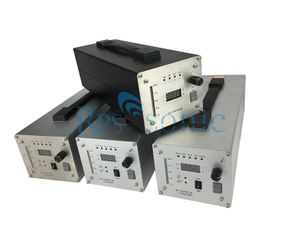
Currently, research on the extraction of antioxidants and anti-aging drugs from natural products has attracted widespread attention from domestic and foreign scholars. Considerable research results have been achieved in this field, and based on comprehensive domestic and international research repor
Ultrasonic spray coating system is a technique for forming thin films with specific functions or properties on the surface of optical glass. It utilizes ultrasonic waves to atomize liquid into fine droplets and uniformly spray them onto the surface of optical glass. This article introduces the princ
What is ultrasonic tinning?Ultrasonic tinning is a kind of welding method that does not use flux. The ultrasonic probe produces cavitation in the molten solder core through mechanical vibration at ultrasonic frequency, and removes the oxide film on the metal surface for smooth and clean tinning. Ult
Ultrasonic spray coating system is a technique for forming thin films with specific functions or properties on the surface of optical glass. It utilizes ultrasonic waves to atomize liquid into fine droplets and uniformly spray them onto the surface of optical glass. This article introduces the princ
The application of ultrasonic in the sewing industry mainly reflects the two major functions of ultrasonic: welding and cutting. In 2019, for masks that are popular all over the world, ultrasound is a household name for applying these two functions to the fullest. The cutting and welding of velvet c
Currently, research on the extraction of antioxidants and anti-aging drugs from natural products has attracted widespread attention from domestic and foreign scholars. Considerable research results have been achieved in this field, and based on comprehensive domestic and international research repor
The application of ultrasonic in the sewing industry mainly reflects the two major functions of ultrasonic: welding and cutting. In 2019, for masks that are popular all over the world, ultrasound is a household name for applying these two functions to the fullest. The cutting and welding of velvet c
What is ultrasonic tinning?Ultrasonic tinning is a kind of welding method that does not use flux. The ultrasonic probe produces cavitation in the molten solder core through mechanical vibration at ultrasonic frequency, and removes the oxide film on the metal surface for smooth and clean tinning. Ult
Currently, research on the extraction of antioxidants and anti-aging drugs from natural products has attracted widespread attention from domestic and foreign scholars. Considerable research results have been achieved in this field, and based on comprehensive domestic and international research repor
What's the Principle and theory of ultrasonic plastic welding machine? The principle of ultrasonic plastic welding machine? How does ultrasonic welding work? what's the composition and function of ultrasonic plastic welding machine What's the core parts in ultrasonic plastic welding machine Ultrasonic plastic welding machine models and specifications? What's the Advantages of ultrasonic welding?
Currently, research on the extraction of antioxidants and anti-aging drugs from natural products has attracted widespread attention from domestic and foreign scholars. Considerable research results have been achieved in this field, and based on comprehensive domestic and international research repor
Ultrasonic spray coating system is a technique for forming thin films with specific functions or properties on the surface of optical glass. It utilizes ultrasonic waves to atomize liquid into fine droplets and uniformly spray them onto the surface of optical glass. This article introduces the princ
The application of ultrasonic in the sewing industry mainly reflects the two major functions of ultrasonic: welding and cutting. In 2019, for masks that are popular all over the world, ultrasound is a household name for applying these two functions to the fullest. The cutting and welding of velvet c
Currently, research on the extraction of antioxidants and anti-aging drugs from natural products has attracted widespread attention from domestic and foreign scholars. Considerable research results have been achieved in this field, and based on comprehensive domestic and international research repor
The application of ultrasonic in the sewing industry mainly reflects the two major functions of ultrasonic: welding and cutting. In 2019, for masks that are popular all over the world, ultrasound is a household name for applying these two functions to the fullest. The cutting and welding of velvet c
What is Diesel Water Emulsion?To best understand what a diesel water emulsion is, we first must discuss the process of emulsifying liquids. Chemically speaking, an emulsified liquid, also known as a dispersion, is a liquid in which distributed particles of one material are dispersed in another mater
| Generator : | |
|---|---|
| Frequency: | |
| horn : | |
| Power: | |
| Availability: | |
| Quantity: | |
RPS-WM20
Rps-sonic
RPS-WM20
20Khz Bench-Top Ultrasonic Welders Ultrasonic Welding Machine with Touch Screen for Automobile Welding
Description
Ultrasonic welding is a process that uses high-frequency mechanical vibrations (ultrasound) to generate frictional heat at the contact surface of thermoplastic materials, causing them to melt locally under pressure and fuse together.
Simply put, it's like "molecular suturing":
High-frequency vibration: The transducer converts electrical energy into high-frequency ultrasonic vibrations of 20kHz, 30kHz, or 40kHz.
Energy Transfer: The vibrations are transmitted to the packaging material to be sealed via the welding head (horn).
Frictional Heating: The molecules at the contact surface of the packaging material generate instantaneous high temperatures due to high-frequency friction.
Fusion and Curing: The contacting materials rapidly melt and fuse together under pressure. When the pressure is removed, they quickly cool and solidify, forming a secure seal.
Core Technology Components
A typical ultrasonic welding system includes:
Power Supply: This converts 50/60Hz mains power into a high-frequency electrical signal.
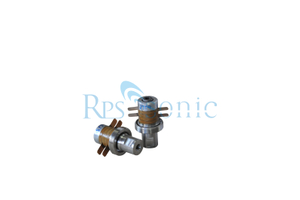
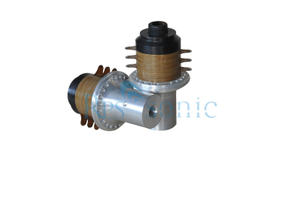
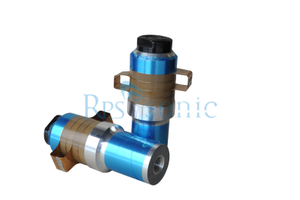
Transducer/Converter: Converts high-frequency electrical signals into mechanical vibrations of the same frequency.
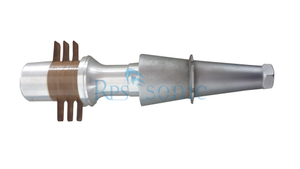
Booster: Amplifies or reduces the amplitude of the vibrations and transmits them to the welding head.
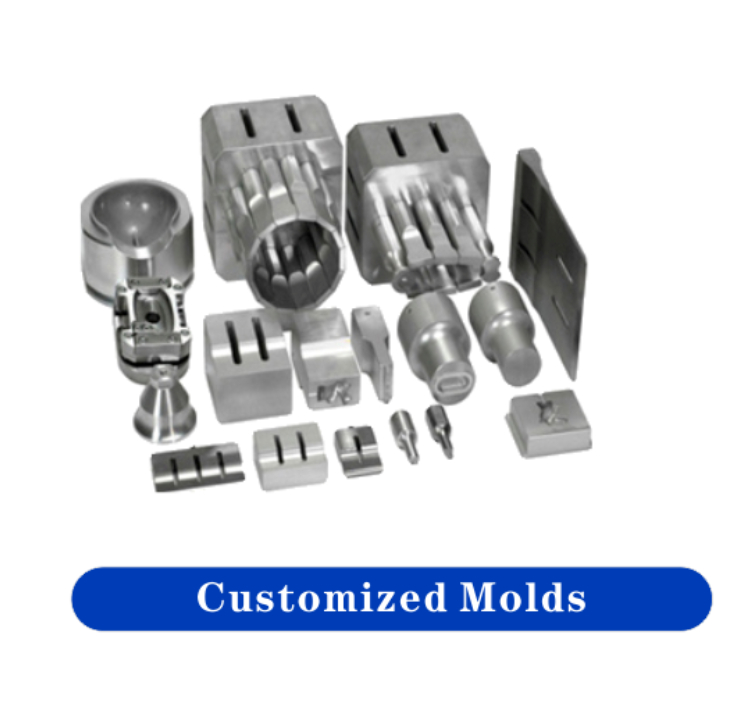
Horn/Sonotrode: A metal tool that directly contacts the product, precisely transmitting ultrasonic vibration energy to the area to be sealed. Its shape must be customized to the product.
Anvil: A fixed platform that supports the product and provides a counterforce for welding.
Parameter
| Frequency | Power | Working distance | Input voltage | Air pressure | System language |
| 15Khz | 2500W/3000W/4000W | 75mm/100mm | 220V or 110v | 0.2-0.8Mpa | English/Chinese |
| 20Khz | 2000W/3000W | 75mm | 220V or 110v | 0.2-0.8Mpa | English/Chinese |
Key Advantages
High Efficiency & Speed: The welding process is typically completed within 0.1 to 1 second, significantly improving production efficiency and easily integrating into automated production lines.
Clean & Environmentally Friendly
No Additives Required: No glue, solvents, or adhesives are used, avoiding the risk of chemical contamination of the contents and making it more environmentally friendly.
Smoke-Free & Dust-Free: The process is clean, suitable for industries with high cleanliness requirements, such as food and medical devices.
High Sealing Quality
High Sealing Strength: The formed seal area has high strength, providing excellent leak-proof and contamination-proof performance.
Aesthetically Pleasing: The sealing line is neat, fine, and aesthetically pleasing. Various complex sealing patterns can be achieved.
Low Gas Permeability: For foods requiring modified atmosphere packaging (MAP), it effectively maintains the gas composition within the packaging.
Energy Saving: Energy is applied only to the sealing area, resulting in very low overall energy consumption.
Easy to Automate: The entire process is program-controlled, and parameters (such as time, energy, and pressure) can be precisely set, ensuring consistent and traceable results.
It can achieve anti-theft function: such as blister packaging, once torn open, it cannot be restored, effectively protecting the product.
Function
◆ Real-time frequency automatic tracking display;
◆ Welding mode: time, energy
◆Amplitude stepping function;
◆Welding amplitude 10-100 adjustable (1% accuracy)
◆Amplitude compensation
◆Mold impedance analysis + protection
◆Overload protection;
◆Quality management (time, energy mutual detection)
◆ welding record (operation statistics);
◆ powerful, high quality, high welding stability
Application
Ultrasonic welding machines are widely used in modern manufacturing due to their fast processing speed, clean bonding, and ability to join thermoplastic and certain metal materials without adhesives or screws. The technology is based on high-frequency vibration that generates heat at the contact interface, enabling rapid molecular fusion.
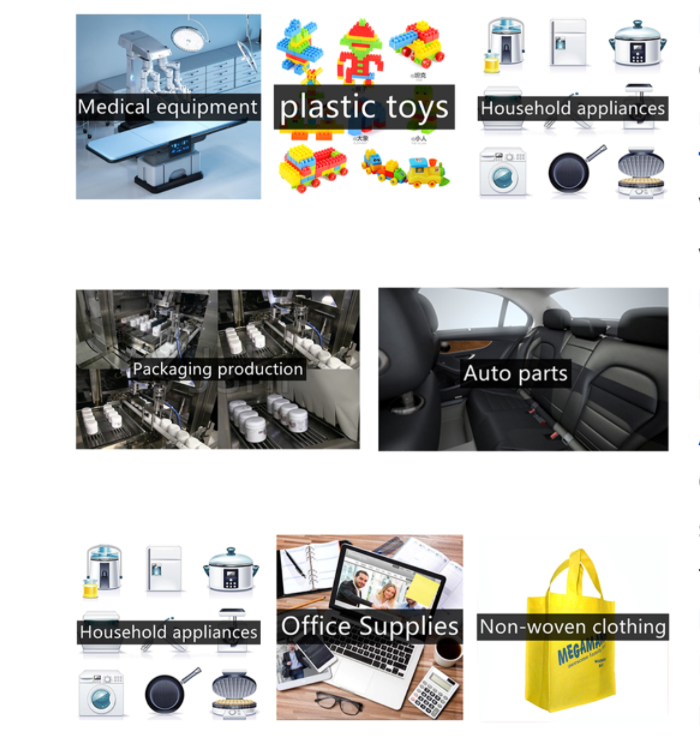
Ultrasonic welding is used for assembling lightweight plastic components that require high strength and precision, such as:
Interior trim parts
Dashboard components
Door panels and clips
Automotive lighting housings
Fluid reservoirs and filters
It is widely applied in electronic device assembly where clean, precise, and reliable connections are required:
Electronic housings and enclosures
Wire harness and connector welding
Battery packs and terminals
Switches and sensors
Mobile and consumer electronics components
Ultrasonic welding is ideal for sterile, contamination-free assembly:
Medical device housings
Disposable medical products
Fluid containers and tubing components
Diagnostic equipment parts
Non-woven medical packaging
Used for fast and clean sealing of plastic packaging without adhesives:
Blister packaging
Cosmetic containers
Food packaging boxes
Sealed plastic trays
Tamper-evident packaging
Ultrasonic welding enables cutting, sealing, and bonding of synthetic fabrics:
Nonwoven fabric products
Medical gowns and masks
Filter materials
Elastic straps and garment seams
Hygiene products
Used for assembling durable plastic parts in consumer appliances:
Vacuum cleaner components
Washing machine parts
Kitchen appliance housings
Air purifier casings
Small plastic structural parts
Ultrasonic welding is used for leak-proof sealing of fluid handling components:
Fuel system components
Air and water filters
Hydraulic plastic parts
Fluid tanks and reservoirs
Increasingly important in energy applications:
Lithium battery packs
Battery casing sealing
Busbar and connector welding
Energy storage components
AMPLITUDE REFERENCE GUIDE for ULTRASONIC WELDING (in Microns (um))
Resin
| Frequency | |||
Amorphous | 15Khz | 20Khz | 30Khz | 40Khz |
acrylonitrile Butadiene Styrene(ABS) | 36-84 | 30-70 | 24-56 | 18-42 |
Acrylonitrile Styrene Acrylate(ASA) | 36-84 | 30-70 | 24-56 | 18-42 |
Polycarbonate(PC) | 72-120 | 60-100 | 48-80 | 36-60 |
PC/ABS | 72-120 | 60-100 | 48-80 | 36-60 |
Polycarbonate/ Polyester | 60-120 | 50-100 | 40-80 | 30-60 |
Polyetherimide(PEl) | 84-120 | 70-100 | 56-80 | 42-60 |
Polyethersulfone(PES) | 84-120 | 70-100 | 56-80 | 42-60 |
Polymethyl Methacrylate(Acrylic, PMMA) | 48-84 | 40-70 | 32-56 | 24-42 |
Polyphenylene Oxide(PPO) | 60-108 | 50-90 | 40-72 | 30-54 |
Polystyrene(PS) | 36-84 | 30-70 | 24-56 | 18-42 |
Polysulfone(PSU) | 84-120 | 70-100 | 56-80 | 42-60 |
Polyvinyl Chloride(rigid PVC) | 48-96 | 40-80 | 32-64 | 24-48 |
Styrene-Acrylonitrile (SAN) | 36-84 | 30-70 | 24-56 | 18-42 |
Semi-Crystalline | ||||
Cellulosics(CA, CAB, CAP) | 72-120 | 60-100 | 48-80 | 36-60 |
Liquid Crystal Polymer(LCP) | 84-144 | 70-120 | 56-96 | 42-72 |
Polyoxymethylene, Polyacetal(POM) | 84-144 | 70-120 | 56-96 | 42-72 |
Polyamid(Nylon, PA) | 84-144 | 70-120 | 56-96 | 42-72 |
Polybutylene Terephthalate(Polyester, PBT) | 84-144 | 70-120 | 56-96 | 42-72 |
Polyethylene Terephthalate(Polyester, PET) | 96-144 | 80-120 | 64-96 | 48-72 |
Polyetheretherketone(PEEK) | 84-144 | 70-120 | 56-96 | 42-72 |
Polyethylene(PE) | 108-144 | 90-120 | 72-96 | 54-72 |
Polyphenylene Sulfide(PPS) | 96-144 | 80-120 | 64-96 | 48-72 |
Polypropylene(PP) | 108-144 | 90-120 | 72-96 | 54-72 |
Ms. Yvonne
sales@xingultrasonic.com
+86 571 63481280
+86 15658151051
1st Building NO.608 Road ,FuYang, Hangzhou, Zhejiang,China