Ultrasonic Fabric Sealing and Cutting Technology: A Comprehensive Analysis from Principles to Practice
Ultrasonic fabric sealing and cutting technology is not a recent innovation. Its origins date back to around 1966, when the concept of using ultrasonic energy to bond thermoplastic fiber structures was first patented. In 1970, Branson Sonic Power Company introduced the first ultrasonic sewing machine; by the early 1970s, the "Pinsonic" process developed by Hunter Machine Company had enabled the continuous production of quilted materials. Over more than half a century of development, this technology has evolved from simple bonding applications into a comprehensive processing solution integrating cutting, edge sealing, and embossing, achieving widespread adoption in the textile and nonwoven industries. This article provides a systematic analysis of ultrasonic fabric sealing and cutting technology, covering its technical fundamentals, fabric compatibility, economic aspects, and process comparisons.
I. Technical Fundamentals: Vibration, Friction, and Fusion
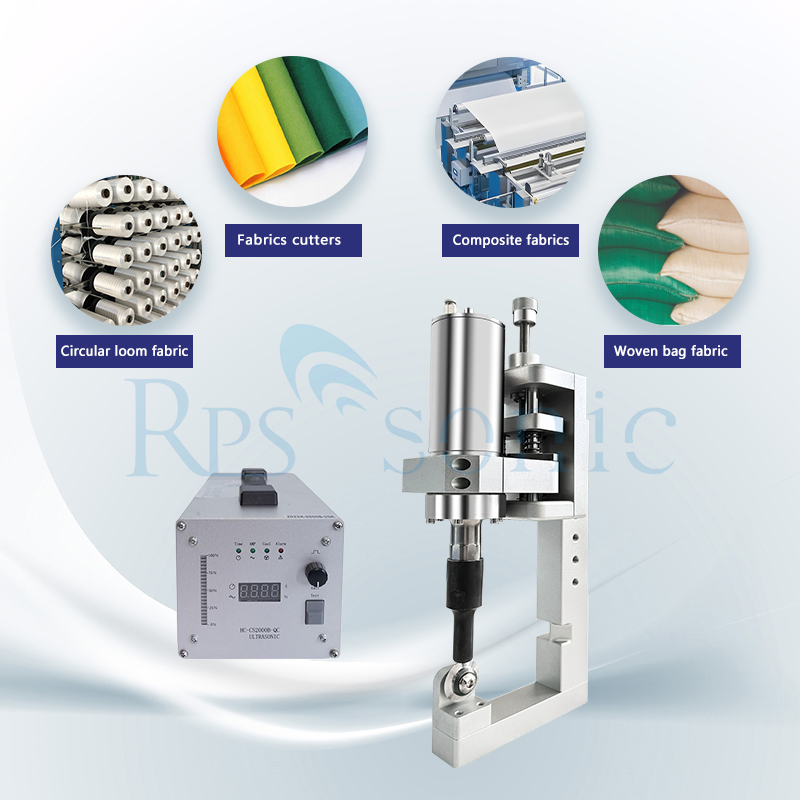
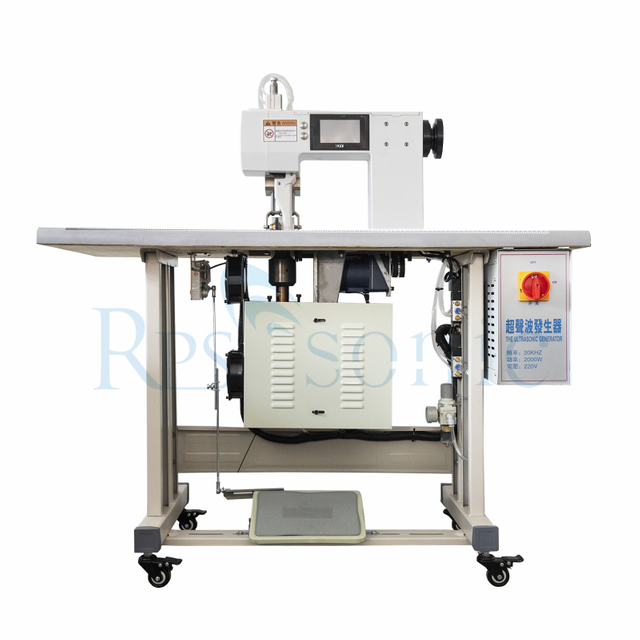
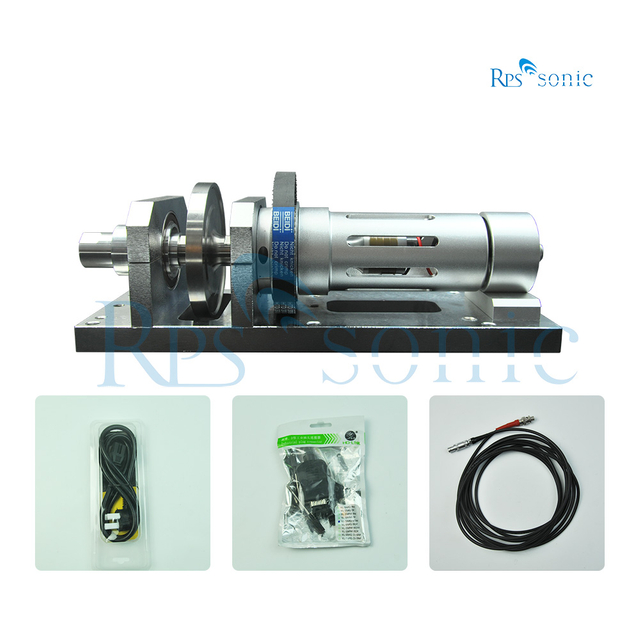
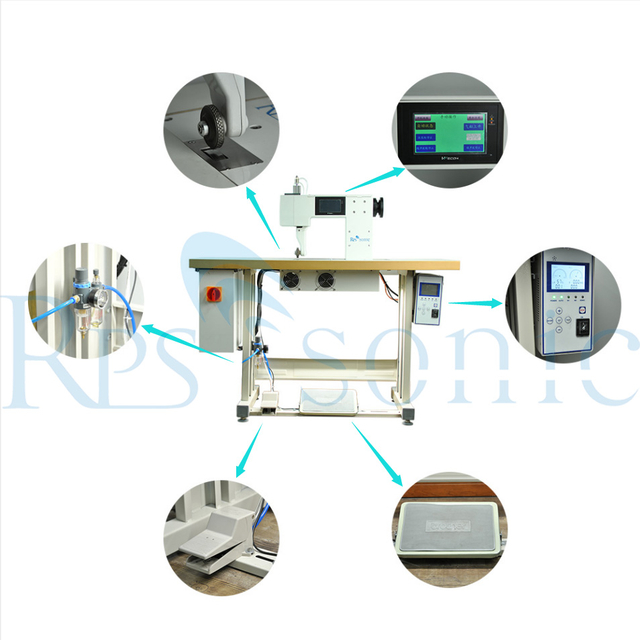
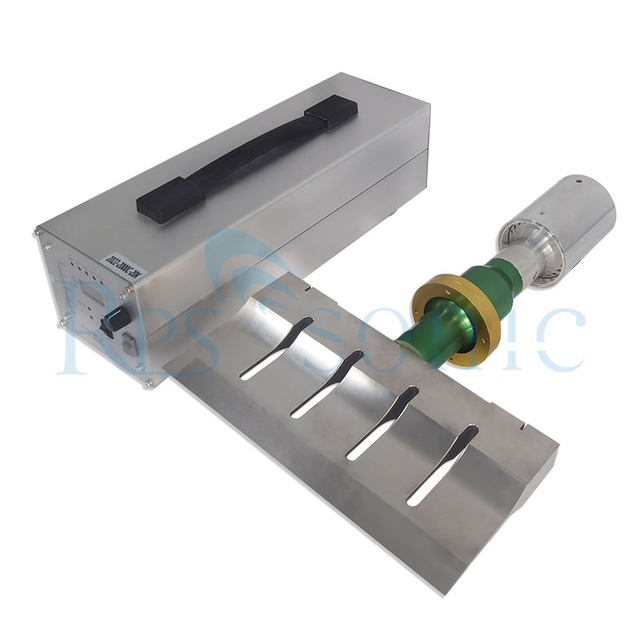
The core operating frequency of ultrasonic fabric sealing and cutting equipment typically ranges from 20 kHz to 40 kHz. The working principle is as follows: an ultrasonic generator converts electrical energy into high-frequency electrical signals, which a transducer transforms into mechanical vibrations at the same frequency; these vibrations are then transmitted to the fabric surface via a welding horn (or cutting tool). The tool vibrates with an amplitude of approximately 10–30 μm. Upon contact with the fabric, the high-frequency vibration generates intense friction between the fabric molecules, raising the local temperature to 200–300°C—sufficient to instantly soften or even melt thermoplastic fibers. Simultaneously, the cutting edge applies slight pressure (usually just 0.1–5 N) to physically separate the material, while the molten fibers re-solidify upon cooling to form a sealed edge.
Two key parameters in this process warrant attention. The first is frequency selection: high frequencies (35 kHz and above) are suitable for the precision cutting of thin materials, whereas low frequencies (20 kHz) combined with high power output are better suited for thick composite materials. The second is the control of the heat-affected zone (HAZ): the HAZ in ultrasonic cutting is typically less than 0.5 mm—far smaller than the 2–3 mm range associated with laser cutting—meaning the fabric undergoes virtually no thermal deformation or discoloration during the cutting process.
II. Fabric Suitability: Not All Fabrics Are Compatible
Ultrasonic sealing and cutting technology is not a universal solution. Its core requirement is that the fabric contains a sufficient proportion of thermoplastic synthetic fibers. Generally, a synthetic fiber content of 20% to 70% or higher is necessary to achieve effective edge sealing; the higher the content, the stronger the seal. Pure natural fibers (such as 100% cotton, linen, or silk) lack thermoplastic components and cannot achieve self-sealing via ultrasonic methods.
Ultrasonic sealing and cutting results vary depending on the fabric structure:
Woven fabrics: Warp and weft yarns are fused and secured at the cut edge, effectively preventing fraying or unraveling; however, excessive energy may cause localized edge hardening, affecting the fabric's hand-feel.
Non-woven fabrics: Due to the random arrangement of fibers rather than an interlaced structure, ultrasonic cutting perfectly maintains material integrity and offers excellent edge stability—which is why non-woven fabrics represent the most mature application area for this technology.
Stretch fabrics (spandex, Lycra, etc.): Precise control of process parameters is required; while sealing and cutting can prevent fraying, improper heat control may lead to edge embrittlement and reduced elasticity.
Multi-layer composite fabrics: Simultaneous cutting and sealing of multiple layers is possible, though improper parameter settings may result in delamination between layers.
III. Economic Analysis: Initial Investment vs. Long-Term Return
The initial investment for ultrasonic sealing and cutting equipment is higher than that for traditional mechanical cutting machinery. A domestically produced ultrasonic cutting table typically costs between $8,000 and $25,000, depending on the equipment width and level of automation. However, when considering the total lifecycle cost, the economic advantages are significant:
Direct cost savings: Traditional cutting requires an additional edge-finishing (serging) step, taking approximately 15 to 30 seconds per piece. Ultrasonic sealing and cutting combine these two processes into one, completely eliminating the need for the separate finishing step. Furthermore, ultrasonic cutting does not require blade replacement, thereby eliminating the consumable costs associated with traditional cutting blades. Efficiency Gains: Actual production data shows that after introducing ultrasonic sealing and cutting equipment, the number of cut pieces an operator can complete per shift increases by approximately 40%, while the edge defect rate drops from 4.2% to 0.3%. In high-volume production scenarios, the overall cost advantage becomes even more pronounced.
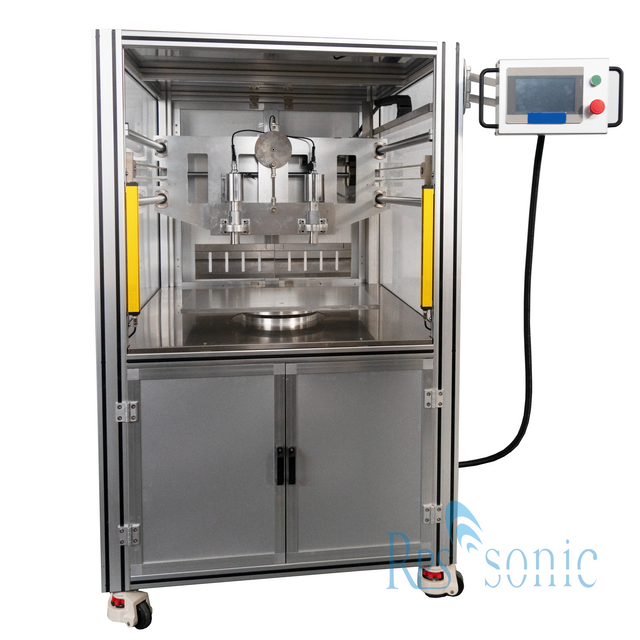
Labor Savings: Fully automated ultrasonic sealing and cutting equipment enables end-to-end automation—from unwinding and slitting to cross-cutting and finished product output—significantly reducing the need for manual intervention.
IV. Process Comparison: Ultrasonic, Laser, and Hot Knife
In the field of fabric cutting, ultrasonic, laser, and hot knife technologies are the three mainstream methods, each with its own advantages and disadvantages:
Ultrasonic vs. Laser: Laser cutting offers high precision and speed, but the cut edges are prone to scorching and hardening. Ultrasonic cutting delivers edge-sealing results that laser technology cannot match: the cut is smooth and free of scorch marks, achieving a perfect seal. Ultrasonic technology also holds an advantage in energy efficiency. However, ultrasonic equipment currently lags slightly behind laser systems in terms of automation integration, and its cutting speed is relatively slower.
Ultrasonic vs. Hot Knife: Hot knives cut fabric by melting it with a high-temperature metal blade, which often leads to material deformation and scorched edges. Ultrasonic cutting is a "low-temperature" process; vibrational energy instantly softens the material's molecules rather than using high-temperature ablation, thereby avoiding thermal deformation issues. Additionally, ultrasonic equipment can operate continuously without preheating, resulting in higher production efficiency.
Overall, ultrasonic sealing and cutting offers irreplaceable advantages regarding edge quality and sealing performance, making it particularly suitable for mid-to-high-end products that demand superior edge quality.
Conclusion
From its conceptualization in a 1966 patent to becoming a standard process in today's textile industry, ultrasonic fabric sealing and cutting technology has evolved over more than half a century. Its core value lies in combining the separate steps of "cutting" and "edge sealing" into a single process—representing not merely a technical innovation, but a fundamental restructuring of production logic. For textile manufacturers, adopting ultrasonic sealing and cutting equipment is not just a technical solution to quality issues like fraying and unraveling; it is a strategic choice that streamlines workflows, reduces overall costs, and enhances product competitiveness. As emerging sectors—such as smart wearables and eco-friendly materials—increasingly demand higher precision and efficiency in flexible material processing, the scope of application for ultrasonic sealing and cutting technology will continue to expand, injecting fresh momentum into the high-quality development of the textile manufacturing industry.