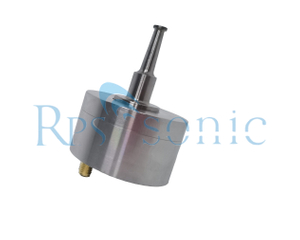
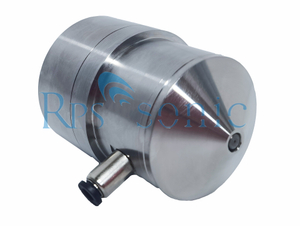
Ultrasonic Atomizer Solar Cell Coating Fuel Cell Coating
Introduction:
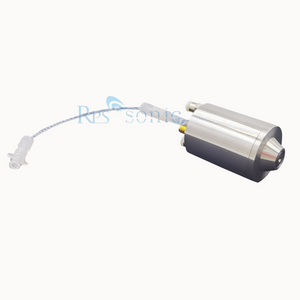
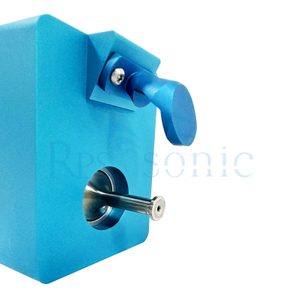
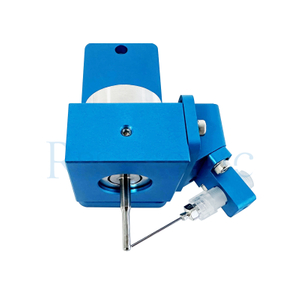
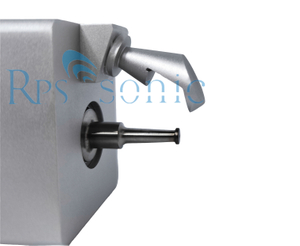
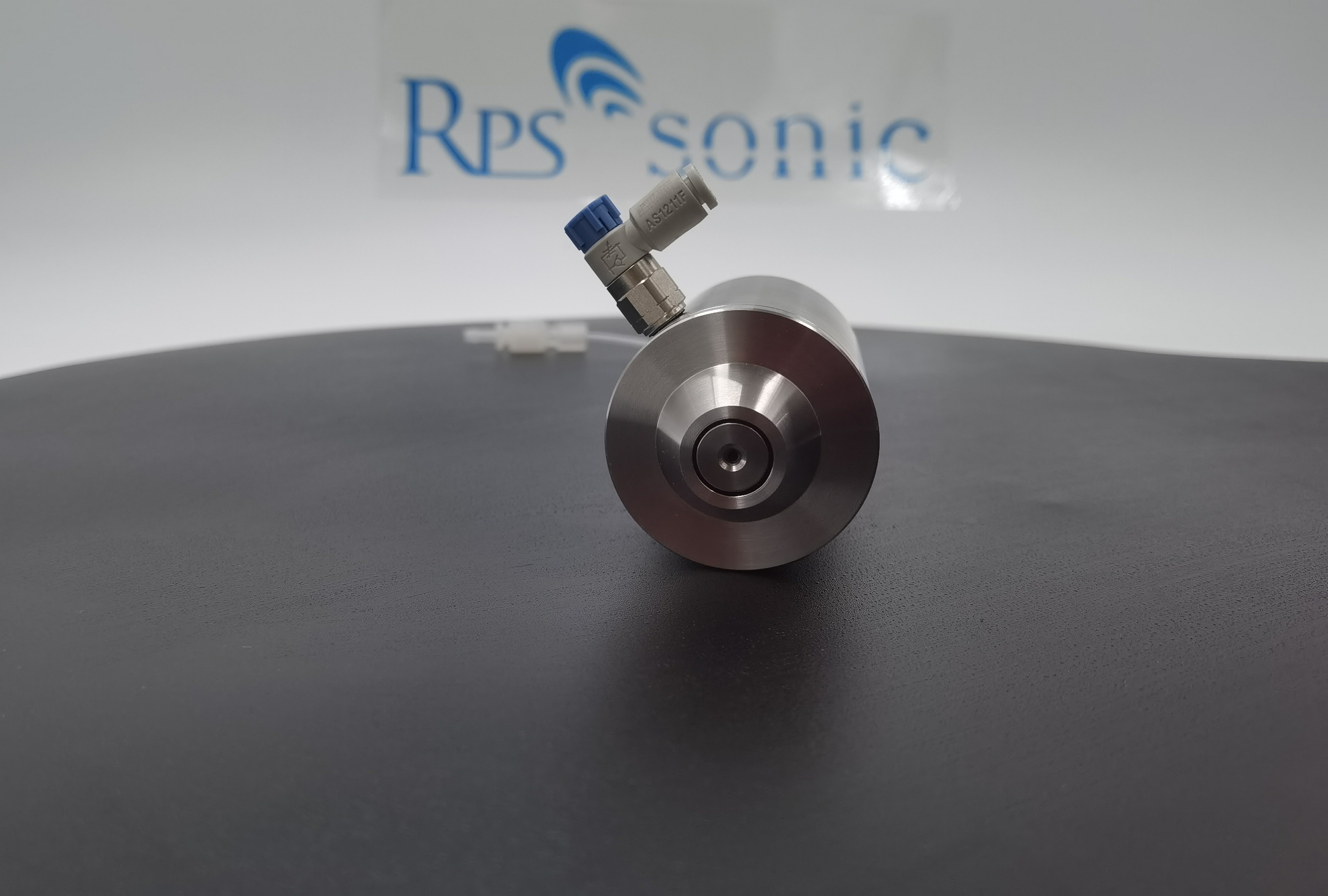
This 40Khz Ultrasonic spray nozzle adopts a special contraction flow channel designed to uniformly gather and distribute the carrier gas, so that the liquid mist after ultrasonic atomization is sprayed in a focused form, thereby reducing the spray coating area of the ultrasonic spray nozzle. This 40khz ultrasonic nozzle is suitable for spray small-area film coatings such as fuel cell membrane electrode spray coatings, thin film solar cell spray coatings, selective flux spray coatings, drug stent spray coatings, and drug balloon catheter spray coatings.
How Ultrasonics Spray Nozzles Work
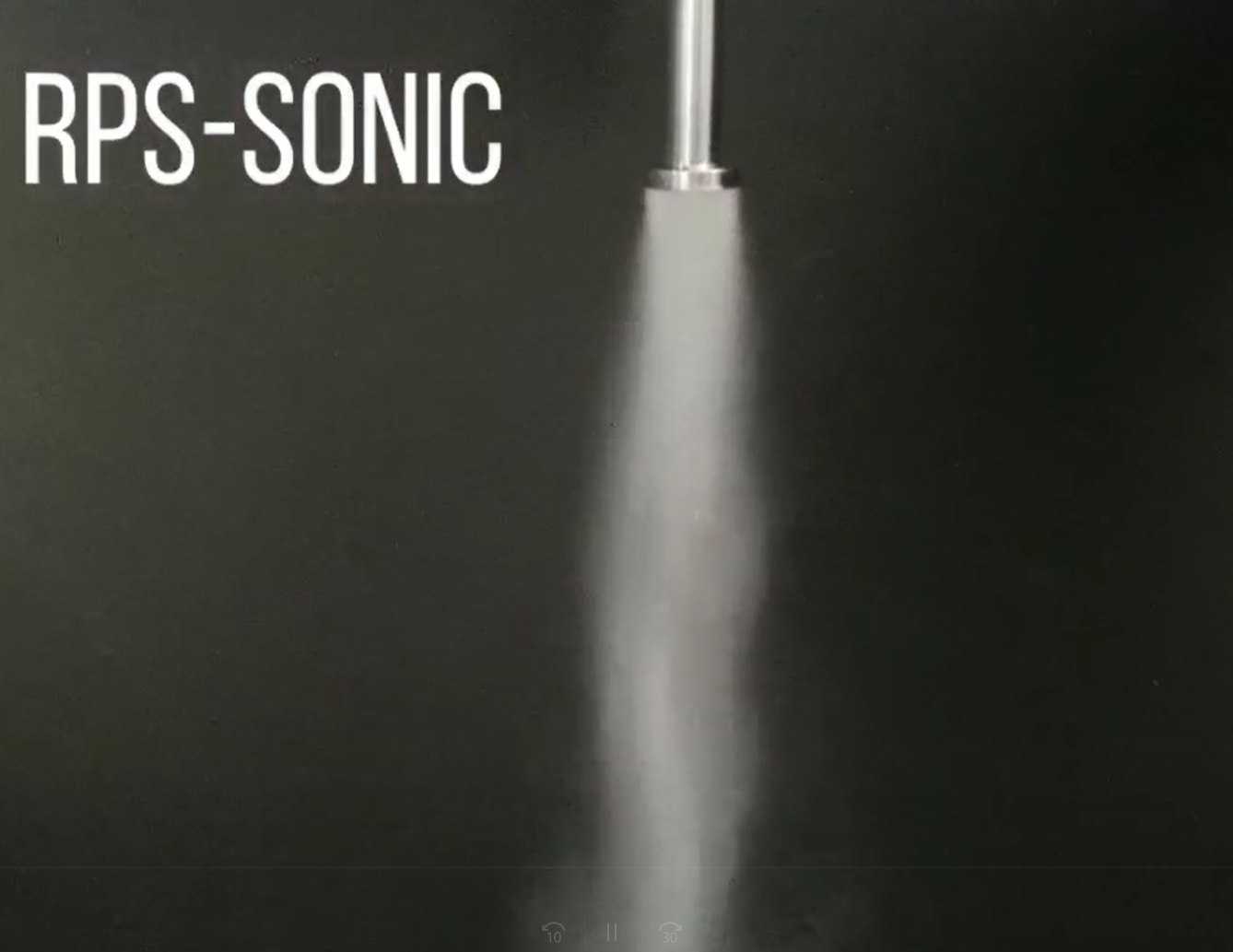
Ultrasonic spray nozzles are constructed to vibrate longitudinally at high frequency by means of piezoelectric transducers. This longitudinal up and down motion creates standing waves in a thin film of applied liquid on the ultrasonic nozzle tip, in which the amplitude of these waves can be controlled by the power generator. These standing liquid waves can be extended upwards off the ultrasonic nozzle tip to the point they separate into evenly sized droplets with little to no kinetic energy (see video). Secondary shaping gas or ambient air can be used to easily entrain droplets to the desired shape and velocity if needed. A variety of ultrasonic nozzles are offered that help determine droplet size, liquid flow rate and spray patterns.
Overview of Ultrasonic Atomizer Coating Technology
Ultrasonic atomizer coating is a high-precision, low-waste thin-film deposition technology that utilizes high-frequency ultrasonic vibration (40kHz–120kHz) to convert functional liquid materials into uniform micron-level fine droplets. Unlike traditional pressure spraying, blade coating, and roller coating methods, it achieves non-contact, soft spraying with precisely controlled droplet size, film thickness, and coating uniformity. This advanced coating solution is widely applied in high-end energy device manufacturing, especially for precision coating processes of solar cells and fuel cells, perfectly matching the stringent requirements of new energy components for thin, uniform, dense, and low-defect functional films.
Ultrasonic Atomizer for Solar Cell Coating
Technical Introduction
Solar cell coating is a core process that determines photoelectric conversion efficiency, weather resistance, and service life of photovoltaic devices. Ultrasonic atomizer coating technology is applicable to multiple key coating links of solar cells, including perovskite layer coating, anti-reflection coating, passivation layer coating, conductive layer coating, and hole/electron transport layer coating. Through adjustable ultrasonic frequency and spraying parameters, the system atomizes functional coating inks into evenly distributed micro-droplets, which are uniformly deposited on solar cell substrates (silicon wafers, flexible substrates, glass substrates) to form ultra-thin, smooth, and pinhole-free functional films. The entire process features low substrate damage and high film-forming consistency, adapting to both rigid silicon-based solar cells and flexible thin-film solar cell production.
Parameter:
| Item | Parameter |
| Frequency | 40Khz |
| Power | 10~100w |
| FLOW RATE (ml/min) | 0~200ml/min |
| Spray width | 10~50mm |
| Solution utilization | above 98% |
Application:
Electronics: Sensors, PCB Fluxing, Semiconductors etc.
Industrial: Glass, Touch Screen, etc.
Medical: Stents, Balloon Catheters, Diagnostic Device etc.
Energy: Fuel Cell, Solar Cell, etc.
Core Advantages
Ultra-high Coating Uniformity & Precise Thickness Control: Ultrasonic atomization produces concentrated and uniform micro-droplets without large particle splashing or material agglomeration. It enables nanometer to micrometer-level precise control of coating thickness, effectively eliminating film thickness deviation and surface unevenness caused by traditional coating methods. Uniform functional films significantly reduce light reflection loss and improve the photoelectric conversion efficiency of solar cells.
Extremely Low Material Waste & Cost Reduction: The material utilization rate of ultrasonic atomization coating exceeds 95%, far higher than the 30%–50% of traditional pressure spraying. It greatly saves expensive photovoltaic coating materials such as perovskite raw materials, conductive silver paste, and passivation coatings, effectively reducing the production cost of high-efficiency solar cells.
Zero Substrate Damage & Wide Compatibility: Adopting low-speed soft spraying mode, the fine droplets land gently on the substrate without impact force, avoiding scratch, deformation, or structural damage to fragile thin-film substrates and precision cell structures. It is compatible with various solar cell types, including monocrystalline/polycrystalline silicon cells, perovskite solar cells, and flexible photovoltaic cells.
Excellent Film Stability & Improved Device Durability: The sprayed coating is dense, crack-free, and highly adhesive to the substrate, effectively enhancing the weather resistance, oxidation resistance, and wear resistance of solar cells. It reduces the attenuation of photoelectric performance during long-term outdoor operation and extends the service life of photovoltaic modules.
No Nozzle Blockage & Stable Mass Production: Different from pressure nozzles that are prone to clogging by high-viscosity or particle-containing coatings, ultrasonic atomizing nozzles rely on vibration atomization, which fundamentally avoids blockage problems, ensuring continuous, stable, and repeatable mass production.