
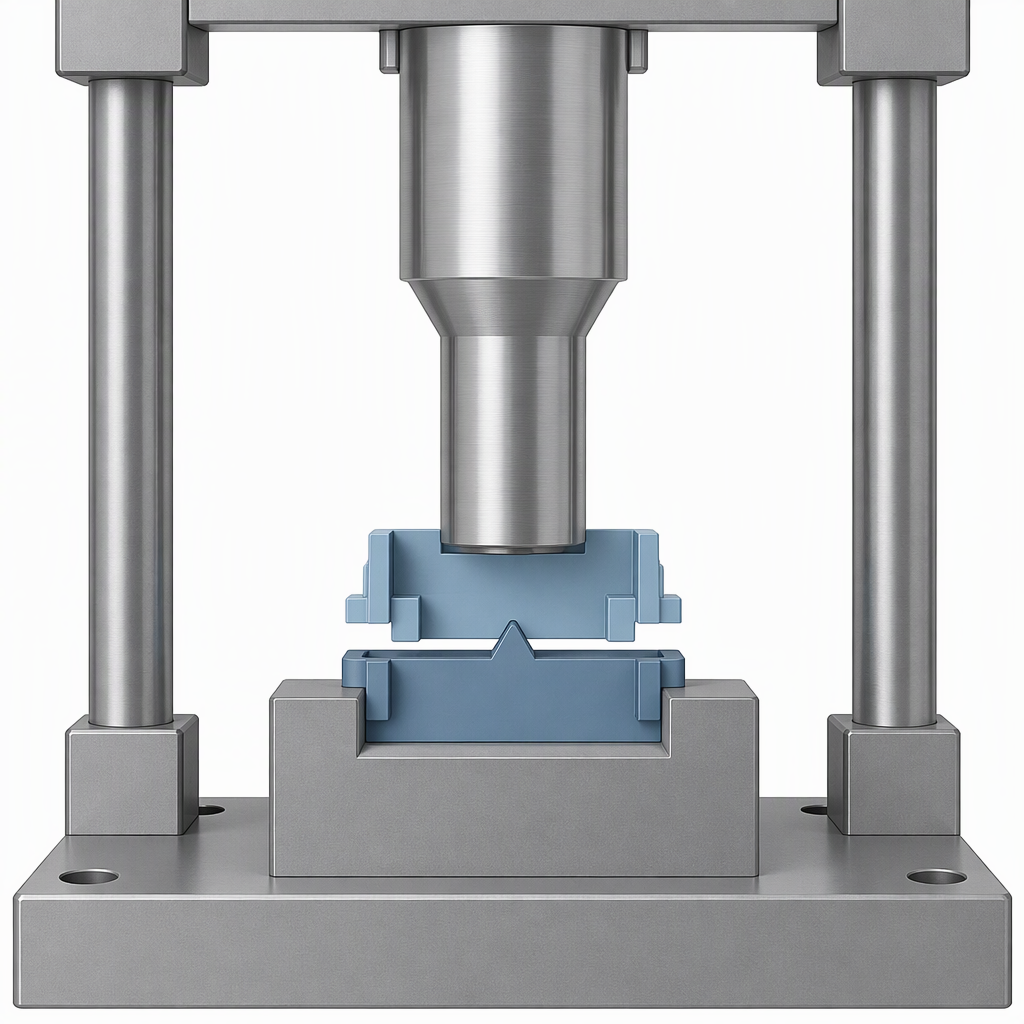
Ultrasonic plastic welding melts designed contact points at the joint interface while the parts are held under pressure and vibrated at high frequency. Whether the finished joint also seals depends on part positioning, weld-line structure, wall thickness, material and the frequency and power used. Treat ultrasonic plastic compatibility as a sample-verified decision, not a resin name on a data sheet.
What Determines Whether Two Plastic Parts Can Be Ultrasonically Welded?
Compatibility is decided by whether the two parts can be pressed together while high-frequency vibration is applied so that the designed contact points at the interface melt locally. Rigid and soft thermoplastics and thermoplastic composites can be joined this way, but the material pair, joint detail, part geometry and seal requirement have to work together.
Can Ultrasonic Welding Join Two Different Plastics?
Yes. Ultrasonic welding can join dissimilar materials, but it is best used with similar plastics. Treat a dissimilar pair as a trial candidate rather than an automatic no, and prove the joint and seal on the real parts before tooling.
The process still depends on local melting at designed contact points, so the pair and the joint detail must be assessed together.
Which Material and Part Data Should You Verify Before Tooling?
Verify the polymer pair, the joint interface and the part geometry as one set, because the process melts designed contact points under pressure and vibration. Add the seal requirement to the same review: water- or airtightness depends on positioning, weld-line structure, wall thickness, material, frequency and power.
| What to verify | Why it changes the weld decision | What to obtain before tooling |
|---|---|---|
| Polymer pair: similar or dissimilar | Dissimilar materials can be joined, but the process is best used with similar plastics. | Supplier grade data and a sample weld on the actual pair. |
| Joint interface and contact point | The weld relies on designed contact points at the interface melting locally. | A joint drawing that shows the contact feature and melt zone. |
| Part size and joint depth | The process has shallow weld depth, suits smaller items and may not weld large joints in one operation. | A geometry review and sample parts at the longest joint. |
| Seal requirement | Water- or airtightness is not automatic; it depends on part positioning, weld-line structure, wall thickness, material and process settings. | A leak or airtightness test on the production geometry. |
How Does Joint Design Change Material Compatibility?
Joint design is part of compatibility because the process works by concentrating vibration at designed contact points that melt locally. A moulded contact feature at the joint gives the melt a defined place to start.
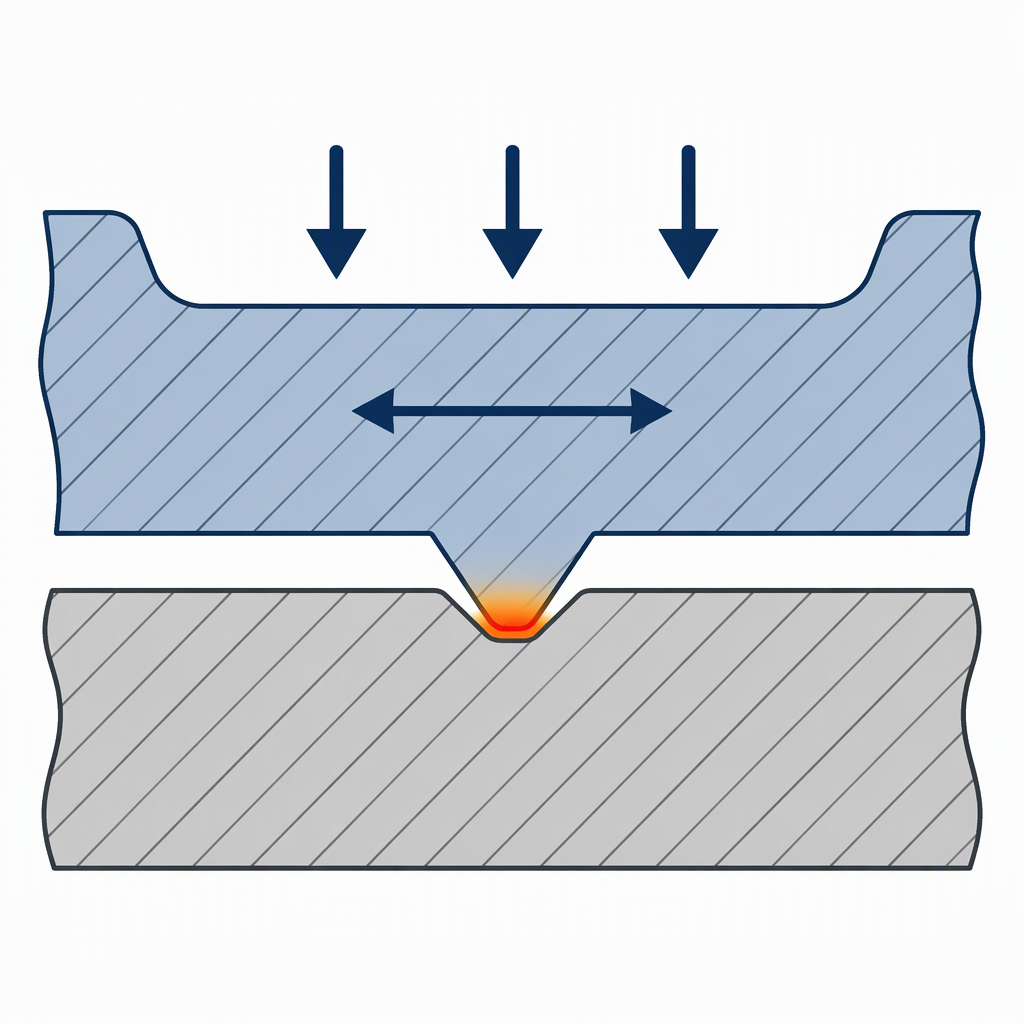
Specially designed joint details are often needed, so the joint drawing belongs in the compatibility review, not only in the mould design.
What Do Frequency, Power and Seal Requirements Have to Do With Material Choice?
Frequency and power are part of the same decision: equipment commonly runs at 15, 20, 30, 35, 40 or 70 kHz. Seal performance depends on the frequency and power used, together with part positioning, weld-line structure, wall thickness and material.
A higher frequency is not a substitute for a suitable pair or joint. Select the frequency and power for the part and seal requirement, then confirm the combination on samples.
When Does a Part Fall Outside Ultrasonic Welding's Limits?
A part is outside the comfortable range when it needs a deep weld, a large joint in one operation, or a joint detail that cannot be designed into the part. The process has shallow weld depth, is suited mainly to smaller items and may not weld large joints in a single operation.
Ultrasonic Welding Compatibility Checklist
Close out the checklist below before tooling release: identify the actual polymer pair, attach the joint drawing and record sample welds at the intended frequency and power. Add the seal result on the same production geometry, because water- or airtightness is not automatic.
- Identify the actual polymer pair and grade from supplier data, not from a family name alone.
- Show the designed contact feature and local melt zone on the joint drawing.
- Check part size, joint length and weld depth against the process limits; the process is suited mainly to smaller items and shallow weld depth.
- State the seal requirement as a functional test, because seal performance depends on positioning, weld-line structure, wall thickness, material, frequency and power.
- Record sample welds at the intended frequency and power.
- Attach the seal test result for the production geometry; do not release tooling on an assumption that the weld is water- or airtight.
Conclusion
Ultrasonic plastic welding can join dissimilar materials but is best used with similar plastics. The process still depends on designed contact points melting locally under pressure and vibration. Seal performance is a separate result that depends on part positioning, weld-line structure, wall thickness, material and process settings. Release tooling only after the material pair, joint detail, part geometry and seal requirement are proved on samples.
Frequently Asked Questions
The answers below cover the compatibility questions that most often change a tooling decision: dissimilar polymers, seal performance, noise, part size and sample validation.
Can ultrasonic welding join two different plastics?
It can join dissimilar materials, but it is best used with similar plastics. Treat a dissimilar pair as a trial candidate and prove the joint and seal on the actual parts before tooling.
Does ultrasonic welding give a waterproof or airtight joint automatically?
No. Water- or airtightness is not automatic. It depends on correct positioning of the two plastic shells, weld-line structure, wall thickness, materials, and the frequency and power used. Specify a leak or airtightness test on the production geometry.
Is high-frequency noise from ultrasonic welding a hearing hazard, and is extraction or ventilation needed?
High-frequency sound from ultrasonic welding can damage hearing. Enclose the machine in a safety box or use ear protection. The process does not require ventilation to remove heat or exhaust, but follow your site noise assessment and local rules.
Can ultrasonic welding close a large joint in one operation?
Not as a general assumption. The process is suited mainly to smaller items and may not weld large joints in a single operation. If the joint is long or the part is large, confirm with sample trials that the required joint and seal can be reached.
What should you do if the polymer supplier gives no weldability data?
Ask for the grade datasheet, the joint drawing and any prior weld trials, then run your own samples at the intended frequency and power. A general family description is not a substitute for a weld and seal result on your part.
Does a higher frequency make a difficult material pair weldable?
Equipment commonly runs at 15, 20, 30, 35, 40 or 70 kHz. Frequency and power interact with the seal requirement, part positioning, weld-line structure, wall thickness and material. Prove the combination on samples rather than treating frequency as a fix for an unsuitable pair.