What Is Ultrasonic Filter Welding?
Ultrasonic welding itself does not require adhesives, enabling seamless connections with high airtightness and efficiency in filter element manufacturing. Originally developed for the plastics industry, this technology is now widely used for welding filter media, sealing end caps, and various other materials.
Working Principle: Its basic principle is to transmit high-frequency (typically ≥20 kHz) mechanical vibrations to the plastic parts to be welded.
When the sound waves are transmitted to the material interface through the welding head, the molecules generate heat due to high-frequency friction, causing rapid local melting at the contact surface. Under pressure, they fuse, and upon cooling, a strong molecular-level bond is formed. The entire process is very fast, typically completed within 0.1 to 3 seconds.
Core Advantages: Compared to traditional adhesive or hot-melt processes, ultrasonic welding offers significant advantages in filter element manufacturing:
Sealing and Strength: Seamless connections are formed through molecular-level fusion, resulting in excellent airtightness. The weld strength can reach 85%-95% of the base material, and its superior sealing performance is key to achieving "zero leakage."
Efficiency and Cost: Extremely fast welding speed, no curing time required, facilitating automated production and significantly improving efficiency -1. Simultaneously, the elimination of adhesives and other auxiliary materials reduces material costs .
Cleanliness and Environmental Protection: No adhesives are required throughout the process, avoiding volatile organic compound (VOC) pollution. The process is clean and particularly suitable for clean production environments such as medical and food industries.
Material Protection: Heat is highly concentrated on the welding surface and the action time is extremely short, resulting in a small heat-affected zone on the material, maximizing the preservation of the filter media's filtration accuracy and permeability.
Integrated Welding and Cutting: Cutting and sealing can be completed simultaneously in one process, resulting in clean edges without wear, ideal for processing precision filters.
Applicable Materials: Compared to other welding methods such as hot plate welding, ultrasonic welding has specific requirements for filter element materials: Advantageous materials for ultrasonic welding: Particularly suitable for polypropylene (PP), polyester (PET), nylon (PA or Nylon)-34, polyethersulfone (PES), and non-woven fabrics.
Welding Challenges: Welding materials such as polytetrafluoroethylene (PTFE), polyvinylidene fluoride (PVDF), and perfluoroalkoxy resins (PFA) is challenging and may require alternatives such as hot plate welding or laser welding.
Main Applications:
Ultrasonic welding has a wide range of applications, from basic air filters to precision medical devices:
Automotive and Industrial Filtration: The core application is the glue-free sealing of end caps and filter elements in air filters, and it is also used in oil filters, cabin air filters, etc.
Water Treatment: Commonly used for sealing the end caps of drinking water filters and water purifier filter elements to ensure water purity and prevent leakage.
Pharmaceuticals and Medical Devices: Used in the manufacture of precision sterile products such as disposable medical filters, infusion filters, and hearing aid earwax filters, requiring strict adherence to cleanroom standards.
Air Purification: Used for edge sealing of air filter bags, splicing of multi-layer filter media, sealing ports, and the manufacture of HEPA filter elements.
Welding Equipment and Processes
To achieve high-quality welding, careful attention must be paid to equipment selection and process parameters:
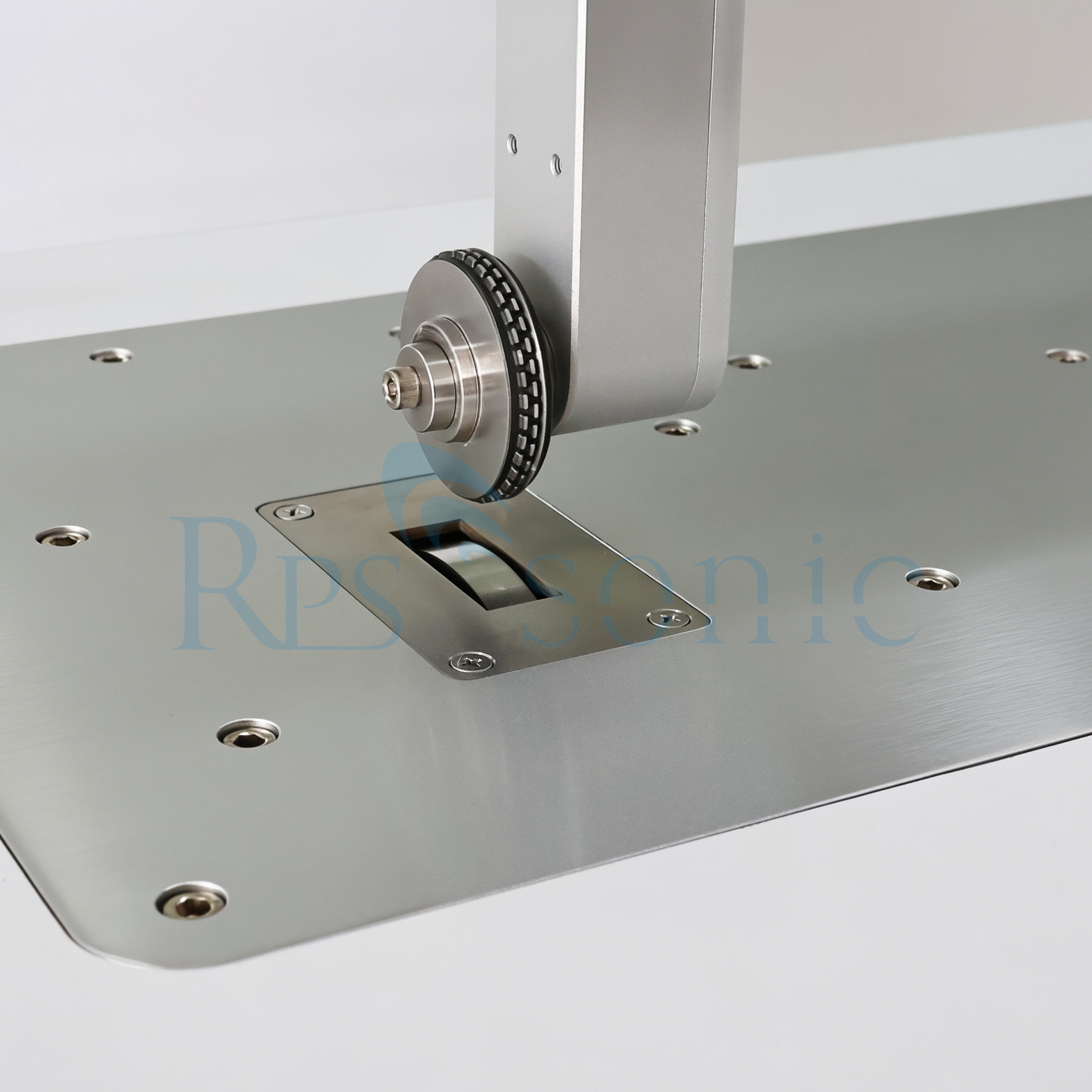
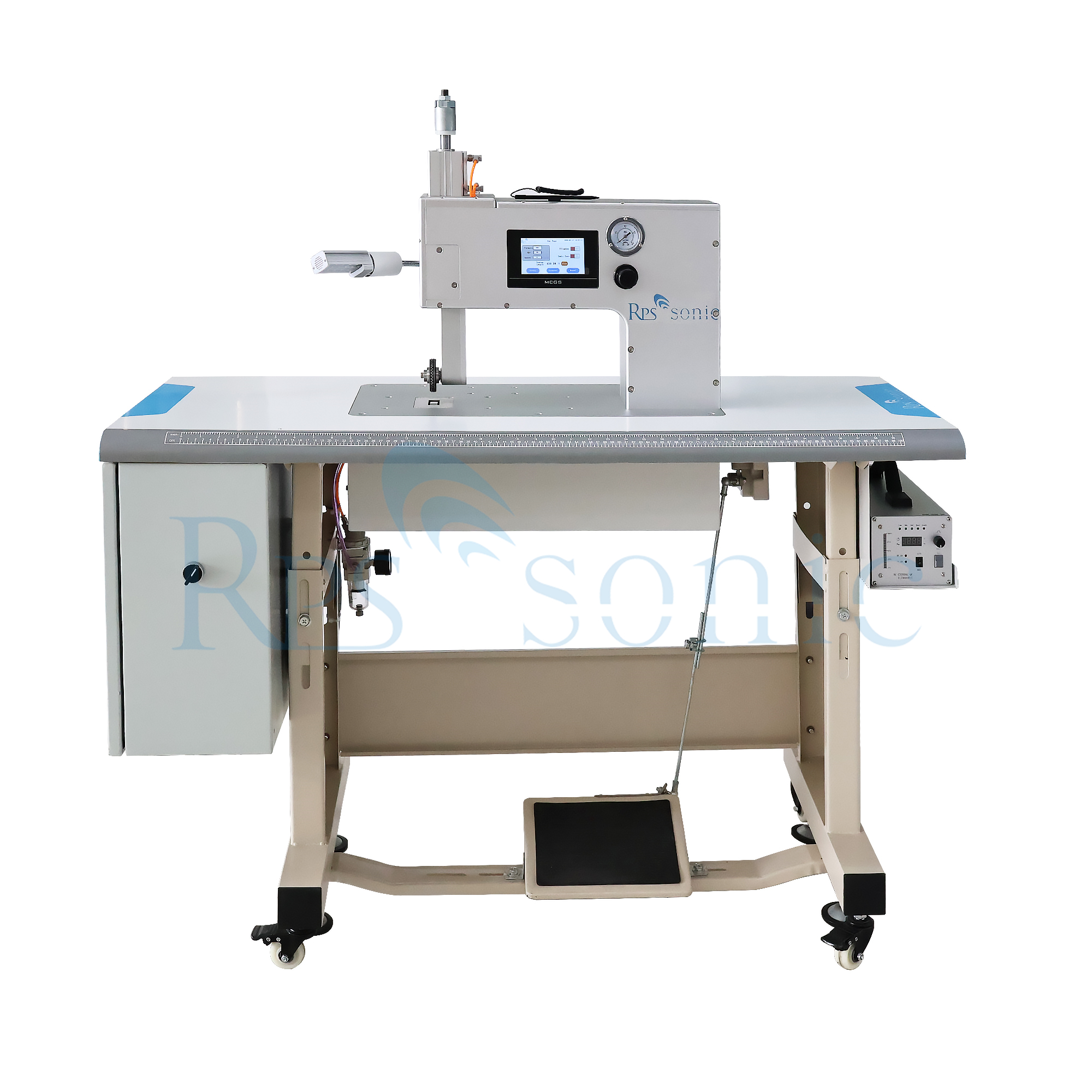
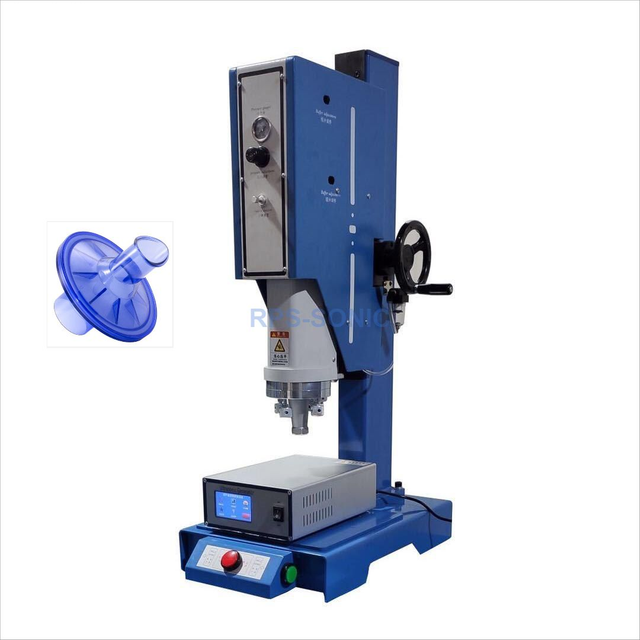
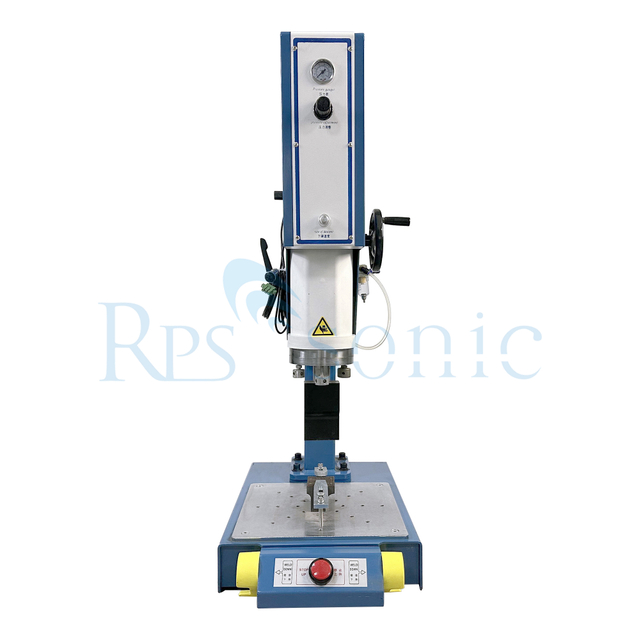
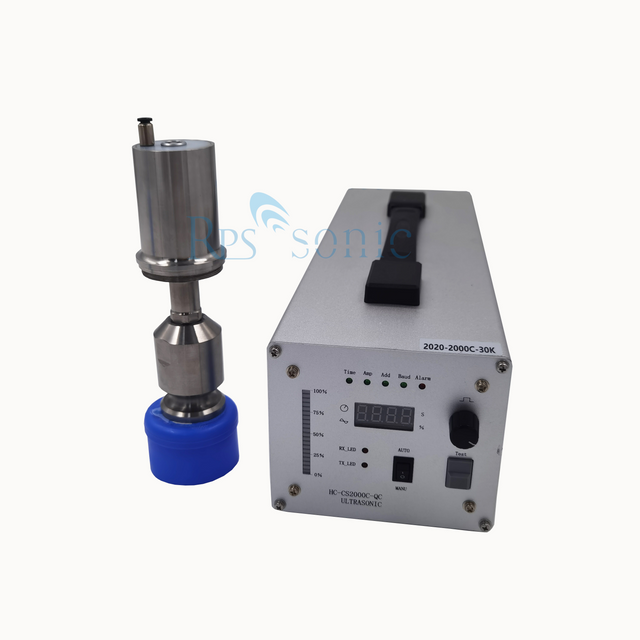
Core Equipment Components: A complete ultrasonic welding machine includes an ultrasonic generator (converting electrical energy into a high-frequency signal), a transducer (converting the signal into mechanical vibration), an amplitude modulator (controlling the amplitude), and a welding head that directly contacts the product.
Automation Integration and Customized Design: Modern equipment commonly uses PLCs and touchscreens for automated control, integrating robotic arms, automatic feeding, etc., and interfacing with MES systems for data traceability. To ensure uniform energy transfer, the welding head needs to be customized for the specific structure of the filter element.
Key Process Parameters: Welding time, pressure, amplitude, and holding/cooling time must be precisely set according to the filter material type. Advanced equipment now features intelligent monitoring systems that can monitor welding energy, pressure, and other parameters in real time to ensure consistency.