What Is The Fully Automatic Ultrasonic Atomization Spraying Equipment?
Views: 114 Author: Site Editor Publish Time: 2026-03-26 Origin: Site
What Is The Fully Automatic Ultrasonic Atomization Spraying Equipment?
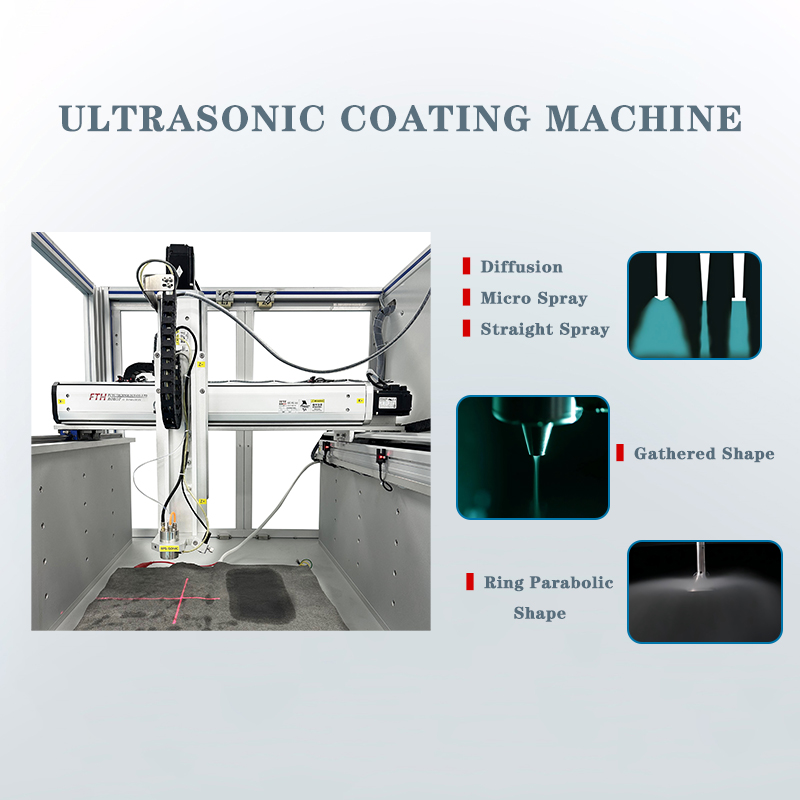
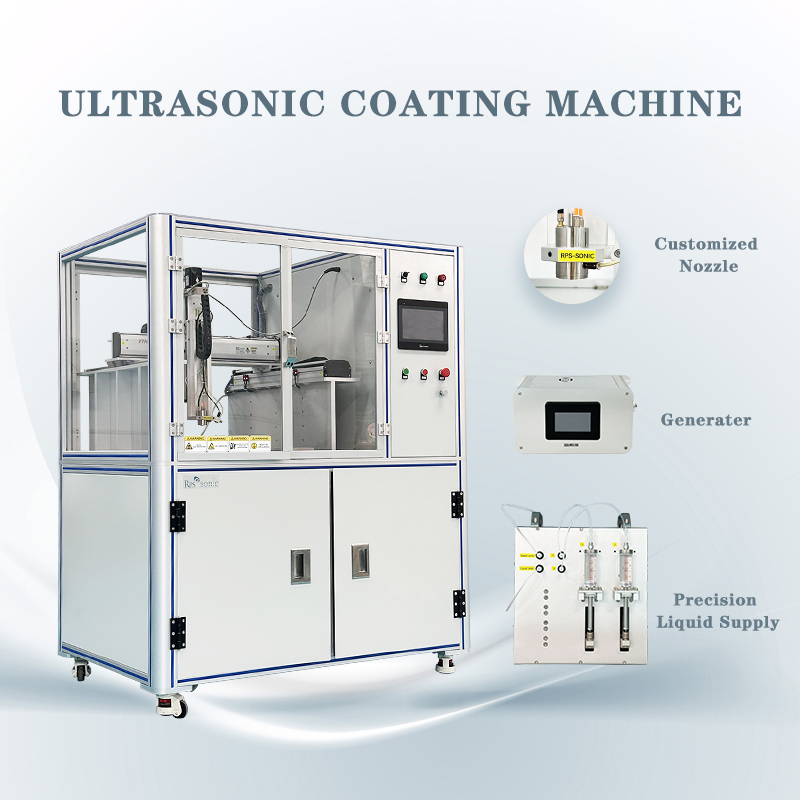
Fully automated ultrasonic atomizing spraying equipment is a precision processing device that uses high-frequency vibration to atomize liquids (coatings, slurries, and other high-value materials) into micron-sized particles and precisely coat them onto the substrate surface.
Unlike traditional high-pressure spray guns, it relies primarily on ultrasonic high-frequency vibration rather than air pressure to atomize the liquid, thus achieving a more uniform, thinner coating with higher material utilization.
These devices on the market are mainly divided into R&D/experimental types and industrial production types. Below are introductions to several representative fully automated devices.
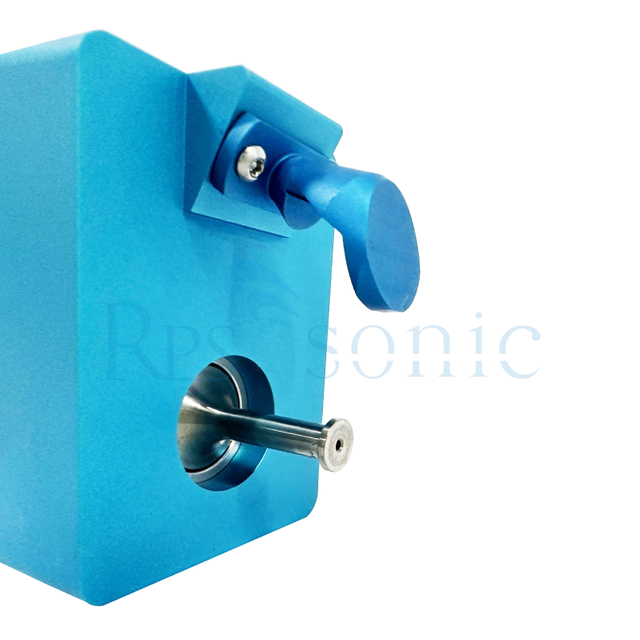
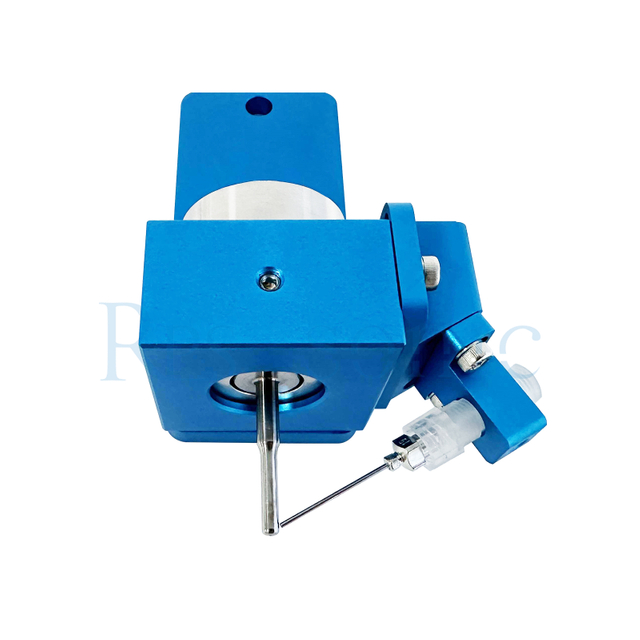
Core Working Principle: The core of the equipment is the ultrasonic atomizing nozzle. Its internal piezoelectric transducer converts high-frequency electrical energy into mechanical energy, generating high-frequency vibrations (typically 40-120 kHz) at the nozzle tip. When the liquid is delivered to the nozzle surface, the intense vibration forms a "standing wave," whose peaks are "torn" apart, forming numerous uniform, gently moving micron-sized droplets. These droplets are then guided by a low-pressure carrier gas to the substrate surface to deposit as a film.
Representative Models and Parameter Comparison
Based on application scenarios and scale, they can be mainly divided into the following three categories:
1. R&D and Experimental Type
These devices are small in size and suitable for universities, research institutes, or corporate R&D departments to conduct process development and testing of small-area samples.
character
RPS-P300
RPS-P400
key feature
Small in size, light in weight, desktop structure, non-sealed
Desktop design, enclosed space. Suitable for laboratory research and small-scale production. Raw material utilization rate > 95%
Maximum spraying area
200 x 200 mm
400*400mm
typical application
Research and development of sheet-like substrates such as PET films and proton exchange membranes
Perovskite solar cells, fuel cells, biosensors, wafer photoresist, etc.
key parameter
Atomized particles: 26 - 65 μm
Flow rate: < 30 ml/min
Substrate heating: ≤ 120℃
Flow rate: < 30 ml/min
Raw material utilization rate: > 95%
Can be equipped with various nozzles
2. Industrial production type
This type of equipment is specifically designed for large-scale, continuous production. It usually has larger spraying dimensions, higher automation levels and greater stability.
character
RPS-P490
RPS-C600
key feature
Four-axis control system, with optional ultrasonic dispersion liquid supply system, suitable for complex processes
It can accommodate 4 to 12 nozzles for联动operation, and supports 24-hour uninterrupted production. It is suitable for production lines.
Fuel cells, photovoltaic cells, glass coating, electronic circuits, etc. - large-scale production
key parameter
Atomized particles: 10 - 40 μm
Flow rate: < 30 ml/min
Spray uniformity: < 2%
Atomized particles: 15 - 45 μm
Solution conversion rate: ≥ 95%
Compatible with various nozzles ranging from 40 to 120 KHz
Core Advantages and Data
Compared with traditional spraying techniques, the fully automatic ultrasonic spraying equipment has the following significant advantages:
Material utilization rate is extremely high: Since the spraying process does not require high pressure and generates almost no splashing, the utilization rate of the coating can reach 85% - 95% or more, which is more than 4 times that of traditional two-fluid spraying, significantly saving expensive materials (such as drugs, nano-silver paste).
The coating is uniform and thin: The size of the atomized particles is highly consistent, and the coating uniformity can exceed 95%. It can achieve extremely low stable flow rate (as low as 0.001 ml/min), thereby preparing ultra-thin coatings with a thickness of several tens of nanometers .
Not prone to clogging: The ultrasonic nozzle does not have small-diameter nozzles. It atomizes through its own vibration and is less likely to get clogged, making it particularly suitable for spraying suspensions and nanoparticle slurries.
Summary and Selection Suggestions
If you are a university or a research institution and need to explore new materials and new processes, the desktop-type devices such as RPS-P300 and RPS-P400 would be a good choice. They are highly flexible and occupy a small space.
If you are engaged in enterprise R&D or small-scale production and need to balance both process development and small-scale manufacturing, the RPS-P490 single nozzle is a suitable choice.
If you are a factory and need to incorporate the precise coating process into a large-scale production line, then you might consider the multi-head integrated RPS-C600. It can offer higher production capacity and stability.