The Application of Ultrasonic Technology in Vibrating Screen Screening of Metal Powders
The application of ultrasonic technology in vibrating screen screening of metal powders hinges on superimposing high-frequency ultrasonic waves onto a traditional vibrating screen, creating a "composite vibration." It doesn't simply enhance vibration; rather, it alters the behavior of the powder at a microscopic level, thus solving the screening challenges of ultrafine, easily agglomerated, and highly static powders.
Working Principle: Low-Frequency Handling + High-Frequency Cleaning
Low-Frequency Mechanical Vibration: Powered by a traditional motor, it allows the material to move in three dimensions on the screen surface, primarily conveying and dispersing the material to ensure uniform spreading.
High-Frequency Ultrasonic Vibration: Generated by a specialized ultrasonic system, with frequencies typically between 18-40kHz. It produces micron-level high-frequency vibrations that act directly on the contact point between the screen and the particles, breaking up adhesion and agglomerates—a key solution to screen clogging.
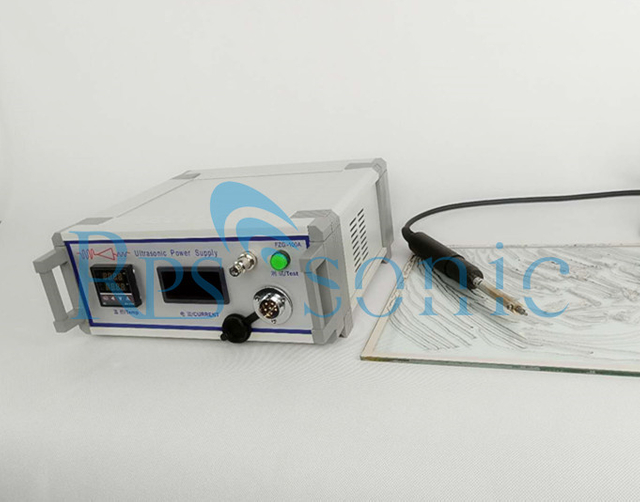
This ultrasonic system mainly consists of an ultrasonic power supply, a transducer, and a resonant ring. The power supply converts electrical energy into a high-frequency electrical signal, which is then converted into mechanical vibration by the transducer and finally transmitted evenly to the entire screen surface through a resonant ring.
Core Advantages: Why Ultrasonic Waves Are So Effective
Compared to ordinary vibrating screens, ultrasonic technology brings a qualitative leap to metal powder screening:
Significantly Improves Screening Efficiency and Accuracy: Throughput can be increased by 50%-100%, and in some cases as high as 400%; output can be increased by 2-10 times; screening accuracy can be improved by more than 80%. For example, when ordinary screening machines screen 100-mesh alloy tungsten powder, the efficiency is only 1 kg/h, while ultrasonic vibrating screens can reach 120 kg/h.
Effectively Solves Various Screening Problems: Effectively addresses common problems of metal powders such as strong adsorption, easy agglomeration, high static electricity, and high density. Through high-frequency vibration, the material can always remain suspended on the screen surface, thereby inhibiting adhesion, friction, and wedging.
Protects Powder Quality: Utilizing the principle of "high frequency, low amplitude," ultrasonic energy is used to "loosen" rather than mechanical force to "collide," maximizing the protection of the powder's sphericity and avoiding secondary damage. For example, after this treatment, the content of satellite particles (small particles adhering to larger particles) in titanium alloy and aluminum alloy powders used for 3D printing can be reduced by more than 95%.
Reduced contamination and maintenance costs: No auxiliary cleaning devices such as rubber bouncing balls are needed, eliminating foreign object contamination at the source. At the same time, the efficient cleaning effect also extends the service life of the screen.
Typical Application Scenarios
This technology covers almost all high-value metal powder screening scenarios:
3D Printing (Additive Manufacturing): Used for the fine classification and recycling of powders such as titanium alloys, aluminum alloys, and stainless steel. The equipment is mostly fully enclosed and explosion-proof, with inert gas protection to prevent powder oxidation and explosion.
Powder Metallurgy: Precisely classifies iron powder, copper powder, nickel powder, etc., ensuring the density and performance of pressed products.
High-End Alloys and Refractory Metals: Effectively screens high-value-added or special-property powders such as tungsten powder, molybdenum powder, and cobalt powder.
Battery Materials: Used for the fine screening of positive and negative electrode materials for lithium batteries, ensuring the consistency of battery performance.
Special Design and Selection Considerations
Due to the special characteristics of metal powders, ultrasonic vibrating screens also have some special designs:
Explosion-proof Design: For flammable and explosive metal powders (such as aluminum powder and titanium powder), the equipment must have a fully enclosed structure, explosion-proof motor, inert gas protection interface, and other safety measures.
Material Requirements: Parts in contact with materials are typically made of 304 or 316 stainless steel to prevent corrosion and contamination.
Intelligent Control: Some high-end equipment is equipped with an automatic frequency tracking system that can adjust the ultrasonic frequency in real time to maintain optimal operating conditions.
Summary: The application of ultrasonic technology to vibrating screening essentially combines macroscopic mechanical conveying with microscopic ultrasonic intervention. It precisely solves core pain points in metal powder screening such as screen clogging, damage, and contamination, and has become an indispensable key technology in high-end manufacturing industries such as 3D printing, powder metallurgy, and battery materials.