How To Choose The Right Ultrasonic Fabric Welding And Cutting Equipment?
When introducing ultrasonic fabric welding and cutting equipment, enterprises should consider the following dimensions:
(I) Frequency Selection
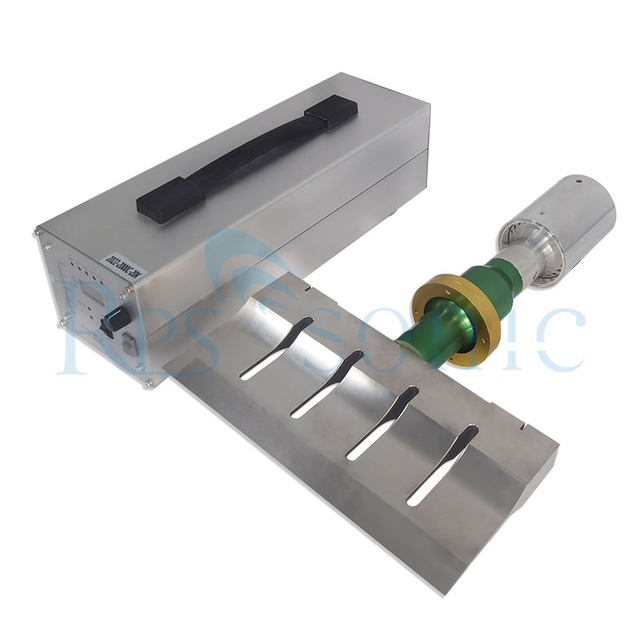
Frequency is the core parameter determining equipment performance. 15kHz to 20kHz is the low-frequency range, with larger amplitude and stronger penetration, suitable for welding thicker, harder materials or large-sized products; 30kHz to 40kHz is the high-frequency range, with smaller amplitude, suitable for fine processing and softer, thinner materials. For example, when cutting high-value lace fabric, a 40kHz frequency, 20μm amplitude blade is recommended for optimal results.
(II) Power Matching
Power directly determines the equipment's processing capacity and efficiency. Common power specifications on the market range from hundreds of watts to thousands of watts. Generally, processing thick, multi-layered, or high-density materials requires higher power equipment. For example, welding and cutting machines for heavier materials such as webbing, nylon tape, and Velcro can reach 2600W. A 2600W device can efficiently handle heavy materials such as webbing, while a 1200W handheld device is more suitable for auxiliary processes such as spot welding. The core principle is: the thicker and harder the material, or the larger the welding area and the higher the speed requirement, the greater the power required.
Amplitude: Amplitude can be understood as the intensity of vibration, affecting weld strength. Different materials have different melting points; ideally, the device should be able to fine-tune the amplitude to adapt to fabrics of varying hardness, avoiding insufficient energy or excessive damage.
(III) Equipment Type and Automation Level
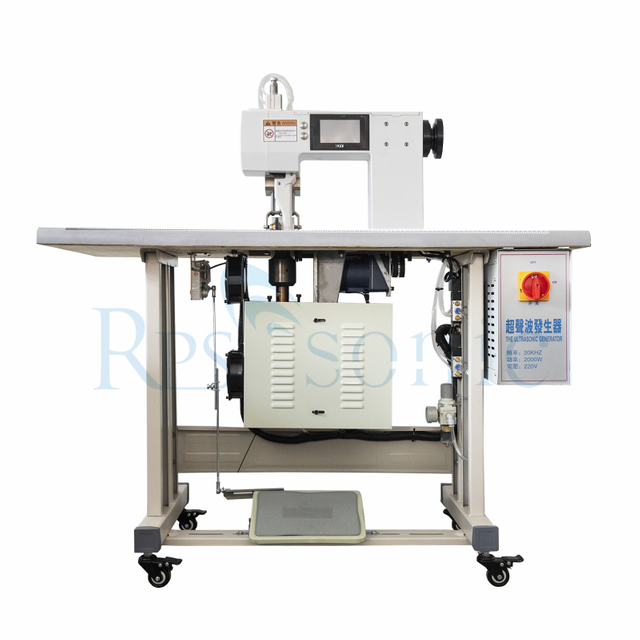
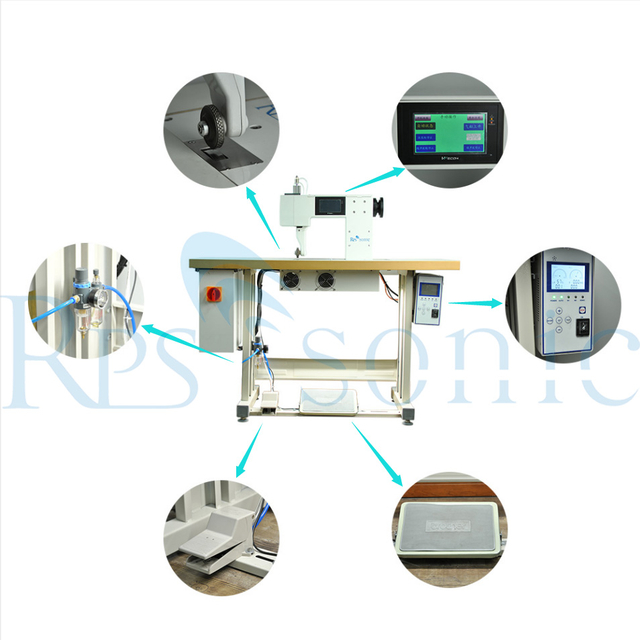
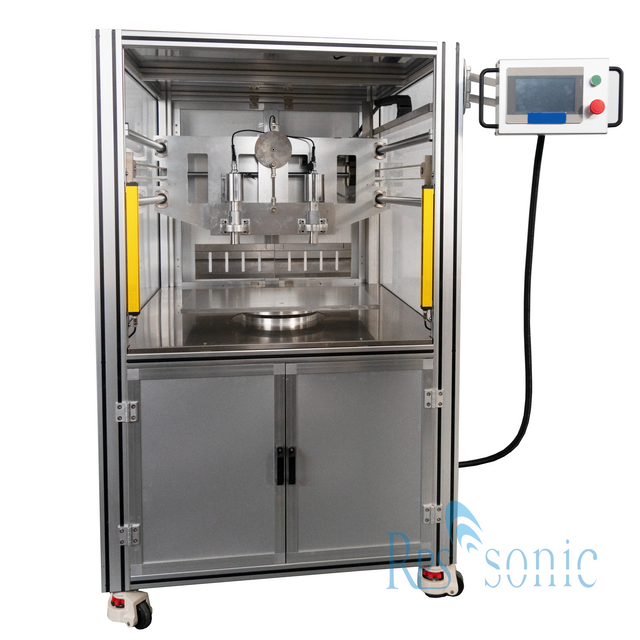
Based on the production scenario, equipment can be divided into three categories: manual, semi-automatic, and fully automatic. Small desktop devices are suitable for prototyping and small-batch production, while continuously feeding roller-type devices (integrated cutting wheels) are suitable for high-speed assembly line operations. Furthermore, the equipment should seamlessly integrate with upstream and downstream processes (such as unwinding, rewinding, and packaging) to ensure the overall line's operating efficiency. Automation Functions: For mass production, the equipment should integrate functions such as automatic deviation correction, material shortage alarm, and automatic material receiving to achieve unmanned operation.
Intelligent System: Whether the equipment is equipped with a touch screen control interface and can store multiple cutting programs is key to achieving flexible production and reducing operational errors.
(IV) Material Compatibility Verification
Can your fabric really be welded?
Ultrasonic technology is not a panacea; understanding its material applicability is a prerequisite for selection.
Excellent Applicability: Thermoplastic fibers: such as polyester, nylon, polypropylene (PP), and spandex, can achieve molecular-level fusion under high-frequency vibration.
Blended Fabrics: As long as the thermoplastic fiber content is sufficient (generally considered to be no less than 35%-50%), a strong weld can be formed. Processable, but requires assistance (Possible with Aid)
Natural fibers: Ultrasonic waves cannot directly process materials such as cotton, linen, silk, and wool. The solution is to add a layer of hot melt adhesive film between the materials as an "adhesive" to assist welding.
Completely unusable (Not Recommended)
100% non-thermoplastic materials: Such as pure cotton and pure linen, effective welds cannot be produced by ultrasonic waves on their own; they must be combined with other processes such as sewing.
(V) Evaluating Hardware and Software: The Visible "Body" and the Invisible "Soul"
Equipment performance and stability largely depend on its hardware design and software system.
Body (Hardware Design)
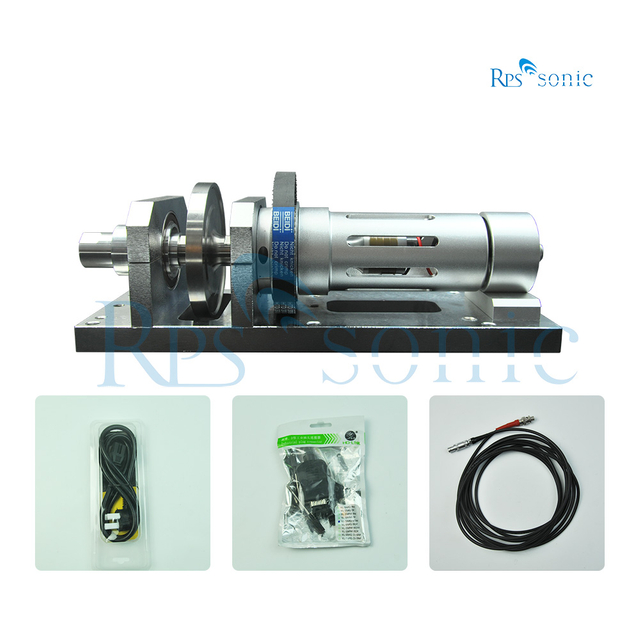
Structural stability: Is the equipment body and frame a one-piece casting or an assembled structure? A one-piece casting body provides better stability at high speeds, ensuring long-term processing accuracy.
Transmission and guidance: Are high-precision linear guides used? This directly affects processing accuracy and the smoothness of equipment operation.
Human-centered design: Does it include auxiliary systems such as laser positioning, greatly simplifying operation and improving yield?
Soul (Software System)
Control System: Brand manufacturers will integrate application data for specific materials like non-woven fabrics into the intelligent system, enabling one-click access to optimal parameters and lowering the barrier to entry.
Data Tracking and Interconnectivity: In the era of smart factories, the ability of equipment to generate data reports and connect to the Industrial Internet is a long-term factor that needs to be considered.
Choosing the right ultrasonic fabric welding and cutting equipment is essentially a comprehensive balance of factors such as "demand, parameters, materials, and budget."
Through the above five steps of screening, you establish a clear and systematic evaluation framework that helps you make more rational investment decisions. If you encounter any uncertainties in actual operation, you are welcome to send materials or bring them to our company for on-site sample testing to personally experience the equipment's effectiveness.