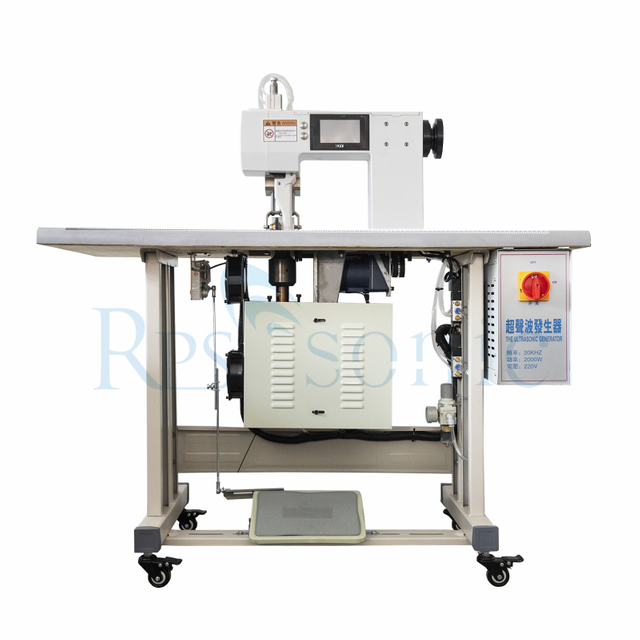
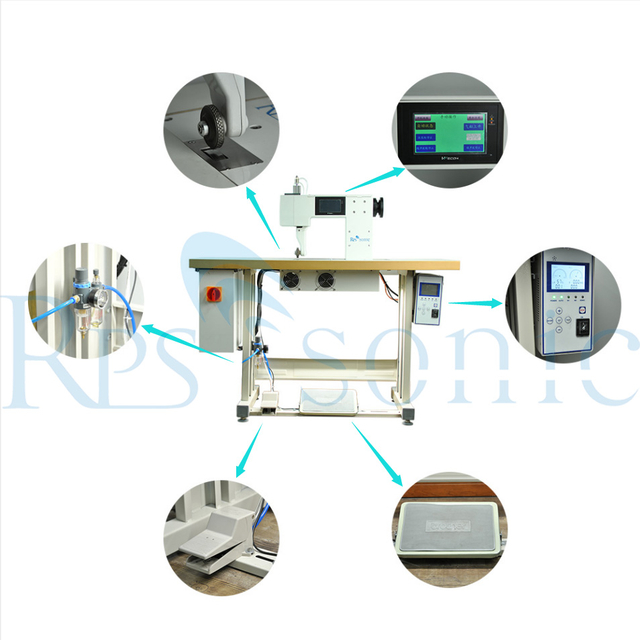
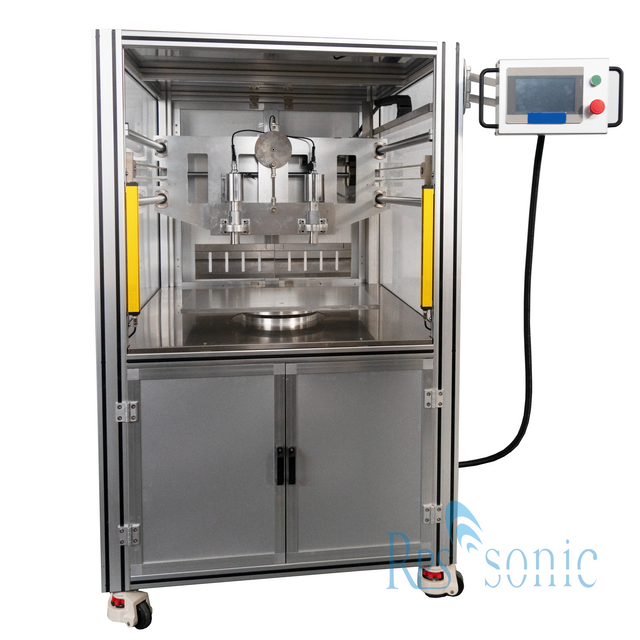
What Is Ultrasonic Fabric Cutting And Sealing Machine?
In the textile processing industry, the traditional "cutting + sewing" model has been used for centuries. However, in the era of intelligent manufacturing that pursues efficiency, environmental protection, and quality, a disruptive technology is quietly changing the industry landscape—ultrasonic fabric welding and cutting technology. Like a precision craftsman with an "invisible hand," it can weld and seal the edges of fabric simultaneously with cutting, without using a single needle, thread, or drop of glue. This "welding and cutting at the same time" technology is becoming an indispensable core process in the production of modern textiles and non-woven products.
I. Technical Principle: Friction Generates Heat, Welding and Cutting are Synchronized
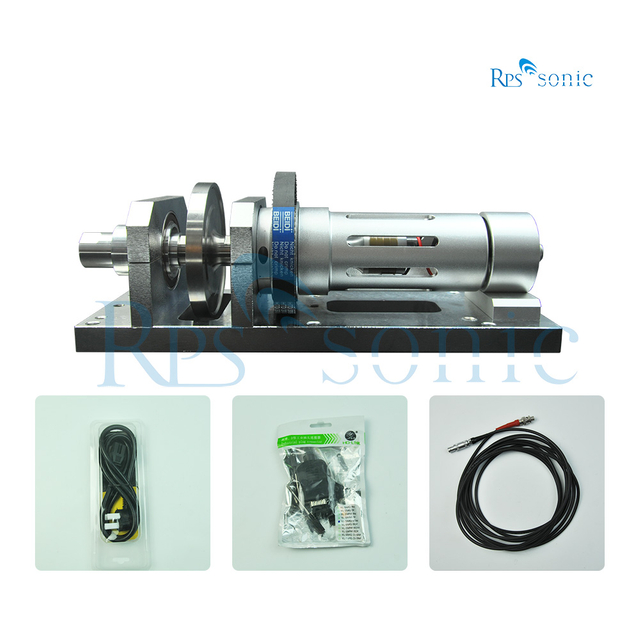
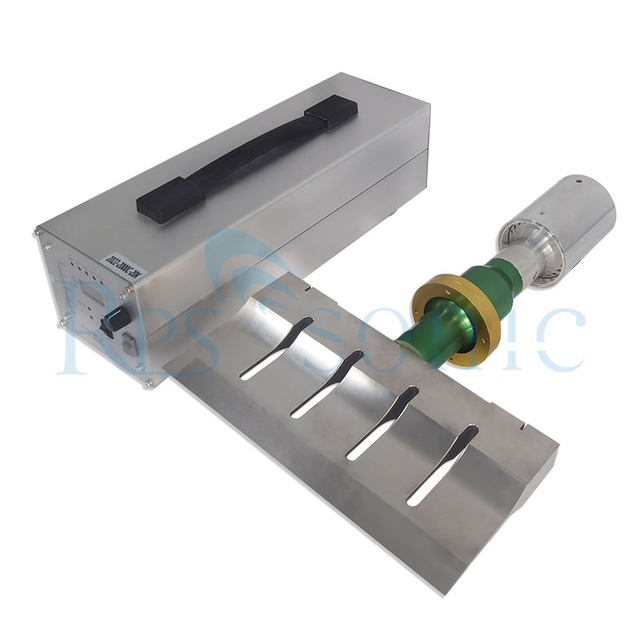
The core of ultrasonic fabric welding and cutting technology lies in the conversion of high-frequency vibration energy into heat energy. The entire system typically consists of an ultrasonic generator, transducer, amplitude transformer, and welding head (or pattern mold). During operation, the generator converts mains power into a high-frequency electrical signal (usually 20kHz to 40kHz), which the transducer then converts into mechanical vibration of the same frequency. The amplitude is amplified by the amplitude transformer and transmitted to the welding head.
When the welding head contacts the fabric and applies pressure, high-frequency vibration causes intense friction between the thermoplastic fiber molecules in the fabric, instantly generating localized high temperatures (melting the material). Simultaneously, a specially designed die cuts the fabric under pressure. After cutting, the molten fiber material cools rapidly, forming a strong sealing strip at the cut edge.
The ingenuity of this process lies in "synchronous welding and cutting": cutting and welding are completed at the same instant, resulting in a smooth, flat cut and immediate edge sealing, fundamentally eliminating the most troublesome problems in traditional processes such as "fraying edges," "fraying threads," and "burrs."
II. Core Advantages: Why Does the Textile Industry Favor Ultrasonic Technology?
Compared to traditional sewing, thermal cutting, or adhesive processes, ultrasonic fabric welding and cutting technology has significant advantages in multiple dimensions:
(I) "Needle-free and thread-free," achieving truly seamless connections. Ultrasonic welding and cutting completely eliminates traditional needle and thread sewing. This means that the processed fabric surface has no needle holes or thread residue, and the seams are smooth and flat. For high-end underwear, seamless sportswear, and other products that prioritize ultimate comfort, this eliminates the friction and abrasion between the seam and skin caused by traditional sewn seams, significantly improving the wearing experience.
(II) Simultaneous Cutting and Edge Sealing Eliminates Unraveling
Traditional fabric cutting often requires additional overlocking or binding processes to prevent edge fraying. Ultrasonic welding seals the fibers at the cut edge simultaneously with the blade's fall, resulting in a smooth and neat cut that can proceed directly to subsequent processes without secondary treatment. Industry data shows that this technology reduces cutting burrs to less than 0.1mm, and the edge sealing strength is more than 20% higher than traditional thermal cutting processes.
(III) Waterproof Sealing with Superior Performance
Because the weld is a molecular-level fusion of the material itself, without pinhole penetration, the seam formed by ultrasonic welding naturally possesses excellent waterproof, downproof, and leak-proof properties. In the outdoor equipment field, ultrasonic welds on waterproof fabrics can withstand pressures up to 20kPa, far exceeding the national standard requirement of 1.67kPa, making it a key technology for achieving high waterproof ratings. (IV) High Efficiency and Energy Saving, Green and Environmentally Friendly Ultrasonic welding and cutting is extremely fast. A simple welding/cutting action can be completed in a fraction of a second, achieving 120 cuts per minute (such as textile labels) or continuously cutting 25 meters of fabric per minute. Simultaneously, the entire process requires no glue, adhesives, or chemical solvents, and there are no fumes emitted as in traditional thermal cutting processes. Energy consumption is only 30% to 50% of traditional hot pressing processes, making it a truly green processing technology.
(V) High Processing Precision, Suitable for Automated Integration
Ultrasonic welding and cutting equipment is typically equipped with a digital control system, enabling precise setting and storage of welding parameters (such as power, time, amplitude, etc.). Welding precision can reach ±0.02mm, resulting in extremely high product consistency. Furthermore, the equipment can be seamlessly integrated with automated production lines, playing a significant role in high-volume, high-paced production scenarios such as medical protective clothing, masks, and diapers.
III. Application Panorama: From Medical to Fashion, From Home Furnishings to Industry
Ultrasonic fabric welding and cutting technology covers almost all areas of textile material processing containing thermoplastic fibers, and its application scope continues to expand. (I) Medical and Hygiene Products: The Unsung Hero in Epidemic Prevention and Control
This is the most mature and in-depth application of ultrasonic welding and cutting technology. The seam welding of medical protective clothing not only provides high strength but also excellent antibacterial barrier properties, preventing the penetration of liquids and viruses. In mask production, ultrasonic welding is a core technology for the automated production of N95 and surgical masks, used for welding ear loops, fixing nose bridge strips, and laminating multi-layer materials. In products such as diapers and sanitary napkins, the welding of components such as waistbands, elastic ear loops, and leak-proof layers also relies heavily on this technology, replacing traditional glue bonding and making the products softer, more comfortable, and more environmentally friendly.
(II) High-End Clothing and Sports Apparel: A New Benchmark for Seamless Comfort
In products such as underwear, yoga pants, and seamless sportswear, ultrasonic welding and cutting technology enables seamless label application, elastic shoulder strap welding, and lace trimming, giving clothing a "seamless" wearing experience. Similarly, in the outdoor apparel industry, the welding of seam sealing strips in waterproof clothing and skiwear is a core application of this technology—complete sealing of the weld seam is key to achieving the product's waterproof rating.
(III) Home Textiles and Automotive Interiors: A Dual Guarantee of Aesthetics and Durability
The welding of down-proof strips in down comforters and down jackets, and the embossing and stitching of bedspreads and car seat covers, all rely on the precision processing of ultrasonic welding and cutting. In automotive interiors, it can also achieve seamless edging of suede and EVA foam, balancing aesthetics and functionality.
(IV) Industrial Fabrics and Environmentally Friendly Products: Comprehensive Penetration from Filtration to Packaging
The welding of multi-layer filter media in air filters and liquid filters requires absolute sealing to ensure filtration efficiency. In the production of eco-friendly bags, this technology is used to weld handles and the bag body, eliminating the need for glue and needles, resulting in high strength and greater compliance with environmental protection principles.