Views: 55 Author: Site Editor Publish Time: 2026-04-17 Origin: Site
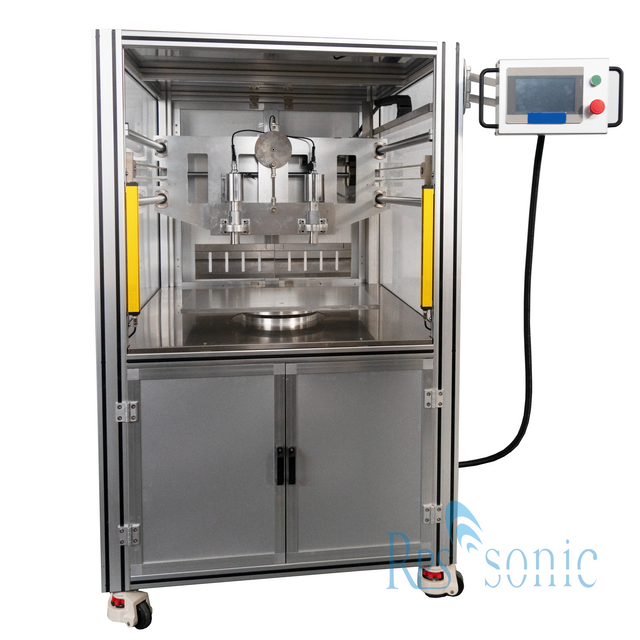
What Is Ultrasonic Chocolate Cutting Equipment?
The core advantages of ultrasonic chocolate cutting lie in its pressure-free cutting, near-non-stick properties, and clean, crisp cuts, achieving high-quality "cold cutting."
This technology effectively solves the problems of sticking, crumbs, and deformation that are common in traditional chocolate cutting. Below is a detailed introduction to its working principle, advantages, equipment selection, and potential problems.
Ultrasonic cutting machines achieve cutting through the following process:
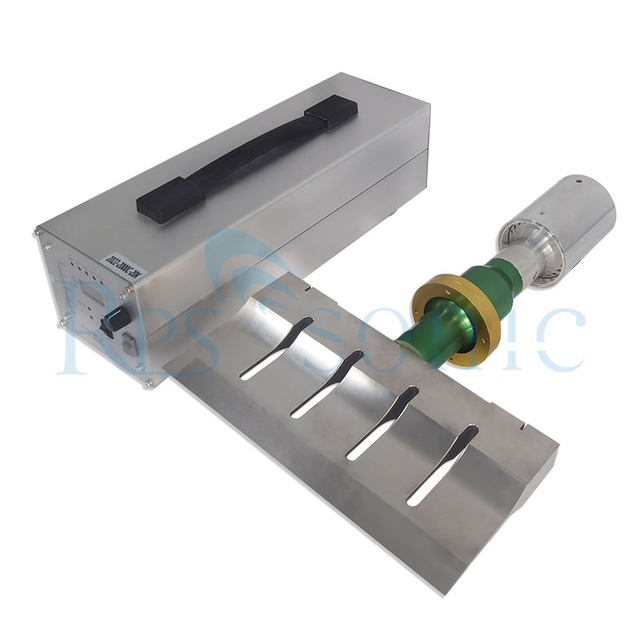
Energy Conversion: The machine's "heart," the ultrasonic generator, converts ordinary electrical energy into high-frequency electrical signals, driving the transducer to generate high-frequency mechanical vibrations of over 20,000 times per second.
Energy Amplification and Conduction: The vibrations are amplified by an amplitude transformer and transmitted to the titanium alloy blade.
Perfect Cut: When the blade contacts the chocolate, the high-frequency vibrations allow it to easily "slide" into the material at a microscopic level, generating almost no downward pressure. The minute heat generated in this process instantly melts the cutting surface, forming a smooth "sealing layer," resulting in a clean, non-stick cut. Simultaneously, the blade's temperature does not significantly increase, preventing the chocolate from melting. Compared to traditional blades, ultrasonic chocolate cutting offers significant advantages in quality, efficiency, and cleanliness.
characteristic
Traditional mechanical cutting
Ultrasonic cutting
quality
The edges are prone to melting and sticking, producing debris, and are especially prone to deformation when processing raw chocolate.
The cut is smooth, flat, and free of debris, and the product has a regular shape.
Sticky knife problem
This is very serious and requires frequent shutdowns for cleaning.
It is virtually non-stick, and the blade has self-cleaning properties.
Production efficiency
Low efficiency, but frequent machine shutdowns are required for cleaning due to issues with sticking blades and debris.
High efficiency, enabling continuous production and reducing downtime. Case studies show that hourly output can be increased by 30% - 50%.
hygiene
Poor quality; blade residue can easily cause cross-contamination.
Excellent, blade cleaning reduces the risk of contamination.
When selecting a model, the following technical parameters are crucial:
Frequency
20-40 kHz
Lower frequencies (such as 20kHz) are suitable for large cuts, while higher frequencies (such as 35-40kHz) can make the cuts finer.
Power
400W- 4000W
Power affects cutting capacity and speed; the appropriate power level should be selected based on production volume and product hardness.
Blade width
100mm - 350mm
Choose based on the maximum width of the chocolate to be cut; customization is usually available.
Blade material
Titanium
Titanium alloy is standard, combining high strength with excellent acoustic conductivity.
Amplitude
20%- 100%
The blade vibration amplitude is adjustable to adapt to chocolates of different hardness and viscosity, offering great flexibility.
In actual production, you may encounter some minor problems. Understanding their causes and solutions can help you use the equipment better.
Frequently Questions
Possible reasons
Solutions and Recommendations
The cutting effect was not good
1. Parameters not optimized
2. Influence of material properties
1. Adjust parameters such as vibration frequency, cutting speed, and power.
2. Ensure the chocolate is cut at a suitable temperature of 18-22℃.
Debris is generated during cutting
1. The material is too brittle or too hard.
2. The cutting pressure or speed is inappropriate.
1. Reduce the cutting speed appropriately.
2. Increase the vibration frequency appropriately to enhance cutting penetration.
Shortened blade life
1. The material contains hard particles (such as nuts).
2. Normal wear and tear after long-term use.
1. Use wear-resistant titanium alloy blades.
2. Regularly check for wear and replace blades promptly.
Equipment fault alarm
1.Core component failure
2.Improper parameter settings
1. Establish a regular maintenance plan and record the equipment's operating status.
2. Operators must undergo professional training and be familiar with equipment operation.
In general, the key to choosing an ultrasonic chocolate cutter is to match it with your production scale, material characteristics (such as hardness and viscosity), and quality requirements.