Ultrasonic Cutting for Automotive Interior Rubber Components
Precision Ultrasonic Cutting Solution for Automotive Interior Rubber
In the manufacturing of automotive interiors, components such as rubber sealing strips, soft rubber parts, rubber-overmolded parts, and composite materials—consisting of rubber combined with foam or fabric—are typically characterized by their softness, high elasticity, susceptibility to deformation, and non-uniform local thickness.
When using traditional mechanical cutting tools, these materials are prone to issues such as burrs, stretching, deformation, and dimensional inaccuracies, caused by the material's elastic recovery, frictional resistance, and tool wear.
Ultrasonic cutting technology utilizes a high-frequency vibrating blade to reduce cutting resistance, allowing the edge to penetrate the rubber material more smoothly. This results in cleaner, more stable, and highly repeatable cuts. Rubber, elastomers, and automotive sealing materials are now key applications for ultrasonic cutting.
Ultrasonic cutting is not merely the high-speed movement of a standard blade; rather, it involves a specialized ultrasonic cutting tool that vibrates at a low amplitude with a frequency in the tens of kilohertz (kHz).
In a typical 20–40 kHz system, the tool vibrates tens of thousands of times per second, which minimizes friction and adhesive resistance between the blade and the rubber, making it significantly easier to penetrate elastic materials. For automotive interior rubber components, this method is particularly well-suited for the following scenarios:
·The rubber possesses high elasticity;
·The product surface features complex 3D contours;
·The product includes narrow edges, holes, or localized cutouts;
·Standard cutting tools tend to cause stretching or pulling;
·High standards are required for the appearance of the cut edge and dimensional consistency;
·The product requires automated or robotic processing.
Automotive doors, windows, dashboards, and other interior areas utilize a wide range of rubber components for sealing and vibration dampening.
Ultrasonic blades can be used for:
·Cutting to specific lengths;
·End trimming;
·Angled cutting;
·Refining joint or interface areas;
·Creating localized cutouts.
When processing soft rubber, ultrasonic blades help minimize the compression and stretching often encountered with traditional cold-blade cutting methods.
Rubber Gaskets
Rubber gaskets and seals typically require dimensional stability and clean, well-defined edges.
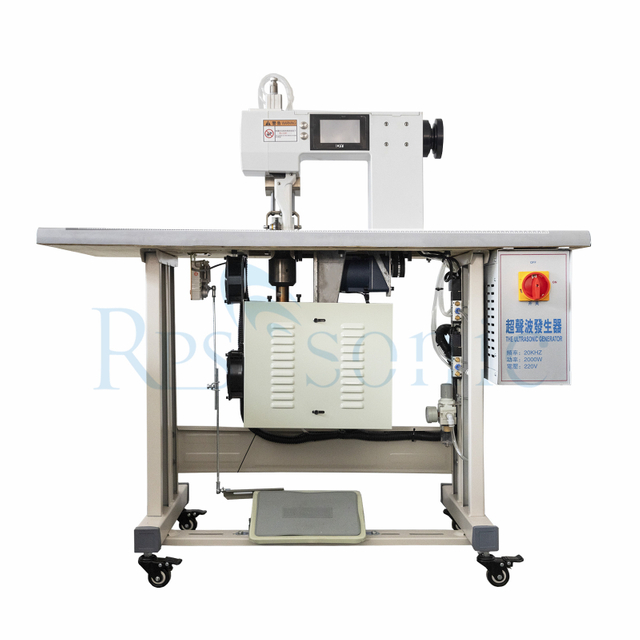
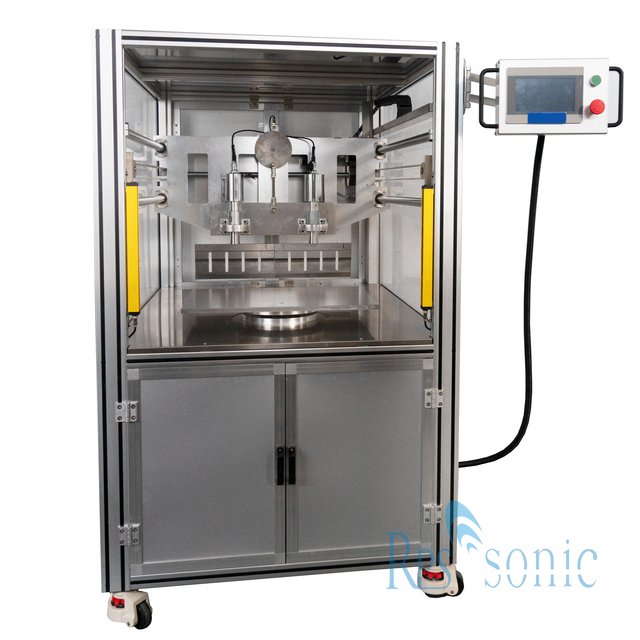
Ultrasonic cutting can be integrated with CNC systems, XY platforms, or robotic systems to process complex contours.
Rubber + Foam Composite Materials
Some automotive interior materials are not composed of a single type of rubber, but rather a composite structure consisting of:
Rubber + Foam + Fabric/Nonwoven
When such multi-layered materials are processed using conventional cutting tools, the varying cutting resistance of the different components often leads to issues like fraying or delamination.
Ultrasonic cutting systems allow for the design of specialized blades tailored to specific composite materials, ensuring a more stable cutting process. In the automotive industry, ultrasonic cutting is widely applied to foams, composite materials, fabrics, and various interior and exterior trim components.
Key Advantages for Automotive Rubber Cutting
Clean Cutting Edges
Ultrasonic cutting produces neat, clean edges, minimizing noticeable fraying or tearing.
This is particularly critical for automotive interior components, many of which remain visible to the consumer.
Reduced Material Deformation
Traditional cutting tools require significant mechanical pressure.
Because ultrasonic blades cut via vibration, the required cutting force is reduced—minimizing the compression and deformation of soft rubber during processing.
High Repeatability
Through automatic frequency tracking and closed-loop control, the system maintains a stable ultrasonic output, ensuring greater consistency across batch production.
Industrial ultrasonic rubber-cutting systems typically operate at frequencies of 20–40 kHz, with blades specifically matched to the rubber type, thickness, tool geometry, and cutting method.
Suitable for Automation
Ultrasonic cutting heads can be integrated into:
·Robots
·CNC machines
·Linear axes
·Automated trimming machines
·Conveyor-based production lines
This reduces the need for manual trimming and enhances the level of automation in automotive component production.
Dry Cutting
Unlike water-jet cutting, ultrasonic rubber cutting is a dry process that requires no cutting fluids.
This helps keep the production environment clean and eliminates the need for subsequent washing or drying steps.
Ultrasonic Cutting: The Future of Automotive Interior Manufacturing
As automotive interiors evolve toward lightweight designs, complex curved surfaces, composite materials, and automated production, traditional, singular die-cutting methods are increasingly insufficient for the full range of products.
The value of ultrasonic cutting extends far beyond simply "slicing through rubber."
Its true strength lies in:
Low Cutting Force + Clean Edges + Flexible Tooling + 3D Automation
This combination makes it exceptionally well-suited for the precision trimming of complex, soft, and elastic materials used in automotive interiors.
Currently, ultrasonic processing in the automotive industry is applied to interior and exterior components, foams, composite materials, rubber cutting, and automated robotic trimming. frimo.com
Conclusion
Ultrasonic cutting offers a precise, clean, and automation-friendly solution for the cutting and trimming of rubber components used in automotive interiors.
By utilizing high-frequency vibrating blades, ultrasonic technology reduces friction and mechanical resistance during the rubber-cutting process, resulting in superior cut quality and minimized material deformation.
For automotive sealing strips, rubber gaskets, rubber-encased parts, rubber-foam composites, and complex 3D interior components, ultrasonic blades and automation systems can be customized based on material thickness, hardness, and product geometry.
For automotive parts manufacturers requiring high-volume production, ultrasonic cutting heads can be integrated into robotic systems, CNC machines, or automated trimming lines to ensure stable, repeatable, and fully automated processing.
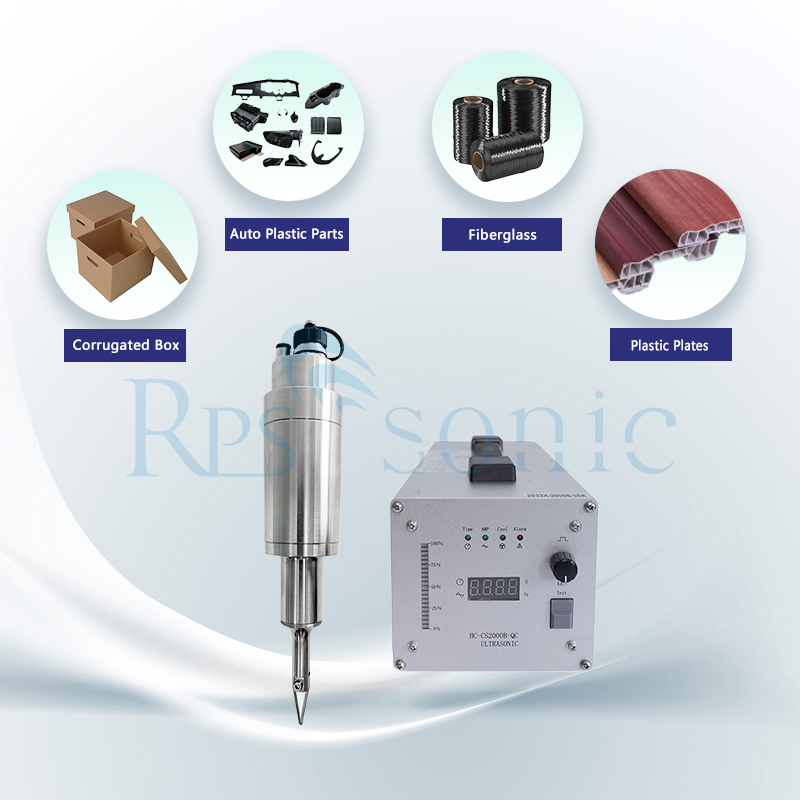
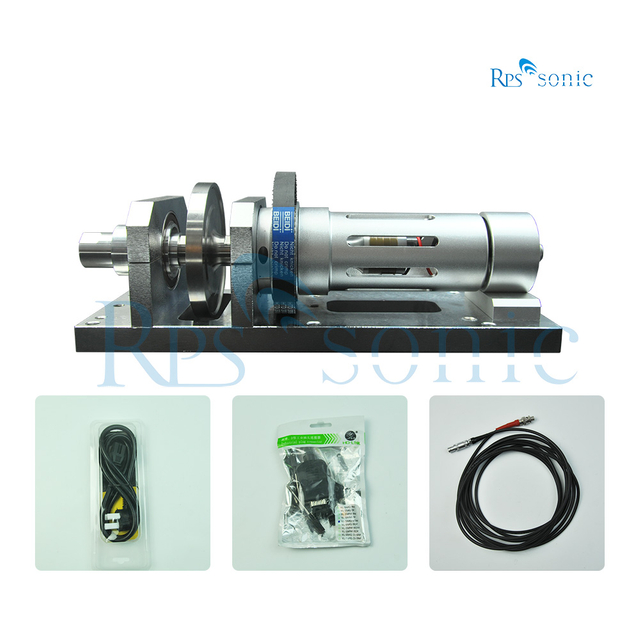
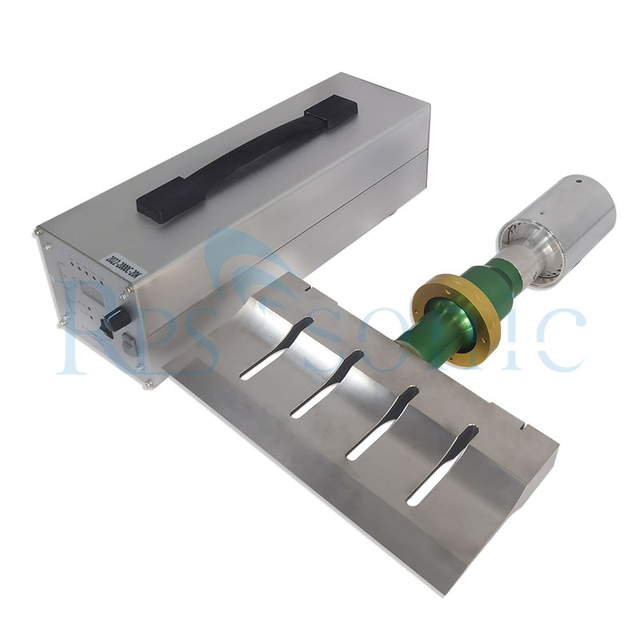
RPS-SONIC provides customized ultrasonic cutting systems for automotive rubber components, including ultrasonic generators, transducers, boosters, bespoke cutting horns, and automated cutting solutions.
Optimal cutting speed, amplitude, power, and blade configuration must be determined through sample testing, tailored to the specific rubber material, its hardness and thickness, and the product's shape.