Silent Defoaming: A Comprehensive Analysis of the Technical Principles and Applications of Ultrasonic Defoaming Equipment
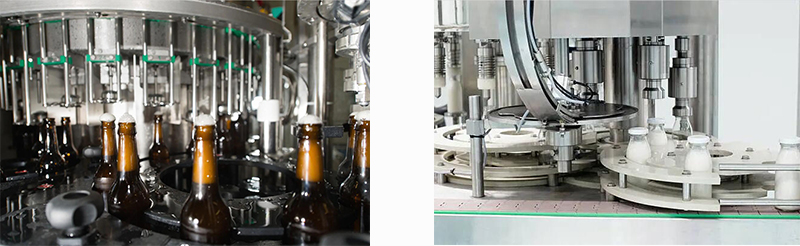
In manufacturing sectors such as the chemical, food, and pharmaceutical industries, foam presents a persistent and vexing challenge. Foam overflow during filling operations can lead to product loss and increased reject rates, while microscopic air bubbles remaining within the liquid can compromise product quality, accelerate oxidative degradation, and even pose safety risks. Taking the filling of injectable solutions at a pharmaceutical company as an example, traditional mechanical stirring methods typically require 30 minutes to achieve complete defoaming.
Traditional defoaming methods each suffer from distinct drawbacks: chemical defoamers, while effective, risk contaminating the product and altering material properties; mechanical defoaming methods require bulky equipment and consume high levels of energy; and vacuum degassing necessitates specialized reaction vessels and cannot be implemented as an inline, continuous process. Ultrasonic defoaming technology, leveraging its unique physical mechanism of action, is emerging as a highly efficient new solution to this complex problem.
I. Core Principles: The Cavitation Effect and Acoustic Field Interaction
The core technical foundation of ultrasonic defoaming equipment lies in the "cavitation effect" induced by ultrasonic waves within a liquid medium.
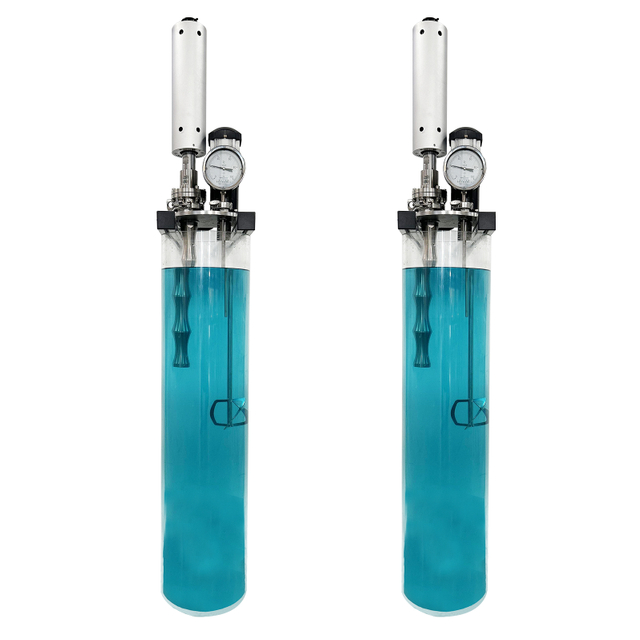
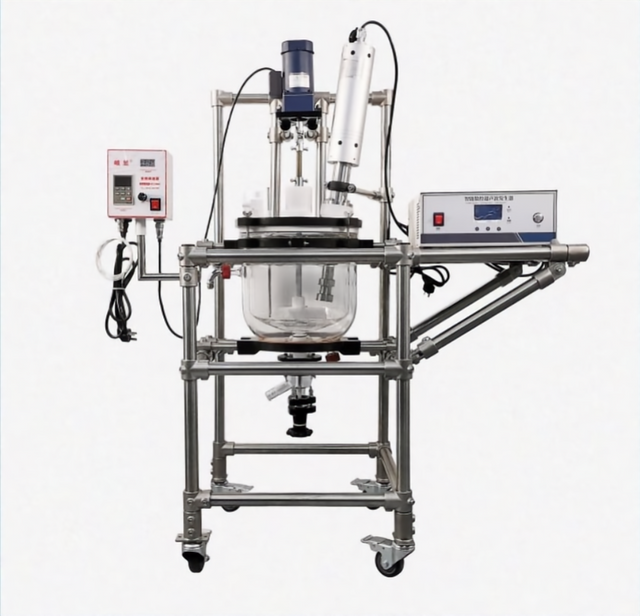
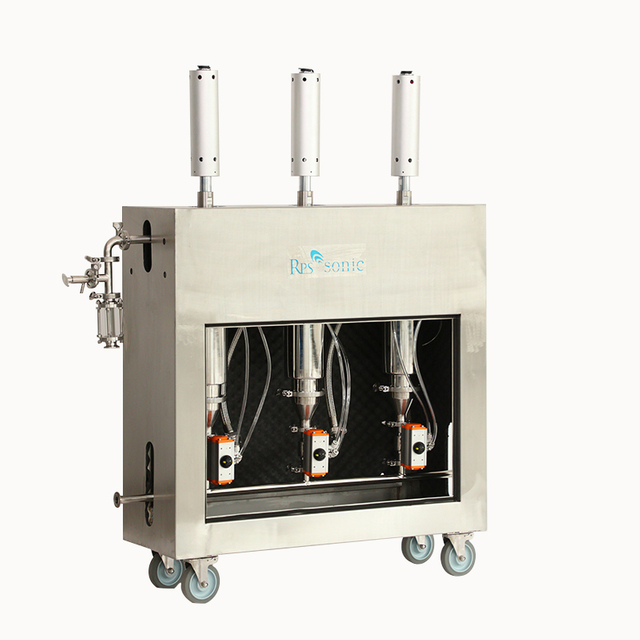
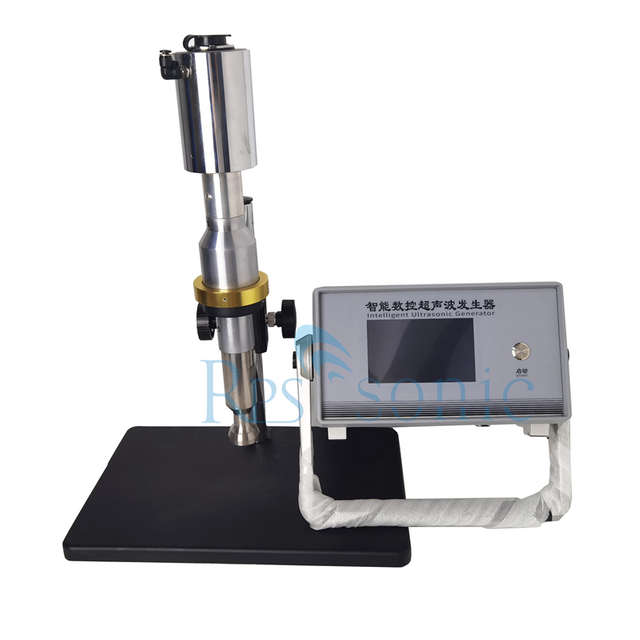
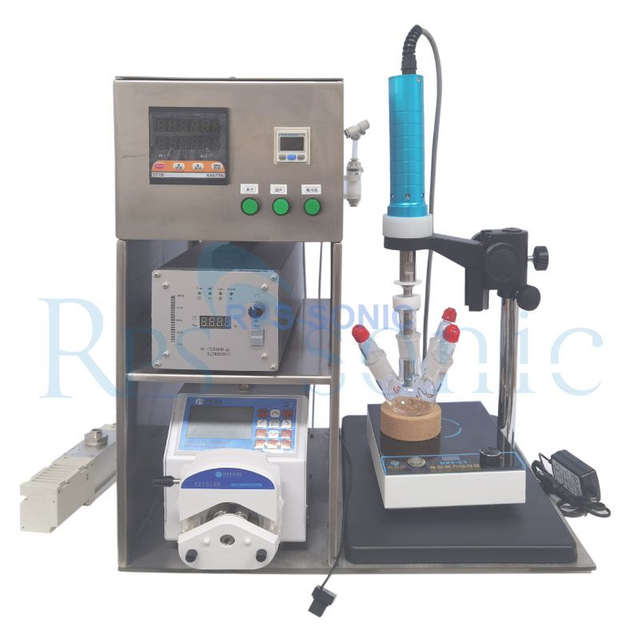
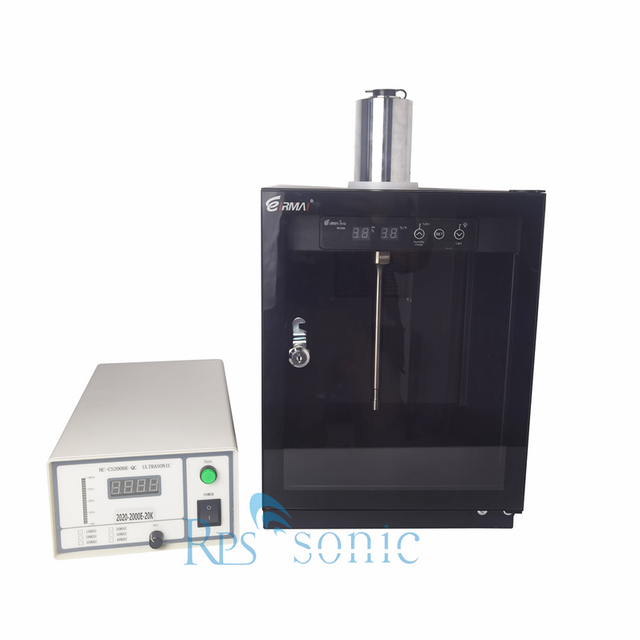
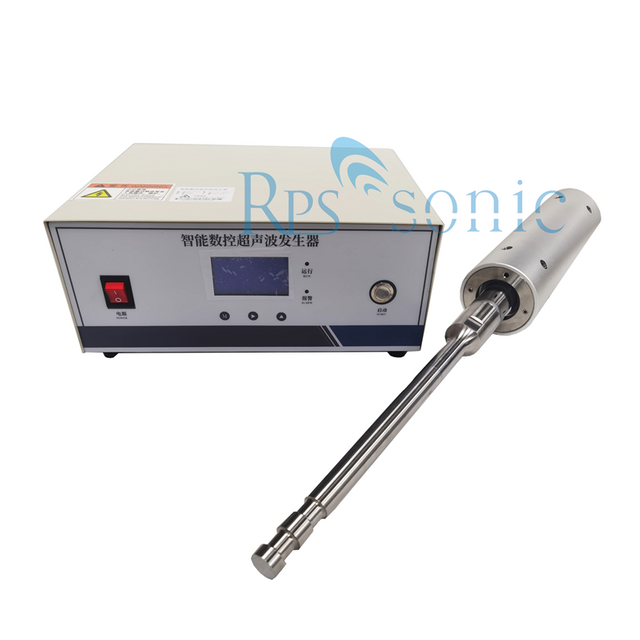
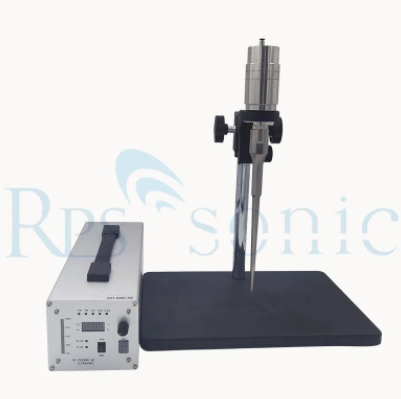
The equipment typically consists of an ultrasonic generator, a transducer, an amplitude transformer (or "tool head"), and a reaction chamber. The ultrasonic generator converts standard mains-frequency AC power into high-frequency electrical signals (typically ranging from 15 kHz to 60 kHz), which drive the transducer—submerged within the liquid—to generate mechanical vibrations at the same frequency. The amplitude transformer further amplifies this vibration amplitude (reaching levels of 50–100 μm), thereby radiating the ultrasonic energy into the liquid medium.
As ultrasonic waves propagate through a liquid, they generate alternating cycles of positive and negative pressure. During the negative pressure phase, the cohesive forces between molecules are overcome, leading to the formation of microscopic, near-vacuum cavitation nuclei in localized regions. During the subsequent positive pressure phase, these cavitation nuclei are rapidly compressed and undergo violent collapse. This process releases astonishing amounts of energy on a microscopic scale: the instant of collapse can generate temperatures reaching several thousand degrees Celsius and shockwaves exerting hundreds of atmospheres of pressure, accompanied by high-velocity micro-jets. This extreme physical environment achieves defoaming and degassing primarily through three pathways:
Degassing (Dissolved Gas Precipitation): The cavitation effect disrupts the gas-liquid equilibrium of dissolved gases within the liquid phase, forcing the gas to escape from the liquid. This results in the formation of larger bubbles that rise to the liquid surface and are subsequently expelled.
Defoaming (Destruction of Existing Foam): Ultrasonic energy acts directly upon the liquid films of existing foam bubbles, disrupting their surface tension and mechanical equilibrium. This causes the liquid films to thin out and eventually rupture.
Directed Diffusion and Coalescence: During their oscillation, cavitation bubbles actively absorb surrounding dissolved gases in a directed manner. Simultaneously, they accelerate their mutual coalescence to form larger bubbles, thereby hastening their ascent to the liquid surface.
These processes work in concert within the liquid being treated to achieve a comprehensive, end-to-end elimination of gas—ranging from dissolved gases to visible foam.
II. Comparison of Defoaming Methods: The Advantages of Ultrasonics
In recent years, academic research comparing various defoaming technologies has become increasingly in-depth. Scholars have systematically analyzed both chemical defoaming agents (including organic compounds, polyethers, silicones, etc.) and physical defoaming methods (such as ultrasonic, mechanical, negative pressure, and thermal methods), evaluating them across dimensions such as underlying principles, advantages, and disadvantages. Compared to these traditional methods, ultrasonic defoaming demonstrates distinct advantages:
1. No Secondary Contamination: As a purely physical process, it requires no chemical defoaming agents. This eliminates the risk of product contamination and avoids the issue of residual chemical ingredients. For instance, at a certain dairy manufacturing facility, switching to ultrasonic defoaming extended the product's shelf life by 20% and reduced the rate of customer complaints regarding "bloated containers" (caused by internal gas expansion) by 90%.
2. High Efficiency and Short Processing Time: Taking a pharmaceutical manufacturer as an example: while traditional mechanical stirring required 30 minutes to achieve defoaming, ultrasonic equipment achieved the same result in just 5 minutes—reducing bubble density from 0.8 bubbles/cm³ to 0.05 bubbles/cm³—without causing any degradation to the active pharmaceutical ingredients.
3. Broad Applicability: The vast majority of liquids can be effectively degassed and defoamed using ultrasonic technology, including water, polymers, resins, silicone oils, adhesives, paints, beverages, inks, and more. Furthermore, ultrasonic degassing can be performed in a continuous flow mode; compared to vacuum degassing—which typically employs batch processing—this makes it far better suited for large-scale, assembly-line manufacturing environments. 4. Simple Equipment, Low Energy Consumption: Compared to mechanical defoaming methods, ultrasonic equipment is more compact and consumes less power. It offers significant overall economic benefits, reducing defoaming costs without compromising product quality.
Of course, ultrasonic defoaming is not without its limitations. A summary on Baidu Baike explicitly notes: "Compared to chemical defoaming, it lowers costs and does not affect product quality; however, ultrasonic devices are expensive and are not suitable for large-scale defoaming operations." Nevertheless, as equipment costs decline and the technology matures, this limitation is gradually being overcome.