Research on Automated Control Technology of Ultrasonic Welding Equipment
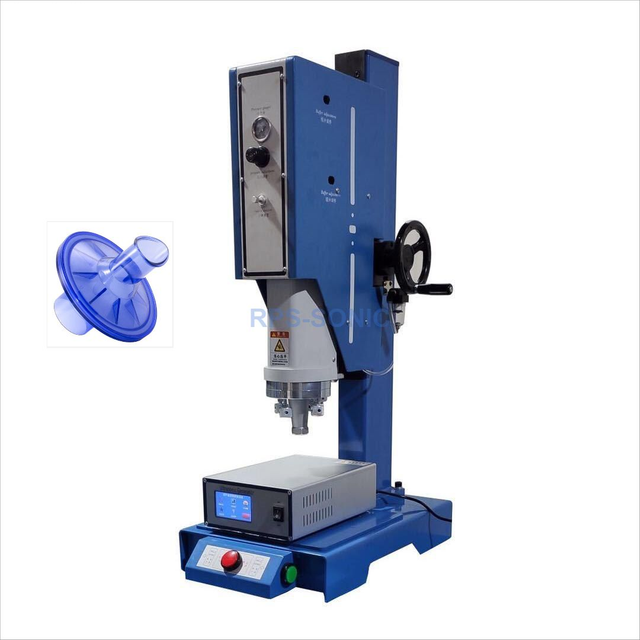
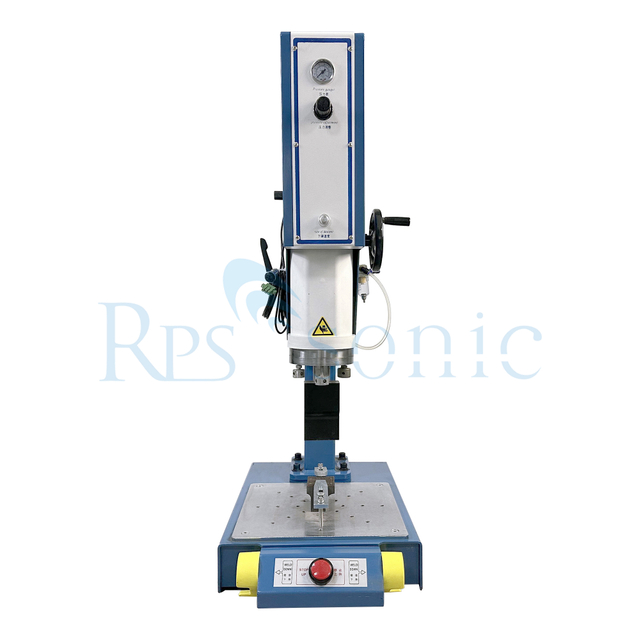
Ultrasonic welding, with its advantages of high welding speed, high strength, cleanliness, environmental friendliness, and no need for auxiliary materials, has been widely used in industrial production fields such as plastic parts, electronics, automotive parts, non-woven products, and new energy materials. With the rapid development of intelligent manufacturing and flexible production, traditional ultrasonic welding equipment, relying on manual adjustment and open-loop control, can no longer meet the modern manufacturing requirements of high precision, high consistency, and high stability. This article focuses on the automation control technology of ultrasonic welding equipment, discussing system composition, key control strategies, intelligent upgrades, and engineering applications, providing technical references for improving welding quality, increasing production efficiency, and enhancing equipment automation.
1 Introduction
Ultrasonic welding is a solid-state welding technology that utilizes high-frequency vibration energy to cause molecular chain fusion at the material contact surface. On mass automated production lines, even small fluctuations in parameters such as welding pressure, vibration frequency, output power, welding depth, and holding time directly affect the weld strength, appearance, and yield of the product. The introduction of automation control technology enables precise parameter adjustment, real-time process monitoring, automatic fault alarms, and full data traceability, which is key to transforming ultrasonic welding from a "manual, experience-based" to an "intelligent, stable" process.
2. Overall Composition of an Automated Ultrasonic Welding Control System
Modern automated ultrasonic welding systems typically consist of the following components working in a closed-loop collaborative manner:
Main Control Unit: Based on a DSP, MCU, or PLC, responsible for timing logic, parameter calculation, and global scheduling.
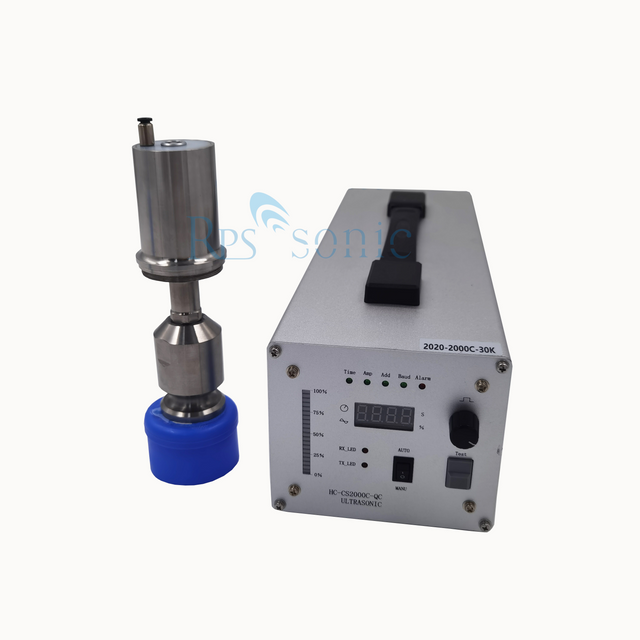
Ultrasonic Generator Module: Enables automatic frequency tracking, precise power output, and stable amplitude adjustment.
Actuation Drive Mechanism: Primarily a servo electric cylinder/precision cylinder, achieving high-precision control of pressure, speed, and displacement.
Sensing and Detection Unit: Includes pressure sensors, displacement sensors, temperature sensors, and current and voltage acquisition modules.
Human-Machine Interaction and Communication Module: Supports parameter setting, curve display, data storage, and production line linkage.
External Linkage Interface: Can interface with robotic arms, conveyor belts, and tooling fixtures to achieve fully automated loading/unloading and assembly line operations.
3. Core Automated Control Technology
3.1 Automatic Frequency Tracking Control
When the load and temperature change, the resonant point of the ultrasonic transducer is prone to shift, leading to power reduction and severe overheating.
The automated control system automatically locks the optimal resonant frequency through real-time impedance detection and dynamic frequency sweeping, ensuring that the electro-acoustic energy conversion efficiency is always at its highest level, improving welding stability and reducing equipment wear.
3.2 Multi-mode Welding Process Closed-Loop Control
To adapt to different materials and structures, the system supports multiple automated welding modes:
Time Mode: Precisely controls the welding duration according to a set time.
Energy Mode: Targets total output energy, ensuring high consistency in energy for each weld.
Displacement Mode: Controls weld depth using a high-precision displacement sensor, suitable for precision plastic parts.
Pressure-Displacement Coordination Mode: Servo pressure and displacement are linked in real time to avoid pressure damage and incomplete welds.
The control system collects data in real time and automatically corrects deviations, achieving automatic completion with a single clamping.
3.3 Precise Servo Pressure and Speed Control
Traditional pneumatic welding suffers from large pressure fluctuations. Modern high-end equipment generally adopts servo drive + closed-loop pressure control:
Higher pressure control accuracy and faster response; Adjustable lifting and lowering speeds, and gradual pressure release; Effectively solves problems such as cracking of brittle parts, software deformation, and uneven welds.
3.4 Online Monitoring and Automatic Anomaly Protection
The control system features real-time monitoring throughout the entire process:
Automatic protection against overcurrent, overtemperature, and overload;
Automatic shutdown for abnormal frequency, abnormal amplitude, and excessive displacement;
Real-time alarm for poor welding and prompts the cause of the fault, reducing human error.
3.5 Integrated Control with Automated Production Lines
The equipment supports standard communication protocols (such as Modbus, Profinet, EtherCAT, etc.), enabling:
Automatic feeding, automatic positioning, automatic welding, and automatic unloading;
Seamless integration with robots, production lines, and vision positioning systems;
Networking of multiple devices for unified scheduling and centralized management.
4 Performance Improvements from Automated Control
Significantly improved welding consistency; Parameters are precisely executed by the system, resulting in strong batch stability and a significant reduction in defect rates.
Significantly improved production efficiency; No need for repeated manual adjustments; can operate continuously and automatically 24 hours a day, reducing downtime for debugging.
Simplified operation and reduced skill dependence; Operators only need to call the program, and the equipment automatically completes the welding process, reducing experience errors.
**Quality Traceability:** Automatically records welding time, energy, displacement, power, and other data, meeting the quality traceability requirements of industries such as automotive and electronics.
**Wideer Applicability:** Flexible adaptation to various products and materials, enabling rapid changeover and meeting the needs of multi-variety, small-batch automated production.
5. Application Prospects and Development Trends:** With the rapid development of industries such as new energy, medical consumables, automotive lightweighting, and consumer electronics, ultrasonic welding automation control is developing towards higher precision, higher integration, and greater intelligence:
Digital Twin and Simulation: Simulates the welding process in advance to optimize parameters;
AI Intelligent Parameter Adjustment:The system automatically identifies materials and recommends the optimal welding process;
Visual Positioning + Ultrasonic Welding Fusion: Achieves high-precision automatic alignment and correction;
Remote Operation and Maintenance & Cloud Platform Management:** Remote monitoring, fault diagnosis, and remote program updates.
6. Conclusion:
Automated control of ultrasonic welding equipment is a core means to improve welding quality, production efficiency, and equipment reliability. Through automatic frequency tracking, multi-mode closed-loop control, servo precision drive, online monitoring, and production line linkage, an upgrade from single-machine automation to full-line intelligence can be achieved. In the future, with the deep integration of control technology, sensing technology and artificial intelligence, ultrasonic welding will further develop towards high precision, high stability, digitalization and intelligence, playing a more important role in high-end intelligent manufacturing.