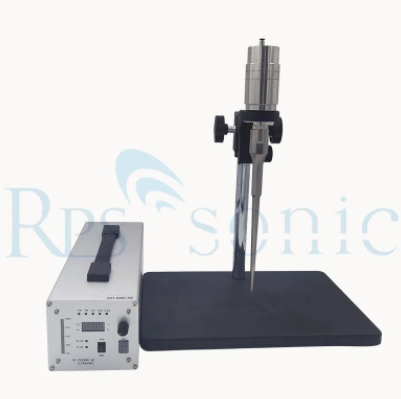
Key Application Scenarios for Ultrasonic Defoaming Equipment
Ultrasonic defoaming equipment has achieved mature application across numerous industrial sectors. Typical scenarios include:
1. Food and Beverages
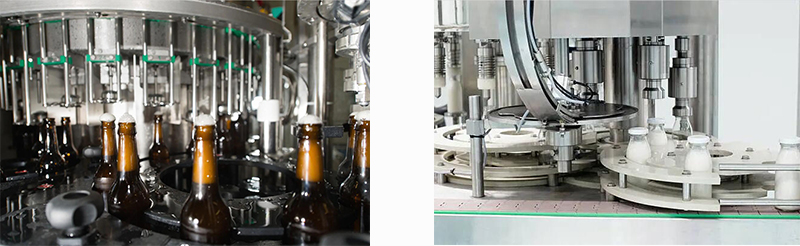
Applied to the degassing of liquids such as fruit juices, dairy products, beer, carbonated beverages, and edible oils. Degassing helps retard oxidative rancidity, improves taste and flavor, extends shelf life, and effectively controls foaming issues during the filling process. In a specific brewery's fermentation tank retrofit, a system utilizing an embedded ultrasonic vibration rod linked with a foam guide tube was implemented; when the foam layer on the liquid surface exceeded 2 cm in thickness, the defoaming process would automatically activate. This reduced dissolved oxygen fluctuations from ±15% to ±3%, significantly boosting yeast activity.
2. Pharmaceuticals and Biomedicine
Used for defoaming during the filling of sterile preparations, such as injectable solutions, oral liquids, and vaccines. Because it requires neither high temperatures nor high pressures—and leaves no chemical residues—ultrasonic defoaming is particularly well-suited for pharmaceutical manufacturing environments where cleanliness requirements are extremely stringent.
3. Chemicals and New Materials
Applied to the defoaming of high-viscosity liquids, including polymer emulsions, resin solutions, inks, coatings, and adhesives. The cavitation effect generated by the ultrasonic vibration rod can penetrate liquid layers exceeding 10 cm in depth, enabling deep-layer defoaming within highly viscous fluids.
4. New Energy and Electronics
In the processing of lithium-ion battery slurries, ultrasonic degassing effectively removes bubbles from NMP solvents, thereby enhancing the coating quality of electrode sheets and improving product yield. Furthermore, ultrasonic technology plays a pivotal role in the defoaming of high-precision materials such as semiconductor photoresists and electronic pastes.
5. Coatings and Printing
Taking a specific coating filling line as an example: an ultrasonic vibration rod was installed on the side wall of the tank at a downward angle of 15 degrees. Through horizontal linear-scanning vibrations, the rod induced uniform ripples on the liquid surface, thereby accelerating the upward migration of bubbles. Data indicates that this solution reduced the liquid-level flatness error during filling from ±3 mm to ±0.5 mm, while simultaneously lowering energy consumption by 60% compared to traditional mechanical defoaming paddles. IV. Equipment Types and Key Parameters
4.1 Key Considerations for Equipment Selection
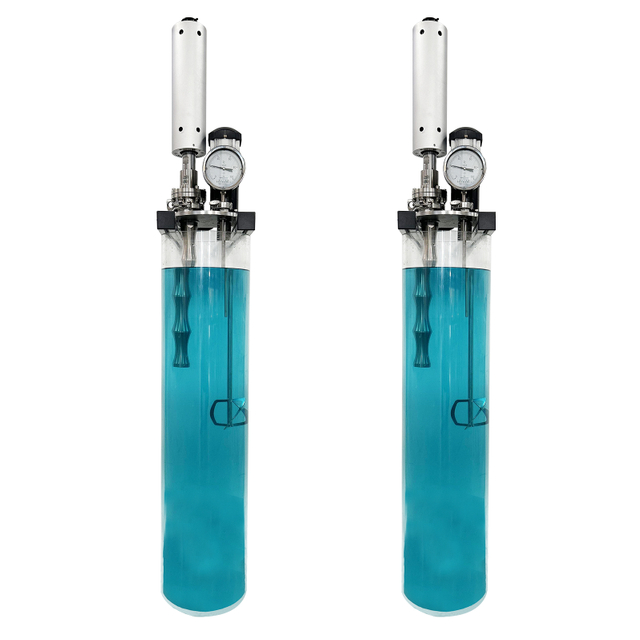
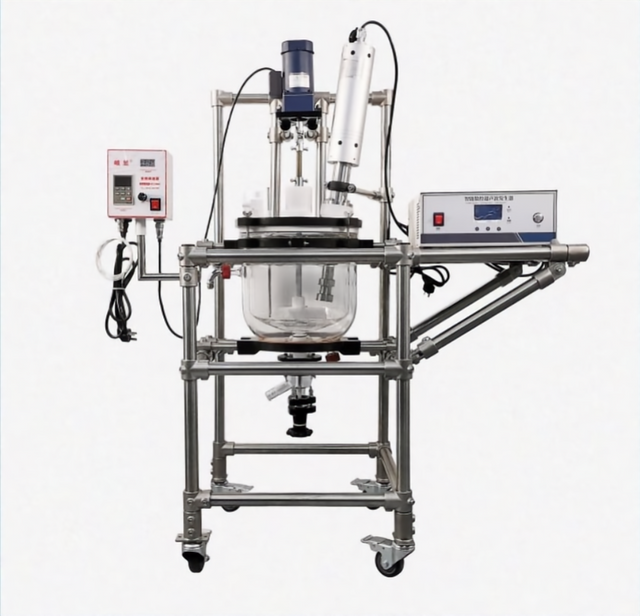
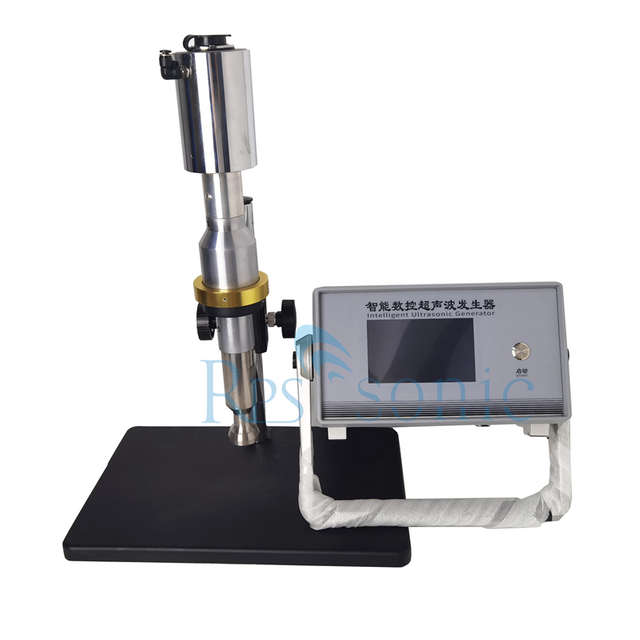
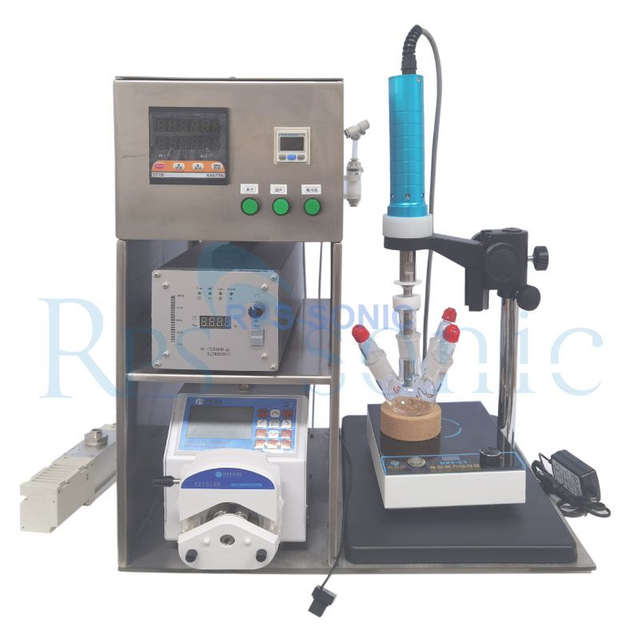
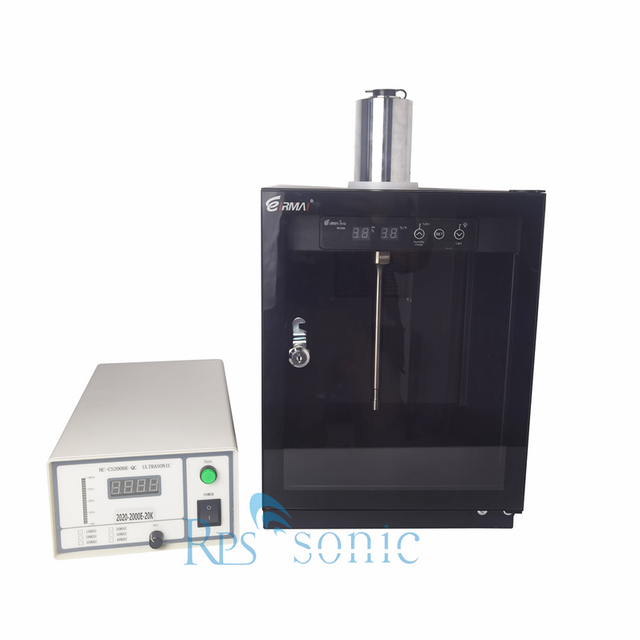
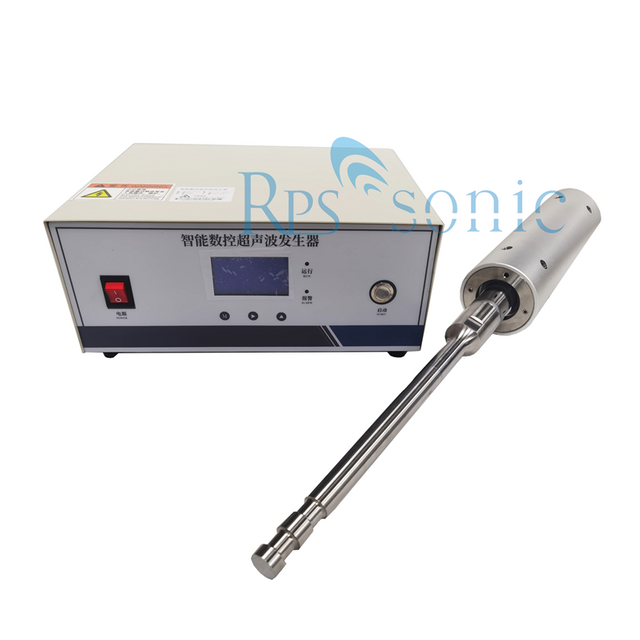
**In-Tank Immersion Type:** The ultrasonic vibration probe is directly submerged into a reaction vessel or liquid storage tank. By leveraging the cavitation effect, it achieves *in-situ* defoaming within the container, making it suitable for both batch processing and continuous online processing scenarios.
**External Circulation Type:** Liquid is drawn from the bottom of the storage tank, pumped through an ultrasonic reactor for treatment, and then either returned to the storage tank (recirculation configuration) or directed into the next vessel (single-pass configuration). This method enables the continuous and automated execution of the degassing process.
**Inline (Pipeline) Type:** An ultrasonic processor is directly integrated into the liquid transport pipeline. Defoaming and degassing occur while the liquid is in transit, making this configuration ideal for large-scale, assembly-line production environments.
4.2 Common Technical Parameters
① **Frequency:** Selectable range typically spans from 15 kHz to 60 kHz. Among these, 20 kHz is the most commonly used frequency. Generally, the lower the frequency, the higher the processing power per unit.
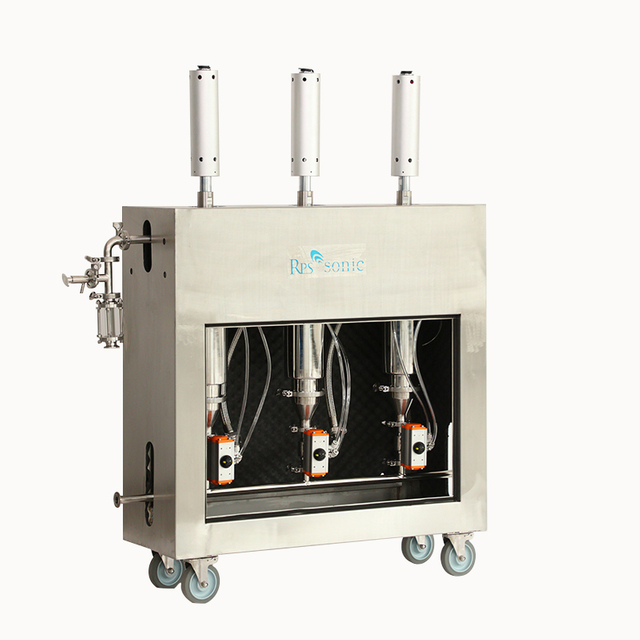
② **Power:** The power output of a single unit ranges from several hundred watts to several kilowatts. Typical models include 500W, 1000W, 1500W, 2000W, and 3000W; multiple units can also be combined to meet the requirements of larger processing volumes.
③ **Amplitude:** The typical amplitude range is 10–70 µm, with some equipment models supporting continuous adjustment within a range of 50% to 100%.
④ **Material:** The probe section—which comes into direct contact with the liquid—is typically constructed from stainless steel or titanium alloy to ensure corrosion resistance and longevity.
⑤ **Temperature Adaptability:** Equipment can be designed to accommodate liquid processing environments ranging from 0°C to 200°C.
⑥ **Control Method:** Modern equipment is typically equipped with intelligent control systems that support features such as continuously adjustable power output, automatic frequency tracking, real-time monitoring of operating status, and fault alarms.
V. Operational Precautions and Maintenance Guidelines
To ensure the long-term, stable operation of the ultrasonic defoaming equipment, particular attention should be paid to the following points:
**Strictly Prohibit Dry Operation (No-Load Running):** It is imperative to ensure that the ultrasonic probe (horn/sonotrode) is completely submerged in the liquid. Operating the device without a liquid load will result in the probe overheating and sustaining damage. **Probe Immersion Depth:** It is generally recommended that the probe be immersed to a depth of approximately 1.5 cm, with the liquid level maintained at 30 mm or higher. The probe should be mounted centrally to avoid contact with the container walls. Inserting the probe too deeply hinders liquid convection, thereby compromising processing efficiency.
**Parameter Optimization:** Adjust the ultrasonic power and treatment duration appropriately based on the specific liquid type and degassing requirements. A pulsed mode is frequently employed to minimize heat accumulation.
**Temperature Control:** For heat-sensitive materials, cooling measures (such as utilizing a cooling jacket) should be implemented to prevent thermal denaturation caused by temperature rise during the sonication process.
**Regular Maintenance:** As the probe is a consumable component, it requires periodic inspection for wear and timely replacement to ensure optimal cavitation performance and equipment efficiency.
Ultrasonic defoaming technology is evolving toward greater intelligence and efficiency. On one hand, the energy conversion efficiency of industrial-grade equipment has reached 80–90%, supported by intelligent control systems capable of functions such as automatic frequency tracking and adaptive power adjustment. On the other hand, through the integration of sensor technologies, future equipment is expected to enable real-time monitoring of bubble density and adaptive power regulation, thereby driving continuous optimization of production processes toward a "zero-bubble" objective.
In terms of application scenarios, ultrasonic defoaming is expanding deeply into high-value-added sectors. The degassing of electrolytes for new-energy batteries, the precision defoaming of semiconductor photoresists, and the rigorous pursuit of solution purity in biopharmaceutical manufacturing processes are all driving this technology toward ever-higher standards of precision.
Concurrently, academic research into the regulation of ultrasonic cavitation continues to deepen.
**Conclusion**
With its unique cavitation effects and physical defoaming mechanism, ultrasonic defoaming technology is emerging as an indispensable—yet "silent"—tool in modern industrial production. From food and beverages to pharmaceutical formulations, and from advanced chemical materials to new-energy batteries, it resolves critical bottlenecks affecting product quality and production efficiency in a subtle yet profound manner. Although its application in ultra-high-flow processing scenarios still faces certain challenges, as technology costs decline and levels of intelligence rise, ultrasonic defoaming equipment is transitioning from being merely a "value-added luxury" to an "indispensable necessity," unlocking its unique value across an ever-expanding range of industrial settings. One study achieved the tunable control of ultrasonic cavitation by generating geometric potential wells on engineered rough surfaces; another study revealed a "double-bubble translation mode" for bubble detachment from hydrophobic surfaces within high-intensity ultrasonic fields, thereby providing a theoretical basis for optimizing ultrasonic degassing processes. These frontier explorations will further enhance the controllability and depth of application of ultrasonic defoaming technologies.