English



Views: 89 Author: Site Editor Publish Time: 2026-08-27 Origin: Site
Applications of Low-E Vacuum Glass Tin Plating in The Automotive Industry
Low-E Vacuum Glass = Two tempered glass sheets + Low-E low-emissivity film + vacuum thin layer
Core advantages of automotive Low-E vacuum glass: The Low-E film inhibits radiative heat transfer, and the vacuum layer eliminates gas conduction heat transfer. The combination of these two achieves superior heat insulation and noise reduction, solving the pain points of high temperature rise and high air conditioning power consumption in new energy panoramic sunroofs under direct sunlight. Curved automotive tempered Low-E glass cannot withstand high-temperature sealing above 400℃; therefore, low-temperature metal brazing + selective edge tinning has become the mainstream high-end technology route.
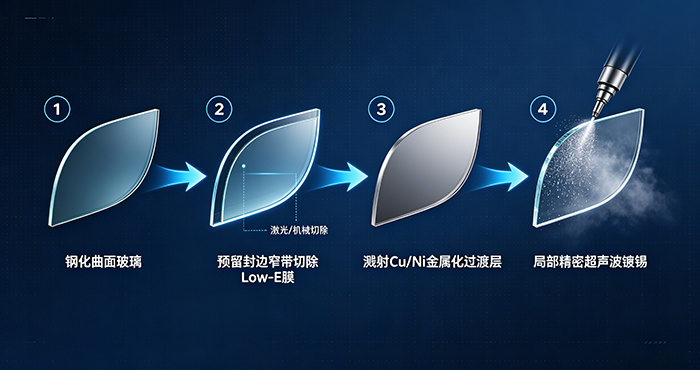
I. Specific applications of tinning process in various parts of automotive Low-E vacuum glass
1. Glass edge sealing area: Selective ultrasonic tinning of curved edges (most critical application)
Process flow: Tempered curved glass → Reserving a narrow edge sealing area to remove the Low-E film (the film layer cannot participate in welding) → Sputtering a Cu/Ni metallization transition layer → Local precision ultrasonic tinning. Functions: ① The tin layer acts as an intermediate transition layer, allowing the low-temperature tin-based solder to fully wet the metallized layer, forming a pore-free gas-tight seal; ② Sealing temperature is 180–260℃. The low-temperature process does not damage the optical properties of the Low-E film, while preventing stress attenuation and spontaneous breakage of tempered glass; ③ The flux-free process releases no chemical residues or released gases, preventing gas accumulation inside the vacuum chamber and thus preventing vacuum failure, protecting the Low-E film from long-term contamination.
Key process requirements: Narrow-band selective tin plating, strict control of tin plating width, reduction of edge metal thermal bridges, and avoidance of weakening the overall thermal insulation effect of Low-E.
2. Preventing stainless steel oxidation and gas generation, avoiding oxide particle contamination of the Low-E film surface on the vacuum side, and ensuring long-term optical stability.
Pre-tin plating of the vacuum glass evacuation copper tube and metal sealing plug: After evacuation, low-temperature tin solder permanently seals the evacuation hole; improves solder sealing performance, and prevents copper oxidation and the formation of verdigris that contaminates the vacuum chamber and Low-E film. The new generation of tailless integrated metal-sealed Low-E vacuum glass features pre-tin-plated integrated sealing components.
3. Tin-plated electrode terminals for multi-functional integrated Low-E vacuum glass
Low-E vacuum windshields/panoramic sunroofs equipped with electrically heated defogging and PDLC electronically controlled dimming: Tin plating is applied to the surfaces of the lead-out electrodes and busbar metal terminals to achieve low-temperature, airtight brazing of the lead-out lines; preventing terminal oxidation and eliminating the risk of high-temperature welding damage to the Low-E film.
II. Typical Automotive Application Scenarios and R&D Cases
Current Status: Automotive Low-E vacuum glass is generally in the trial production and small-batch verification stage, with few mass-produced models; tin-plated metal sealing solutions are positioned as high-end solutions.
1. Panoramic Low-E Vacuum Panoramic Sunroofs for New Energy Vehicles (Main Application Direction) Fuyao and Xinyi Glass have developed curved Low-E vacuum panoramic sunroof samples, employing edge-selective ultrasonic tin plating + metal brazing edge sealing, supplying high-end pure electric vehicle forward-looking projects such as NIO, Li Auto, and Avita. Pain Point Solutions: 1. **Standard Insulating Low-E Glass Skylights:** Ordinary double-glazed Low-E skylights lack sufficient heat insulation; high-temperature sealing with glass powder damages curved tempered glass and the Low-E film. Tin-plated low-temperature sealing perfectly avoids these two major drawbacks. The goal is to eliminate in-vehicle sunshades and achieve lightweight design.
2. **High-End Pure Electric Sedan Low-E Vacuum Windshield R&D Project:** Double-layered Low-E vacuum windshields, combining sound insulation, heat insulation, and infrared radiation protection; using tin-plated metal sealing technology to overcome the noise reduction bottleneck of traditional laminated glass, targeting flagship executive models.
3. **RV and High-End Sightseeing Bus Low-E Vacuum Side Windows (Small-Batch Deployment):** Long-distance RVs use curved Low-E vacuum glass windows. The tin-plated edge sealing structure resists continuous bumps and large temperature differences, ensuring long-term airtightness and maintaining the heat insulation performance of the Low-E film.
III. Advantages and Challenges of Tin-Plated Low-E Automotive Vacuum Glass
Advantages:
1. Lower process temperature, fully preserving the optical and thermal insulation properties of the Low-E film;
2. Longer lifespan of the airtight weld, matching the 10-15 year service life of the vehicle, ensuring long-term stable performance of Low-E radiation blocking;
3. Automated continuous production, with a faster production cycle than high-temperature sealing with glass powder;
4. No residual contaminants, preventing fogging and devitrification of the Low-E film surface.
Existing Shortcomings:
1. High Cost: Selective tin plating equipment for curved surfaces requires significant investment, and tin raw material prices fluctuate, limiting its application to high-end models.
2. Stringent Process Control: Precise control is required for tin plating location and thickness. Excessive tin can obstruct light transmission, compromising the Low-E appearance.
3. Thermal Bridges Exist in Metal Edge Sealing, necessitating Narrow-Width Tin Plating Structures for Optimized Insulation.
IV. Industry Application Prospects:
1. Positive Medium- to Long-Term Demand: Under the dual-carbon development model, new energy vehicle manufacturers are continuously reducing air conditioning energy consumption and improving cabin comfort. Low-E + vacuum composite glass is a core direction for panoramic sunroof upgrades. With the accelerated industrialization of curved tempered Low-E vacuum glass, ultrasonic selective tin plating, as an essential process for low-temperature metal edge sealing, is experiencing stable market growth.
2. Market Segmentation:
High-end luxury new energy vehicles: Prioritize the use of [Low-E vacuum glass + tin-plated metal brazed edge sealing];
Economy passenger vehicles: Continue to use glass powder-sealed Low-E vacuum glass or ordinary insulated Low-E glass, with both routes coexisting in the long term.