Ultrasonic Spray Pyrolysis: The Precise Manufacturing Art From Droplets To Functional Materials
Ultrasonic Spray Pyrolysis (USP) is a material preparation technology that ingeniously combines ultrasonic atomization with high-temperature pyrolysis. Unlike traditional spray pyrolysis that relies on compressed air or high-pressure gas, USP utilizes the energy of ultrasound to break the precursor solution into uniform droplets of micron or even submicron size. These droplets are then transported to a high-temperature reaction zone via a carrier gas, where a series of physicochemical transformations, including solvent evaporation, solute thermal decomposition, and sintering, are completed, ultimately yielding powder or thin film materials. The unique aspect of this technology lies in its ability to start from a single drop of liquid and achieve "customized" design of the product's morphology, composition, and structure through precise control of the coupling of physical and chemical fields.
I. Droplet Formation: The Physical Mechanism of Ultrasonic Atomization
USP's technology originates from ultrasonic atomization. When high-frequency ultrasound (typically between 20 kHz and 2.4 MHz) acts on a liquid surface, it triggers two main physical effects. The first is capillary instability—ultrasound excites capillary waves at the liquid surface; when the amplitude is large enough, droplets at the wave crests detach from the surface, forming tiny droplets. The second is cavitation—ultrasound generates microbubbles within the liquid; the energy released when these bubbles collapse breaks the liquid into droplets.
The atomization frequency directly determines the droplet size distribution. The higher the frequency, the finer the droplets produced. For example, an ultrasonic frequency of 1.7 MHz can produce high-quality droplets of 1–5 μm, while higher-frequency atomizers can even refine droplets to the submicron level. The uniformity of droplet size is USP's core advantage over pneumatic atomization—pneumatic atomization produces powders with larger particle sizes and wider distributions, while ultrasonic atomization allows for finer particle size control.
II. From Droplets to Particles: Morphological Evolution During Pyrolysis
After entering the high-temperature reaction zone, the droplets undergo a precisely controlled "morphology programming" process. Taking the preparation of TiO₂ spherical photocatalysts as an example, this process can be divided into four stages:
200–400℃ Low-temperature zone: The solvent evaporates rapidly, and a solute shell forms on the droplet surface;
400–600℃ Medium-temperature zone: The titanium salt precursor undergoes hydrolysis and pyrolysis, generating amorphous TiO₂;
600–1000℃ High-temperature zone: Crystal transformation and particle sintering are completed, generating a highly active anatase phase or anatase-rutile mixed phase;
Cooling and collection: The particles are cooled and then collected by a collection device.
It is worth noting that the precursor concentration is the key "switch" for controlling the particle morphology. Under low concentration conditions, the solute is insufficient to fill the entire droplet volume after evaporation, easily forming hollow microspheres; medium concentrations generate dense spherical particles; while excessively high concentrations easily induce particle agglomeration. This "one-pot" morphology control capability gives USP a unique advantage in preparing materials with complex morphologies such as hollow structures and core-shell structures.
III. A Precise Network of Process Parameters
The product quality of USP depends on the synergistic optimization of multiple process parameters. These parameters constitute a precise control network:
Parameter category | key parameter | Typical range | The impact on the product |
Atomization parameters | ultrasonic frequency | 20 kHz – 2.4 MHz | Determine the size of droplets and the uniformity of their distribution |
Fluid parameters | Solution flow rate | 0.5 – 2 mL/min | Affecting deposition rate and film thickness |
Thermal field parameters | pyrolysis temperature | 300–1200℃ | Determine crystal form, crystallinity and particle morphology |
Atmospheric parameters | carrier gas flow | 0.5–2 L/min | Controlling the residence time of droplets and the reaction atmosphere |
geometrical parameter | Nozzle-base distance | 10–25 cm | Affecting the uniformity of the film and the deposition efficiency |
These parameters are intricately coupled. For example, the carrier gas flow rate not only affects the droplet transport efficiency but also determines the droplet residence time in the high-temperature zone—if the flow rate is too high, the droplets will be blown out of the reaction zone before complete pyrolysis; if the flow rate is too low, it may lead to excessive sintering of the particles. Researchers are increasingly using Design of Experiments (DoE) methods to systematically explore the interactions between these parameters in order to achieve global optimization of product performance.
IV. System Composition and Evolution
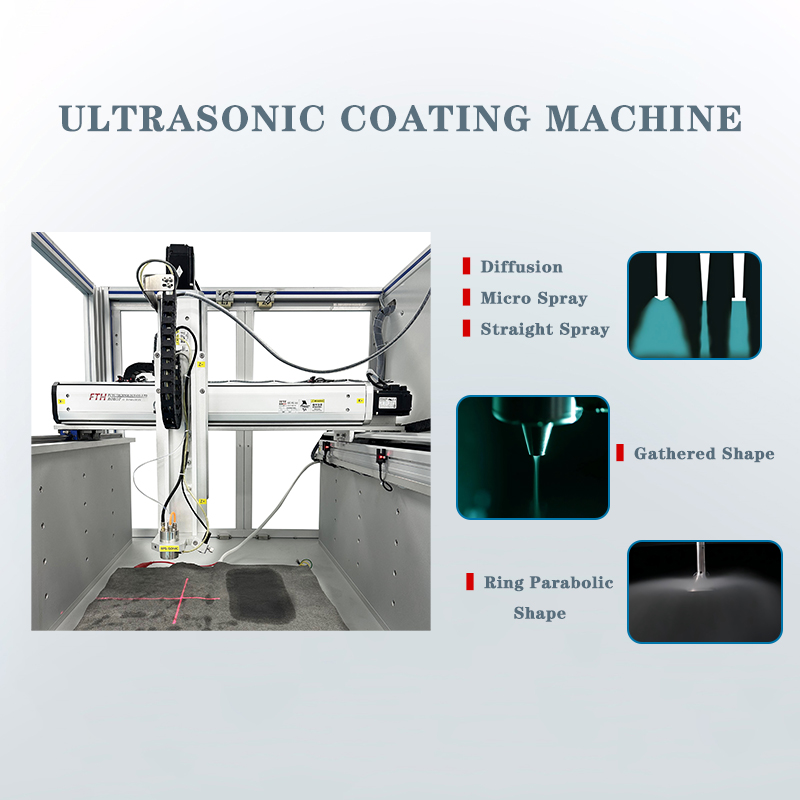
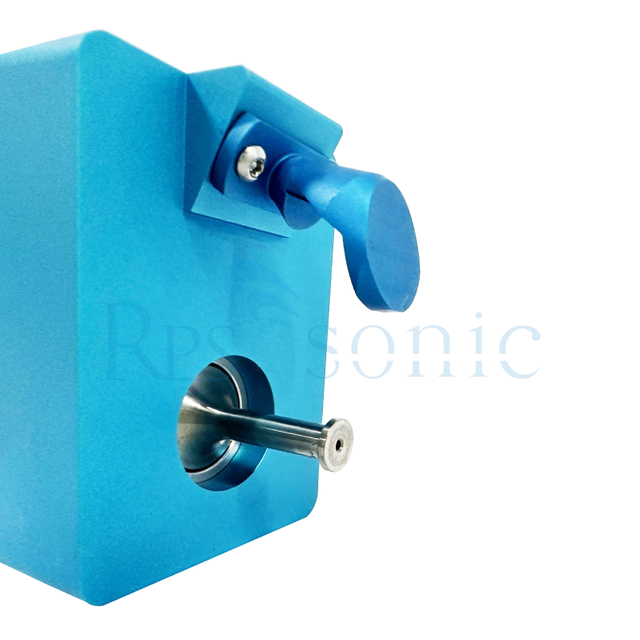
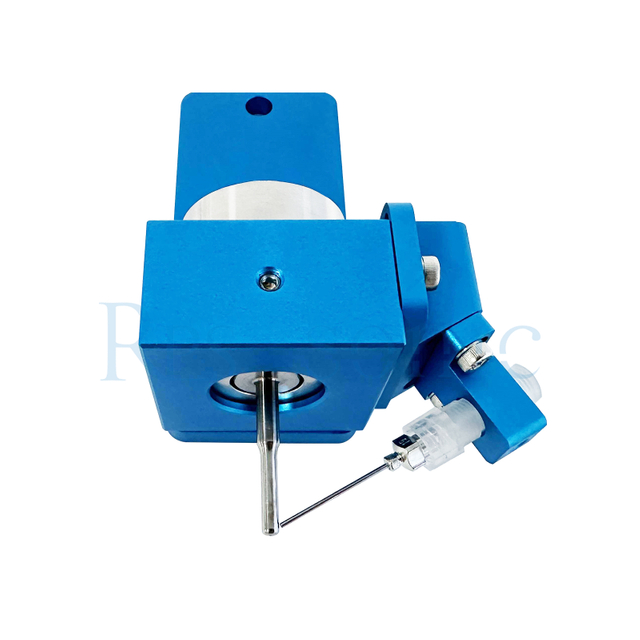
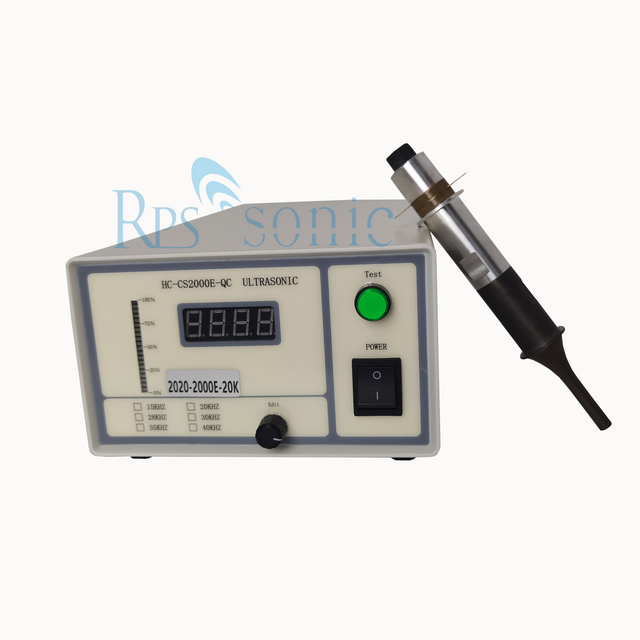
A complete USP system typically consists of four core components: an ultrasonic atomizer (1.6–2.4 MHz, atomizing the precursor solution into uniform droplets of 1–10 μm), a carrier gas system (using air, nitrogen, etc. as a medium, regulating flow rate and controlling the reaction atmosphere), a segmented temperature-controlled high-temperature tube furnace (temperature control range 300–1200℃), and a powder collection device (such as a bag filter).
V. Cutting-Edge Applications and Technological Innovation
At the application level, USP technology is continuously expanding its boundaries. Besides traditional semiconductor thin film and functional ceramic powder preparation, the following directions are particularly noteworthy:
Environmental Remediation: USP-prepared TiO₂ spherical photocatalysts exhibit excellent performance in the degradation of organic pollutants, with a degradation rate exceeding 90% in 60 minutes. Its overall performance surpasses that of the sol-gel method, hydrothermal method, and commercial P25. USP and flame spray pyrolysis (FSP) have become the two mainstream technologies for the preparation of functional nanomaterials in the field of environmental remediation.
Gas Sensing: Researchers have used a self-built USP system to prepare Zn-Sn-O matrix semiconductor thin films. By precisely controlling the zinc-tin stoichiometry, they achieved highly selective detection of volatile organic compounds such as acetone.
Biomass-Derived Carbon Materials: Using biomass such as sucrose as raw materials, USP technology can synthesize porous carbon nanospheres (particle size 600–1500 nm) with abundant internal channels, showing application potential in catalysis and energy storage.
Advanced Ceramics: Benchtop USP technology has been successfully applied to the pyrolysis of pre-ceramic polymers (such as polycarbosilanes and polysilazanes) to prepare complex ceramic materials such as SiC and Si₃N₄, with material utilization rates exceeding 85%.
VI. Challenges and Prospects
Despite the significant advantages of USP technology, several challenges remain. The first is the issue of incomplete combustion—some particles may not burn completely during pyrolysis, producing harmful gases such as nitrogen oxides and carbon monoxide, placing higher demands on the exhaust system. Secondly, there is the limitation of precursor solubility—USP requires the precursor to have good solubility in the solvent, which limits the application range of insoluble chemicals. Furthermore, template methods such as salt-assisted USP require additional washing and drying steps after synthesis, increasing process complexity.
However, as a precision manufacturing technology "from droplets to functional materials," the core value of USP lies in integrating the physical precision of ultrasonic atomization with the chemical controllability of pyrolysis reactions. With continuous improvements in equipment design, a deeper understanding of process parameters, and the continuous expansion of application scenarios, USP is moving from the laboratory to a broader industrial stage. On this path of transformation from microscopic droplets to macroscopic materials, USP demonstrates not only a technology, but also an art of precisely manipulating the form of matter.