Ultrasonic atomization spraying technology: Application of PEM fuel cell catalyst coating preparation
Proton exchange membrane fuel cells (PEMFCs), as a highly efficient and clean energy conversion device, are considered a core technology carrier for the hydrogen economy. However, their large-scale commercialization has long been constrained by high material costs and performance bottlenecks—the cost of the membrane electrode assembly (MEA) accounts for the vast majority of the fuel cell cost, and the performance of the MEA directly depends on the microstructure and preparation quality of the catalyst layer (CL). Against this backdrop, ultrasonic atomization spraying technology, with its unique process advantages, is becoming the most promising revolutionary process in the field of PEM fuel cell catalyst coating preparation.
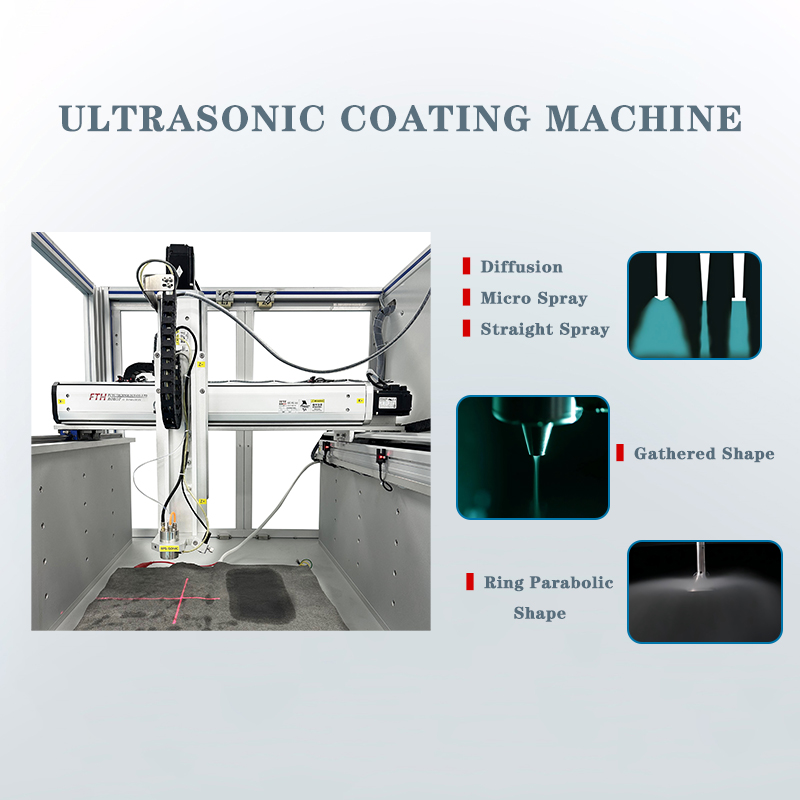
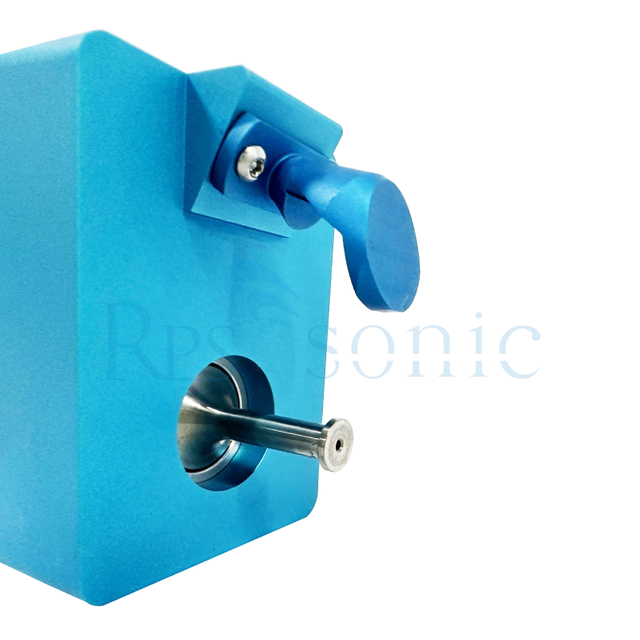
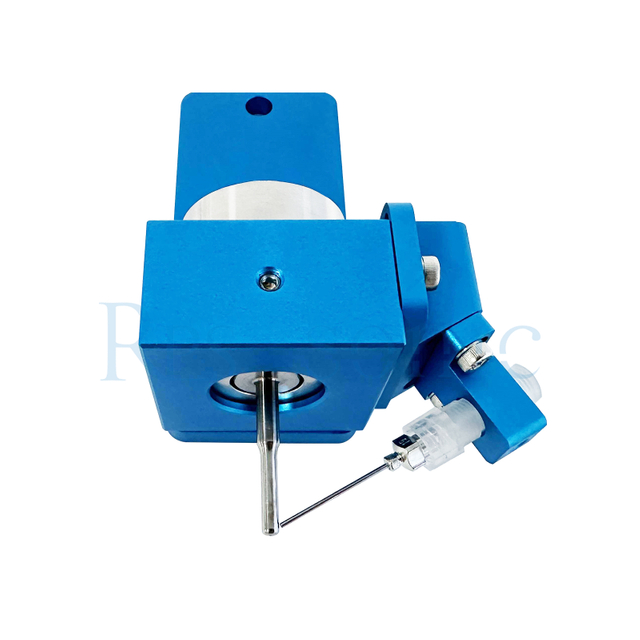
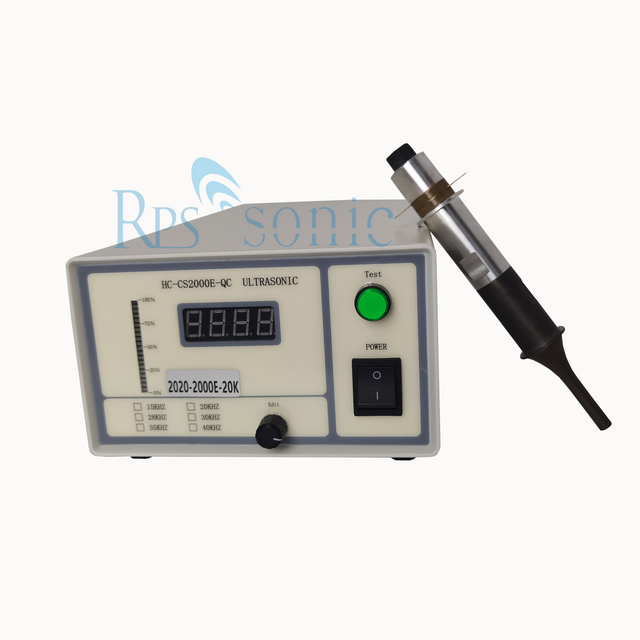
I. Technical Principle: The core of ultrasonic atomization spraying technology lies in the piezoelectric transducer converting electrical energy into high-frequency mechanical vibrations (typically 20kHz-40kHz), which atomize the catalyst slurry into micron-sized uniform droplets through an ultrasonic nozzle. These tiny droplets, guided by a low-pressure carrier gas, are precisely and uniformly deposited on the surface of the proton exchange membrane or gas diffusion layer, forming a dense and uniform catalytic coating.
Unlike traditional compressed air spraying or high-pressure airless spraying, ultrasonic spraying is a non-contact spraying method characterized by "soft atomization"—the atomization process does not rely on high-speed airflow, thus avoiding mechanical impact or compressive stress on precision substrates such as proton exchange membranes. Ultrasonic spraying can coat catalyst ink onto proton exchange membranes or other substrates, and the droplet size is closely related to the microstructure of the catalyst layer.
Studies have shown that increasing nozzle amplitude and frequency, and controlling the surface tension and viscosity of the catalyst ink within appropriate ranges, are beneficial for obtaining finer droplets and a narrower droplet size distribution. Simultaneously, higher viscosity and lower shear rate ink fluids contribute to improved spray quality.
II. Core Advantages: The advantages of ultrasonic atomization spraying technology in the preparation of PEM fuel cell catalyst coatings are reflected at multiple levels, from microstructure to macroscopic production.
1. Extremely High Material Utilization and Cost Savings
Platinum is a core material in PEM fuel cell catalysts, and its cost is high. Ultrasonic spraying technology, with its precise droplet control and high deposition efficiency, achieves material utilization rates as high as 85%-90%, far exceeding the 20%-30% of traditional processes, and can reduce platinum catalyst consumption by up to 50%. In the research and development phase, only 10 ml of catalyst slurry is needed to coat multiple proton exchange membranes. Studies have shown that membrane electrodes prepared using ultrasonic spraying technology can achieve a current density of 2.8 A/cm² at 0.6 V with a platinum loading of only 0.3 mg/cm².
2. Ultrathin and Uniform Catalytic Layer Structure
Ultrasonic spraying can form ultrathin catalytic layers with a thickness of only 5-15 micrometers and a uniformity exceeding 95%. This highly uniform coating structure provides a superior "three-phase reaction interface"—the intersection of electron, proton, and gas channels—where electrochemical reactions occur. The optimized catalytic layer structure significantly improves the power density and durability of the battery.
3. Gentle Process, No Clogging or Damage
The continuous ultrasonic vibration inside the ultrasonic nozzle constantly disperses and breaks down aggregated suspension particles, effectively preventing nozzle clogging. Simultaneously, the non-contact spraying method avoids mechanical damage to the proton exchange membrane, preventing swelling and deformation of membrane materials such as Nafion. Ultrasonic atomization operates stably with both low-viscosity catalyst inks (such as alcohol-water mixtures) and high-viscosity ionomer dispersions.
4. Process Flexibility and Scalability
The ultrasonic spraying equipment supports the entire process from laboratory research and development to industrial mass production. A spraying system equipped with four ultrasonic nozzles can provide a catalyst spraying rate of approximately 0.8 square meters per hour, equivalent to an annual production of 120,000 membrane electrode assemblies (based on 250 cm²/assembly). The modular design allows the equipment to seamlessly integrate with existing production lines or to build a standalone, fully automated coating production line.
III. Key Application Scenarios
CCM/MEA Catalyst Layer Preparation: Directly spraying catalyst slurries such as Pt/C and IrO₂ (containing Nafion ionomers and solvents) onto both sides of the proton exchange membrane to form the anode and cathode catalyst layers—this is the most valuable application of ultrasonic spraying in the fuel cell field. Catalyst layers prepared by ultrasonic spraying can be achieved by directly spraying the catalyst onto the gas diffusion layer or by directly depositing it onto the proton exchange membrane to form a catalytic coating membrane (CCM).
GDL Hydrophobic Layer and Microporous Layer: Spraying PTFE hydrophobic emulsions and carbon black-PTFE microporous slurries onto carbon paper or carbon cloth allows for precise control of drainage and gas distribution.
Bipolar Plate Coating: Spraying corrosion-resistant conductive composite layers (such as titanium-based and carbon-based coatings) reduces contact resistance and prevents metal ion deposition.
IV. Cutting-Edge Advances: From Process Optimization to Interface Engineering
In recent years, the application of ultrasonic atomization spraying technology in the field of PEM fuel cell catalyst coatings has been continuously deepening. A groundbreaking study published in 2026 proposed a dual-nozzle ultrasonic spraying technique that can independently deposit Pt/C catalysts and Nafion ionomers, achieving precise control over ionomer distribution. This interface engineering strategy maintains a high ionomer content near the membrane to minimize proton conduction resistance, while reducing the ionomer content near the microporous layer to enhance oxygen diffusion and water expulsion. Electrochemical tests showed that the interface-optimized catalyst layer achieved a peak power density of 803 mW/cm², 20%-30% higher than uniform or reverse designs, and maintained excellent electrochemical surface area after 30,000 cycles.
Another study in 2024 revealed the profound impact of ultrasonic spraying process parameters on the catalyst layer structure: increased flow rate or decreased pressure leads to larger atomized particle size and a wider particle size distribution. Larger droplets falling on the Nafion membrane cause a coffee ring effect, resulting in defects such as orange peel texture, protrusions, and grooves in the catalyst layer, which in turn deteriorates the polarization curve and reduces the peak power density. This provides an important theoretical basis for the precise optimization of process parameters. Furthermore, ultrasonic spray pyrolysis (USP) technology has also been used to synthesize high specific surface area catalyst materials, such as PdCr/C nanocatalysts and CoTMPP/C electrocatalysts, providing a new catalyst development pathway for the oxygen reduction reaction.
Conclusion
Ultrasonic atomization spraying technology, with its high material utilization, ultra-thin and uniform coating, mild process without clogging or damage, and flexible adaptability from R&D to mass production, is profoundly changing the preparation paradigm of PEM fuel cell catalyst coatings. It not only effectively solves the pain points of traditional coating methods, such as uneven coating and serious material waste, but also shows great potential in improving stack power density, reducing precious metal usage, and achieving large-scale production.
From single catalyst deposition to precise control of dual-nozzle interface engineering, from laboratory pilot tests to large-scale mass production of 120,000 membrane electrode assemblies per year, ultrasonic atomization spraying technology is continuously evolving along a path of "more precise, more efficient, and more economical." With the accelerated global clean energy transition, this technology will undoubtedly play an increasingly important role in PEM fuel cells and even in broader new energy fields such as solid oxide fuel cells and electrolytic hydrogen production.