Principles And Types of Ultrasonic Aging Equipment
Since ancient times—from the adage regarding *Baijiu* (Chinese liquor) that "wine is fragrant only when aged," to the oak-barrel maturation of wine—time has consistently been the most pivotal variable in shaping the quality of fine spirits. However, the traditional cycle of natural aging is a lengthy process—spanning anywhere from a few months to several years, or even decades. This not only consumes vast amounts of storage space but also poses significant challenges for enterprises regarding capital turnover and production capacity. Traditional aging methods require a large number of storage vessels, entail long production cycles, and are difficult to manage; consequently, they struggle to keep pace with the evolving trends of the modern brewing industry. Thus, the question of how to drastically shorten the aging period while simultaneously guaranteeing product quality has long been a subject of intensive exploration within the brewing sector.
Ultrasonic aging equipment represents an innovative technological solution born precisely out of this need. By harnessing the cavitation, mechanical, and thermal effects generated by ultrasonic waves within a liquid medium, this technology accelerates various chemical reactions—at a microscopic level—within liquid products such as spirits and vinegars. This enables newly brewed products to acquire the flavor profile and aromatic complexity characteristic of natural aging within a remarkably short timeframe. This technology constitutes not only a significant innovation within the realm of modern food processing equipment but also opens up entirely new possibilities for enhancing both the quality and efficiency of the traditional brewing industry.
Technical Principles: The Three Core Effects of Ultrasonics
Ultrasonic waves are defined as sound waves with a frequency exceeding 20,000 Hertz (20 kHz)—a range that lies beyond the threshold of human hearing. When ultrasonic waves propagate through a liquid medium, their interaction with the medium induces physical and chemical transformations, giving rise to a series of mechanical, thermal, and chemical "ultrasonic effects." Among these, the effects that play a pivotal role in the aging acceleration process primarily encompass the following three aspects:
Technical Principles: The Three Core Effects of Ultrasonics
Ultrasonic waves are defined as sound waves with a frequency exceeding 20,000 Hertz (20 kHz)—a range that lies beyond the threshold of human hearing. When ultrasonic waves propagate through a liquid medium, their interaction with the medium induces physical and chemical transformations, giving rise to a series of mechanical, thermal, and chemical "ultrasonic effects." Among these, the effects that play a pivotal role in the aging acceleration process primarily encompass the following three aspects:
2.1 The Cavitation Effect
The cavitation effect constitutes the core mechanism underlying ultrasonic aging acceleration. When ultrasonic waves act upon a liquid, they generate a multitude of tiny bubbles—known as cavitation bubbles. Upon the collapse of these bubbles, the surrounding liquid rushes inward instantaneously, creating localized conditions of extreme temperature (momentarily exceeding 5,000 K) and high pressure (surpassing 1,000 atmospheres). Simultaneously, intense shock waves and high-velocity micro-jets are released. This extreme microscopic environment significantly elevates the activation energy of various molecules within the liquor, thereby accelerating chemical reaction rates and enabling processes such as esterification, condensation, and redox reactions to be completed within an extremely short timeframe.
Furthermore, the cavitation effect accelerates the vaporization and volatilization of pungent volatile substances—such as sulfides and aldehydes—present in the liquor. This process effectively reduces the liquor's harshness and acridity, thereby enhancing its overall mouthfeel.
2.2 Mechanical Effects
The mechanical effects of ultrasonic waves are primarily manifested through the continuous action of high-frequency vibrations upon the medium. These vibrations facilitate the emulsification of the liquid, accelerate the mixing and homogenization of its constituents, and enhance the intermolecular affinity between polar molecules, thereby accelerating the association between alcohol and water molecules. Mechanistically, this physical-level interaction bears a strong resemblance to the gradual process of molecular "association" that occurs during natural aging; it renders the liquor smoother and mellower in character, effectively mitigating the "raw" or harsh sensation typically associated with young spirits.
2.3 Thermal Effects
During propagation, a portion of the ultrasonic energy is converted into thermal energy, resulting in a moderate elevation of the liquid's temperature. This rise in temperature provides the necessary energetic conditions for various chemical reactions, further accelerating the rates of processes such as esterification and redox reactions. While this thermal effect is analogous to the temperature-induced changes observed during traditional aging, the application of ultrasonic waves allows for its realization with far greater precision and uniformity.
Collectively, these three synergistic effects work in concert to ensure that the mechanism of ultrasonic-accelerated aging closely mirrors that of natural aging—yet it possesses a level of efficiency and controllability that traditional aging methods simply cannot match.
III. Equipment Configuration and Main Types
3.1 Core Components
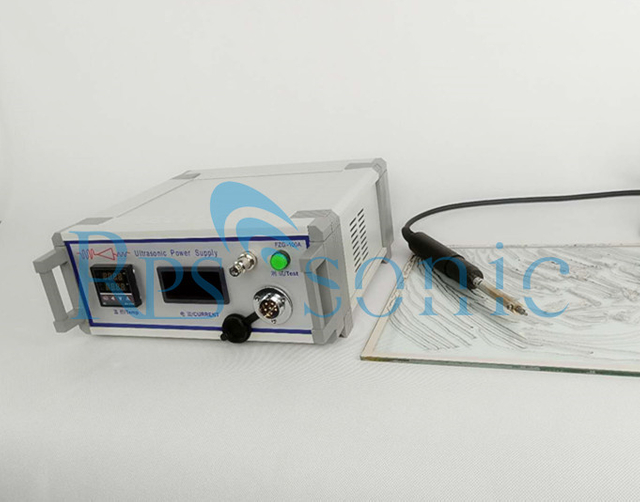
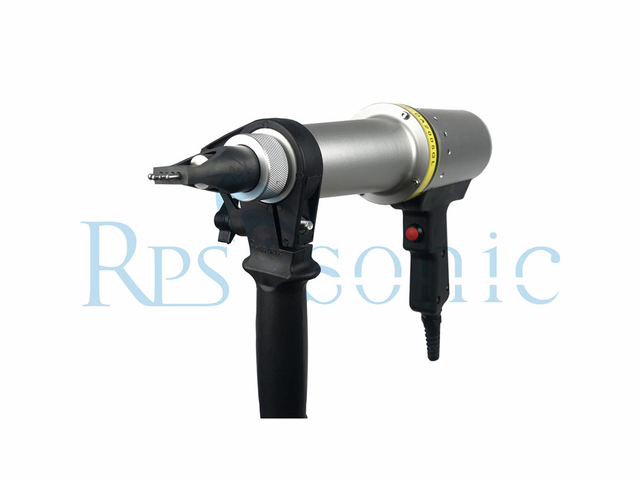
Ultrasonic aging acceleration equipment primarily consists of two core components: the ultrasonic vibration system (the main unit) and the ultrasonic driving power supply. The ultrasonic main unit consists of three components: a transducer, a booster, and a tool head (emitter). The transducer converts input electrical energy into mechanical vibrational energy; the booster serves to amplify the amplitude and provide protective isolation; and the tool head directly transmits this energy into the liquid medium. The driving power supply is a digitally controlled unit capable of real-time frequency tracking and power regulation, thereby ensuring stable equipment operation under varying process conditions. Furthermore, the equipment is typically paired with a reaction vessel—customizable to meet specific user production volume requirements—while certain high-end models integrate additional functional modules such as temperature monitoring, automatic stirring, and automated control systems.
3.2 Equipment Classification
Based on application scenarios and production scale, ultrasonic aging equipment can be broadly categorized into the following types:
Laboratory / Small-Batch Type: Primarily utilized for scientific research experiments, process development, and small-scale pilot production; these units typically feature a benchtop or handheld configuration. Typical specifications include a volume of 10 liters, an ultrasonic power output of 0.5 kW, and a frequency of 20 kHz, making them ideal for formula fine-tuning and parameter optimization.
Industrial Continuous Production Type: Designed for large-scale manufacturing, these systems typically employ a pipeline or tank-based structure, enabling continuous liquid inflow and outflow to meet the high-volume aging requirements of beverage manufacturers. Processing power ranges from 1 kW, with capabilities extending to over 20 kW.
Composite Aging Equipment: These systems integrate ultrasonic technology with other aging techniques (such as micro-oxygenation, microwave treatment, irradiation, or the use of oak chips). By synergistically harnessing the advantages of multiple physical effects, the resulting aging efficacy often surpasses that of any single technology used in isolation.