Application of Ultrasonic Spraying Technology in The Preparation of Triclosan-containing Antibacterial Sutures
Views: 101 Author: Site Editor Publish Time: 2026-07-30 Origin: Site
Application of Ultrasonic Spraying Technology in The Preparation of Triclosan-containing Antibacterial Sutures
Surgical site infection (SSI) is one of the most common complications after surgery, not only prolonging hospital stays and increasing medical burden, but also potentially endangering lives in severe cases. Among numerous preventative measures, antibacterial surgical sutures are considered an important means of reducing infection risk because they act directly on the critical stage of wound closure.
Triclosan, as a broad-spectrum antibacterial agent, has good inhibitory effects on many common bacteria associated with surgical site infections, including Staphylococcus aureus (including methicillin-resistant strains MRSA) and Escherichia coli. Applying triclosan as a coating to the suture surface allows for the slow release of antibacterial components within the body, with the antibacterial effect typically lasting 5 to 7 days post-surgery, matching the critical period for wound healing.
How to uniformly, firmly, and efficiently coat the suture surface with triclosan is the core technical challenge in antibacterial suture preparation. Ultrasonic spraying technology, with its unique advantages of precision, uniformity, and efficiency, is becoming an important process route in this field.
The Technical Principle of Ultrasonic Spraying
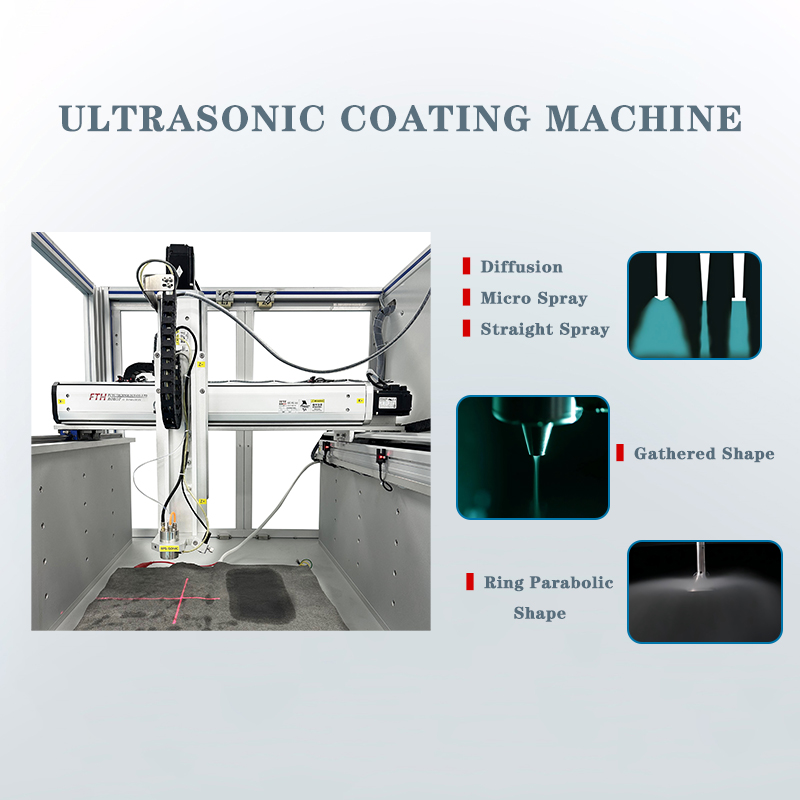
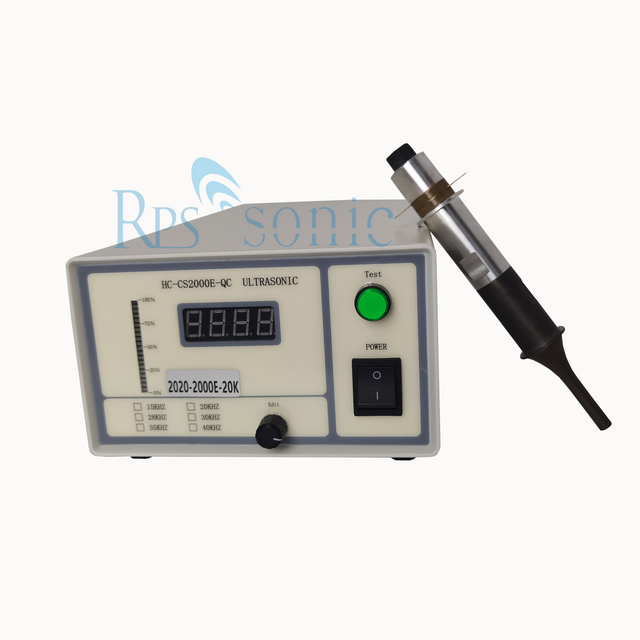
Ultrasonic spraying is a precision coating preparation technology. Its core principle is to use an ultrasonic transducer to convert electrical energy into high-frequency mechanical vibration, atomizing a solution containing triclosan into uniform droplets at the micron or even nanometer scale under the influence of vibrational energy. These tiny atomized particles are then directionally deposited onto the suture surface under the guidance of a low-pressure carrier gas (such as clean air or nitrogen), forming a thin and uniform antibacterial coating.
Unlike traditional spraying methods that rely on high-pressure airflow atomization, ultrasonic spraying does not require high-pressure impact, thus avoiding splashing and waste of coating material. Taking a triclosan + ethanol solution system as an example, a 120kHz high-frequency ultrasonic atomizing nozzle can break the solution into uniform droplets of 10-50μm, with a narrow and controllable droplet size distribution.
The Core Advantages of Ultrasonic Spraying
Extremely High Coating Uniformity
Medical sutures are precision medical devices with stringent requirements for coating uniformity. The small droplet size deviation generated by ultrasonic atomization, coupled with directional deposition achieved through a low-pressure carrier gas, ensures that the coating thickness deviation on the suture surface is controlled within ±5%. In contrast, traditional dip-coating processes can result in coating thickness deviations of 30%-50%. This high uniformity is crucial for delicate sutures, effectively avoiding the "localized buildup" or "missed coating" problems common in traditional methods.
No special restrictions on suture materials:
Ultrasonic spraying technology offers excellent process versatility. Whether using absorbable sutures (such as PGA and PLA) or non-absorbable sutures (such as nylon and polypropylene), ideal coatings can be obtained by adjusting spraying parameters (such as ultrasonic frequency and solution viscosity). For absorbable sutures, the triclosan coating degrades synchronously with the suture, avoiding coating residue; for non-absorbable sutures, the coating adheres for a long time, continuously providing infection prevention.
High material utilization:
In traditional dip-coating processes, the coating material utilization rate is only 30%-50%, with a large amount of material lost with the waste liquid. Ultrasonic spraying, however, achieves a coating utilization rate more than four times that of traditional two-fluid spraying. This not only reduces production costs but also reduces the burden of treating waste liquid containing bioactive components, demonstrating significant environmental value.
Low-damage
protective of substrate and functional components: The high-pressure impact of traditional high-pressure spraying methods can damage heat-sensitive substrates or cause premature degradation of absorbable sutures (such as PGA). Ultrasonic spraying uses low-pressure carrier gas to deliver droplets, achieving precise and low-damage bonding between the coating and the suture substrate, effectively protecting the mechanical properties of the suture and the antibacterial activity of triclosan.
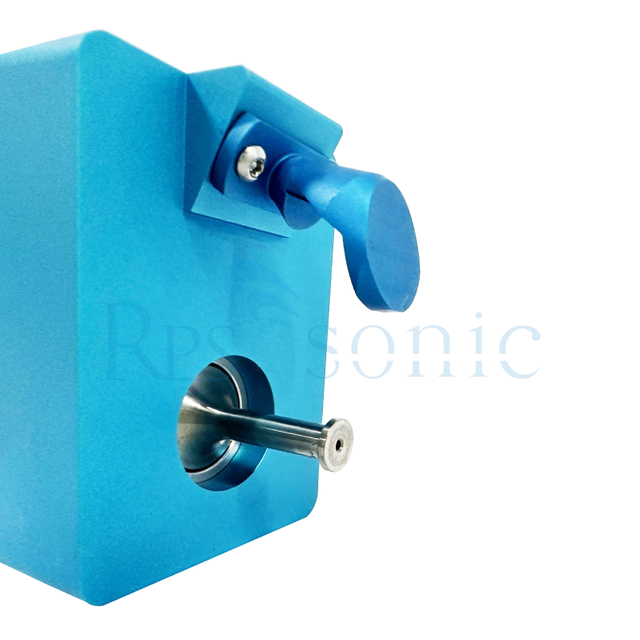
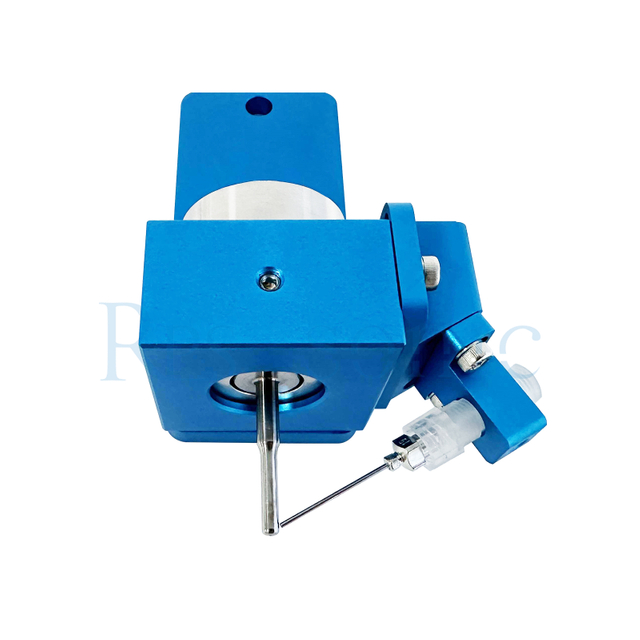
Ultrasonic atomization and spraying equipment atomizes the coating solution using high-frequency ultrasonic vibration, producing micron-sized atomized particles. Taking a 120kHz high-frequency atomizing nozzle as an example, its atomization accuracy is superior to conventional 40-60kHz nozzles, atomizing triclosan + ethanol solution into finer, more uniform droplets. The resulting antibacterial coating exhibits a thickness uniformity deviation of less than 5%.
Ultrasonic spraying technology provides a precise, efficient, and universal process for preparing triclosan-containing antibacterial sutures. It fundamentally overcomes the bottlenecks of traditional dip-coating and spraying processes, such as uneven coating, material waste, and substrate damage. With its core advantages of high uniformity, high material utilization, and low damage, it perfectly meets the stringent requirements of medical sutures for coatings in terms of "biosafety, functional stability, and process consistency."
With the continuous development of precision medicine and personalized implants, the application prospects of ultrasonic spraying technology in the preparation of functional coatings for antibacterial sutures and other medical devices will be even broader.