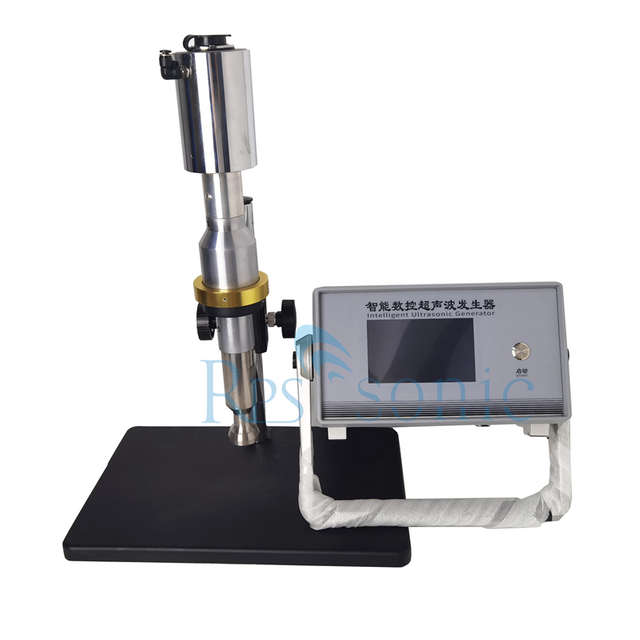
Application of Ultrasonic Cell Disruption
Ultrasonic cell disruption technology is widely applied, playing a pivotal role—akin to a "micro-scalpel"—particularly in cutting-edge fields such as life sciences, pharmaceuticals, and materials science. It harnesses the "cavitation effect" generated by ultrasonic waves within a liquid—specifically, the powerful shockwaves and shear forces produced by the instantaneous collapse of bubbles—to achieve a diverse range of functions, including cell disruption, material dispersion, and the acceleration of chemical reactions.
The table below summarizes its primary fields of application:
Life Sciences: Cell lysis and extraction of intracellular contents; preparation of DNA, RNA, and proteins; isolation of subcellular structures, etc.
Pharmaceuticals: Extraction of medicinal components; preparation of drug carriers (liposomes, microspheres, etc.); processing of microbial fermentation products; gene transfection for drug delivery, etc.
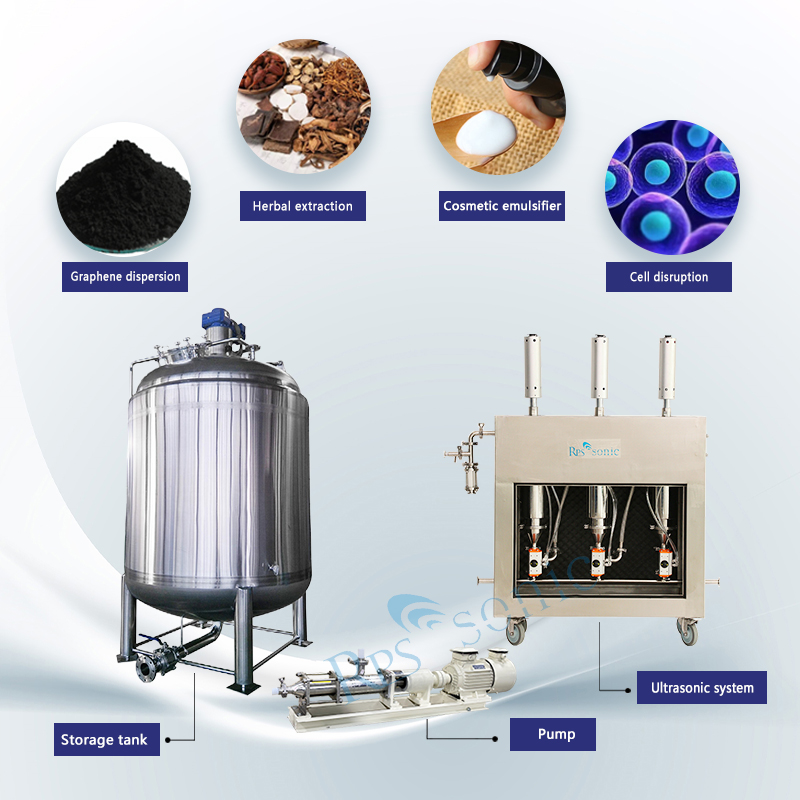
Materials Science: Dispersion and preparation of nanomaterials (graphene, carbon nanotubes, etc.); emulsification and homogenization of solutions; auxiliary acceleration of chemical reactions, etc.
Food & Agriculture: Extraction of active food ingredients (e.g., polysaccharides, flavonoids); emulsification and homogenization of food products; extraction of functional components from agricultural produce, etc.
Environmental Science: Analysis of environmental microorganisms; pre-treatment of soil and sediment samples; analysis and detection of organic pollutants in water, etc.
Life Sciences: Cell Disruption and Extraction of Biological Macromolecules
Ultrasonic cell disruption technology serves as a fundamental tool in molecular biology laboratories, utilizing the mechanical forces generated by the cavitation effect to effectively disrupt various cellular structures.
Cell Lysis and Intracellular Extraction: It effectively disrupts animal and plant cells, bacteria, yeast, and other organisms. This constitutes a critical step in the extraction of biological macromolecules—such as nucleic acids (DNA/RNA) and proteins—while avoiding the introduction of impurities often associated with chemical lysis methods.
DNA/RNA Preparation: Modern ultrasonic systems enable the highly efficient shearing of nucleic acid samples, allowing for precise control over DNA fragmentation to meet specific sequencing requirements; certain devices can fragment DNA within the 150 bp to 1 kb range. Non-contact ultrasonic devices are particularly well-suited for preparing samples for high-throughput sequencing and Chromatin Immunoprecipitation (ChIP) assays.
Other Key Applications: This technology plays a pivotal role in the extraction of membrane proteins, the isolation of subcellular components, and various microbiological research endeavors.
Pharmaceuticals: A Key Technology in Drug R&D and Manufacturing
From early-stage research and development to large-scale commercial production, this technology is integral to numerous stages throughout the pharmaceutical industry value chain.
**Pharmaceutical R&D and Extraction:** Used for the efficient extraction of active ingredients from natural products—such as traditional Chinese medicinal herbs—thereby facilitating the discovery of new drugs.
**Drug Formulations and Carriers:** Applicable to the preparation of drug delivery systems—including liposomes, microspheres, and nanoparticles—to enhance drug stability and targeting specificity, while simultaneously improving bioavailability.
**Biopharmaceutical Production:** Employed for the extraction of recombinant proteins—such as isolating insulin from *E. coli*—or for processes like the disruption of viral cells during vaccine manufacturing.
**Novel Formulation Preparation:** Enables the creation of nanoscale emulsions, which can be used to encapsulate poorly soluble drugs, thereby enhancing their absorption.
**Gene Therapy Applications:** Facilitates the entry of gene vectors into cells, thereby boosting gene transfection efficiency and demonstrating significant potential within the field of gene therapy.
**Materials Science: Nanodispersion and Advanced Materials Preparation**
The uniformity and dispersibility of materials are critical to their performance; ultrasonic disruption technology serves as a powerful tool for achieving these objectives.
**Overcoming Nanomaterial Agglomeration:** The shockwaves generated by ultrasonic cavitation effectively disaggregate nanomaterials prone to clumping—such as graphene and carbon nanotubes—ensuring uniform dispersion. This, in turn, guarantees the desired electrical conductivity, mechanical strength, and catalytic activity of the final product.
**Assisted Chemical Synthesis and Materials Preparation:** Acts as an "accelerator" for chemical reactions, significantly reducing reaction times and boosting yields. It even enables the successful execution of reactions that would otherwise be difficult or impossible to achieve under conventional conditions.
**Solution Emulsification and Homogenization:** Used to prepare stable emulsions (e.g., oil-in-water mixtures) or applied in industries such as food and cosmetics for homogenization processes, resulting in finer textures and enhanced product stability.
**Food and Agriculture: Extraction of Natural Ingredients and Quality Enhancement**
This technology enables the "dissolution" and extraction of beneficial substances from food sources, while simultaneously improving overall product quality.
**Extraction of Natural Products:** Facilitates the efficient extraction of nutritional components—such as polyphenols and flavonoids—as well as essential oils and collagen from plant sources. These extracts are subsequently utilized in health supplements, food additives, or cosmetic products. Compared to traditional methods, this approach offers higher extraction efficiency and significantly shorter processing times.
**Optimization of Food Processing:** Applied in the R&D of functional foods, beverage homogenization, and the "aging" (maturation) processes for alcoholic beverages, thereby enhancing both the sensory qualities and the stability of food products. Environmental Science: Environmental Monitoring and Sample Pretreatment
In the field of environmental science, this technique is primarily utilized for sample pretreatment and the analysis of environmental microorganisms, serving as a foundational step for obtaining accurate data.
Analysis of Environmental Microorganisms: It enables the efficient disruption of cells within soil and water samples, thereby facilitating subsequent analysis, as well as the investigation of microbial community structures and functions.
Environmental Sample Processing: It is employed to homogenize soil and rock samples, or to pretreat water and wastewater samples, in order to facilitate the analysis of organic pollutants contained therein.
Other Emerging Applications
Chemical Industry: It can serve as a catalyst to accelerate chemical reactions, such as organic synthesis.
Inks and Coatings: It is used to disperse pigments and additives, thereby ensuring the stability and consistency of product quality.
Cosmetics: It is utilized in the preparation of microemulsions, nanoemulsions, and similar formulations to enhance product permeability and texture.
Medical Therapeutics: Within the realm of high-intensity focused ultrasound (HIFU) technology, it can be applied in "tissue ablation" procedures to treat conditions—such as tumors—in a non-invasive manner.
Summary
Leveraging its unique physical mechanism of action, ultrasonic cell disruption technology has emerged as a versatile platform technology spanning diverse fields, including biology, medicine, materials science, food science, and environmental science. It provides indispensable support for both the exploration of the microscopic world and the fabrication of advanced materials. To achieve optimal results, the key lies in selecting the appropriate equipment type and optimizing operational parameters based on the specific requirements of one's research or production processes.