Application of Ultrasonic Atomization Technology in The Medical Industry
Ultrasonic atomization technology is revolutionizing the medical industry, driving a shift from "precision manufacturing" to "precision treatment" due to its core advantages such as high precision, high uniformity, high material utilization, and compatibility with heat-sensitive materials. This technology atomizes liquids into uniform droplets at the micron or even nanometer scale and precisely deposits them onto target surfaces. It is currently widely used in several key areas, including drug-eluting stents, inhalation drug delivery, biosensor manufacturing, and wound care.
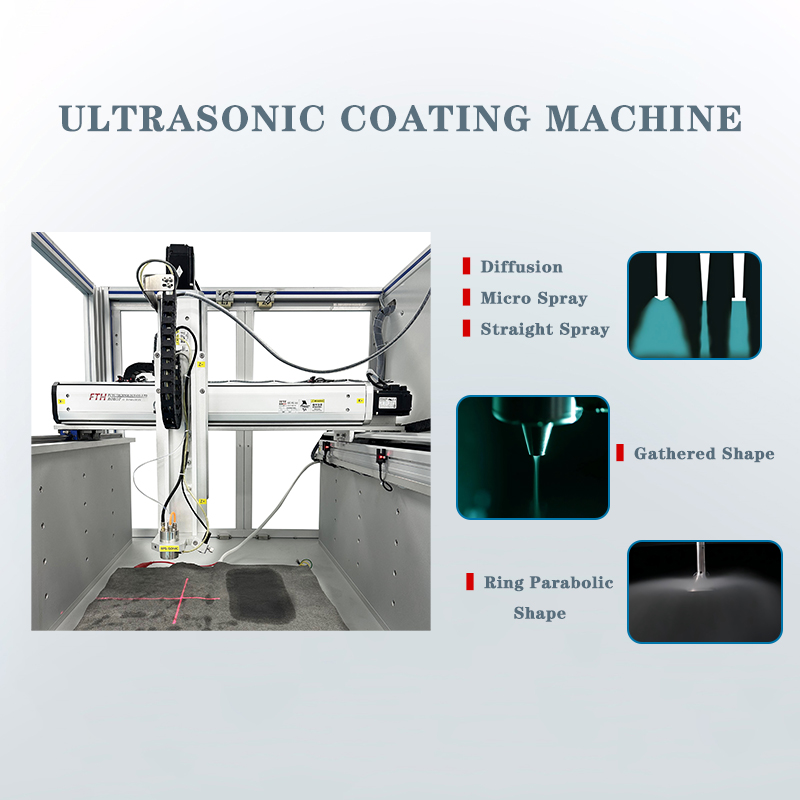
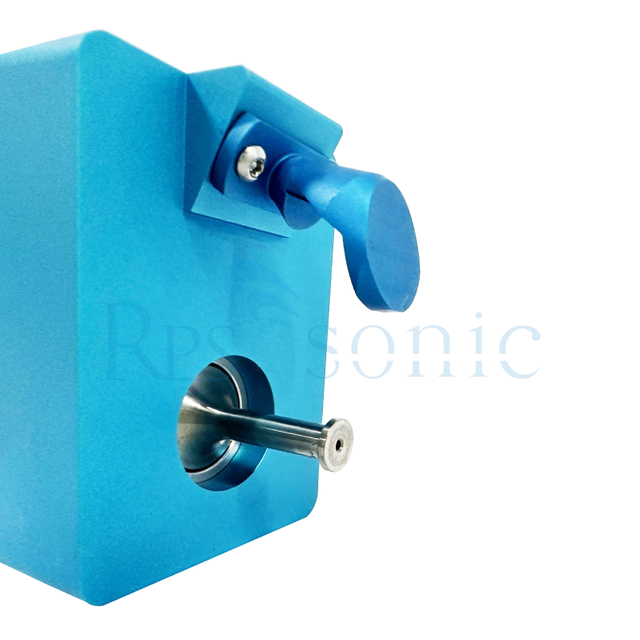
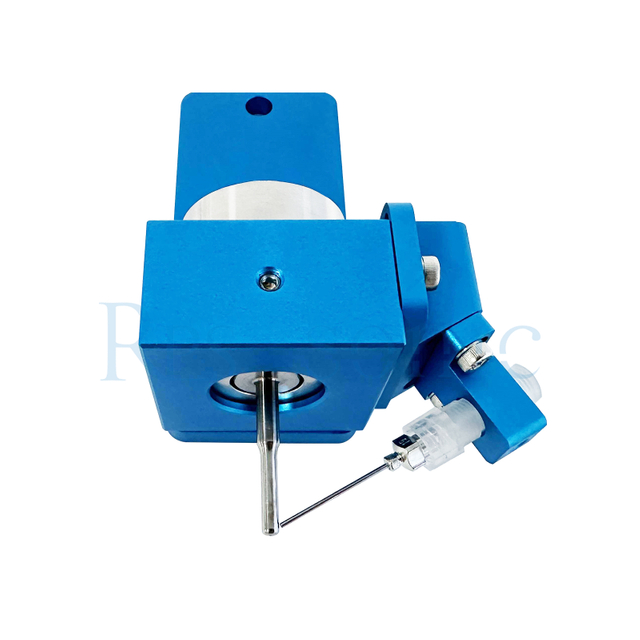
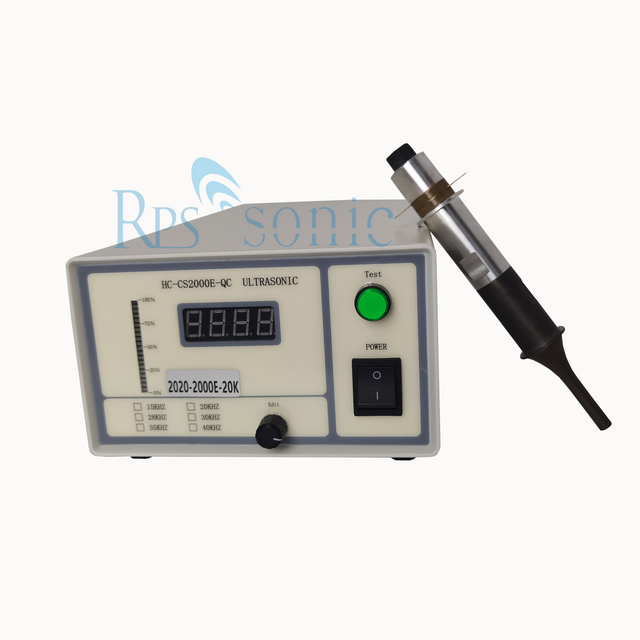
Core Technology Principle: The core of an ultrasonic atomization spraying system is a piezoelectric transducer. When a high-frequency current (typically 40kHz-120kHz) is applied to the system, the transducer generates high-frequency mechanical vibrations. These vibrations create standing waves in the liquid film at the nozzle, "breaking" the liquid into micron-sized droplets with a concentrated size distribution. The atomized droplets are then directionally transported to the substrate surface by a low-velocity carrier gas (such as nitrogen), where they dry and solidify to form a dense and uniform functional coating.
Unlike traditional spraying methods that rely on high pressure or mechanical pressure, ultrasonic atomization requires no high pressure and involves no violent impact. This gentle, non-contact process offers irreplaceable advantages in protecting drug activity and preventing damage to precision instruments.
Core Advantages: Ultrasonic atomization technology exhibits significant advantages in multiple dimensions in the medical field:
* Excellent Coating Uniformity: Narrow droplet size distribution results in coating thickness uniformity exceeding 95%, effectively avoiding defects common in traditional processes such as orange peel, adhesion, and pinholes. This is crucial for devices with extremely high consistency requirements, such as drug-eluting stents.
* Extremely High Material Utilization: The atomization process eliminates high-pressure airflow dispersion, enabling precise deposition and achieving a material utilization rate exceeding 85%, four times that of traditional two-fluid spraying. For expensive drugs like rapamycin and paclitaxel, this advantage directly translates to significant cost savings.
Ultra-Thin Coatings: Ultrasonic spraying can easily produce extremely thin and uniform coatings. For example, with a micro-nozzle, the spray width is only 1-2 mm, and the flow rate can be as low as 0.005 ml/min, making it particularly suitable for the precision coating of micro-devices such as coronary stents.
*Protection of Heat-Sensitive Drugs:* The atomization process does not generate high temperatures, and the low-speed carrier gas delivery avoids severe shear forces, effectively protecting heat-sensitive drug molecules such as rapamycin and paclitaxel.
*Environmentally Friendly:* Eliminating the need for high-pressure air significantly reduces organic solvent evaporation and coating waste, aligning with the trend of sustainable development in the medical industry.
Core Applications in the Medical Field:
I. Precision Coating of Drug-Eluting Stents (DES)
Drug-eluting stents are one of the most mature and core applications of ultrasonic spraying technology in the medical field.
Micro-devices such as coronary stents require a uniform and dense drug coating on a metal framework only 1-2 mm wide. Traditional dip-coating methods struggle to control coating thickness and uniformity, while ultrasonic spraying technology, using a micro-micro ultrasonic atomizing nozzle, atomizes drug solutions such as rapamycin and paclitaxel into tiny droplets, forming a uniform, dense, non-adhesive, pinhole-free, and bubble-free drug coating on the stent surface.
The quality of this coating directly determines the controllability of drug release behavior. By precisely controlling the drug-polymer ratio, coating thickness, and spraying parameters, manufacturers can design an ideal drug release curve that achieves "early potent release and subsequent stable maintenance." Ultrasonic spraying technology has been adopted by 80% of research and manufacturing institutions in the domestic drug-eluting stent market, providing nearly 200 ultrasonic spraying systems to well-known companies such as Lepu Medical and MicroPort Medical.
II. Drug-Eluting Balloon (DEB) Coating
Drug-eluting balloons are considered a cutting-edge treatment option for "intervention without implantation." Ultrasonic spraying systems can precisely coat balloons up to 280mm in length, and the device is equipped with special clamps to secure catheters up to 2 meters in length.
Compared to traditional dip coating processes, ultrasonic spraying offers several advantages in balloon coating:
Highly uniform coating: Ensures even drug delivery to the lesion site.
Precise and controllable drug delivery: Significantly saves on expensive drug materials.
High coating durability: Prevents cracking or peeling, ensuring drug integrity during delivery.
Selective area spraying: Allows for striped spraying on specific areas of the balloon surface, rather than covering the entire surface.
This technology is already used by 80% of research and manufacturing institutions in the domestic drug-eluting balloon coating market.
III. Other implanted devices and functional coatings
The application of ultrasonic spraying technology goes far beyond stents and balloons, and also widely covers the surface functionalization treatment of a variety of medical devices
Device type | Coating Functions and Applications |
Guide wire, catheter, hypotube | It replaces traditional dip coating, improves concentricity and longitudinal uniformity, and reduces material waste. |
Artificial blood vessels, vena cava filters | Spraying pharmaceuticals, polymers, hydrophilic/hydrophobic functional coatings, etc. |
Antibacterial coating | Nanoparticles of antibacterial materials such as silver, copper, and zinc oxide are sprayed onto the surfaces of medical catheters, etc. |
Coating on the inner wall of blood collection tubes | Ultrasonic nozzles can be used for precise internal coating of vacuum and non-vacuum blood collection tubes. |
In summary, ultrasonic atomization coating technology, with its high precision, high uniformity, high material utilization, and friendliness to heat-sensitive drugs and precision instruments, has become an indispensable key process in modern medical manufacturing. From micron-level precision coating of drug-eluting stents to targeted lung delivery of inhaled drugs; from the fabrication of highly sensitive functional membranes for biosensors to antibacterial coatings for wound dressings—this technology is comprehensively driving the medical industry towards greater precision, safety, and efficiency. With the continuous advancement of materials science, micro/nano manufacturing, and intelligent response systems, ultrasonic atomization technology will play an even more important role in the global wave of precision medicine.