Application of Ultrasonic Atomization Technology in Blood Collection Tube Coating
Blood collection tubes are among the most fundamental and critical medical devices used in clinical blood testing. The quality of their inner-wall coatings—whether composed of anticoagulants (such as EDTA or heparin), clot activators (such as silica), or lubricants—directly determines the quality of blood samples and the accuracy of test results. With the advancement of precision medicine, increasingly stringent demands are being placed on the uniformity, consistency, and controllability of these coatings.
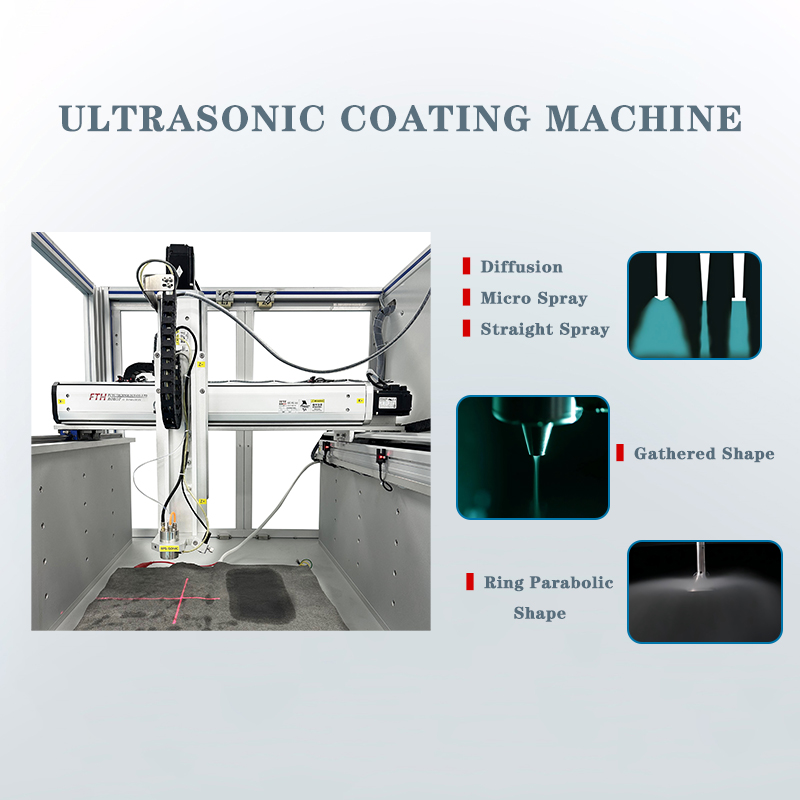
Against this backdrop, ultrasonic atomization spraying technology is emerging as a game-changing innovation in the field of blood collection tube coating. Ultrasonic spraying systems are widely recognized in the industry as the premier choice for coating blood collection tubes and syringe barrels. However, to truly appreciate the value of this technology, one must first understand its "distinctiveness"—specifically, how it differs fundamentally from traditional coating methods.
Mainstream Methods for Coating Blood Collection Tubes and Their Limitations
Before the widespread adoption of ultrasonic technology, coating the inner walls of blood collection tubes primarily relied on the following methods:
Dip coating is the most traditional method, involving the immersion of the tube directly into the coating solution, followed by removal and drying. While seemingly simple, this method has inherent flaws: coating thickness is highly uneven, with significant disparities between the tube opening and the bottom; material waste is substantial, as large amounts of expensive anticoagulant are lost with the runoff; and selective coating is impossible, resulting in the entire inner wall being covered.
Spin coating spreads the liquid across the inner wall via high-speed rotation; however, maintaining consistency in mass production is difficult, and the method adapts poorly to variations in tube shape and dimensions.
Air-pressure spraying (two-fluid spraying) utilizes high-pressure gas to atomize and eject the liquid. Although an improvement over dip coating, this method presents significant issues: high-pressure airflow causes severe splashing and overspray; the atomized droplet size distribution is broad, leading to poor coating uniformity; material utilization efficiency is typically only 30%–40%; and nozzles are prone to clogging, resulting in high maintenance costs.
Technical Principles of Ultrasonic Atomization Spraying
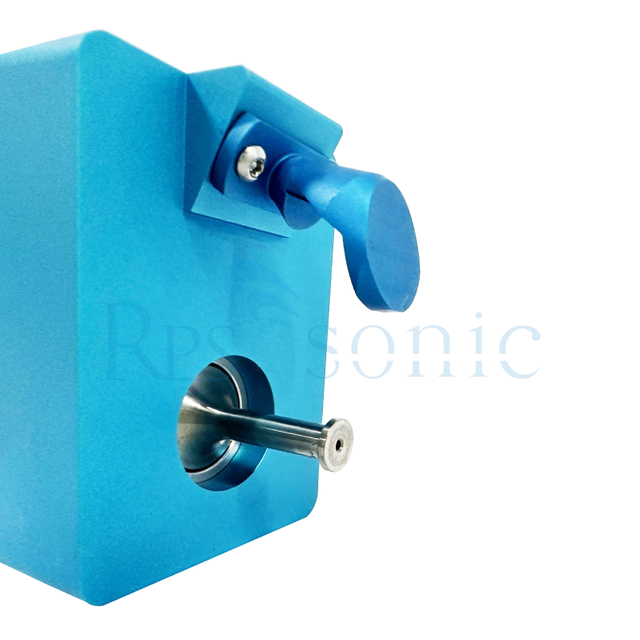
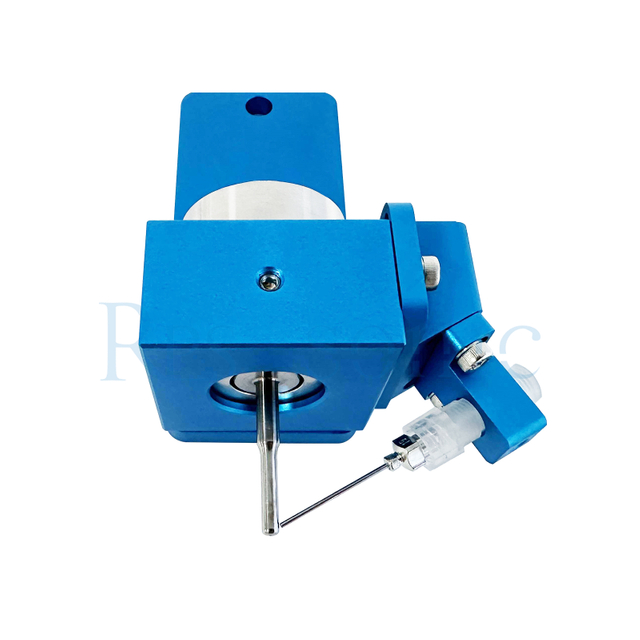
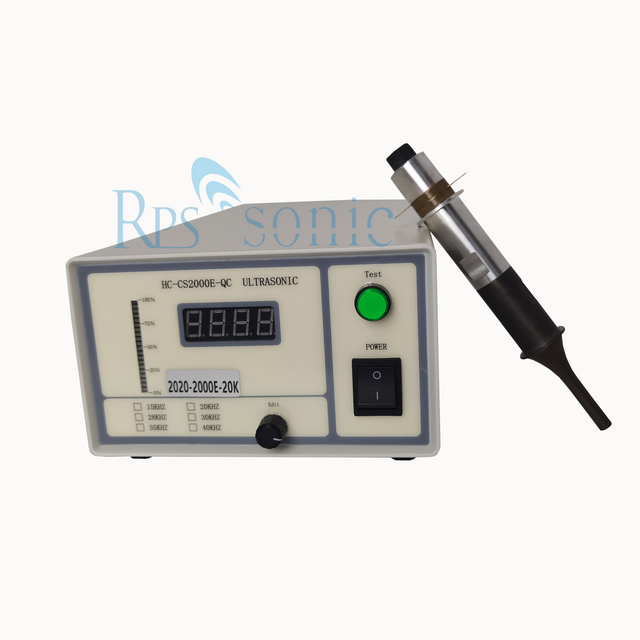
The working principle of ultrasonic atomization spraying differs fundamentally from the methods mentioned above. Its core component is the ultrasonic atomization nozzle, which employs a piezoelectric transducer to convert high-frequency electrical signals (typically 20–120 kHz) into high-frequency mechanical vibrations. As the coating liquid flows across the vibrating surface, the high-frequency vibrations break it down into uniform, micron-sized droplets.
The key distinction of this process is that atomization does not rely on high-pressure gas but rather entirely on the mechanical vibrational energy of the ultrasonic waves. This results in an extremely gentle spraying process free from high-pressure impact, thereby eliminating droplet splashing and rebound.
For slender, tubular devices like blood collection tubes, the technology has evolved to include probe-style nozzles—featuring an extended probe that allows the nozzle to reach directly inside the tube for coating. These probe-style nozzles can penetrate narrow tubes (diameters of 6 mm or larger) to achieve precise inner-wall coating. This design enables ultrasonic spraying to reach every "dead zone" within a vacuum test tube, preventing issues such as edge buildup.
1. Coating Uniformity: From "Roughly Uniform" to "Highly Consistent"
This is the most significant advantage of ultrasonic technology. Traditional dip coating and air-pressure spraying struggle to ensure consistent coating thickness due to varying droplet sizes and random distribution. In contrast, ultrasonic atomization produces a highly concentrated droplet size distribution, achieving atomization uniformity of over 95%. Coating thickness variation can be controlled within ±5%.
Crucially, ultrasonic vibration possesses a unique ability to disperse agglomerates. Take the spraying of silica accelerators as an example: silica particles tend to agglomerate in water, making uniform dispersion difficult with traditional methods. However, the high-frequency vibration of the ultrasonic nozzle actively breaks up these agglomerates, ensuring the formation of a uniform thin film of particles on the tube wall. This synergistic mechanism of simultaneous atomization and dispersion is unmatched by other methods.
2. Material Utilization: From Significant Waste to Maximum Efficiency
In medical device manufacturing, coating materials—particularly high-purity anticoagulants and pharmaceuticals—are expensive, and material utilization rates directly determine production costs. Traditional air-pressure spraying yields a utilization rate of only 30%–40%, with the majority of costly material lost to overspray and splatter.
Ultrasonic atomization spraying offers a completely different scenario. Because it eliminates the need for high-pressure gas, allows for controlled droplet directionality, and prevents splatter, raw material utilization can exceed 85%—roughly four times that of traditional two-fluid spraying. Studies indicate that some systems can even achieve utilization rates of 90%–95%. For a production line manufacturing millions of blood collection tubes annually, the resulting cost savings are staggering.
3. Process Control: From Rough Operation to Precision Regulation
Traditional methods suffer from inherent limitations in process control. With dip coating, coating thickness is primarily determined by solution concentration and withdrawal speed, leaving little room for adjustment; while air-pressure spraying allows for the regulation of air pressure and flow rate, droplet size is coupled with gas pressure, making independent control difficult. Ultrasonic atomization spraying elevates process control to a whole new level:
Precise control of droplet size: Droplet diameter can be independently controlled by adjusting ultrasonic frequency and power;
Precise flow rate control: Coupled with high-precision dispensers, the flow rate ranges from 0.03 to 5 ml/min;
Precise targeting of the spray zone: The atomized spray can be confined to specific areas of the tube wall rather than coating the entire tube;
Ambient temperature operation: The atomization process requires no heating, preventing the degradation of heat-sensitive components (such as certain bioactive anticoagulants).
4. Adaptability and reliability: Traditional nozzles rely on tiny orifices for atomization, making them highly prone to clogging from even minute solid particles in the suspension. In contrast, ultrasonic nozzles lack such tiny orifices and are virtually clog-free, allowing for the stable, long-term processing of suspensions containing solid particles. Additionally, the nozzles feature a self-cleaning function, resulting in extremely low maintenance costs.
Regarding production line integration, the compact design of the ultrasonic spraying system allows for rapid installation into existing blood collection tube production lines. A typical system with 10 nozzle units can achieve a production speed of up to 12,000 blood collection tubes per hour. With a spacing of only 25 mm between parallel nozzles, the system is ideally suited for high-speed, automated mass production.
Typical Application Scenarios
Ultrasonic atomization spraying technology enables the uniform application of various functional coatings for blood collection tubes:
Anticoagulant coatings: EDTA, heparin, acid citrate dextrose (ACD), etc., used for tests such as complete blood counts (CBC);
Coagulation-promoting coatings: Silica, etc., used to accelerate clotting and facilitate serum separation;
Hydrophobic coatings: Improve blood flow characteristics and reduce residue on tube walls;
Lubricating coatings: Silicone oil, etc., used to lubricate the inner walls of syringes.