Analysis of The Application And Advantages of Ultrasonic Spray Pyrolysis System
I. What is Ultrasonic Spray Pyrolysis Technology?
**Ultrasonic Spray Pyrolysis (USP)** is a novel material preparation technology that utilizes ultrasonic atomization to transform liquid precursors into micron-sized droplets, which are then rapidly dried, decomposed, and sintered in a high-temperature reaction zone to prepare powders, thin films, nanomaterials, or functional particles.
The basic process is as follows:
Precursor solution → Ultrasonic atomization → Microdroplets → High-temperature pyrolysis → Solid particle collection
The ultrasonic atomizer generates uniform, fine droplets, with droplet size typically controlled within the range of:
1–10 μm
Upon entering the high-temperature furnace:
1. Solvent rapidly evaporates
2. Precursor undergoes thermal decomposition
3. Spherical particles or nanomaterials are formed
Ultimately, materials with uniform particle size and high purity are obtained.
II. Working Principle of an Ultrasonic Spray Pyrolysis System
The ultrasonic spray pyrolysis system mainly consists of the following components:
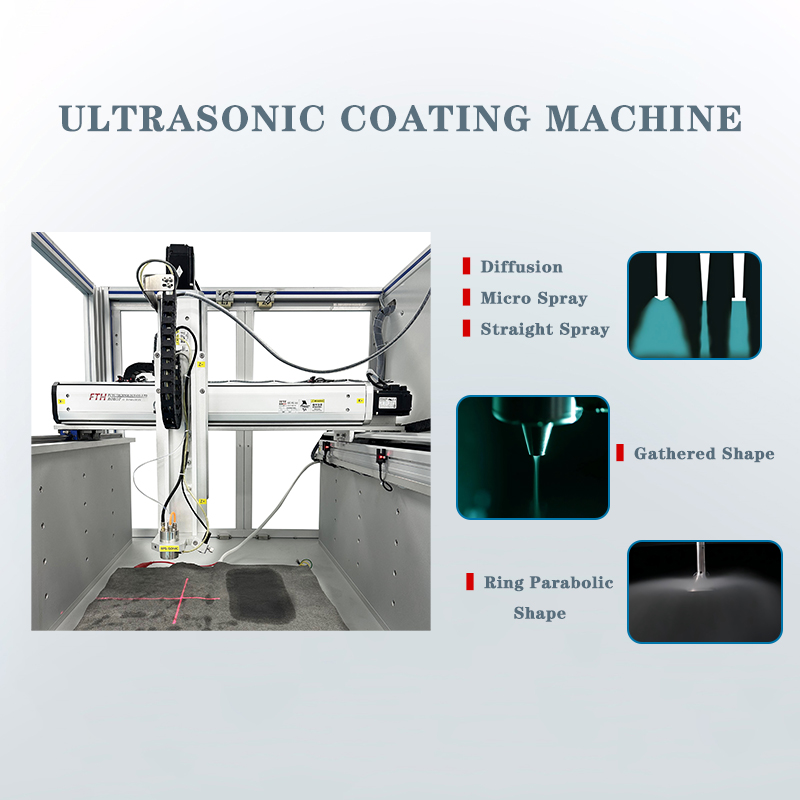
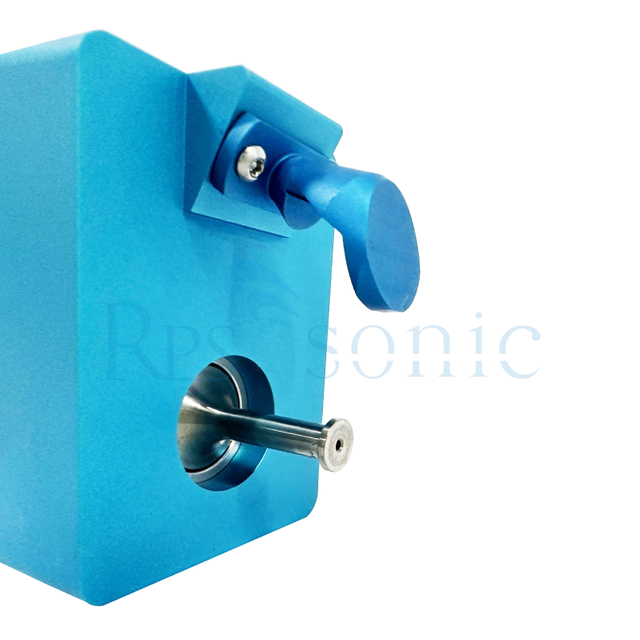
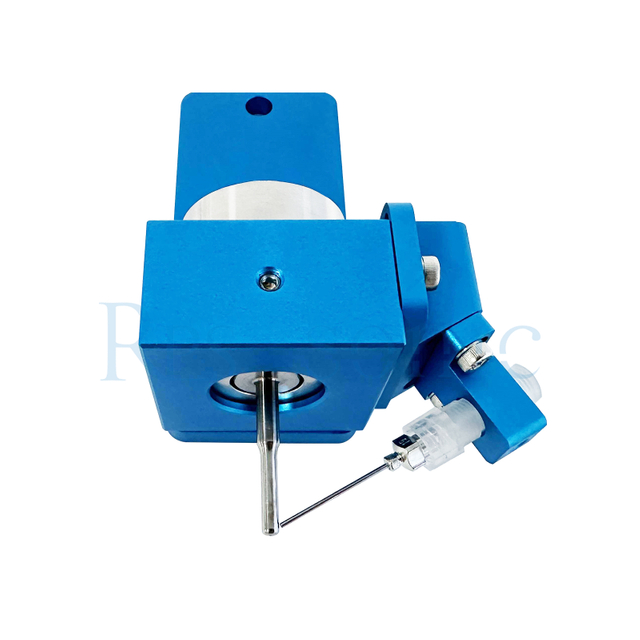
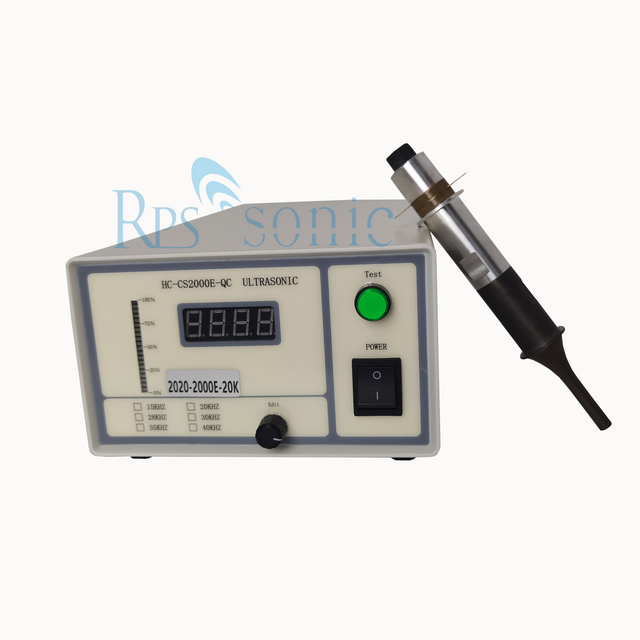
1. Ultrasonic atomization module
This module utilizes high-frequency ultrasonic vibration (typically 1.7MHz–2.4MHz) to generate capillary waves on the liquid surface. When ultrasonic energy exceeds the surface tension of the liquid:
↓ A large number of uniform, tiny droplets are formed.
↓ They enter the reaction chamber.
2. Carrier Gas Delivery System
Through:
Air, Nitrogen, Argon, Oxygen
The droplets are stably delivered to the high-temperature reaction zone.
3. High-Temperature Pyrolysis Furnace
Temperature depends on material requirements:
·200–500℃
·500–1000℃
·Above 1000℃
During this process:
·Solvent evaporation
·Precursor decomposition
·Crystal formation
4. Powder Collection System
The final product is obtained through:
·Cyclone separation
·Filtration collection
·Electrostatic collection
The target material is obtained.
III. Main Application Areas of Ultrasonic Spray Pyrolysis
1. Nanomaterial Preparation
This is one of the most important applications of ultrasonic spray pyrolysis.
It can prepare:
Metal oxide nanoparticles
For example:
·TiO₂ (titanium dioxide)
·ZnO (zinc oxide)
·Fe₂O₃ (iron oxide)
·Al₂O₃ (aluminum oxide)
Applications:
·Photocatalysis
·Sensors
·Coating materials
·Environmentally friendly materials
2. Lithium-ion Battery Material Production
With the development of the new energy industry, spray pyrolysis is widely used in battery material manufacturing.
Applications:
Cathode Materials
Examples:
·LiFePO₄
·NCM (Ternary Materials)
·LiMn₂O₄
Advantages:
Uniform particle size, controllable structure, improved electrochemical performance
Used in:
Power batteries, Energy storage batteries, Consumer electronics batteries
Catalyst Manufacturing
Ultrasonic spray pyrolysis can produce:
Porous catalysts, Nanocatalytic particles, Composite oxide materials
Applications:
Hydrogen energy, VOC treatment, Automobile exhaust purification, Chemical catalytic reactions
Ceramic Powder Preparation
Traditional ceramic powders are prone to:
·Uneven particle size
·Severe agglomeration
Ultrasonic spray pyrolysis can produce:
·High-purity oxide powders
·Spherical ceramic particles
·Functional ceramic materials
Applications:
·Electronic ceramics
·Piezoelectric materials
·Structural ceramics
Pharmaceuticals and Biomaterials
In the pharmaceutical field, it can be used for:
Drug microsphere preparation
Examples:
·Sustained-release drug particles
·Inhaled drug carriers Biomaterials
Examples:
• Hydroxyapatite
• Bioceramics
Advantages: Controllable particle size, good biocompatibility.
Solar Energy and Semiconductor Materials
Applications:
· Photovoltaic materials
· Conductive oxide thin films
· Semiconductor powders
Examples:
· ITO conductive materials
· ZnO thin films
· Perovskite-related materials
IV. Advantages of Ultrasonic Spray Pyrolysis Technology
1. Controllable Particle Size
Traditional spraying methods:
· Unstable droplet size
· Wide distribution range
Ultrasonic atomization:
· Uniform droplets
· High particle size consistency
Beneficial for:
· Nanoparticle manufacturing
· High-performance material development
2. High Product Purity
Due to:
· Continuous atomization
· Rapid drying
· Enclosed reaction environment
Reduces:
· Contamination
· Impurity contamination
· Secondary agglomeration
3. Enables Spherical Particle Production
During spray pyrolysis:
Droplets → Individual reaction microenvironment
Final formation:
· Spherical powders
· Hollow particles
· Porous particles
Particularly suitable for:
Battery materials and catalysts.
In summary, ultrasonic spray pyrolysis systems are advanced micro/nano material preparation technologies. They utilize ultrasound to generate uniform microdroplets, combined with a high-temperature pyrolysis process, to achieve continuous production of high-purity, highly uniform, and high-performance materials.
Its core advantages include:
✅ Micron/nano-level particle size control
✅ Spherical particle manufacturing capability
✅ High-purity material preparation
✅ Continuous production
✅ Precise parameter adjustment
✅ Applicable to high-tech fields such as new energy, semiconductors, catalysts, and biomaterials