What Is Ultrasonic Atomization Spraying PCB Technology?
Printed circuit boards (PCBs) are core components of electronic devices, and their operating environment is often complex and variable. Factors such as humidity, dust, and chemical corrosion can easily lead to PCB failure. In the PCB manufacturing and assembly process, the coating process—whether it's applying a conformal coating or selectively spraying flux—is a critical step determining product reliability and lifespan.
Traditional spraying processes mainly rely on pneumatic two-fluid spraying, often facing problems such as uneven coating, significant paint waste, low spraying accuracy, and the formation of bubbles and pinholes. The emergence of ultrasonic atomization spraying technology provides a completely new solution for PCB coating processes. This technology uses high-frequency ultrasound to atomize liquid into micron-sized uniform droplets, which are then guided by a low-pressure airflow to deposit onto the target surface. With its high precision, high uniformity, and high material utilization, it is gradually becoming the preferred process in the PCB coating field.
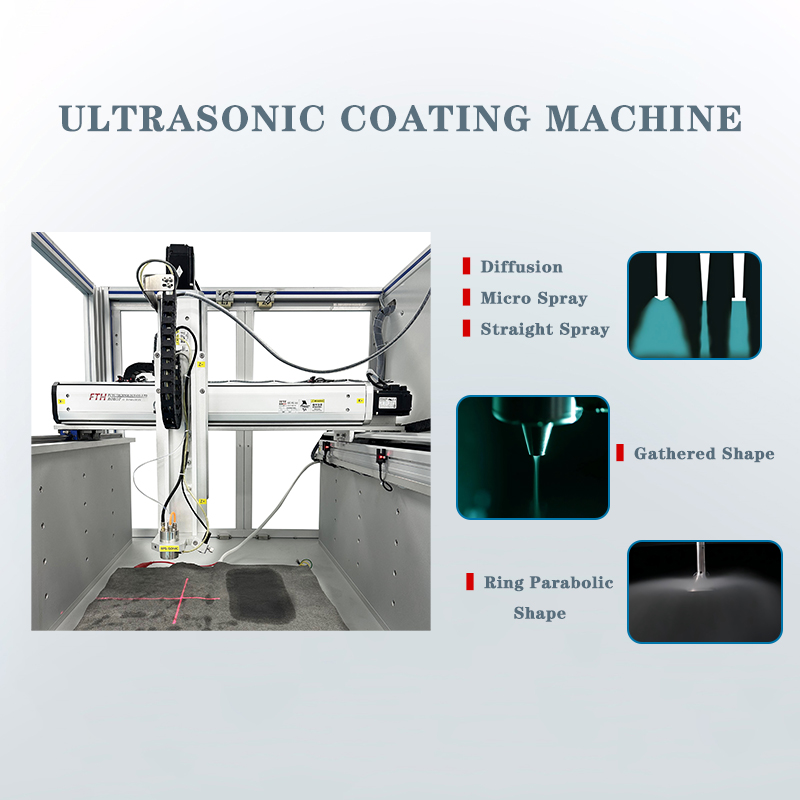
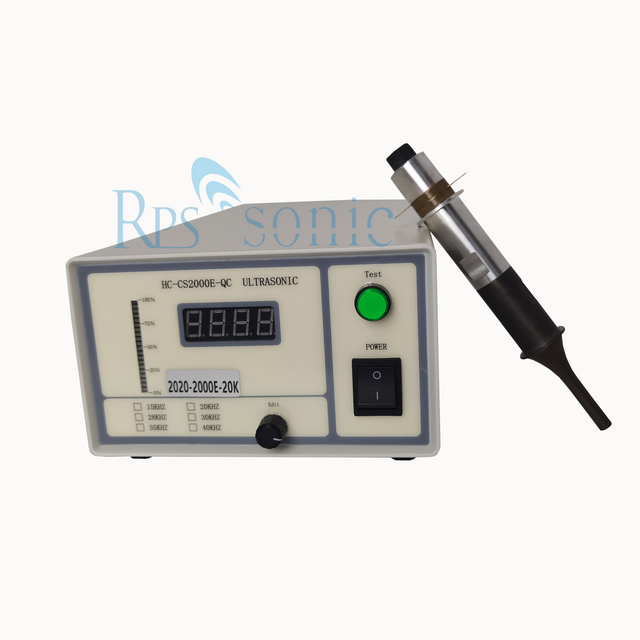
The Working Principle of Ultrasonic Atomization Spraying: The core of ultrasonic atomization spraying lies in its unique atomization method. The system converts electrical energy into high-frequency mechanical vibrations (typically 20kHz to 200kHz) through a piezoelectric ceramic transducer. High-frequency vibrations create capillary waves on the nozzle surface, breaking down the liquid film into uniform, micron-sized droplets. For example, a common frequency of 120kHz can form droplets of approximately 13µm; 180kHz can produce even smaller droplets of 8µm.
The resulting mist-like droplets are then guided by a low-pressure carrier gas (usually dry air or nitrogen) and precisely deposited onto the target area of the PCB. This process has several significant advantages:
Non-contact spraying: The nozzle does not directly contact the substrate, avoiding mechanical damage to components on the PCB surface.
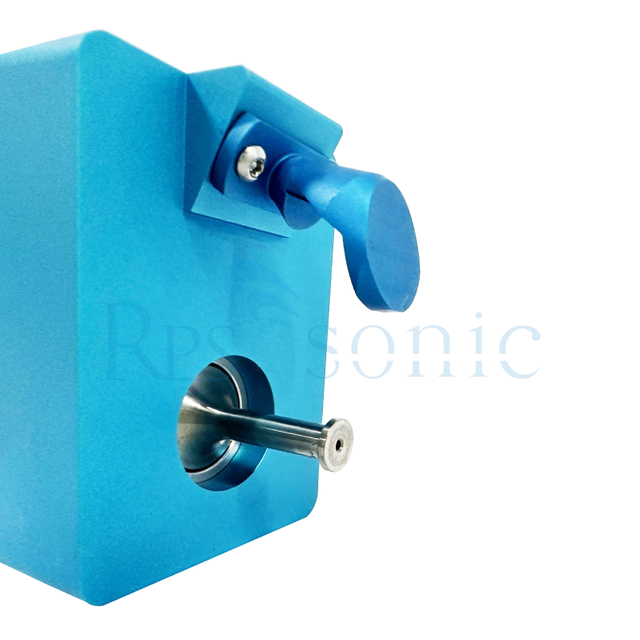
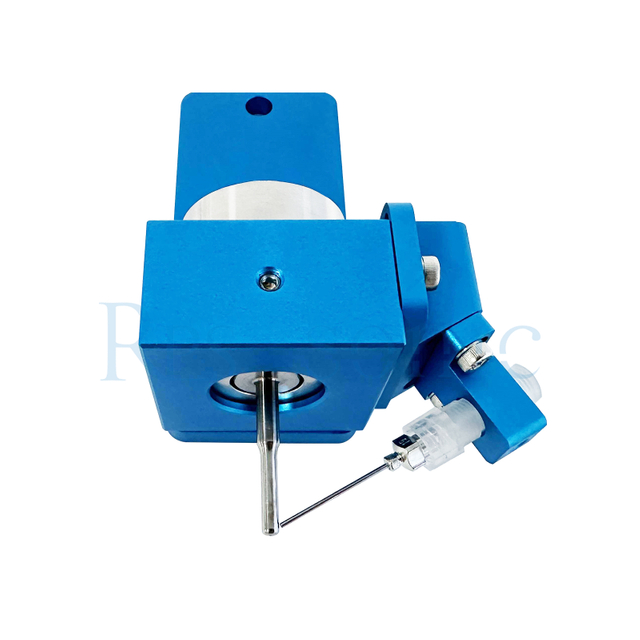
Nozzle-free design: Many ultrasonic nozzles employ a nozzle-free structure, fundamentally avoiding the clogging problems common with traditional nozzles.
Low-pressure operation: Carrier gas pressure is typically between 0.2-1.0 bar, far lower than traditional pneumatic spraying, resulting in a gentle atomization process with no splashing.
Main applications of ultrasonic spraying in PCB manufacturing:
Conformal Coating: Conformal coating is a key process for improving the protective performance of circuit boards. Its function is to form a uniform protective film on the circuit board surface, effectively isolating harmful substances such as moisture, dust, salt spray, and chemical solvents.
Ultrasonic spraying has particularly prominent advantages in conformal coating. Droplet diameter can be precisely controlled at the micron level, enabling comprehensive coverage of complex areas such as tiny components and pin gaps on the circuit board, avoiding spraying blind spots. Ultrasonic spraying can deposit a uniform protective layer on complex structures such as between small components and under pins, preventing component failure in humid, corrosive, or high-temperature environments.
In terms of coating thickness control, ultrasonic spraying can achieve a typical coating thickness of 10-30µm in a single coat, and can reach over 50µm through multiple coats. Coating uniformity reaches ±5%, and repeatability accuracy reaches ±2%, fully meeting the requirements of high-precision PCB coating. Suitable for various conformal coating materials such as polyurethane, acrylic resin, silicone resin, and UV-curable materials.
Selective Flux Spraying: In wave soldering or selective soldering processes, flux needs to be precisely applied to specific areas of the PCB (such as pins of through-hole components, pads, or solder joints of surface mount components) before soldering.
Ultrasonic selective spraying systems can precisely set the coating location, shape, and amount according to the PCB design documents. Its accuracy reaches sub-millimeter levels, making it ideal for high-density, fine-pitch PCB assemblies. More importantly, selective spraying only covers the areas that need soldering, avoiding the 70-90% flux waste found in traditional overall spraying or foaming processes. Internationally leading ultrasonic spraying solutions can achieve up to 90% flux savings.
Fluoride residue is concentrated near the solder joint, away from sensitive areas such as gold fingers, connectors, and test points, significantly reducing the risks of electrochemical migration (CAF), corrosion, and leakage caused by residue.
Flexible Circuits and Special Coatings
Besides the two main applications mentioned above, ultrasonic spraying can also be used in the manufacture of flexible printed circuits (FPCs). Flexible circuits are obtained by atomizing nano-silver conductive ink through an ultrasonic nozzle and spraying it onto a polyimide (PI) film substrate, followed by low-temperature sintering. Furthermore, ultrasonic spraying can also be used for coating special polymer materials such as polyimide on PCBs.
Technical Advantages of Ultrasonic Spraying
Compared to traditional spraying processes, ultrasonic atomization spraying exhibits multi-dimensional advantages in PCB coating:
Coating Quality: The atomized droplets are small and concentrated in size, resulting in an ultra-thin and uniform coating. Uniform coating thickness ensures consistent protective performance and reduces the risk of localized protective failure due to uneven coating. For example, with a wide-width ultrasonic nozzle, the uniformity of the prepared coating can be better than 5%.
Material Utilization: The paint utilization rate of ultrasonic spraying is more than four times that of traditional two-fluid spraying. Precise atomization control and directional spraying technology can increase paint utilization to over 90%. Some high-performance ultrasonic spray nozzles can achieve paint utilization rates of 95% or higher.
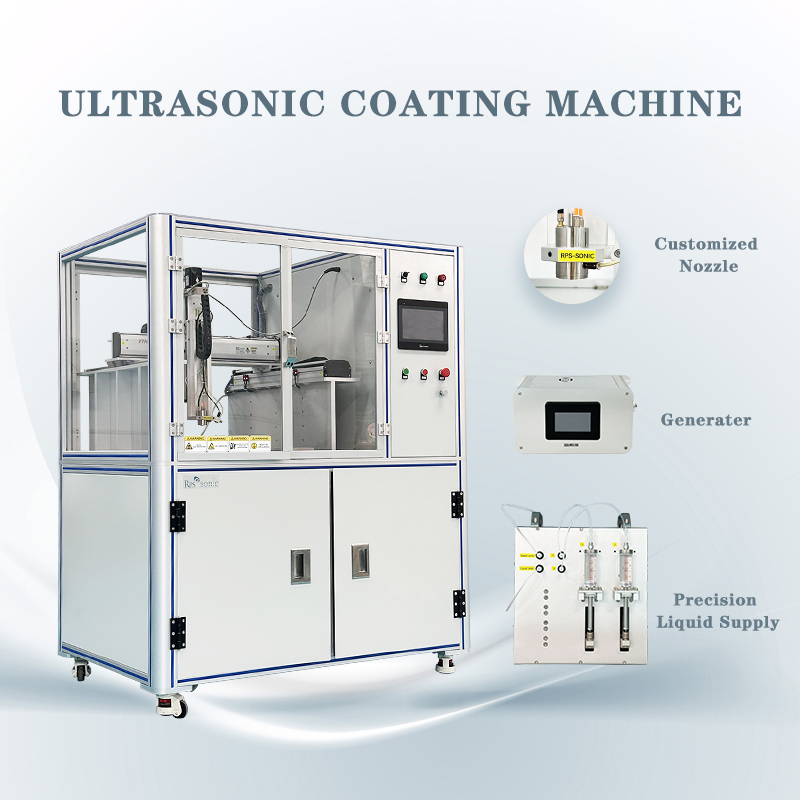
In terms of precision and control: Ultrasonic spraying enables ultra-low liquid flow rates and precise flow control. Flow control accuracy can reach 0.01 ml/min, and dry film thickness can be controlled within the range of 20 nanometers to 100 micrometers. Combined with a precision X-Y-Z motion platform, complex spraying trajectories such as points, lines, surfaces, and rotations can be programmable. 3-12
In terms of environmental protection and cost: Significantly reduces paint waste and volatile organic compound (VOC) emissions. The ultrasonic vibration system has lower energy consumption, effectively saving electricity compared to traditional high-pressure spraying equipment. At the same time, the nozzle is less prone to clogging, effectively reducing maintenance costs.
Ultrasonic atomizing spray nozzle technology, with its high precision, high uniformity, high material utilization, and excellent adaptability to complex surfaces, is profoundly changing the landscape of PCB coating processes. Whether it's the uniform application of conformal coatings or the selective and precise spraying of flux, ultrasonic spraying demonstrates advantages that traditional processes cannot match.
As the electronics manufacturing industry continues to raise its requirements for product protection levels, production efficiency, and environmental protection, the application prospects of ultrasonic spraying technology in the PCB field will be even broader. For electronics manufacturing companies pursuing production upgrades and product quality improvements, ultrasonic atomization spraying is undoubtedly a key process technology worthy of focused attention and application.