Ultrasonic Spraying Technology for battery coating
Views: 100 Author: Site Editor Publish Time: 2026-04-29 Origin: Site
Ultrasonic Spraying Technology for battery coating
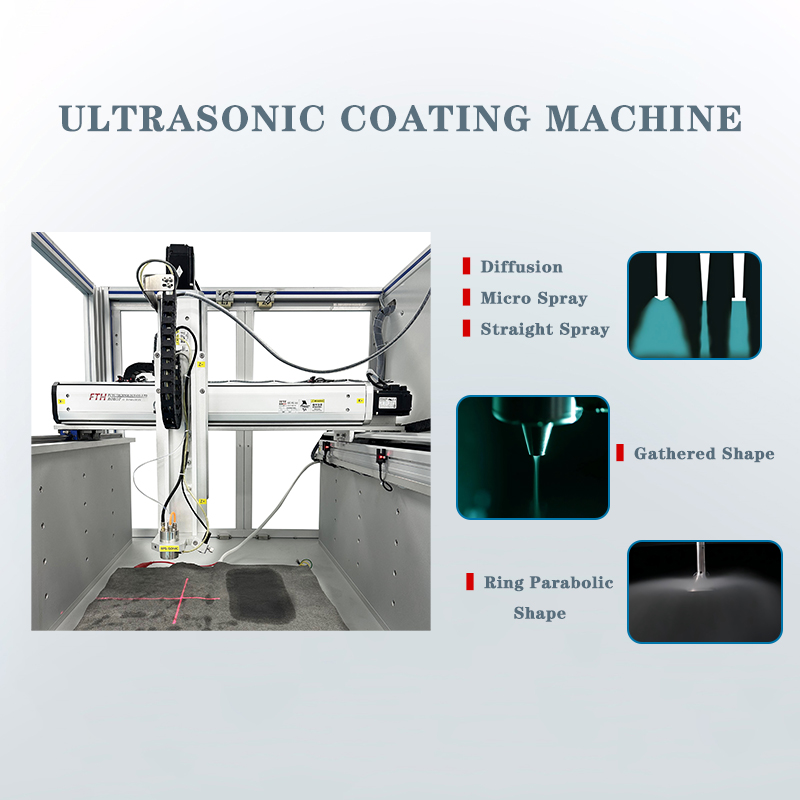
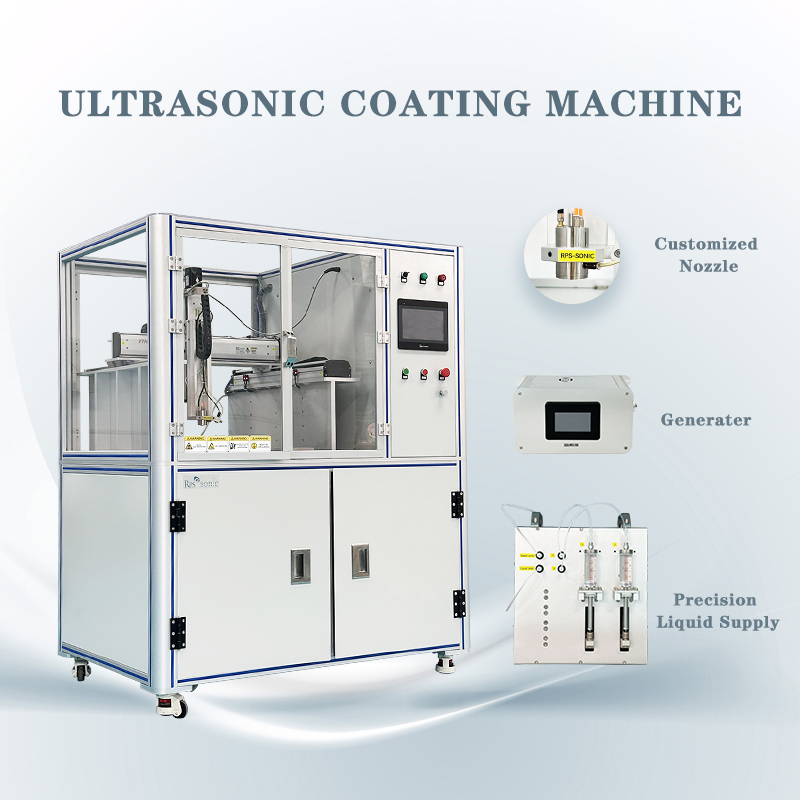
Ultrasonic spraying technology is also a precision "additive" process based on ultrasonic atomization. It uses high-frequency vibration to break up the slurry into micron-sized uniform droplets, which are then gently deposited onto the substrate. This is suitable for battery manufacturing processes where uniformity and thickness control are critical.
Working Principle: From "High-Pressure Extrusion" to "Gentle Atomization"
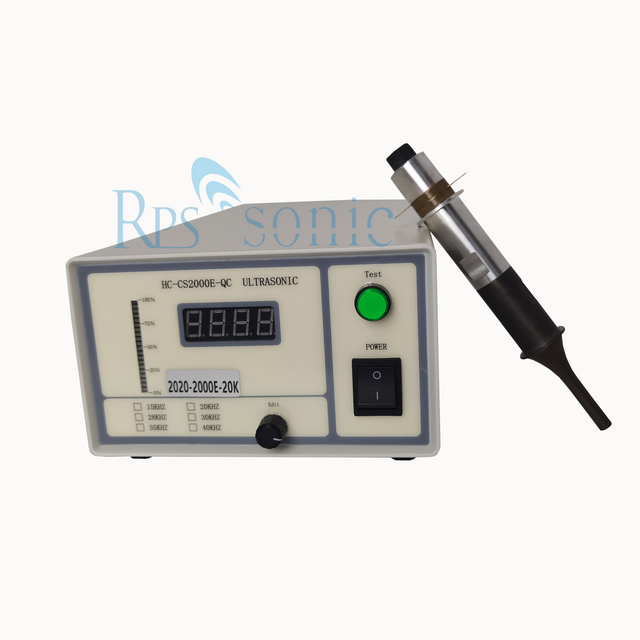
Core Mechanism: A piezoelectric transducer converts electrical energy into high-frequency mechanical vibration (typically between 20kHz and 200kHz). This high-frequency vibration generates "capillary waves" on the nozzle surface, breaking up the slurry flowing across the surface into uniform micron-sized droplets.
Key Difference: Unlike traditional spraying processes that rely on high-pressure airflow or hydraulic pressure, ultrasonic spraying technology is much gentler. With the assistance of a very low-pressure carrier gas, droplets can be precisely deposited onto the substrate to form a dense, uniform coating.
Core Technological Advantages
Ultrasonic spraying is considered a key technology in lithium battery manufacturing primarily due to its significant advantages in coating quality and cost-effectiveness:
More Uniform Coating: The droplets generated by ultrasound are highly consistent in size, effectively avoiding the "coffee ring effect" and edge particle aggregation common in traditional spraying. Coating thickness uniformity can be easily controlled to over 95%, and thickness deviations can even be compressed to within ±3%, which is crucial for improving cell consistency.
Thinner Coating Capability: This technology can precisely manufacture ultra-thin coatings ranging from tens of nanometers to tens of micrometers.
Higher Utilization Rate: Due to virtually no splattering or overspray, material utilization can reach 85% to 95%, more than four times that of traditional two-fluid spraying. This is extremely beneficial for expensive precious metal catalyst layers (such as platinum) or nanomaterials.
Clog-Free Design: The slurry does not need to be squeezed through tiny nozzles under high pressure; instead, it is atomized by ultrasonic energy, physically eliminating nozzle clogging. Some advanced designs even achieve stable spraying with "no pressure, no clogging, and no residue." Better Interface Control: By adjusting spraying parameters, the pore structure of the coating can be actively designed; it also enables gradual transitions between layers such as electrodes and electrolytes, i.e., gradient coatings, optimizing interface compatibility.
More Environmentally Friendly Process: Eliminating the need for high-pressure air reduces solvent evaporation, making it greener and lower-carbon, and also reducing environmental impact and waste gas treatment costs. Broadly speaking, for those focusing on R&D or preparing small-sized samples, desktop/laboratory equipment is the starting point; for pilot-scale production or preparing larger-area samples, vertical/medium-sized equipment is more suitable; and for mass production, industrial online equipment that can be integrated into the production line is required.
Key Application Areas: Electrode Manufacturing (High-Energy Positive and Negative Electrodes): Including high-nickel ternary positive electrodes, silicon-carbon negative electrodes, lithium metal negative electrodes, etc.. Fine pore structure design accommodates volume expansion and can construct a surface protective layer.
Solid-State Batteries: In the manufacturing of electrolyte layers, ultrasonic spraying has become one of the few feasible processes, capable of producing submicron-level, highly dense coatings with thicknesses controlled at 0.5-5μm. It is also used for spraying a modified buffer layer at the electrode/electrolyte interface.
Separator functionalization: Uniformly spraying an alumina (Al₂O₃) or silica (SiO₂) ceramic coating onto a polyolefin-based membrane. The coating enables it to withstand temperatures exceeding 200°C, preventing short circuits and improving safety.
Current collectors and structural components: Commonly used for spraying a conductive carbon layer onto copper or aluminum foil surfaces to reduce contact resistance. Furthermore, it can be used to spray an ultra-thin, dense anti-corrosion/insulating coating onto tabs and housings.