The Application of Ultrasonic Technology in Wire Harness Welding
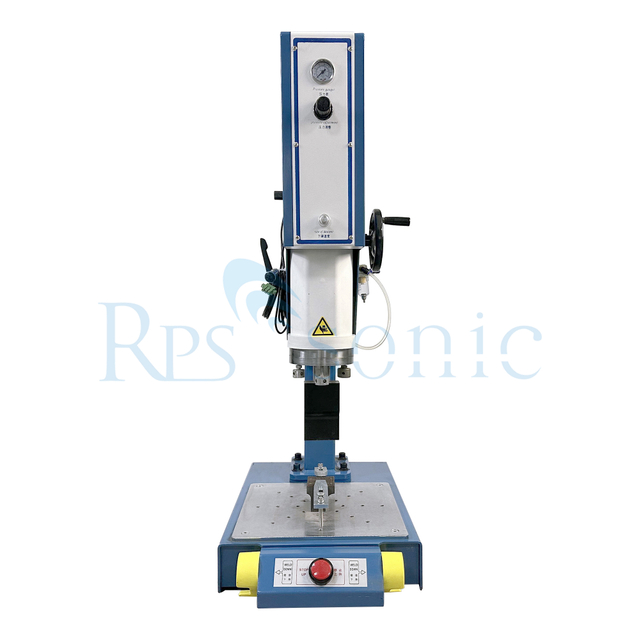
In the manufacturing process of automotive wiring harnesses, ultrasonic welding machines are generally used to weld the joints of wires requiring bonding. Ultrasonic welding transmits mechanical vibrations directly to the wiring harness to be crimped through the welding head. The application of ultrasonic welding in the wiring harness industry is already widespread and is increasing.
Origin of Ultrasonic Metal Welding
Ultrasonic metal welding was accidentally discovered in the 1830s. At that time, during experiments with current spot welding electrodes and ultrasonic vibration, it was discovered that welding could be achieved without current, thus developing ultrasonic cold metal welding technology. Although ultrasonic welding was discovered relatively early, its mechanism of action is still not fully understood. It is similar to friction welding, but there are differences. Ultrasonic welding has a very short time and the temperature is below recrystallization; it also differs from pressure welding because the applied static pressure is much smaller.
It is generally believed that in the initial stage of ultrasonic welding, tangential vibration removes oxides from the metal surface and repeatedly micro-welds and breaks down rough surfaces, increasing the contact area and raising the temperature of the weld zone, resulting in plastic deformation at the interface of the workpieces. Under contact pressure, when the workpieces approach each other to a distance where atomic attraction can occur, a weld point is formed. Excessive welding time or excessive ultrasonic amplitude can reduce weld strength or even cause damage.
Ultrasonic Metal Welding Principle: Ultrasonic metal welding utilizes high-frequency vibration waves of tens of thousands of times per second transmitted to the surfaces of two metal workpieces to be welded. Applying pressure causes the metal surfaces to rub against each other, forming a fusion between molecular layers, thus achieving the welding purpose. Its advantages include speed, energy saving, high fusion strength, good conductivity, no sparks, and near-cold processing; its disadvantages include the inability to weld very thick metal parts (generally less than or equal to 5mm), the inability to have a large weld point, and the need for pressure.
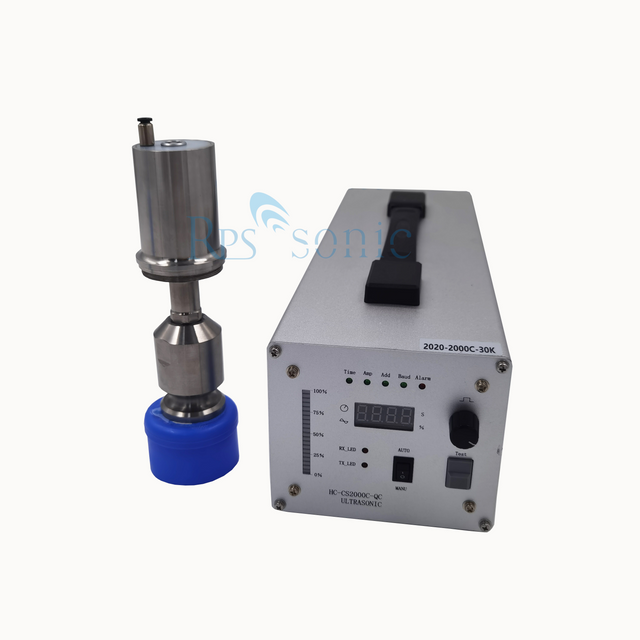
The ultrasonic welding head of an automotive wiring harness mainly consists of four parts: a welding head, an anvil connecting block, an anvil top block, and a polymerization module. During welding, the wires are vertically aligned and tightly pressed against the anvil connecting block. After pressing the foot switch, the aggregation module moves towards the top of the anvil block, while the anvil connecting block and the top of the anvil move downwards together, pressing the automotive wiring harness firmly into the welding area. The welding head vibrates, transferring energy to the copper wires, thus welding the wiring harness together.
During welding, only the welding head vibrates; the other tool heads remain stationary. After welding, the aggregation module and the top of the anvil retract, while the anvil connecting block rises, allowing the wiring harness to be removed. Because the welding head vibrates while the other tool heads remain stationary, to prevent welding between the tool heads and the welding head and damage to the welding machine, a 0.025mm gap is maintained between the upper surface of the welding head and the ground of the aggregation module, and between the side of the top of the anvil block and the side of the anvil connecting block. This prevents the welding head from contacting other tool heads. These gaps must also be free of scrap copper or other debris; otherwise, welding will cause erosion of the tool head's working surface, potentially damaging the circuit board. Since ultrasonic vibration is generated by the welding head, its energy is transferred from the welding head to the top of the anvil. Therefore, the closer to the welding head, the greater the energy, and the energy is transferred from top to bottom. Thus, when placing the wires, the thicker wire should be placed at the bottom, close to the welding head surface, with the thinner wires arranged vertically upwards. This allows the thicker wire to receive greater energy, preventing over-welding or under-welding. Vertical arrangement also prevents side welding, ensuring weld quality.
Advantages and Disadvantages of Ultrasonic Metal Welding
Advantages:
1. Ultrasonic metal welding has low pressure and low energy consumption, and can weld dissimilar metal materials. Based on these characteristics, metal parts can be rapidly formed by comprehensively utilizing ultrasonic metal welding technology and CNC milling technology. Functional components can be embedded during the forming process to create intelligent metal-based composite materials, etc.
2. Ultrasonic metal welding machines can perform spot welding and continuous welding. They have a fast welding speed. In terms of application range, even materials with significantly different physical properties can be welded well; it can also weld metal foils, fine wires, tiny devices, and multi-layered metal sheets of varying thicknesses that are difficult to weld using other methods.
3. Ultrasonic metal welding produces high-strength welds with excellent stability and high fatigue resistance.
4. The welding process requires no water cooling or gas shielding, resulting in minimal deformation of the welded workpiece. No heat treatment such as annealing is necessary after welding. The ultrasonic metal welding process itself cleans and breaks down the oxide layer on the surface of the weldment. The weld surface is clean and aesthetically pleasing, eliminating the need for post-weld cleaning as with other welding methods.
5. Ultrasonic metal welding does not use welding rods. The welding area is not energized, and the welded metal is not directly heated. Compared to shielded metal arc welding and gas welding, ultrasonic plastic welding machines in Suzhou consume significantly less energy when welding the same workpiece.
6. Because no flux is required, it does not contaminate the workpiece and produces no slag, wastewater, harmful gases, or other waste pollution, making it an energy-saving and environmentally friendly welding method.
7. Since the ultrasonic generator uses power electronic circuitry, it is easy to implement electrical control and can be well integrated with computers for welding control, achieving high-precision welding and facilitating the informatization and automation of the welding process.
Disadvantages:
1. While ultrasonic welding of metal materials can achieve excellent welding results, the stability, operability, and reliability of the entire system—combining the ultrasonic generator and acoustic system with the mechanical system—still have issues. Therefore, the design of the acoustic system (transducer, amplitude transformer, connecting parts) and the connection method between the acoustic system and the specimen are crucial issues.
2. Insufficient understanding of the mechanism of ultrasonic metal welding. Whether ultrasonic metal welding involves no metal melting, or is merely a solid-state welding method, or a "bonding" process between metals, requires further research.
3. Many factors influence the process parameters of ultrasonic metal welding, making it difficult to summarize.
4. Since the welding power required increases exponentially with the thickness and hardness of the workpiece, and high-power ultrasonic welding machines are difficult and costly to manufacture, further increases in welding power will not only present a series of intractable problems in the design and manufacturing of the acoustic system, but may also fail to achieve the desired process results. Therefore, it is currently limited to welding thin parts such as wires, foils, and sheets.
5. Ultrasonic welding machines have relatively poor "openness," and the workpiece insertion dimension cannot exceed the range allowed by the welding system. Currently, the joint type is limited to lap joints.
6. The weld surface is prone to high-frequency mechanical vibration, which can cause fatigue damage at the edges, making it unsuitable for welding hard and brittle materials.