English



Views: 89 Author: Site Editor Publish Time: 2025-12-17 Origin: Site
What Is The Application for Ultrasonic Technology
Ultrasonic technology has a wide range of applications in liquids and is highly efficient, with its core almost entirely revolving around the physical phenomenon of "ultrasonic cavitation."
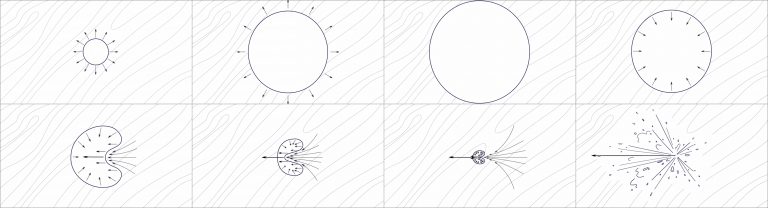
When high-intensity ultrasound propagates in a liquid, it generates countless tiny vacuum bubbles (cavitation bubbles). These bubbles form, grow, and violently collapse instantaneously, releasing enormous energy within a tiny space (generating high temperature, high pressure, shock waves, and microjets). This series of effects can be applied to a variety of different fields.
Ultrasonic Extraction: The core driving force of ultrasonic extraction is the cavitation effect.
You can imagine it like this: Traditional extraction: like slowly soaking a walnut in its shell in warm water, requiring a long time for the flavor to seep out.
Ultrasonic extraction: like using a precise "sonic hammer" to instantly break the walnut shell, releasing the contents immediately.
Simply put, it uses ultrasound to "bombard" the sample, extracting the desired beneficial components (such as active ingredients, oils, and flavorings from plants) faster and more efficiently.
Examples include extracting edible oils from oilseed crops such as soybeans, peanuts, and sesame seeds; and extracting flavor compounds from tea and coffee beans. Extracting pigments (such as anthocyanins) and fragrances from fruits and vegetables. Extracting active ingredients such as alkaloids, flavonoids, and glycosides from traditional Chinese medicinal herbs (such as ginkgo leaves, licorice, and ginseng). This is currently a widely researched and applied field.
Ultrasonic emulsification is a process that uses the high-intensity energy of ultrasound to forcibly and efficiently mix two immiscible liquids (usually oil and water) to form a stable and homogeneous emulsion.
Simply put, it uses the immense power of ultrasound to "tear" oil and water droplets into extremely small particles, allowing them to mix evenly and stably, forming an emulsion similar to milk or mayonnaise.
This is used in cosmetics and skincare products such as lotions, creams, emulsions, sunscreens, and lipsticks, ensuring thorough emulsification of the oil and water phases, resulting in a fine, stable texture and even distribution of active ingredients.
Ultrasonic homogenization, also known as ultrasonic treatment, is a physical technique that uses high-intensity, high-frequency ultrasound (typically > 20 kHz) to break down, disperse, emulsify, homogenize, and extract particles (such as cells, bacteria, viruses, liposomes, or solid particles) in liquids.
Simply put, it acts like a pair of "molecular-level scissors," using powerful sound wave energy to break large particles in a liquid into tiny, uniform nano- or micron-sized particles. During the expansion (negative pressure) phase of the pressure wave, the liquid is "torn apart," forming countless tiny vacuum bubbles or cavities (i.e., "cavitation bubbles"). In the subsequent compression (positive pressure) phase, these cavitation bubbles are rapidly compressed and violently collapse and implode within an extremely short time (microseconds). These extreme forces acting on the sample particles are sufficient to break cell walls and membranes, break up aggregated particles, and achieve fine emulsification of droplets, thus achieving homogenization.
Applications include the preparation of liposomes and drug carrier emulsions for targeted drug delivery, and the manufacture of fat emulsions for intravenous injection. Preparation of ointments, creams, and other topical medications.
Ultrasonic dispersion is a technique that utilizes the powerful energy of ultrasound to break up aggregated solid particles (such as nanomaterials, pigments, and powders) in a liquid, ensuring their stable and uniform distribution within the liquid over a long period.
Many micron- or nanometer-sized solid powders (such as graphene, carbon nanotubes, pigments, and drug particles) tend to aggregate tightly due to intermolecular forces, forming visible clumps. Traditional mechanical stirring can only temporarily mix these clumps into the liquid, but it cannot completely break them up; they will soon re-aggregate and precipitate again.
The core objective of ultrasonic dispersion is to solve this aggregation problem. For example, uniformly dispersing conductive agents (such as carbon black) and active materials (such as lithium iron phosphate and lithium cobalt oxide) in solvents and binders is a crucial step in manufacturing battery electrodes, directly affecting battery performance.
Ultrasonic disruption, also known as ultrasonic cell disruption or sonication, is a physical technique that uses high-intensity, high-frequency ultrasound (typically 20-100 kHz) to disrupt cells, tissues, or other particulate matter.
Simply put, it uses sound, inaudible to the human ear, to generate powerful physical forces in a liquid, "shattering" things.
You can imagine it like this:
Macroscopic version: If you place a subwoofer from a high-powered speaker close to the surface of water and play extremely low frequencies, you'll see water splashing everywhere. Ultrasonic disruption amplifies this process microscopically, at a higher frequency, and amplifies it countless times.
Explosive version: It simultaneously creates billions of extremely tiny "cavitation bubble bombs" in the liquid. These bombs explode continuously, and their shockwaves "shatter" the surrounding cells.
Simple analogy: It's like inserting a high-speed vibrating tuning fork into water, causing splashing. Ultrasonic disruption amplifies this effect millions of times and occurs in the microscopic world invisible to the naked eye. Examples include extracting proteins, enzymes, plasmid DNA, and RNA from bacteria, yeast, plant, or animal tissues. Ultrasonic degassing is a highly efficient technology that uses the energy of high-intensity ultrasonic waves to "vibrate" and remove dissolved or entrained gases from liquids.
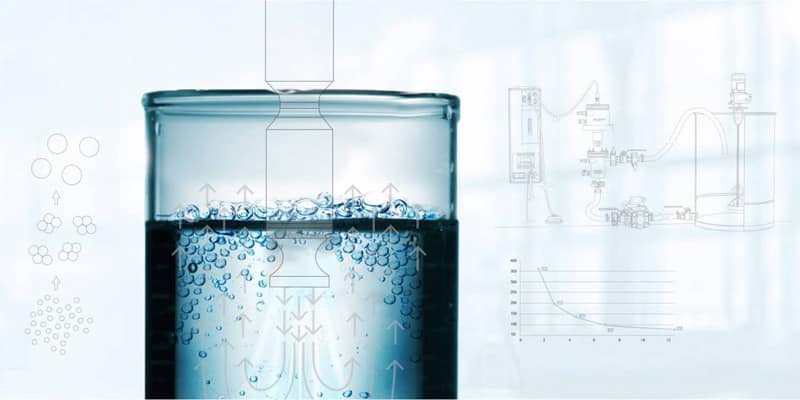
Simply put, the ultrasonic waves create countless "vacuum cleaners" (cavitation bubbles) in the liquid, drawing in dissolved gases. These small "vacuum cleaners" then coalesce into larger ones that float to the surface, thus removing the gases.
The process involves: Ultrasonic generator → generating a high-frequency electrical signal → Transducer (converting the electrical signal into mechanical vibration) → Amplifier (amplifying the amplitude) → Introducing high-intensity ultrasonic waves into the liquid → Creating a cavitation effect → Forming microbubbles as "seeds" → Dissolved gases diffuse and accumulate within the bubbles → Bubbles merge and grow → Under buoyancy, they rise to the surface and burst → Gas is removed.
Applications include epoxy resins, UV adhesives, silicone adhesives, coating solutions, silicone oils, molten aluminum alloys, and polymers.