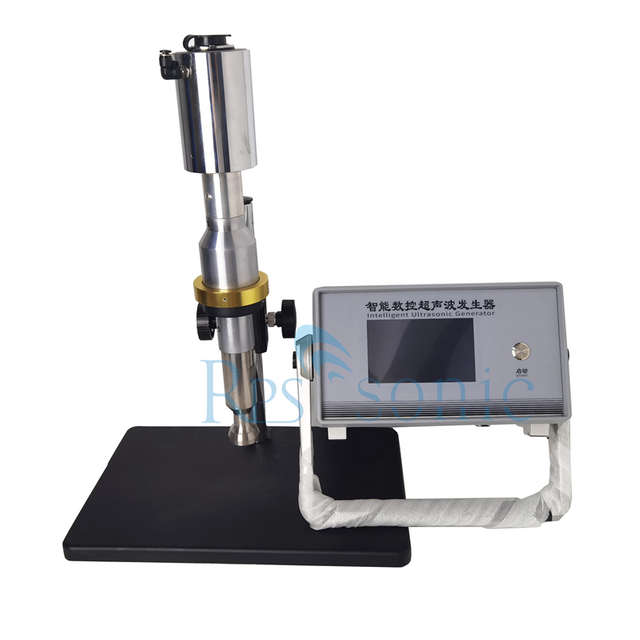
The Application of Ultrasonic Technology in Lipid Preparation
Liposomes are miniature vesicles composed of a phospholipid bilayer, capable of encapsulating hydrophilic, lipophilic and amphiphilic compounds within their aqueous phase or lipid bilayer. Due to their excellent biodegradability, biocompatibility and non-immunogenicity, liposomes have been widely applied in various fields such as pharmaceuticals, medicine, biochemistry, food science and cosmetics, serving as drug delivery systems, diagnostic carriers and embedding platforms for functional components.
The core indicators for evaluating the quality of liposomes include appearance, particle size distribution, and encapsulation efficiency, etc. Among them, particle size is an important indicator for measuring the intrinsic quality of liposomes, directly affecting the cellular uptake efficiency, in vivo circulation time, and bioavailability of liposomes. However, liposomes prepared by different methods show significant differences in particle size, structure, and stability. How to efficiently and controllably prepare uniform-sized and stable nanoliposomes has always been the research focus in this field.
Ultrasound technology, as a physical processing method, has emerged as one of the most commonly used and effective tools in lipid preparation due to its unique cavitation effect and mechanical effect. The probe-type ultrasound, due to its simple operation, has become one of the main methods for preparing liposomes. This article will systematically elaborate on the working principle, main methods, key parameters and applications of ultrasound technology in lipid preparation.
The principle of preparing liposomes using ultrasound
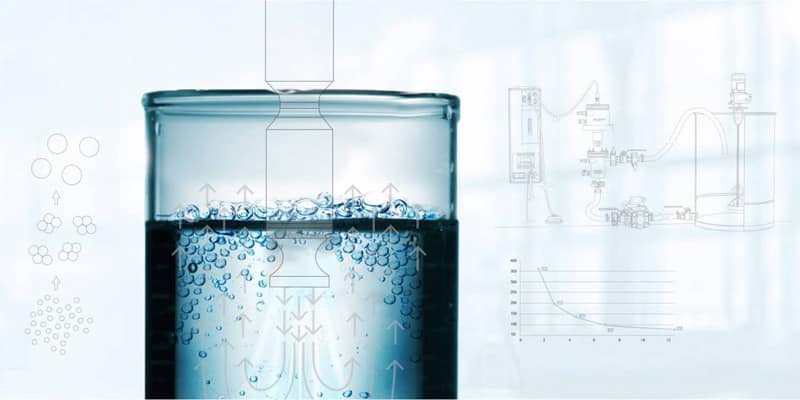
Ultrasound is a type of mechanical wave with a frequency higher than 20 kHz. In the process of preparing liposomes, ultrasound mainly functions through the cavitation effect. When high-intensity ultrasound propagates in a liquid, it generates periodic compression and rarefaction areas. During the negative pressure stage, a large number of tiny cavitation bubbles are formed inside the liquid; during the positive pressure stage, these bubbles collapse rapidly, releasing an enormous amount of energy in an instant.
The local shear force, microjets and transient pressure gradients generated when cavitation bubbles collapse can exert multiple physical effects on multi-layer lipid vesicles:
Fragmentation of multilayer vesicles: The powerful shear force breaks down the larger multilayer lipid vesicles (MLVs) into fragments.
Two-molecular-layer reassembly: Broken phospholipid fragments reassemble under the drive of energy.
Forming small single-layer vesicles: Eventually, smaller single-layer liposomes (SUVs) with narrower distribution are formed.
Studies have shown that the reduction in the particle size of liposomes by ultrasound is attributed to the physical effect of cavitation. Although there are still some academic discussions regarding the specific mechanism of how cavitation bubbles break down liposomes, the core role of the cavitation effect in controlling particle size has been widely recognized.
Furthermore, ultrasound can also reduce the size of lipid particles, enhance the encapsulation efficiency and stability of active substances, thereby obtaining more functionalized nanoparticles.
Advantages of ultrasonic preparation of liposomes
Compared with traditional lipid preparation methods, ultrasonic-assisted preparation has the following significant advantages:
The particle size can be precisely controlled. By adjusting parameters such as ultrasonic power, time and frequency, the particle size of liposomes can be accurately controlled, ranging from several hundred nanometers to approximately 70 nanometers or even smaller.
The particle size distribution is narrow and uniform. High-power ultrasonic treatment can narrow the particle size range of liposomes and reduce the polydispersity index (PDI). In the optimized ultrasonic micro-reactor, even ultra-uniform liposomal preparations with a PDI of less than 0.1 can be achieved.
The encapsulation rate has increased. Ultrasonic treatment can enhance the encapsulation effect of active substances. The encapsulation rate of collagen amide lipidosomes prepared by the film dispersion-ultrasonic method can reach 90.73%.
Stability improved. The liposomes prepared by ultrasound technology exhibit excellent colloidal stability. Nanoscale liposomes have a larger specific surface area, improved colloidal stability, and enhanced cell uptake capability.
No organic solvent residues (for some methods). The liposomes prepared by the ultrasonic method do not require any organic solvents throughout the process (such as ethanol injection - ultrasonic method). The product has no solvent residues, is of higher purity, and can be directly applied without the need for additional purification steps.
Suitable for a variety of active substances. Ultrasonic technology can be widely used to encapsulate various hydrophilic, lipophilic and amphiphilic active substances, including drugs, peptides, functional oils, plant extracts, etc.
Application fields
Liposomes prepared by ultrasound have been widely applied in multiple fields:
Pharmaceutical field: As a drug delivery system, it is used to encapsulate anti-cancer drugs, anti-inflammatory drugs, nucleic acid drugs, etc., to enhance the targeting ability and bioavailability of the drugs.
Food industry: It is used to encapsulate functional oils (such as fish oil, turmeric oil, eucommia seed oil, etc.), bioactive peptides, flavonoid compounds, etc., to enhance their stability and bioavailability.
Cosmetics industry: Used to encapsulate active ingredients such as vitamin E, ceramides, and coenzyme Q10, to enhance skin permeability and stability.
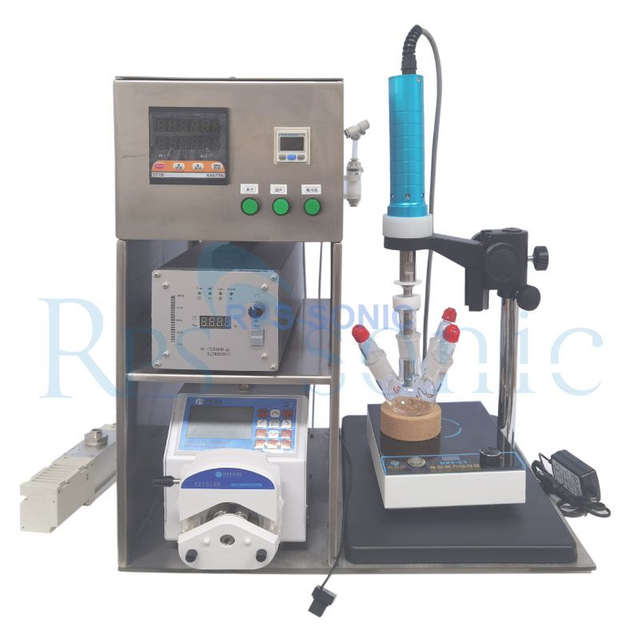
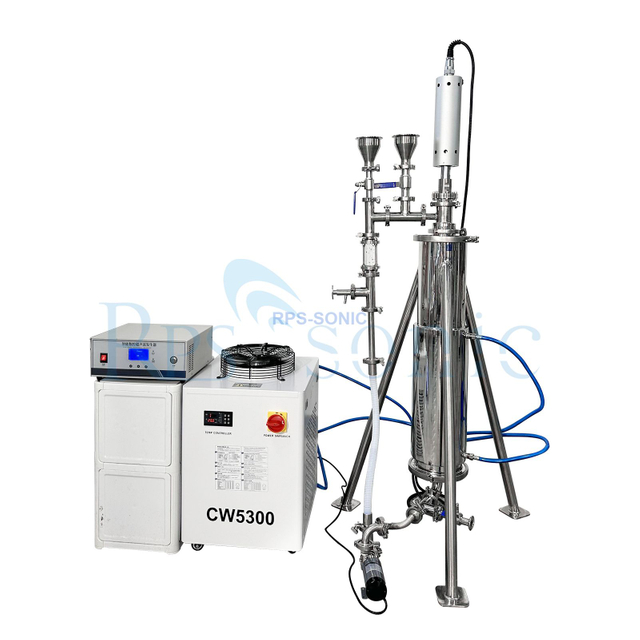
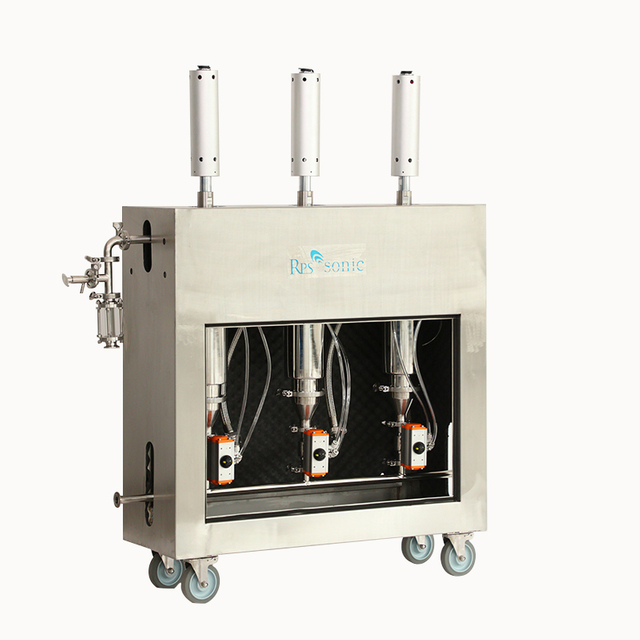
Ultrasound technology serves as the core tool for lipid preparation, generating local shear force and microjets through the cavitation effect, which efficiently disintegrates multi-layer liposomes and reorganizes them into nanoscale single-layer liposomes, achieving precise control of particle size and highly uniform distribution. Precise regulation of parameters such as ultrasound power, ultrasound time, and probe position is crucial for obtaining ideal liposomes. With the continuous development of new technologies like ultrasound microreactors, the application of ultrasound in lipid preparation is moving from the laboratory to industrialization, providing solid technical support for the high-quality development of fields such as drug delivery, functional foods, and cosmetics.