
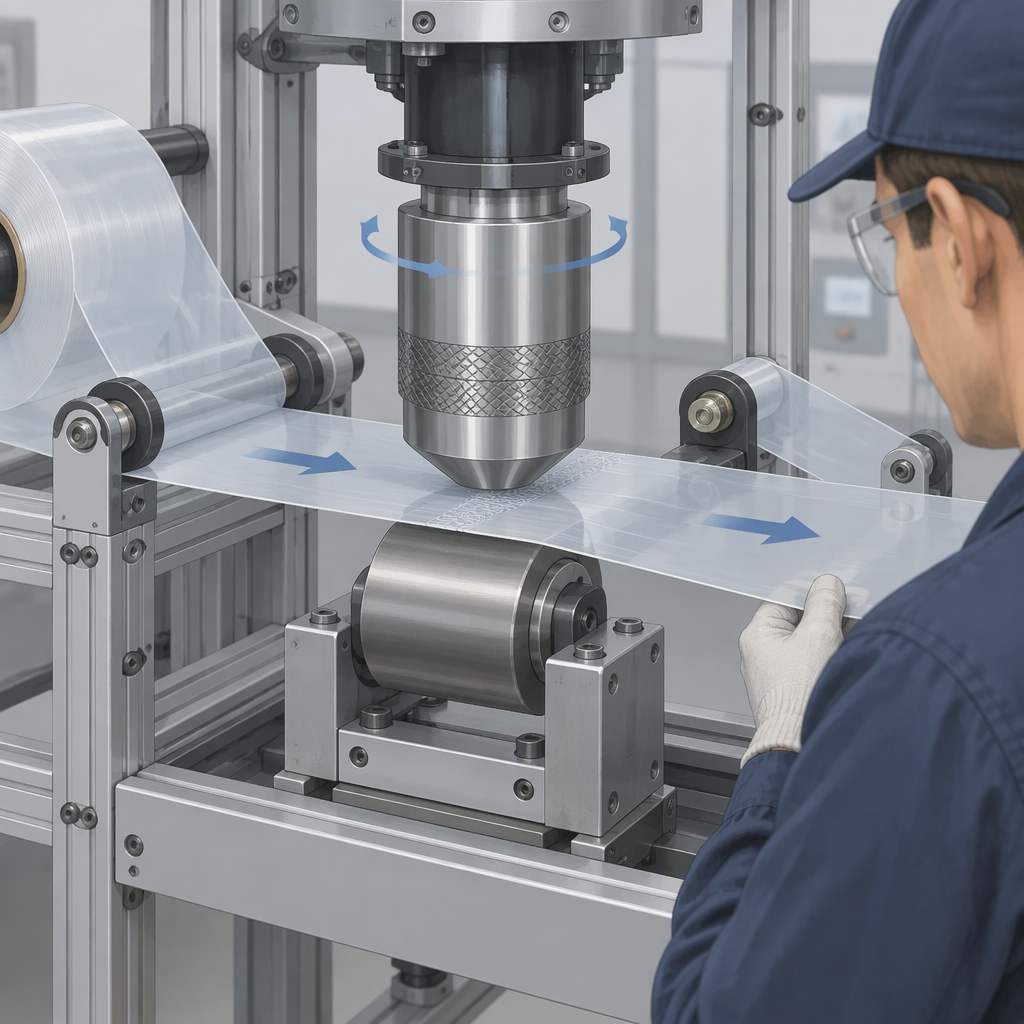
Start with the application boundary
Define what the rotary horn must do before changing alignment settings: cutting, sealing, film thickness, thermoplastic type, web path, target quality checks and the real production material all affect the readiness decision.
Rotary horn alignment is not a stand-alone geometry exercise. The same setup can behave differently when film type, thickness, horn design, amplitude, line speed or equipment compatibility changes, so the application boundary should be written before a team accepts a pre-production setting.
For terminally sterilized medical-device packaging, the FDA-recognized ISO 11607-1 Second edition 2019-02 with AMD1:2023 concerns sterile barrier and packaging systems intended to maintain sterility until point of use. The FDA page for the older ISO 11607-1:2019 recognition states that recognition 14-530 will be superseded by recognition 14-594 and that FDA will accept declarations of conformity to the older recognition until December 20, 2026. This does not make every rotary horn sealing project a medical packaging project; it means medical packaging teams should confirm the current recognized standard, transition status and project validation plan before continuous release.
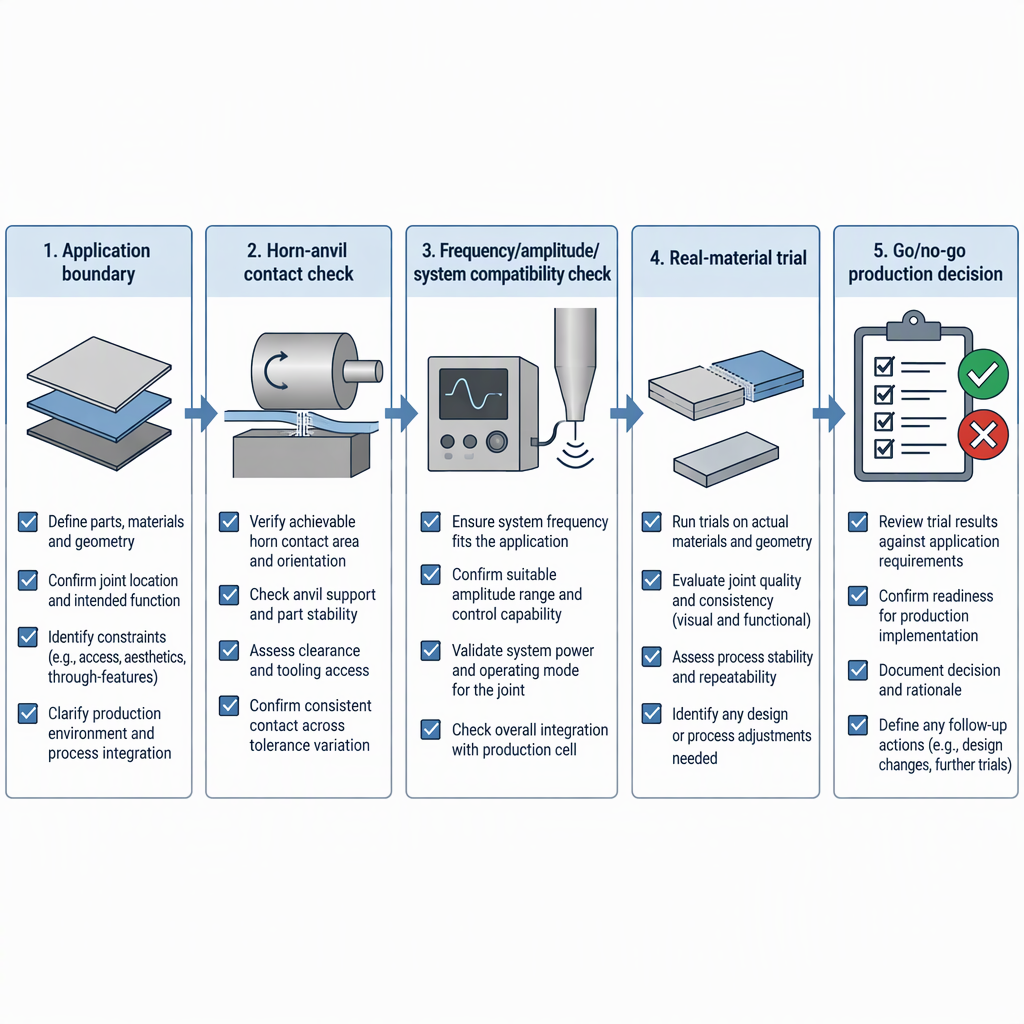
Check horn–anvil alignment and contact before continuous running
Before continuous running, check that the horn, anvil area, web path and tooling condition match the intended film cutting or sealing application, then correct any visible contact, tracking or material-response issue before raising speed.
- Confirm the horn is the intended design for the application, because horn design and amplitude are part of rotary horn selection for plastic film cutting and sealing.
- Confirm the anvil or counter-surface area supports the planned cut or seal path and does not introduce an obvious skew, unsupported zone or tracking conflict.
- Check that the web guide presents the real film or laminate consistently through the horn-anvil zone before judging seal or cut quality.
- Inspect tooling surfaces for contamination, damage or wear that could change the contact pattern during a longer run.
- Use actual production material for the final readiness check, because real-material testing is part of avoiding full-production mistakes and material waste.
Before any manual access near the horn, anvil, web path or guards, switch off the equipment and disconnect the applicable electrical, pneumatic, hydraulic or battery power source; then use only the access points and checks allowed by the machine and tooling manuals. Do not bypass guards or improvise disassembly to reach the horn-anvil area.
Use only the horn-to-anvil gap specified for your actual machine, tooling and validated material trial. Frequency, power, amplitude, horn material, horn design, thermoplastic compatibility and equipment compatibility are all selection and setup variables, so the acceptable setting must come from the machine, converter/booster/horn/tooling documentation and the validated material trial.
Verify frequency, amplitude and system compatibility
Confirm the ultrasonic system, horn and material are compatible before increasing line speed; frequency, power, amplitude, horn material and equipment fit are pre-production variables, not afterthoughts.
- Match the horn and generator frequency stated for the equipment package; a rotary horn chosen for one frequency should not be assumed compatible with a different ultrasonic stack.
- Review amplitude and power settings against the intended film, laminate or thermoplastic response before committing to continuous operation.
- Check that horn material and horn design are suitable for the application and expected wear environment.
- Confirm the rotary horn integrates with the existing equipment layout, web handling and control method before judging the process at production speed.
- Record the starting frequency, amplitude, power setting, line speed, material roll identification and observed seal or cut condition.
- Separate alignment symptoms from parameter symptoms: a centered web with poor seal strength may need process adjustment, while a drifting web or one-sided mark may require mechanical correction.
- Keep maintenance condition in the release review, because tooling condition and upkeep affect whether a setup remains repeatable in production.
Run material trials before releasing the line
Release the setup only after trials on the real production film or laminate show stable cutting or sealing behavior at the intended operating condition.
- Start with the documented application boundary: material type, thickness range, intended cut or seal geometry and the quality checks that decide pass or fail.
- Run a controlled trial using production-representative material rather than a convenient substitute.
- Observe material behavior through the horn-anvil zone, including tracking, heat response, edge condition, seal appearance and any tendency to wrinkle, drag or stick.
- Record trial results before changing more than one major variable, so engineering can separate alignment, amplitude, speed and material effects.
- Repeat the trial after corrective changes, then compare the result with the same quality checks used in the first pass.
- Keep representative samples from acceptable and rejected trial conditions.
- Record the actual material, process speed, observed seal or cut quality and any maintenance or tooling condition noted during the trial.
- Do not use a short successful jog as the only release evidence when the intended production mode is continuous running.
Use a go/no-go decision before continuous production
A line is ready for continuous production only when the application boundary, horn-anvil relationship, system parameters, material trial and quality records point to the same stable condition.
| Pre-run condition | Decision | Engineering action |
|---|---|---|
| Application, material, horn design and system compatibility are documented, and real-material trial results meet the defined quality checks. | Run under controlled release | Start continuous production with normal monitoring and retained trial records. |
| Seal or cut quality changes when speed, amplitude or material roll changes. | Adjust and retrial | Change one variable at a time, repeat the material trial and compare samples before release. |
| Web tracking, contact pattern, tooling condition or equipment compatibility is uncertain. | Stop for setup review | Do not mask the issue with speed or power changes; correct the mechanical or compatibility issue first. |
| The project concerns terminally sterilized medical-device packaging and the packaging-system requirements are not confirmed. | Stop for quality and regulatory review | Confirm the applicable sterile-barrier packaging standard, validation plan and release authority before production release. |
Rotary horn alignment should not be accepted because the machine can run. It should be accepted because the horn, anvil area, ultrasonic parameters, material response and recorded trial outcome support the intended continuous process.
Conclusion
The final release rule is simple: do not move from rotary horn alignment checks to continuous production until the real material, real setup and documented process variables produce an acceptable and repeatable result.
- Start with the application boundary, not with a borrowed gap value.
- Check horn-anvil contact, web path, tooling condition and equipment compatibility before increasing speed.
- Use real production material for trial evidence and keep records of settings, observations and samples.
- For terminally sterilized medical-device packaging, confirm the applicable sterile-barrier packaging requirements as part of the release decision.
FAQs about rotary horn alignment
These questions help process engineers, R&D teams and equipment integrators turn rotary horn alignment checks into a controlled production-release decision.
Does ISO 11607 automatically apply to every rotary horn sealing project?
No. FDA recognition of ISO 11607-1 concerns packaging for terminally sterilized medical devices and requirements for sterile barrier and packaging systems intended to maintain sterility until point of use. For FDA recognition status, note that the older ISO 11607-1:2019 recognition has a stated transition to recognition 14-594 with acceptance of declarations to the older recognition until December 20, 2026.
Can one rotary horn be used for every plastic film?
Do not assume that. Thermoplastic compatibility, film thickness, material type, horn material, horn design and amplitude are all part of rotary horn selection for plastic film cutting and sealing.
What records should be kept during a pre-production trial?
Keep the material identification, setup variables, line speed, observed seal or cut quality, process behavior, tooling condition and retained samples from both acceptable and rejected trial conditions.
What exact horn-to-anvil gap should we use?
Use the value specified for the actual equipment, tooling and material trial plan. Frequency, amplitude, horn design, material compatibility and equipment fit affect the setup, so a universal gap value is not a safe release basis.
When can we raise line speed?
Increase speed only after the lower-speed trial shows stable material handling and acceptable cut or seal quality, and record the result before changing another major process variable.
If quality is poor, should we adjust alignment or ultrasonic parameters first?
First identify the symptom. Web drift, one-sided marks or inconsistent contact point to mechanical setup review; stable tracking with weak or overheated sealing may point to frequency, amplitude, power, material or speed compatibility.
Who should sign off before continuous production?
The release should involve the people responsible for the process, product quality and equipment integration, because the decision depends on application fit, machine compatibility, material response and documented trial results.