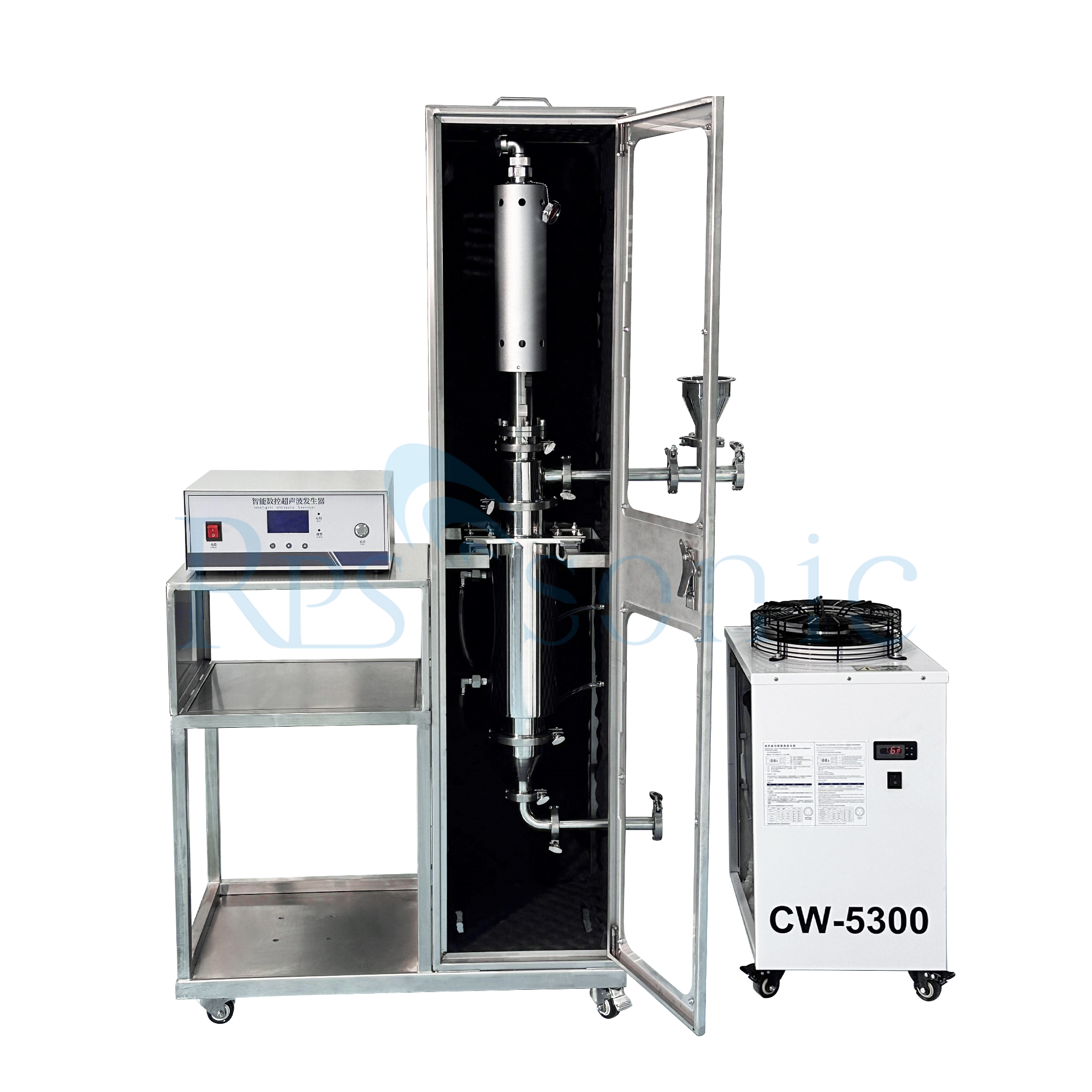
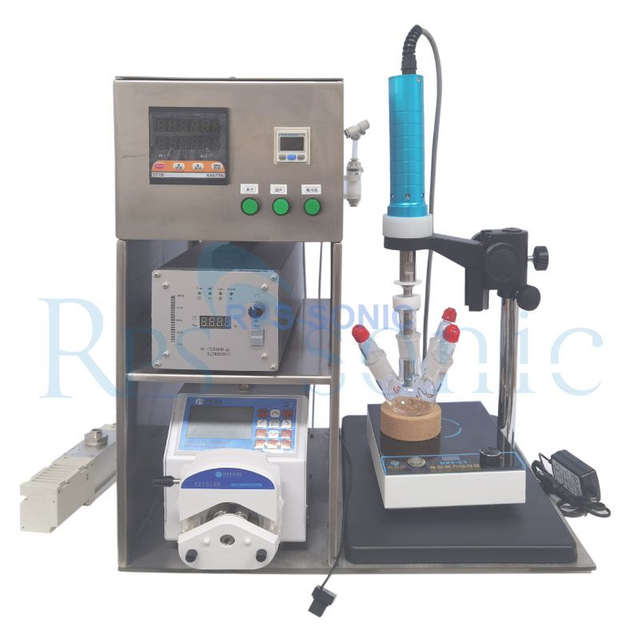
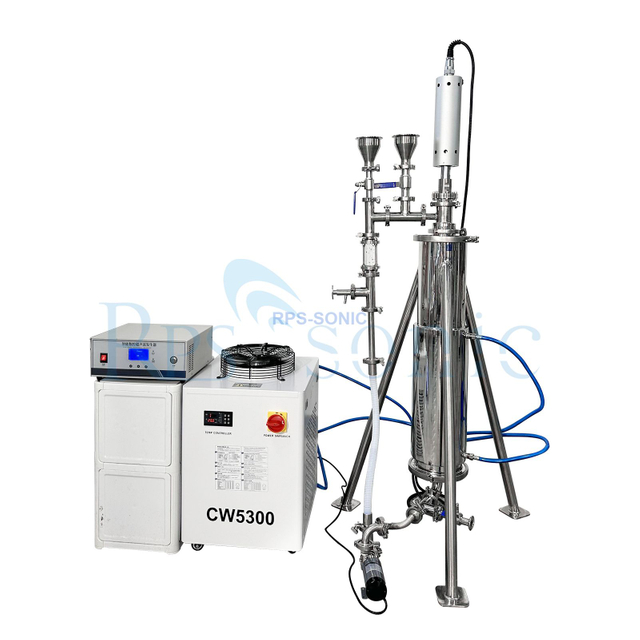
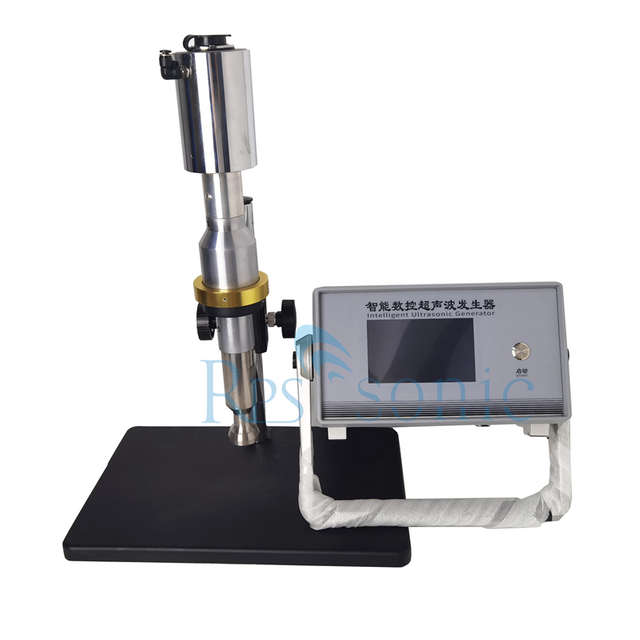
How ultrasonic degassing technology creates clarity from microscopic turbulence
In many fields of fine chemicals, high-end manufacturing, and even food processing, dissolved gases or potential bubbles in liquids are often hidden killers of performance and quality. They can cause coating defects, reduce the efficiency of hydraulic systems, affect the purity of reagents, or ruin the taste of food. Traditional degassing methods, such as settling, heating, or vacuum degassing, often face bottlenecks due to time consumption, energy consumption, or limited efficiency. However, a technology utilizing high-frequency sound waves is addressing the physical essence of this problem in a more proactive, precise, and efficient way—this is ultrasonic degassing technology. It is not simply physical stirring, but cleverly harnesses the two major physical properties of "cavitation effect" and "gas solubility" to orchestrate a precise prelude from molecular precipitation to collective escape within the liquid.
Step 1: Nucleation—Hearing a "Thunderclap" in Silence
The technological process begins with the propagation of high-intensity, low-frequency ultrasound waves in the liquid. The sound waves generate periodic compression zones (high pressure) and rarefaction zones (low pressure). In the rarefaction zone, the liquid seems to be instantaneously "stretched," causing a sudden drop in local pressure. This change significantly reduces the solubility of the gas in the liquid, forcing the previously dissolved gas molecules to precipitate out of the solution. This process is analogous to adding seed crystals to a supersaturated solution, instantly generating countless tiny, invisible bubble nuclei—"gas nuclei"—in the liquid. Ultrasound acts as a "trigger," creating the initial conditions for gas precipitation through energy fluctuations.
Step Two: Bubble Growth—The Energy Gift of Micro-to-Major Formation
The nascent gas nuclei are not static. In the subsequent cyclical compression and rarefaction of sound waves, these micro-nuclei become active centers. On one hand, they continuously absorb gas molecules that precipitate due to changes in solubility; on the other hand, and more importantly, they cleverly utilize the energy of the "cavitation effect" induced by ultrasound. In the sound field, the bubble nuclei undergo violent oscillation, growth, and merging. Ultrasonic energy does not directly "push" the bubbles out, but rather provides a continuous and powerful driving force for the aggregation, merging, and growth of these micro-bubbles, causing them to rapidly increase in size like a snowball.
Step 3: Bubble Rising and Escape – The Final Battle of Buoyancy
When bubbles grow to a critical size under the "nourishment" of ultrasonic energy, the dominance of physical laws shifts. At this point, the buoyancy acting on the bubbles finally overcomes the viscous resistance of the liquid. These enlarged bubbles rapidly rise to the surface, burst upon arrival, and permanently release the gas they carry into the atmosphere, thus achieving complete separation of gas and liquid.
Technical Essence and Advantages: Proactive, Root Cause, High Efficiency
The core essence of ultrasonic degassing technology can be summarized as "proactive triggering and root cause solution." Unlike passive waiting like static placement, or relying primarily on external pressure differences for "extraction" like vacuum degassing, it actively alters the local environment by injecting precise mechanical energy into the liquid, forcing dissolved gases to "spontaneously" precipitate and "helping" them efficiently aggregate into large bubbles large enough to escape quickly. This approach, starting from within the solution and from the dissolved state of the gas itself, fundamentally and significantly reduces the potential for foam formation and the gas content in the liquid before the product is even put into use. Its advantages are obvious:
High efficiency and speed: The process is completed within seconds to minutes, far faster than traditional static methods.
Deep degassing: It can remove deeply dissolved fine gases that are difficult to handle using traditional methods.
Easy integration: It can be easily integrated into existing production lines to achieve continuous or batch online processing.
Non-thermal and consistent: It typically does not require significant heating (avoiding denaturation of heat-sensitive materials), and the treatment effect is uniform and consistent.
From ensuring the flawless quality of advanced coatings and optical adhesives, to improving the performance stability of hydraulic oils and insulating oils, and to improving the taste and shelf life of wines and juices, ultrasonic degassing technology, with its elegant solutions based on profound physical principles, is silently but powerfully driving a quality revolution in many fields requiring "clear liquids." It proves that solving macroscopic problems sometimes requires a subtle call to and control of the physical laws of the microscopic world. When the right frequency and energy arouse microscopic turbulence in a liquid, what is brought about is the ultimate order and clarity.
Ultrasonic degassing is a physical method that uses high-frequency sound waves (usually 20 kHz–1 MHz) to remove dissolved or dispersed gases in liquids. This technology is widely used in metallurgy, chemical industry, food, medicine and other fields. It has the advantages of high efficiency, energy saving and environmental protection, and can replace traditional heating or vacuum degassing methods. The local instantaneous high pressure effectively removes the air inside the liquid.
Existing degassing systems can be improved,won' t destroy food components. And the
such as heating, vacuum or bubbling. Used in industrial scale, for example in the food and
ultrasonic cavitation can improve the no beverage industry, chemical solutions, hydraulic oils, coolants, drilling fluids, crude condensation of bacteria, make bacteria oils, emulsions, paints, inks, adhesives, virulence loss or death, so as to achieve the varnishes, coatings, epoxies, shampoos, detergents and many other products.
Principle of ultrasonic degassing
Cavitation effect drives gas precipitation
When ultrasonic waves propagate in liquid, cavitation bubbles are generated, and their growth and collapse process promotes degassing through the following mechanisms:
Gas nucleus aggregation: tiny gas nuclei (dissolved gas) in the liquid expand in the negative pressure phase of the sound wave to form microbubbles.
Bubble merging: cavitation bubbles merge with surrounding dissolved gas during oscillation to increase bubble size.
Buoyancy rise: large bubbles quickly float to the liquid surface and escape due to buoyancy.